The Future of the Open Web: How AudioEye is Bridging the Digital Divide Through AI and Human Expertise
In an era where the internet serves as the primary gateway to commerce, healthcare, and civic engagement, the lack of digital accessibility remains a silent crisis. With over 1.3 billion people globally living with a disability, the inability to navigate standard websites is more than a technical hurdle—it is a fundamental barrier to participation in modern society.
As digital landscapes become increasingly complex, companies are finding that traditional, manual approaches to accessibility are no longer sustainable. Enter AudioEye, a digital accessibility platform that has spent nearly two decades refining a hybrid model that combines high-speed AI automation with rigorous human oversight. By shifting the perspective from "legal checkbox" to "business imperative," AudioEye is setting a new standard for how organizations interact with their global customer base.
The Core Mission: Accessibility as the Default
At the heart of AudioEye’s operations is a singular, ambitious vision: to transform the internet into a space where accessibility is the default, not an afterthought.
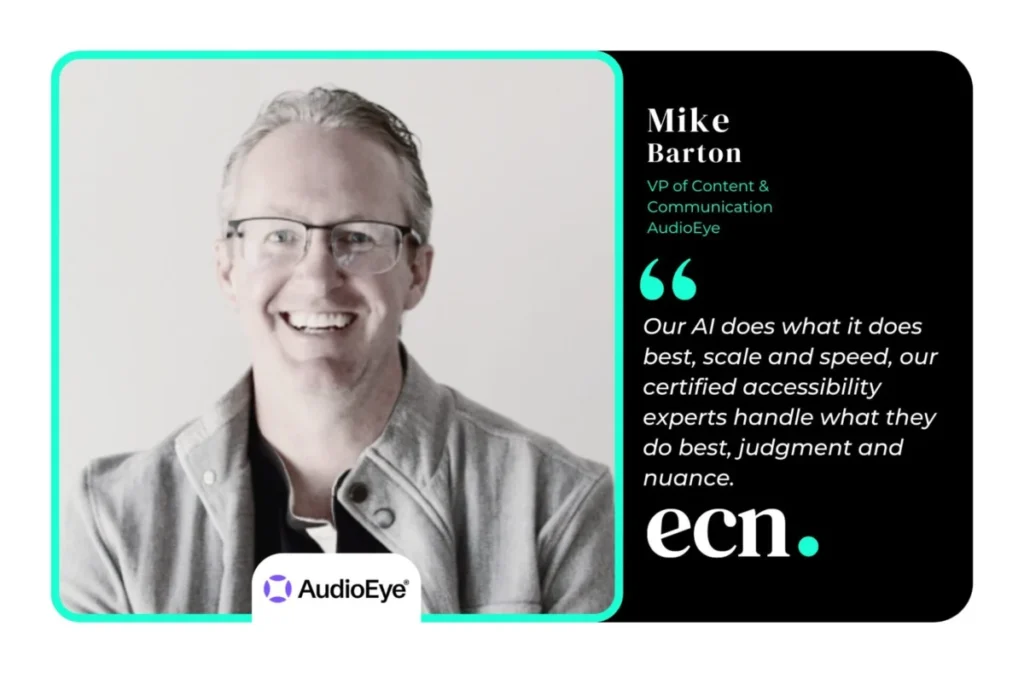
"Our mission is to deliver the strongest, most cost-effective accessibility protection in the industry," explains Mike Barton, VP at AudioEye. "We are building toward a digital world where organizations don’t have to scramble to meet legal requirements, but instead view inclusive design as a fundamental aspect of their brand identity."
This mission is supported by a platform that currently serves over 127,000 organizations. By leveraging both automated detection and expert-led remediation, AudioEye aims to alleviate the burden of digital exclusion while providing robust protection against the rising tide of accessibility-related litigation.
A Chronology of Evolution: From Niche to Necessity
To understand the current state of digital accessibility, one must look at how the industry has shifted over the last twenty years.
- The Early Years (2000s): Digital accessibility was largely viewed as a niche concern. Companies treated compliance as a "checkbox" exercise, often ignoring it entirely in favor of aesthetic or functional priority.
- The Regulatory Tipping Point (2015–2020): As reliance on the web exploded, so did the legal scrutiny. Accessibility-related lawsuits in the U.S. began a steady climb, signaling to businesses that their digital front doors were legally vulnerable.
- The AI Era (2020–Present): With the rapid adoption of AI, the complexity of website architecture increased. However, this period also introduced new tools for automation. AudioEye pivoted during this time to integrate AI as a foundational layer, capable of scanning thousands of pages in real time—a scale that was previously impossible.
- Global Harmonization (2025 and Beyond): With the enactment of the European Accessibility Act (EAA), accessibility is no longer a localized US concern; it is a global regulatory mandate. AudioEye has evolved its platform to provide a unified compliance framework that addresses both regional and international standards.
The Data-Driven Business Case
The argument for digital accessibility is no longer purely ethical; it is increasingly fiscal. Data reveals that businesses failing to prioritize inclusive design are leaving significant revenue on the table.
The $18 Trillion Opportunity
People with disabilities represent an estimated $18 trillion in global spending power. Yet, research indicates that 83% of users with disabilities limit their shopping to websites they know are functional and accessible. When a site fails to accommodate screen readers or keyboard navigation, users do not simply "try again later"—they defect to competitors.
The Cost of Inaction
The financial risks of ignoring accessibility are stark:
- Legal Exposure: U.S. accessibility lawsuits have doubled since 2020.
- Retention: Seven out of ten users will abandon a site immediately if it presents accessibility barriers.
- The Discovery Gap: As AI-driven search agents and crawlers become more common, they rely on a site’s "accessibility tree" to parse content. If a site is not accessible, it is effectively invisible to the next generation of AI-powered search and discovery tools.
Inside the Platform: How the Hybrid Model Works
AudioEye’s platform functions through a seamless integration, often requiring only a single line of JavaScript. This allows the platform to act as a diagnostic and corrective layer that operates in real time.
Automated Detection and Remediation
Upon deployment, AudioEye’s AI scans the rendered page against the Web Content Accessibility Guidelines (WCAG). According to an independent 2026 study by Adience, the platform detects up to 2.5 times more issues than competing tools. Approximately 50% of these issues are resolved automatically in real time, ensuring that the user experience remains uninterrupted.
The Human "Gray Area"
Technology, however, has limits. Complex issues involving user intent, site context, and the nuanced "feel" of a navigation experience often require human judgment.
"Software finds the patterns," says Barton. "Experts find what hides between them."
AudioEye employs certified accessibility specialists—many of whom have disabilities—to conduct audits and deploy custom code fixes. This hybrid approach results in a 97% resolution rate before the customer’s internal development team even needs to intervene.
Regulatory Compliance and Legal Protection
For many organizations, the primary motivator for pursuing accessibility is the threat of litigation. AudioEye provides a unique value proposition in this space: a legal guarantee backed by a documented history of success.
Unlike "widget-only" solutions that offer superficial fixes, AudioEye’s approach aims for deep, structural compliance. The company provides:
- Expert Debunk Reports: Should a legal claim arise, AudioEye’s team works directly with the client’s counsel to validate or refute allegations.
- Documented Courtroom Dismissals: The firm is currently the only vendor in the space with a documented, successful track record in court, providing a level of confidence that standard software warranties cannot match.
- Comprehensive Monitoring: Constant scanning ensures that as a website updates, new content does not inadvertently create new accessibility barriers.
The Future: AI, Accessibility, and the Open Web
As we look toward the future, the relationship between AI and accessibility is becoming a paradox. While AI tools are helping developers build more accessible sites, general-purpose AI coding tools are simultaneously generating "inaccessible code" at an unprecedented rate, trained on a legacy web that was never built for inclusivity.
"Solving that gap is one of the most important problems in our industry," Barton notes. "Accessibility and AI discovery are going to be the same conversation in a few years."
Strategic Ambitions
AudioEye’s roadmap for the next decade centers on two pillars:
- Global Expansion: As more jurisdictions adopt mandates similar to the European Accessibility Act, AudioEye is positioning itself to help global enterprises navigate a fragmented regulatory landscape.
- AI-Native Accessibility: By treating accessibility as a key component of the AI "discovery" ecosystem, AudioEye aims to ensure that its clients remain visible to the next generation of AI agents that will define how users find products and services online.
Conclusion: The Path Forward
Digital accessibility is no longer a peripheral task for IT departments. It is a strategic priority that sits at the intersection of brand reputation, legal risk, and market growth. By moving beyond the "one-and-done" audit mentality and adopting a continuous, hybrid approach, companies can transform their digital footprint from a source of liability into a competitive advantage.
As the web continues to evolve, the businesses that succeed will be those that recognize a simple truth: the internet is a public utility, and its utility is only as good as its accessibility to all. AudioEye is not just providing a service; it is building the infrastructure for a more inclusive, equitable digital future.