Bridging the Digital Divide: Bill Gates and the $1 Billion Push to Make Artificial Intelligence a Global Equalizer
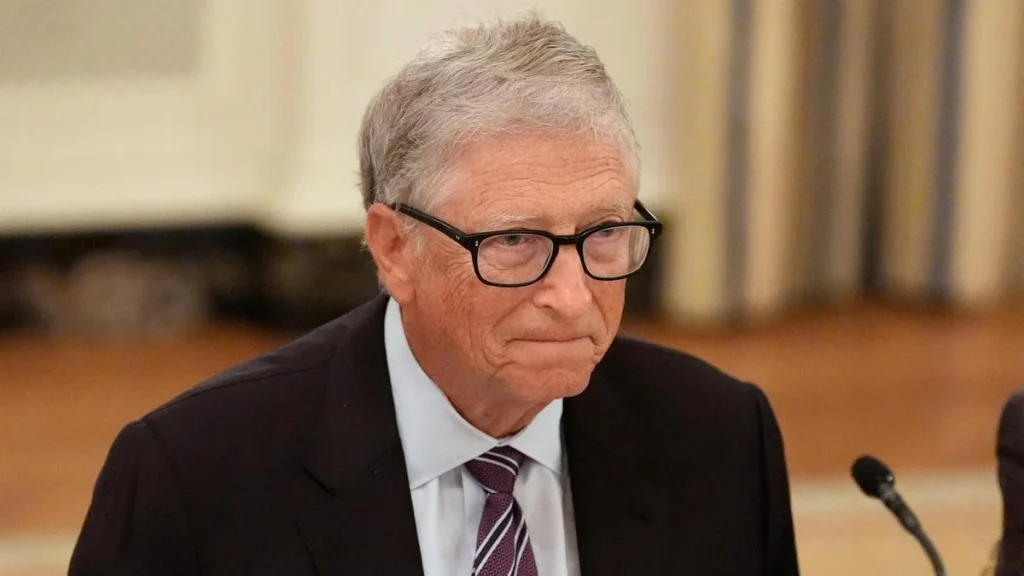
NEW YORK — As artificial intelligence rapidly reshapes the global economy, Microsoft co-founder Bill Gates has issued a stark warning to world leaders and technology executives: immediate intervention is required to ensure that the AI revolution combats social inequities rather than exacerbating them.
Against the backdrop of growing global friction, the Bill & Melinda Gates Foundation has announced a sweeping $1 billion commitment over the next two years. The capital is specifically earmarked to democratize access to advanced AI tools, ensuring that marginalized populations in developing nations reap the benefits of a technology historically prone to favoring the affluent.
The announcement, made public alongside the foundation’s annual "Goalkeepers" report, arrives as international stakeholders grapple with the dual-edged sword of artificial intelligence. While commercial labs race to build more powerful foundation models, critics and experts warn that without deliberate interventions, AI threatens to widen the chasm between the Global North and the Global South.
Main Facts
- The Financial Commitment: The Gates Foundation has pledged $1 billion over the next two years to fund AI-driven initiatives targeted at global health, education, agriculture, and local language accessibility.
- Allocation Breakdown: Approximately $400 million will target healthcare innovations, another $400 million will support educational tools, $100 million will bolster agricultural applications for smallholder farmers, and $100 million will be directed toward training AI models on underrepresented local languages.
- Industry Partnerships: Major technology corporations and research hubs—including Google.org, Microsoft’s AI for Good Lab, OpenAI, and Anthropic—have joined forces with the foundation to co-fund projects, supply data sets, and pilot health and agricultural tech interventions in Africa.
- The Core Dilemma: Bill Gates has cautioned that AI will serve as either "the greatest equalizer" or "the worst source of injustice," noting that market forces inherently favor deploying lucrative technologies to those who can already afford them.
- Global Policy Friction: The initiative launches amid declining international aid from the United States, cuts to global health programs under the Trump administration, and widening gaps between rich and poor nations tracked by the United Nations.
Chronology of Events
The release of the Goalkeepers report and the subsequent $1 billion pledge culminate months of mounting tension within the tech sector and international policy circles:
- August 2026: Bill Gates publishes a comprehensive blog post warning that while AI holds immense potential to solve intractable global crises, it also risks accelerating fraud, disinformation, surveillance, cyberattacks, and bioterrorism. He explicitly frames the technology as a fork in the road for human equity.
- Early September 2026: Internal debate within the AI research community reaches a fever pitch following high-profile resignations—including a former Anthropic researcher stepping down over corporate responsibility concerns—reigniting fears that advanced AI models are outpacing human regulatory control.
- September 14, 2026: U.N. watchers and geopolitical analysts, such as Richard Gowan of the International Crisis Group, brief reporters on the impending United Nations General Assembly high-level meetings, highlighting anxieties over the slow pace of U.N. governance regarding AI and the impending transition of leadership as Secretary-General António Guterres prepares to step down.
- September 15, 2026: The Gates Foundation officially releases its annual Goalkeepers report. Gates Foundation CEO Mark Suzman announces the $1 billion funding initiative during an interview with The Associated Press. Concurrently, major tech firms announce collaborative pilot projects in Rwanda and other African nations.
- Mid-September 2026 onward: The foundation initiates high-level talks with the U.S. Congress and President Donald Trump’s administration to lobby for sustained foreign assistance, refusing to abandon diplomatic engagement despite recent cuts to global aid budgets.
Supporting Data and Financial Allocations
The Goalkeepers report monitors progress toward the United Nations’ Sustainable Development Goals (SDGs) for 2030. The latest metrics paint a sobering picture of a world in crisis. Last year’s projections indicated that the century could witness its first increase in child deaths, exacerbated by disruptions to global health initiatives, such as the U.S.-led interruptions to global AIDS relief programs.
To counteract these setbacks, the foundation’s $1 billion injection is mapped out across specific developmental vectors:
+-----------------------------------------------------------------+
|                  GATES FOUNDATION AI ALLOCATIONS                |
+------------------------+-------------------+--------------------+
| Sector                 | Funding Amount    | Target Impact      |
+------------------------+-------------------+--------------------+
| Healthcare             | ~$400 Million     | Diagnostic tools   |
|                        |                   | & symptom checkers |
+------------------------+-------------------+--------------------+
| Education              | ~$400 Million     | Adaptive lesson    |
|                        |                   | planning for rooms |
+------------------------+-------------------+--------------------+
| Local Languages        | ~$100 Million     | Data sets for      |
| & Contexts             |                   | underserved regions|
+------------------------+-------------------+--------------------+
| Agriculture            | ~$100 Million     | Real-time weather, |
|                        |                   | pest & fertilizer  |
+------------------------+-------------------+--------------------+
Beyond the foundation’s direct balance sheet, strategic private-sector co-investments are scaling these efforts. OpenAI has committed $50 million to pair with foundation resources, launching pilot programs to train health workers in Rwandan clinics. Anthropic is actively collaborating with foundation scientists to accelerate vaccine development pipelines and refine chatbot data sets concerning regional crop management.

Official Responses and Stakeholder Perspectives
The initiative has drawn praise for its ambition, alongside rigorous skepticism regarding the mechanics of private philanthropy in global governance.
The Gates Foundation Perspective
Mark Suzman, CEO of the Gates Foundation, acknowledged that while the foundation’s financial commitments are dwarfed by the commercial expenditures of Silicon Valley tech giants, their strategic objective is to redirect technical talent toward neglected social needs.
Addressing the political climate in Washington, Suzman affirmed that the foundation remains actively engaged with skeptical lawmakers. "We haven’t given up on the U.S.," Suzman told The Associated Press. "We will acknowledge it’s been a challenging period with the U.S. government on this. But we believe there is still a case to be made."
Sociological and Structural Critiques
Independent experts have raised critical questions about relying on billionaires and private corporations to solve systemic global inequalities.
Jonathan Shaffer, an assistant professor of sociology at the University of Vermont whose research centers on global health governance, argued that merely pumping data into models will not solve deeply entrenched infrastructural deficits. Shaffer noted that health infrastructure in marginalized regions is often so underdeveloped that the poorest populations will inevitably be excluded from training data sets. Consequently, AI tools could inadvertently amplify existing structural biases.
Furthermore, Shaffer challenged the privatization of global problem-solving: "They still mean a kind of particularly privatized form of access," he said, questioning the legitimacy of allowing private foundations and corporate monopolies—rather than democratically organized, deliberative global bodies—to dictate technological rollouts.
The United Nations and International Governance
As delegates prepare for the United Nations General Assembly in New York, the structural lag of international bureaucracy remains a glaring vulnerability. Outgoing U.N. Secretary-General António Guterres has consistently maintained that artificial intelligence “cannot be governed by a handful of countries or companies.”

However, experts point out that intergovernmental bodies move at a glacial pace compared to the exponential growth curve of tech innovation. Richard Gowan of the International Crisis Group noted that with Guterres’s term concluding, it remains uncertain whether his successor will maintain the same aggressive institutional focus on AI regulation and digital equity.
Implications for the Future
The convergence of artificial intelligence, global health crises, and shifting geopolitical aid priorities sets a precarious stage for the remainder of the decade.
If successful, the Gates Foundation’s initiative could establish a viable blueprint for "public interest AI"—demonstrating that generative models and machine learning can successfully optimize crop yields for subsistence farmers, catch overlooked pathologies in rural clinics, and adapt educational curricula for underprivileged classrooms.
Conversely, if the initiative falters or fails to account for structural data exclusion, it risks cementing a two-tier digital society where advanced computational power serves exclusively to enrich the developed world, leaving the Global South to navigate cascading ecological, economic, and health crises unaided.
As the debate moves to the floor of the United Nations General Assembly, the ultimate test will be whether global leaders can harmonize private sector innovation with public accountability before the window to close the digital divide slams shut.