Architecting the Mind of the Machine: A Deep Dive into Reliable AI Agent Memory Systems
In the rapidly evolving landscape of autonomous AI agents, the transition from simple chatbots to sophisticated, multi-step problem solvers hinges on a single, critical capability: memory. When an AI agent operates within a single, isolated prompt-response loop, its requirements are modest. However, as soon as an agent is tasked with executing long-running workflows, maintaining user preferences across weeks, or navigating complex enterprise environments, it requires a robust, persistent memory architecture.
Without a well-designed memory system, agents are condemned to a "Groundhog Day" existence, forced to start from zero with every interaction. When built poorly, however, these systems can become sources of "digital dementia"—persistent, hard-to-trace failures that compound over time, leading to hallucinations, security vulnerabilities, and logic loops that remain invisible until they cause a critical system collapse. This article examines the blueprints for success and the architectural landmines to avoid when building reliable agentic memory.
Defining Memory: Moving Beyond the Context Window
It is common for developers to conflate "context windows" with "memory." In reality, they are fundamentally different. A context window is the immediate, volatile workspace where the LLM processes current input. Memory, by contrast, is external storage—a persistent state that allows an agent to maintain continuity across sessions, tasks, and time.
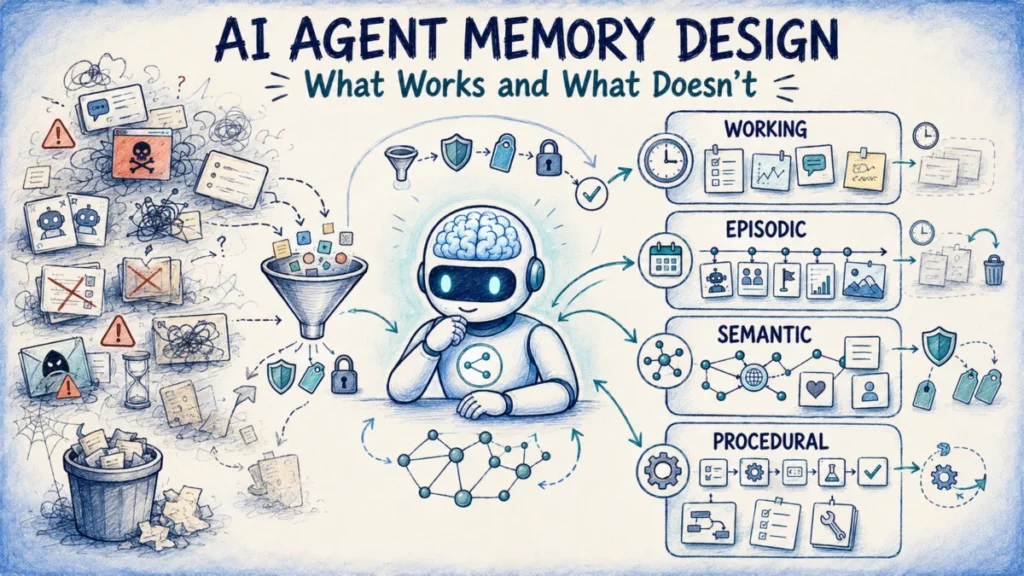
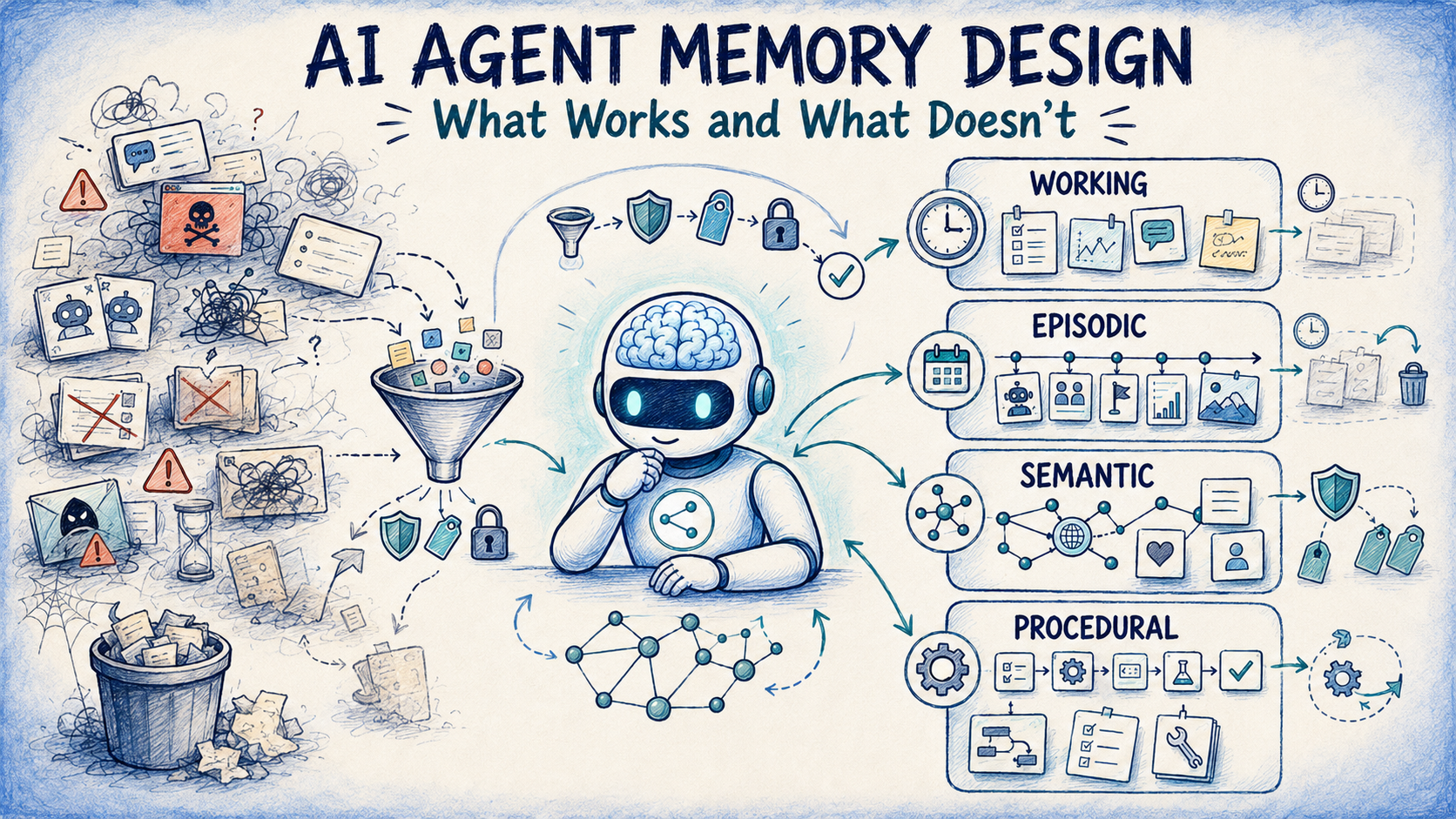
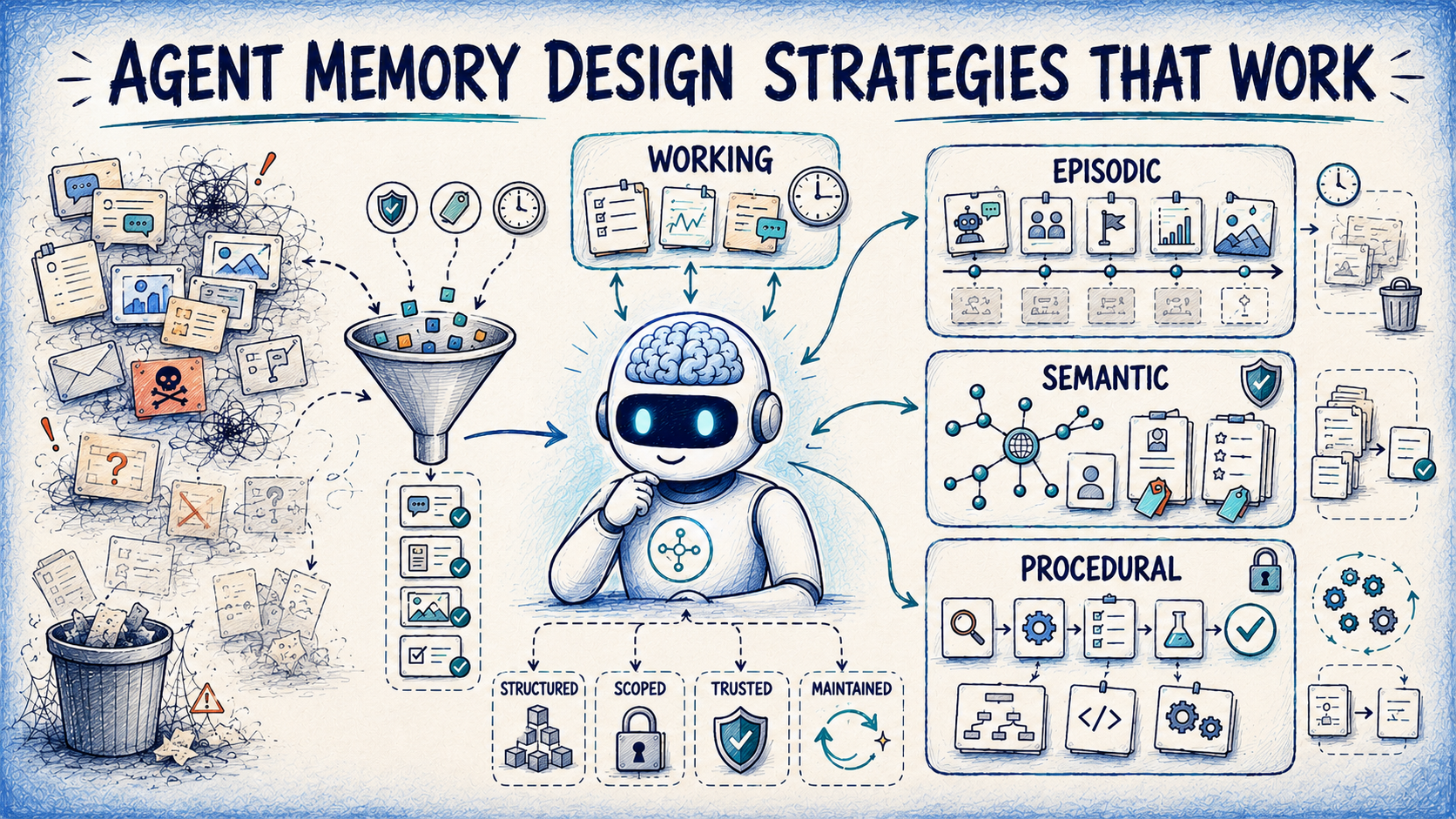
For professional-grade agentic systems, memory must be categorized to be effectively managed. Collapsing these distinct functions into a single "catch-all" database is a recipe for failure.
The Four Pillars of Agentic Memory
- Episodic Memory: This captures the "what happened." It tracks past interactions, previous task runs, and the specific decisions the agent made. This is typically managed via vector databases for semantic similarity search.
- Semantic Memory: This stores "what is known." It is the repository for facts, user preferences, and evolving domain knowledge. Unlike episodic memory, this often requires a hybrid approach, utilizing both vector search and exact key-value lookups.
- Procedural Memory: This covers "how to do things." It holds successful action patterns, learned workflows, and optimized tool-usage sequences. It acts as the agent’s "muscle memory."
- Working Memory: This is the scratchpad. It holds intermediate results and active task state. It is ephemeral and requires high-speed, direct-access storage.
Strategies That Work: Engineering for Reliability
The difference between a hobbyist project and a production-ready agent lies in the implementation of "intelligent persistence."
Scoring Memory by Importance
Storing every interaction is not just expensive; it is actively harmful to retrieval quality. An "all-or-nothing" storage policy creates noise, drowning out relevant information with irrelevant fluff. A scalable architecture uses Hierarchical Memory with Importance Scoring.
By implementing a MemoryEntry model that evaluates the durability and importance of data at the point of ingestion, developers can ensure that the "noise" is discarded while "signals" are preserved. For instance, a temporary system error should be discarded after an hour, whereas a user’s preferred output format for financial reports should be stored as high-importance, long-term semantic memory.
Scoping Memory by Agent Role
In multi-agent orchestration, a fatal mistake is granting every agent a "God-view" of the entire memory store. If a research agent writes raw, unverified data to a global store, and a code-execution agent reads that data as a command, the system becomes prone to catastrophic logic errors.
The Fix: Implement strict memory namespaces. The Orchestrator should manage a global state, but sub-agents should only have read/write access to their specific scope, plus a "shared facts" layer. This creates a sandboxed environment where agents can communicate without polluting the context of others.
The "Write-Back" Protocol
Many developers only commit to memory when a task is finished. If an agent crashes at 90% completion, the entire history of the task—including the valuable insights gathered in the first 80%—is lost.
A professional architecture adopts a Step-Wise Persistence model. Working memory should be updated after every individual step. If a task reaches a successful conclusion, the relevant data is then "promoted" to long-term episodic memory. If the task fails, the working memory acts as a diagnostic log, allowing the system to retry from the point of failure rather than the beginning.
The Architecture of Failure: What to Avoid
Many systems fail because they treat AI memory as a simple CRUD (Create, Read, Update, Delete) operation. The following architectural patterns are common, yet they are the primary drivers of agent instability.
The "Vector Store Sink" Trap
Using a single vector database for everything is the most common anti-pattern in agent development. Vector databases are excellent for semantic retrieval, but they lack the relational structure needed for facts, and they struggle with data deduplication. When you dump conversation logs, system instructions, and user preferences into one vector bucket, you sacrifice precision for convenience.
The Compression Fallacy
As history grows, developers often use LLMs to "summarize" old conversations to save space. This is a destructive process. Summarization, by definition, discards information. Over time, this "memory compression" leads to:
- Loss of Edge Cases: Critical constraints or specific numerical requirements are often lost in summary.
- Compounding Hallucinations: If a summary contains a hallucinated fact, that error is "blessed" as truth in the long-term store, making it harder to debug when the agent keeps referencing that same error in future sessions.
Instead of summaries, use Structured Fact Extraction. Force the model to map input into a rigid schema (e.g., a Pydantic model). By storing structured data instead of prose, you ensure that the facts remain verifiable and queryable.
Memory Poisoning and the Trust Gap
The "MemoryGraft" attack is a growing concern in AI security. An attacker can inject a malicious instruction into a document or an interaction that the agent eventually saves to its long-term memory. When the agent later retrieves that memory, it executes the embedded instruction as if it were a system-level command.
The Solution: Never trust any memory entry equally. Implement Provenance Tracking. Every entry should contain metadata: Who created this? What tool generated it? What was the trust level of the input source? Before performing high-stakes operations, the agent should query the provenance metadata. If the memory originated from a low-trust external source, it must be sanitized or discarded.
Implications for Future Development
As we move toward more autonomous systems, the role of the developer is shifting from "writing code" to "designing cognitive architectures." The implications of these memory strategies are profound:
- Cost Efficiency: By discarding low-value data and using hierarchical storage, companies can significantly reduce the compute and storage costs associated with large-scale vector databases.
- Safety and Compliance: Provenance tracking is not just a debugging tool; it is a compliance requirement. In regulated industries like healthcare or finance, being able to trace why an agent made a specific decision—and which memory entry triggered it—is mandatory.
- Systemic Robustness: By moving away from monolithic memory stores, systems become modular. A bug in the "Research" memory scope can be isolated and patched without affecting the "Executive" or "Financial" memory scopes.
Conclusion: The Path Forward
Building reliable memory for AI agents is an exercise in balance. It requires the precision of a database architect and the foresight of a security engineer. By segmenting memory into logical layers, enforcing strict provenance and trust rules, and prioritizing structured data over free-form summaries, developers can move past the current limitations of "brittle" agents.
The future of AI is not just about the size of the model, but the quality of its recollections. An agent that remembers correctly is an agent that can act decisively. As we refine these architectural patterns, we are not just adding storage; we are building the foundation for machines that can learn, adapt, and operate with the reliability required for the next generation of enterprise automation.
Summary of Best Practices
| Strategy | Recommended Approach | Avoid |
|---|---|---|
| Architecture | Multi-layer (Working, Episodic, Semantic, Procedural) | Single vector store for all data |
| Data Format | Structured Fact Extraction | Free-form summarization |
| Retrieval | At every decision point | Only at task initiation |
| Persistence | Step-wise promotion with TTLs | Unbounded storage growth |
| Security | Trust-level filtering and sanitization | Treating all data as equally trusted |
By adhering to these principles, you ensure that your agent’s memory serves as an asset—a clear, reliable, and secure guide for its future actions—rather than a repository of ghosts from past mistakes.