The New Gatekeeper: How to Position Your Business for AI Recommendations and Citations
As artificial intelligence rapidly transforms how consumers find products, services, and information, a silent revolution is rewriting the rules of digital visibility. Traditional search engine optimization (SEO) is no longer the sole battleground for digital dominance. Today, conversational AI platforms like ChatGPT, Claude, and Perplexity are acting as consumers’ primary digital concierges—recommending businesses, comparing local service providers, and mapping out itineraries with a single prompt.
According to AI strategist Liron Segev, co-creator of a recent deep-dive briefing alongside Michael Stelzner, businesses that fail to adapt to this paradigm shift risk fading into irrelevance. With roughly 68% of standard search engine queries now concluding without a click to an external website, users are increasingly bypassing traditional search results entirely in favor of direct, synthesized answers from AI tools.
This comprehensive guide examines the mechanics of AI visibility, the core structural changes required for modern digital marketing, and actionable strategies for ensuring your brand becomes an AI’s go-to recommendation.
Main Facts: The Shift from Search Engines to AI Advisors
The fundamental landscape of consumer research has shifted. Historically, companies competed for real estate on the first page of search engines or optimized their names—such as legendary "Yellow Pages" tactics like "AAA Locksmith"—to appear at the top of alphabetical directories. When Google arrived, the optimization playbook evolved, but the underlying dynamic remained: users asked a machine for links, and the machine provided a list of web pages.
Today, AI models have flipped that model on its head. Instead of presenting twenty blue links, tools like ChatGPT and Perplexity conduct private, multi-layered consultations with users.
- The "Trusted Advisor" Dynamic: AI models retain conversational context, remembering a user’s budget, geographic constraints, personal preferences, and past behavior. When an AI recommends a service provider, it acts as a trusted friend making a tailored referral.
- The Death of the Traditional Click: With nearly seven out of ten searches resolving without a website click, brands can no longer rely solely on traditional organic traffic. If a business is omitted from an AI tool’s internal synthesis, it essentially ceases to exist for that consumer segment.
- Dual Content Frameworks: Content creators must now realize that machines read differently than humans. While human readers crave narrative arcs, emotional hooks, and dramatic tension, AI systems consume information via non-linear parsing and data extraction.
Chronology and Evolution: From Newsletter Archives to AI Dominance
The methodology behind achieving AI visibility has evolved from trial-and-error optimization into a repeatable, systematic science. Organizations that have successfully claimed market share in AI recommendations typically follow a distinct chronological implementation model.
Phase 1: Auditing and Repurposing Existing Assets
Rather than starting from scratch, successful firms begin by analyzing their historical content repositories—most notably, newsletter archives. Many businesses treat newsletters as ephemeral messages that die in the inbox. AI optimization experts advise treating these archives as primary data assets.
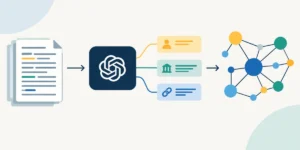
In a recent real-world case study highlighted by Segev, a mid-sized consulting firm was consistently losing market share to larger, better-funded competitors who dominated paid digital advertising. Recognizing that paid ads merely "rent" attention—disappearing the moment budgets dry up—the firm pivoted its strategy. They analyzed their highest-performing past newsletters, extracted the core concepts, and reformatted them specifically for machine readability.
Phase 2: Dual-Audience Publishing
The firm then published these assets on their corporate website under a dual-architecture framework:
- The Human Version: Styled for traditional engagement, readability, and brand storytelling.
- The AI-Optimized Version: Restructured with distinct headings, keyword matrices, and direct answers tailored for web crawlers.
Phase 3: Compounding Authority
Within three weeks of deploying this structured approach, the consulting firm captured 72% of AI-driven recommendations within its specific industry category. By supplying AI crawlers with clean, original, and deeply structured data, the firm outpaced legacy competitors who possessed much larger budgets and older domain histories.
Supporting Data: Why "Fan-Out Queries" and Originality Matter
To understand how to get recommended by AI, business owners must first understand how modern large language models (LLMs) retrieve and process information.
Understanding Fan-Out Queries
When a user inputs a complex prompt—such as researching a competitor or planning a specialized project—AI does not merely search for a direct keyword match. Instead, it initiates what Segev calls "fan-out queries."
The system automatically generates and executes dozens of background sub-queries based on inferred user intent. For example, if a user asks about moving to a specific city, the AI will simultaneously query local tax structures, school district ratings, crime statistics, and neighborhood safety indices. Therefore, businesses that publish isolated, narrow content are frequently bypassed in favor of brands whose content naturally interconnects with these broader contextual inquiries.
The Originality Filter
AI models are inherently trained to recognize patterns—including their own output. If a business publishes generic content that an LLM could easily generate on its own (such as standard "10 Tips for Retirement Planning" listicles), the AI assigns zero comparative value to that page.
- The Substitution Test: A reliable diagnostic for content originality is to swap your company name with a competitor’s name in the text. If the article still reads logically, the content is generic and will likely be ignored by AI citation algorithms.
- Proprietary Data and Personal Experience: AI actively seeks out what it cannot synthesize independently: firsthand case studies, specific client turnaround metrics, proprietary research, and personal anecdotes. Content that details a unique client portfolio restructuring during a market downturn holds immense weight compared to recycled textbook theory.
Official Recommendations: Structuring Content for Machine Consumption
Achieving systemic AI visibility requires specific technical setups and structural formatting adjustments. Industry experts recommend adherence to several core protocols:
1. The "Chunking" Strategy
AI models read and extract information via "chunking"—the isolation of self-contained, highly accurate paragraphs from a larger body of text that directly answer a specific question.
- Every section of your article or website copy must be able to stand entirely on its own.
- If an AI can extract a clear, two-to-three sentence explanation from the middle of your page and present it accurately to a user, it will frequently cite your domain as the source.
2. Front-Loading Q&A Formats
Content should be formatted with clear, explicit questions followed immediately by direct, authoritative answers within the first 100 words of the section. This matches the exact query-and-response pattern that LLMs rely on during data retrieval.
3. Technical Infrastructure and Crawler Access
Even the most brilliant content strategy will fail if automated bots cannot physically read your website. Technical audits should verify the following components:
- Robots.txt Files: Ensure legacy settings have not inadvertently blocked AI web crawlers (such as GPTBot or ClaudeBot) from indexing your pages.
- Cloudflare and Security Settings: Verify that aggressive anti-bot protections or built-in AI blockers are configured correctly and not cutting off legitimate algorithmic indexing.
- JavaScript Rendering: Minimize heavy, dynamic client-side rendering where content only appears after complex user interactions. Static, clean HTML remains the easiest format for AI parsers to ingest.
- Comprehensive Sitemaps: Maintain both XML and HTML sitemaps. Segev notes that businesses can successfully publish vast archival libraries (such as unlinked newsletter repositories) directly onto indexable pages. As long as the sitemap includes them, AI crawlers will discover them without cluttering the site’s primary human-facing navigation menus.
- Structured Data (Schema Markup): Implement robust FAQ schemas, article schemas, and list markups to explicitly define content hierarchies for machine readers.
Implications: The Future of Brand Trust and Compounding Authority
The transition from keyword-driven search to conversational AI recommendations carries profound implications for digital marketing, brand equity, and commercial survival.
The Compounding Effect of AI Citations
When an AI system repeatedly references a specific business as the authoritative answer to user queries, a powerful psychological phenomenon occurs. Consumers begin to view that brand as an undisputed industry leader. Just as repeated recommendations from a trusted friend build unwavering brand loyalty over time, frequent citations across multiple AI interactions establish deep, compounding authority.
Mapping the Full Customer Journey
Because AI advisors assist users across every stage of decision-making—from initial curiosity and exploratory research to final vendor evaluation—brands must expand their content strategies accordingly. A local real estate professional, for instance, cannot rely solely on bottom-of-funnel "homes for sale" listings. They must establish authority higher up the funnel by addressing foundational lifestyle questions regarding community infrastructure, taxation, and local economics.
The Bottom Line
Traditional SEO is far from dead, but its rules have expanded to encompass a dual audience. Modern marketers must write with empathy and emotional intelligence for human readers, while simultaneously engineering their site architecture, data structures, and content depth for the artificial intelligence systems quietly shaping the future of commerce. Businesses that master both realms will secure their position as the default recommendations of tomorrow.