The AI Awakening: How Small Businesses Are Quietly Redefining the Rules of Marketing
By Global Business Insights Desk
Published: October 2026
Executive Summary & Main Facts
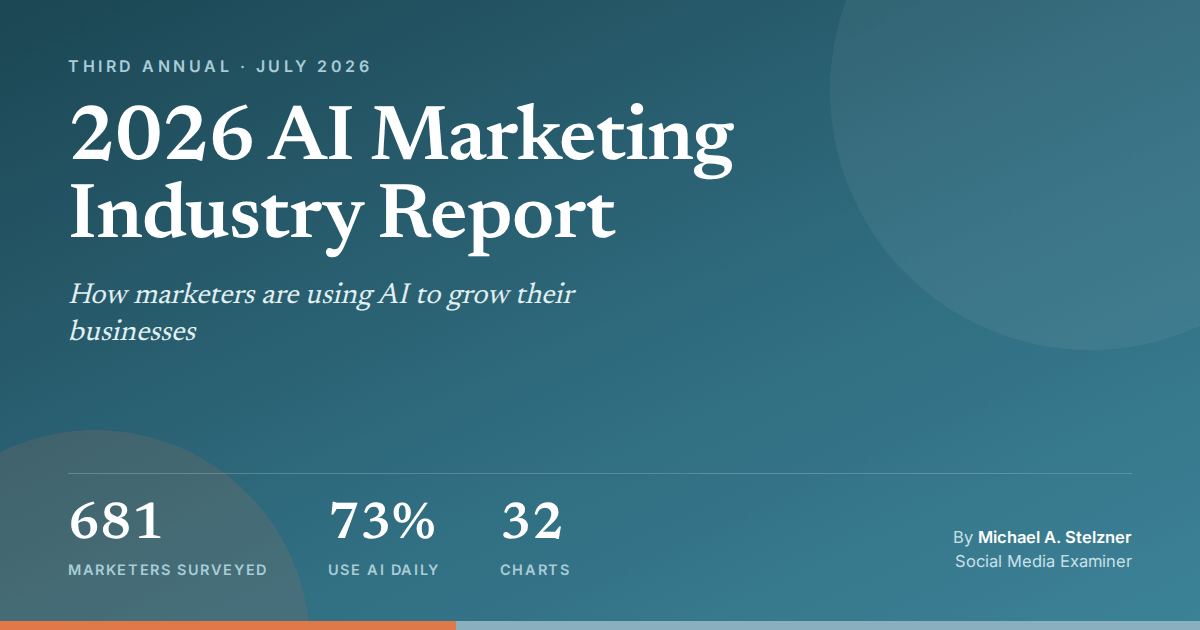
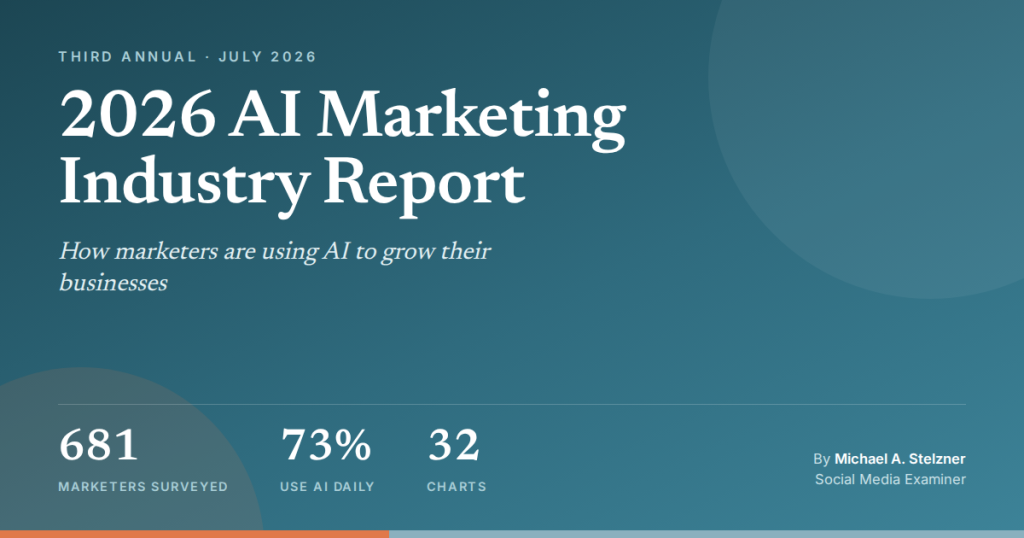
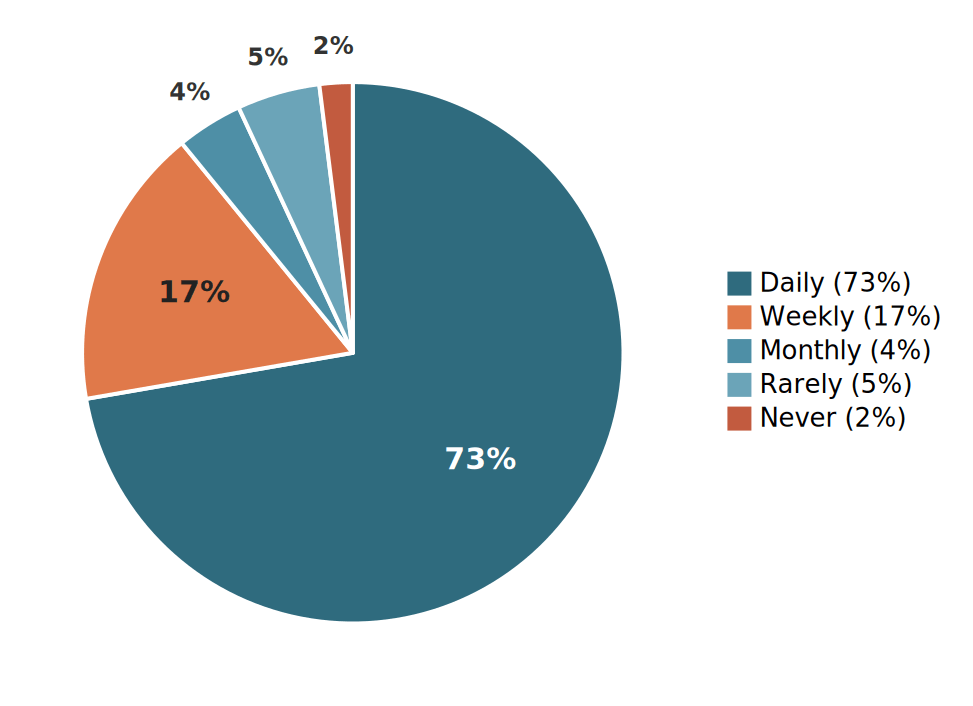
Artificial intelligence has officially crossed the threshold from experimental technology into the foundational plumbing of modern commerce. According to the newly released 2026 AI Marketing Industry Report by Social Media Examiner, daily utilization of generative and automated AI tools among marketing professionals has surged to an unprecedented 73%, a massive leap from just 37% two years prior.
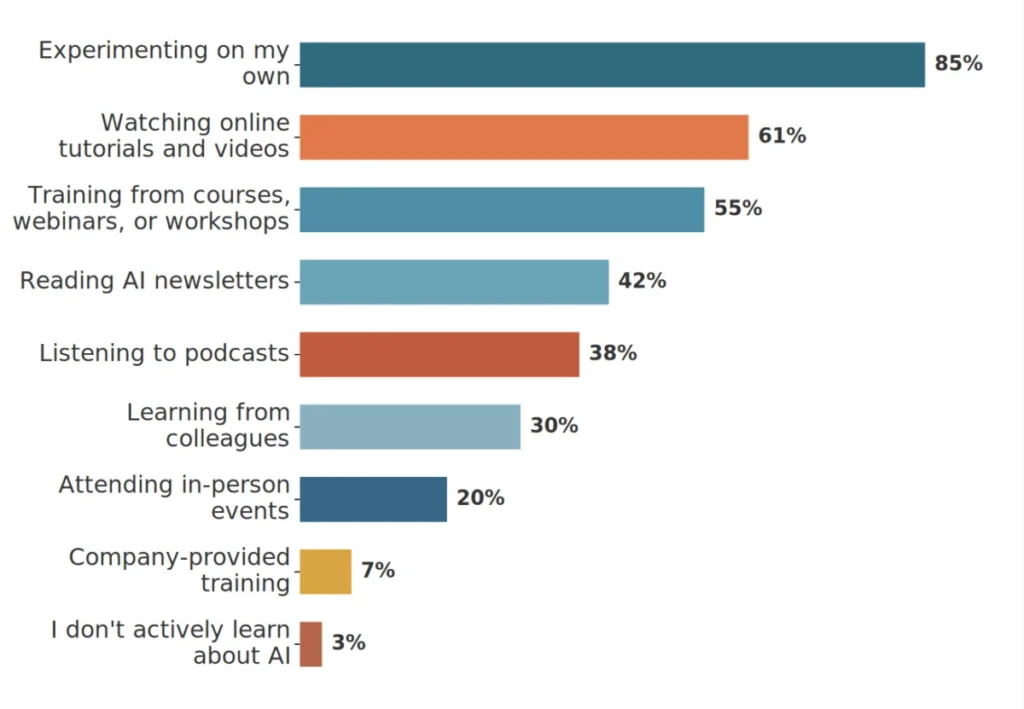
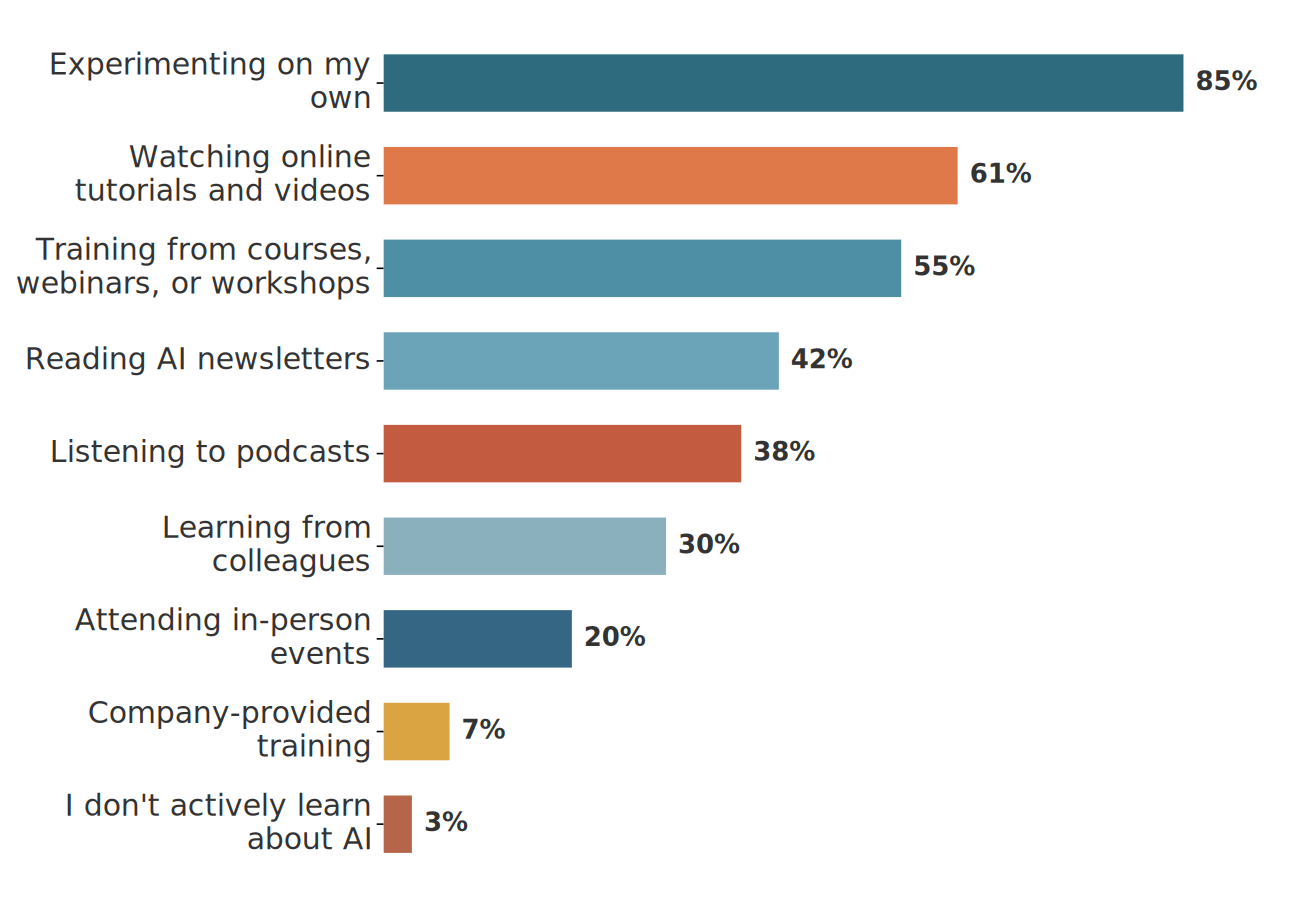
Crucially, this is not a corporate phenomenon dominated by multinational conglomerates with bottomless budgets. The research reveals that 60% of survey respondents operate within small businesses of 10 or fewer employees, painting an accurate portrait of the Main Street entrepreneur navigating the technological shift. Far from relying on formal corporate training initiatives or subsidized software licenses, 85% of small business professionals are learning through self-directed experimentation, while over half are directly financing their own tool suites out of pocket.
Yet, beneath the staggering adoption curves and universal praise for time-saving efficiencies lies a complex narrative. While 86% of surveyed professionals report acute boosts in productivity, only 30% possess the metrics to definitively quantify the return on investment. Furthermore, gaping chasms remain between mature technologies—such as written text generation, utilized by 95% of practitioners—and emerging frontiers like AI video and autonomous AI agents, which represent the next major battlegrounds for competitive advantage.
Chronology of the Shift: From Hype to Daily Operations
To understand where small business marketing stands today, it is vital to trace how the operational landscape has evolved over the past 24 months.
Phase 1: The Novelty Era (2024)
At the dawn of the mass generative AI boom, the market was defined by headline-driven enthusiasm tempered by widespread skepticism. In 2024, nearly a quarter of marketers (23%) stated they rarely or never touched AI tools. For those who did, utilization was sporadic, restricted largely to brainstorming outlines or drafting preliminary copy. Training programs were virtually nonexistent, and the dominant sentiment was one of cautious observation. Free tiers of prominent large language models dominated workflows, and businesses treated AI as an ancillary toy rather than an operational core.
Phase 2: The Normalization Wave (2025)
Over the course of the following year, the friction of adoption gave way to pragmatic integration. Weekly usage spiked dramatically as tools became embedded directly into native content management systems, email platforms, and graphic design suites. The barrier to entry plummeted, forcing even the most hesitant solo entrepreneurs and micro-agency owners to open accounts and test prompts. The "nice-to-have" label was permanently discarded.
Phase 3: The Operational Baseline (2026)
Today, AI is the new normal. The 2026 industry benchmark data reveals that a staggering 90% of marketers now use AI at least weekly, with nearly three out of four relying on it every single day. Only 7% remain on the sidelines. More importantly, momentum shows no signs of plateauing: 84% of respondents report that their overall usage has increased over the past year, and 78% expect it to scale even higher. The evolution has transitioned from whether businesses will use AI to how deeply they can automate their operations before their competitors do.
Supporting Data: The Anatomy of Modern AI Adoption
A granular examination of the 2026 data uncovers structural truths about how small business owners are mastering these tools without institutional backing.
1. The Death of Corporate Training
The traditional corporate model—where human resources departments mandate software training, purchase enterprise-wide licenses, and orchestrate onboarding seminars—is entirely absent from the small business reality.
- 85% of professionals learn independently through trial, error, online communities, and direct interaction with the models.
- Only 7% receive formal company-provided training.
- 55% of respondents state that "I" am the sole driver and owner of AI adoption within their enterprise.
2. Personal Financial Commitment
The era of relying exclusively on free software tiers is rapidly drawing to a close. To secure advanced capabilities, faster processing speeds, and superior output quality, 85% of marketers now pay for AI tools in some capacity, with 53% paying out of their own pockets rather than expensing them through a corporate ledger. This financial sacrifice underscores the tangible value practitioners place on these technologies.
3. The Measurement Paradox
Despite the widespread financial and temporal investments, a glaring blind spot persists around quantitative proof of success.
- 86% agree that AI saves them time.
- 86% agree that AI dramatically boosts overall productivity.
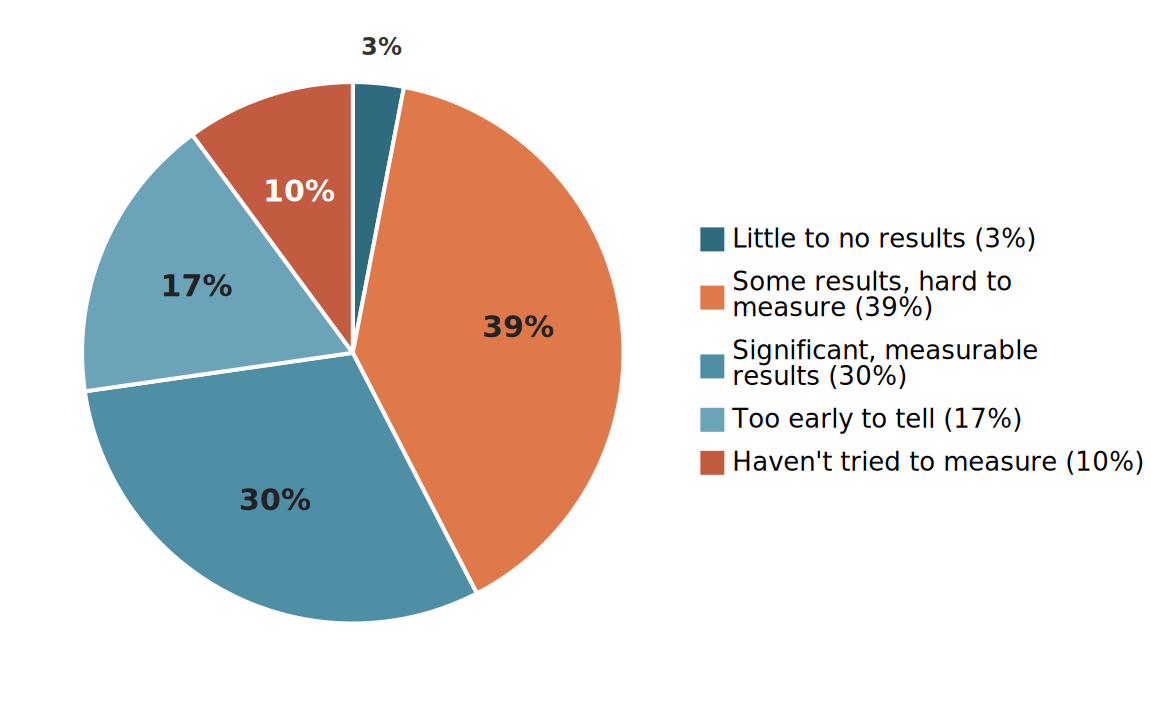
- However, only 30% can point to hard, measurable business outcomes resulting from their AI usage.
- 39% sense qualitative improvements but lack the tracking mechanisms to quantify them, while 10% have made no attempt to measure impact whatsoever.
4. The Content Chasm: Text vs. Video
While utilization rates for written content have reached near-universal saturation at 95%, and image generation has surged from 39% to 67% since 2024, AI video creation lags severely behind at just 37%. This creates a massive 37-point deficit when juxtaposed against the fact that 74% of marketers state that video is the number one content type they want to learn to create with AI.
[Content Type Utilization vs. Demand]
Written Content:  [████████████████████] 95% Adoption
Image Generation: [█████████████       ] 67% Adoption
AI Video:         [██████              ] 37% Adoption (Targeted by 74% for learning)
5. The Rise of Autonomous Agents
Representing the bleeding edge of the 2026 data, AI agents—systems capable of executing multi-step workflows autonomously without constant human prompting—are poised for explosive growth. Currently, only 11% use them regularly and 24% are experimenting. Yet, 44% plan to adopt agents soon, bringing total current and prospective adoption to 79%. Furthermore, learning how to deploy AI agents ranks as the number one educational priority for marketers today.
Official Perspectives and Industry Commentary
Industry experts and analysts reviewing the 2026 dataset emphasize that the findings should serve as both a wake-up call and a validation for lean organizations.
Michael Stelzner, founder of Social Media Examiner and architect of the annual study, notes that the research cuts through the abstract technology hype to reveal what practitioners are experiencing on the ground.
"We surveyed marketers to find out how they’re actually using AI—not the hype, not the headlines, the real story," Stelzner explains. "Since 60% of our respondents come from businesses with 10 or fewer people, this isn’t enterprise research. This is your world. The data shows that the marketers furthest ahead didn’t get there through massive corporate budgets; they got there by rolling up their sleeves and figuring it out."
Observers also point out a notable platform shift documented in the broader report: a dramatic migration of user preference away from legacy pioneers like ChatGPT toward competitors like Anthropic’s Claude. This reflects a marketplace that is becoming increasingly sophisticated, demanding nuance, superior reasoning capabilities, and greater contextual understanding for complex business tasks.
Implications for Small Businesses: Turning Gaps into Advantages
For the independent business owner, consultant, or small agency director, these five empirical findings are not merely academic statistics—they are strategic blueprints for survival and outsized growth.
1. Close the Measurement Gap to Outperform Peers
Because 70% of businesses are currently unable to prove the quantitative ROI of their AI implementations, establishing basic performance metrics offers an immediate competitive edge. By tracking simple inputs—such as hours saved per week, cost reductions per content asset, or velocity of campaign deployment—small business owners can optimize their workflows far more intelligently than competitors flying blind.
2. Seize the Video Deficit Early
The 37-point gap between the desire to produce AI video (74%) and actual utilization (37%) represents a golden window for early movers. As text-to-video and avatar-driven tools mature, small businesses that master basic AI video workflows will capture consumer attention on social media platforms long before their slower-moving rivals figure out the software.
3. Prepare for Autonomous Leverage via AI Agents
For a small team of two or three people, the promise of AI agents is nothing short of revolutionary. Imagine delegating routine customer service inquiries, multi-tier email follow-up sequences, and real-time analytics monitoring to autonomous software agents that operate 24/7 without human intervention. This provides the operational leverage of a 50-person corporation at a fraction of the overhead.
4. Leverage Agility Over Bureaucracy
The data proves that institutional training programs are largely irrelevant to AI mastery. Small business owners already possess the ultimate competitive advantage in the AI era: radical adaptability. Without legacy software policies, bureaucratic red tape, or committee-driven approvals, the solo entrepreneur can test, iterate, and deploy advanced AI solutions overnight.
As the 2026 data decisively demonstrates, the window for casual experimentation is closing. The future belongs not to the organizations with the largest IT departments, but to the agile small businesses ready to turn raw tools into systematic operational leverage.