OpenAI’s "Dots" Agents Usher in a New Era of Always-On Autonomous AI at DevDay
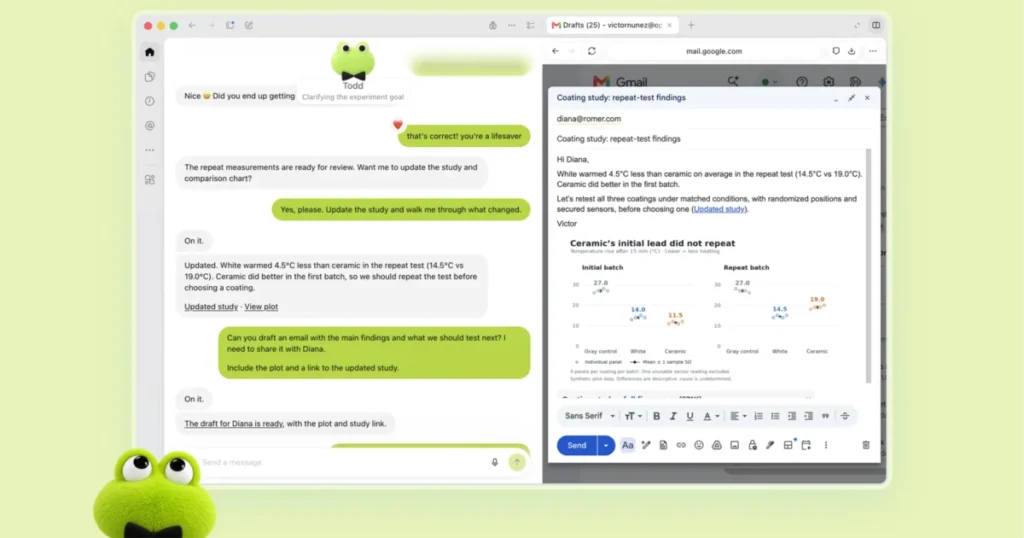
SAN FRANCISCO — OpenAI’s recent DevDay conference introduced a wave of technological advancements, but few announcements captured the imagination of developers and everyday users quite like "Dots." Touted for their groundbreaking "always-on" capabilities, these autonomous agents are designed to operate continuously in the background, bridging the gap between passive conversational assistants and active, persistent digital partners.
While the headline-grabbing keynote focused on the high-level vision of proactive AI, the fine print tucked away in OpenAI’s newly published help documentation reveals the true scope, mechanics, and security parameters governing how Dots function when humans are not directly interacting with them. As OpenAI begins its phased rollout of Dots to global markets, understanding these mechanics is crucial for professionals navigating the evolving landscape of productivity and digital automation.
Main Facts: What Are OpenAI’s "Dots"?
At their core, Dots are autonomous AI agents integrated into the ChatGPT ecosystem. Unlike traditional chatbots that remain entirely dormant until a user inputs a prompt, Dots are engineered to maintain contextual awareness, run scheduled tasks, and perform background research independently.
The foundational pillars of the Dots architecture include:
- The "Always-On" Paradigm: Dots can operate continuously, monitoring connected platforms, parsing data, and maintaining a persistent state across multiple conversations.
- Proactive Research: Dots can scan permitted sources for new information before a user explicitly asks, saving private notes and compiling updates for future reference.
- Plugin Integration: Leveraging ChatGPT’s vast plugin catalog—which now exceeds 4,000 supported applications—Dots can connect with productivity tools like calendars, Slack, Gmail, and GitHub.
- Strict Safety Boundaries: While autonomous, Dots are bound by rigid safety guardrails. During unprompted background operations, they are strictly read-only; they cannot send external messages, modify data via plugins, or control external browsers and computers without direct assignment.
Chronology: The Rollout and Evolution of ChatGPT Agents
The journey toward autonomous background agents has been a methodical progression for OpenAI, moving from static query-response models to sophisticated, multi-step agentic workflows.
1. The Foundation of Scheduled Tasks
Long before the introduction of Dots, OpenAI laid the groundwork for persistent automation through scheduled tasks within ChatGPT. Users could configure AI to handle one-time or recurring jobs, such as tracking changes in repositories or responding to basic triggers from workspace tools like Slack or Gmail. However, these early iterations lacked the persistent, adaptive context that defines modern agent frameworks.
2. The August WebMCP Deployments
In August, OpenAI—alongside tech giants like Shopify and Cloudflare—rolled out WebMCP deployments. This infrastructure provided AI agents with standardized, structured methods to interact with and navigate the inside of websites. While WebMCP gave agents the technical footing to operate on the web, it remained largely task-oriented rather than continuously observational.
3. DevDay and the Official Introduction of Dots
At DevDay, OpenAI officially unveiled Dots, showcasing their ability to run autonomously, maintain ongoing context, and monitor workflows. Accompanying the keynote, OpenAI published comprehensive help center guides detailing privacy, security, safety FAQs, and getting-started protocols.
4. Current Rollout Phase (Present Day)
OpenAI has initiated a staggered rollout of Dots:
- Pro Users: Rolling out to Pro tier subscribers across various global markets. Notably, users in the European Economic Area (EEA), Switzerland, and the UK are currently excluded due to regional regulatory frameworks.
- Business Premium: Available immediately across all supported ChatGPT regions.
- Enterprise, Edu, and Healthcare Workspaces: Offered via a beta version that is switched off by default, requiring administrative opt-in. Account-level access may take several days to fully propagate.
Supporting Data: Technical Capabilities and Limitations
The technical framework governing Dots relies on a delicate balance between autonomy and security. OpenAI’s documentation outlines distinct operational modes and structural constraints that dictate how Dots interact with the digital world.
Proactive Research vs. Recurring Scheduled Checks
OpenAI divides autonomous background work into two primary categories, each governed by different rule sets:
- Proactive Research: This occurs when the user is completely disengaged from the active chat interface. The Dot reads permitted connected sources and catalogs private notes. However, its toolset is heavily restricted. It cannot:
- Send messages or emails to other people.
- Modify or change content through third-party plugins.
- Control an external browser or a cloud computer.
- Recurring Scheduled Checks: Operating similarly to traditional automated workflows, a Dot can execute scheduled tasks—such as parsing a calendar every morning to brief a user on upcoming meetings—within the same conversational thread.
Memory Persistence and Data Management
Dots share plugin permissions across the broader ChatGPT ecosystem, including standard ChatGPT, ChatGPT Work, and Codex.
- Retained Memory: When a user disconnects an application, the Dot is blocked from future access, but it does not automatically purge memories or data it has already saved from that source.
- No Manual Editing: Presently, users cannot selectively view, edit, or delete individual memories stored by a Dot.
- The Reset Option: The only way to clear a Dot’s accumulated memory, saved notes, and scheduled tasks is to perform a complete system reset, which simultaneously deletes its associated conversation history.
Active Work vs. Background Work
While background operations are strictly read-only, the rules change when a Dot is actively assigned a working task. During active assignments, a Dot is permitted to operate its own cloud-based browser and cloud computer to complete the objective. To maintain institutional security, Enterprise administrators retain granular control, able to independently enable or disable cloud browser use, cloud network access, and cloud computer use across their organizational workspaces.
Official Responses and Governance
The introduction of always-on, autonomous agents has naturally sparked conversations surrounding data privacy, corporate compliance, and user safety. OpenAI’s official documentation emphasizes that every action a Dot takes—whether proactive or reactive—must pass through standard platform safety checks and system rules.
Custom Rules and Administrative Control
Users can establish "Custom Rules" to tailor what a Dot is permitted to do independently, allowing for varying degrees of flexibility. However, OpenAI has built-in fail-safes: Custom rules cannot override the hardcoded safety restrictions placed on proactive research.
For organizational deployments, Enterprise governance is paramount. OpenAI has engineered administrative dashboards specifically for workspaces, allowing IT leaders to toggle cloud computing features on or off. By defaulting the beta version to "off" in Enterprise, Edu, and Healthcare environments, OpenAI has handed organizations the immediate authority to vet the technology before allowing employees to deploy persistent agents within corporate networks.
Implications: What Dots Mean for Productivity and Digital Monitoring
The arrival of Dots marks a profound philosophical shift in how humans interact with artificial intelligence: moving from command-and-response tools to delegate-and-review digital teammates. This shift carries sweeping implications across multiple industries, particularly in professional environments centered on continuous monitoring.
Transforming Professional Monitoring Workflows
In fields like search engine optimization (SEO), digital marketing, and cybersecurity, professionals spend countless hours manually refreshing dashboards, checking competitor page changes, and monitoring campaign metrics. Traditionally, every check starts anew, requiring fresh queries and manual compilation.
Because proactive research allows a Dot to read permitted connected sources overnight, a marketing professional could wake up to a private note detailing overnight ranking shifts, competitor site updates, or sudden drops in campaign performance. Because the proactive mode is read-only, it acts as an intelligent early-warning radar system without the risk of an autonomous agent accidentally executing unauthorized changes to live campaigns.
The Integration Challenge: Analytics and SEO Tools
While the potential for automated monitoring is immense, its immediate utility depends heavily on plugin availability. As of late September, OpenAI’s documentation makes no direct mention of specialized analytics or heavy-duty SEO platforms natively integrated into the Dots framework. The primary integration examples remain standard productivity suites—calendars, communication platforms like Slack, and personal email accounts.
For Dots to become indispensable in specialized technical sectors, third-party developers will need to expand their plugin offerings to bridge specialized databases with ChatGPT’s agentic architecture.
Looking Ahead: The Future of Scaling Agents
OpenAI has already signaled that the current iteration of Dots is just the first step. Future updates are slated to introduce the ability for users to add multiple Dots, scaling individual agent output based on specific performance metrics, processing speeds, and monthly task allocations.
As the Enterprise beta expands and regional rollouts eventually target markets in the EEA, Switzerland, and the UK, the primary metric to watch will be ecosystem adoption. How quickly developers build out analytics-friendly plugins, and how trust is maintained around persistent, unprompted AI memory, will ultimately determine whether Dots become a standard fixture of the modern digital workplace or remain a specialized tool for early adopters.
For now, OpenAI’s DevDay reveal has irrevocably shifted expectations: the future of AI is no longer waiting for your command—it is already working in the background.