Fintech Soonicorn Niyo Slashing Losses by 58.1% in FY26 on the Back of AI Integration and Surging Travel Demand
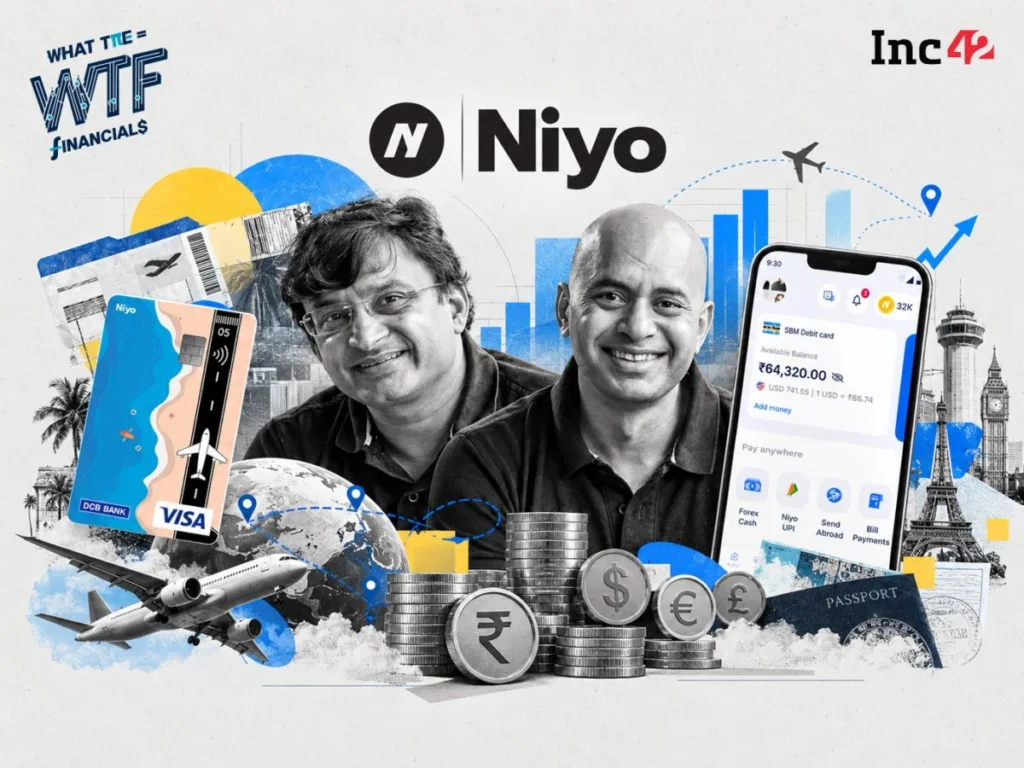
NEW DELHI — In a stellar display of financial consolidation and strategic pivots, Finnew Solutions Pvt Ltd, the parent company of prominent fintech soonicorn Niyo, has slashed its consolidated net losses by an impressive 58.1% for the financial year 2025–26 (FY26). According to regulatory filings, the company’s net loss contracted to INR 32.6 Cr, a sharp descent from the INR 77.9 Cr reported in the corresponding period of the previous fiscal year.
Driven by aggressive top-line growth, rigorous cost-containment measures, and widespread artificial intelligence (AI) adoption across operations, Niyo is inching closer to its coveted milestone of EBITDA profitability. This fiscal performance underscores a broader maturation wave sweeping India’s competitive fintech and neobanking ecosystem, where unsustainable cash-burn models are rapidly giving way to unit-economic discipline and diversified revenue streams.
1. Main Facts: Financial Highlights at a Glance
Niyo’s FY26 financial statements paint a picture of a high-growth neobanking platform successfully balancing customer acquisition with fiscal prudence.
- Net Loss Reduction: Slashed by 58.1% year-on-year (YoY) to INR 32.6 Cr in FY26, compared to INR 77.9 Cr in FY25.
- Operating Revenue Surge: Revenue from operations grew by a robust 80.1%, touching INR 158 Cr, up from INR 87.8 Cr in the previous fiscal year.
- Total Income: Bolstered by INR 16.2 Cr in other income and INR 4.2 Cr in other gains, Niyo’s total income for the year ended March 2026 stood at INR 178.5 Cr.
- EBITDA Improvements: EBITDA losses narrowed significantly by 60%, dropping from INR 77 Cr in FY25 to INR 32 Cr in FY26.
- Gross Revenue Breakdown: Gross revenue from the sale of services rose 52% to INR 187.6 Cr (from INR 123.4 Cr in FY25), which, after factoring in customer considerations of INR 29.6 Cr, translates to the reported operating revenue.
The startup attributes this financial turnaround to two primary drivers: an expanding top-line demand for cross-border travel and financial products, and structural efficiencies powered by AI integration across customer service, marketing, operations, and product development cycles.
2. Chronology: The Evolution and Expansion of Niyo
To understand Niyo’s trajectory to becoming a leading cross-border financial services soonicorn, it is essential to trace its evolution over the past decade:
- 2015 – Inception: Niyo was founded by industry veterans Vinay Bagri and Virender Bisht, with a vision to revolutionize digital banking experiences for retail customers in India.
- The Core Offering – Zero Forex Cards: The startup carved out a distinct niche by launching zero forex markup cards, enabling Indian travelers, students, and corporate globetrotters to load Indian Rupees (INR) and spend seamlessly across more than 180 countries. To achieve this, Niyo forged deep strategic alliances with prominent institutional banking partners, including DCB Bank, SBM Bank, and global payments giant Visa.
- Venture Capital Backing: Over successive fundraising rounds, Niyo successfully attracted nearly $180 Mn in total funding. Its cap table features top-tier institutional investors such as Accel, Lightrock, Multiples, Tencent, and Prime Venture Partners.
- Portfolio Diversification: Moving beyond its flagship zero forex product, the company progressively widened its service umbrella. It introduced international debit and credit cards, outward and inward remittances, forex cash, flight and hotel bookings, visa assistance, travel insurance, and international eSIMs.
- Strategic Acquisitions (FY26): In a bid to cement its market presence and diversify further into forex and cross-border payment verticals, Niyo signed a definitive agreement to acquire RemitX—the forex business of listed financial services firm Capital India Finance—for a consideration of INR 11.4 Cr.
3. Supporting Data: Revenue Segments and Expenditure Breakdown
A granular look at Niyo’s income streams and expenditure reveals the engine room powering the fintech’s fiscal recovery.
Revenue Segment Performance
Niyo’s monetization model relies heavily on its network partner services and technology-led financial offerings:
- Network Partner Services: This segment doubled year-on-year, surging to INR 132.4 Cr in FY26 and accounting for a massive 71% of the total gross top line.
- Technology-Led Financial Services: As the company’s second-largest segment, this division registered a modest 6% growth, moving from INR 44.2 Cr in FY25 to INR 46.9 Cr in FY26.
- Other Verticals: Foreign currency handling, travel currency cards, telegraphic transfers brought in INR 2.7 Cr, while other operating services contributed INR 5.6 Cr to the overall mix.
Expenditure Analysis
While operational efficiency was a key theme, Niyo’s total expenditure rose by 19.2% to INR 212.7 Cr in FY26, compared to INR 178.4 Cr in FY25, driven largely by aggressive marketing and team scaling.
- Employee Benefit Expenses: Accounting for the largest share of overall outlays (43.1%), employee costs stood at INR 91.7 Cr in FY26, marking a 16.7% increase from INR 78.6 Cr in the previous year as the firm invested in engineering, product, and AI talent.
- Marketing and Branding: In an effort to capture a larger share of the booming outbound Indian travel market, marketing expenses witnessed a sharp 215.5% spike, reaching INR 33.4 Cr (up from INR 10.6 Cr in FY25). This outlay constituted roughly 15.7% of total costs.
- Network and Card Fees: Driven by higher transaction volumes across its international card portfolio, spending under network and card fees grew 72.3% to INR 29.4 Cr, compared to INR 17 Cr in FY25.
4. Official Responses and Leadership Vision
Niyo’s executive leadership remains optimistic about the company’s trajectory, emphasizing a healthy balance sheet and a clear roadmap toward profitability.

Commenting on the fiscal performance, Gourav Kumar, Chief Financial Officer (CFO) of Niyo, stated:
"We concluded the year with a robust balance sheet, and deeper partnerships with our banking partners. This gives us the confidence and flexibility to continue investing in our technology and products. We expect to maintain our growth momentum and work towards becoming EBITDA positive soon."
Elaborating on the strategic vision for customer acquisition and product cross-selling, Kumar added:
"As we look ahead, our focus is not just on acquiring more customers, but on building deeper, longer-term relationships with the customers we already serve. With a strong cross-border customer base, we see a significant opportunity to bring more financial and travel products to them and create greater value over time. The strengthening of our product portfolio, combined with improved customer onboarding and acquisition, has supported this phenomenal growth."
5. Implications: What This Means for India’s Neobanking Landscape
Niyo’s FY26 financial results hold significant implications for the broader Indian fintech and neobanking ecosystem:
1. The Validation of AI-Led Unit Economics
For years, Indian neobanks struggled to justify customer acquisition costs (CAC) against thin monetization margins. Niyo’s success in cutting its net losses by nearly 58% while scaling operations by 80.1% demonstrates that artificial intelligence can successfully automate operational overheads. By streamlining customer service, optimizing marketing funnels, and automating product development, fintechs can scale revenues without expanding their cost bases at a linear rate.
2. Capitalizing on the Outbound Travel Boom
India is currently witnessing an unprecedented surge in international travel, driven by rising disposable incomes, easing visa regimes, and a growing appetite for global exploration among Gen Z and millennial demographics. By positioning itself as an end-to-end travel fintech companion—ranging from zero forex cards to eSIMs and travel insurance—Niyo has successfully captured a high-intent, high-value consumer base that traditional banks often fail to service efficiently.
3. Consolidation and Inorganic Growth
The planned acquisition of RemitX for INR 11.4 Cr signals an industry-wide shift toward consolidation. As funding winters and regulatory scrutiny mature the market, well-capitalized soonicorns are utilizing inorganic routes to absorb specialized legacy forex businesses, scale distribution channels, and fortify their B2B and retail cross-border infrastructure.
Outlook
With a fortified balance sheet, a pending acquisition to expand its forex playbook, and narrowing EBITDA losses, Niyo is uniquely positioned to transition from a high-burn startup into a self-sustaining, profitable market leader. As the company pushes closer to its EBITDA-positive goals, all eyes will be on how effectively it leverages AI and deep banking partnerships to dominate India’s burgeoning cross-border financial services sector.