Goldman Sachs Offloads 53.4 Lakh Shares of Foodtech Giant Eternal in INR 168.7 Cr Block Deal; BofA Steps In
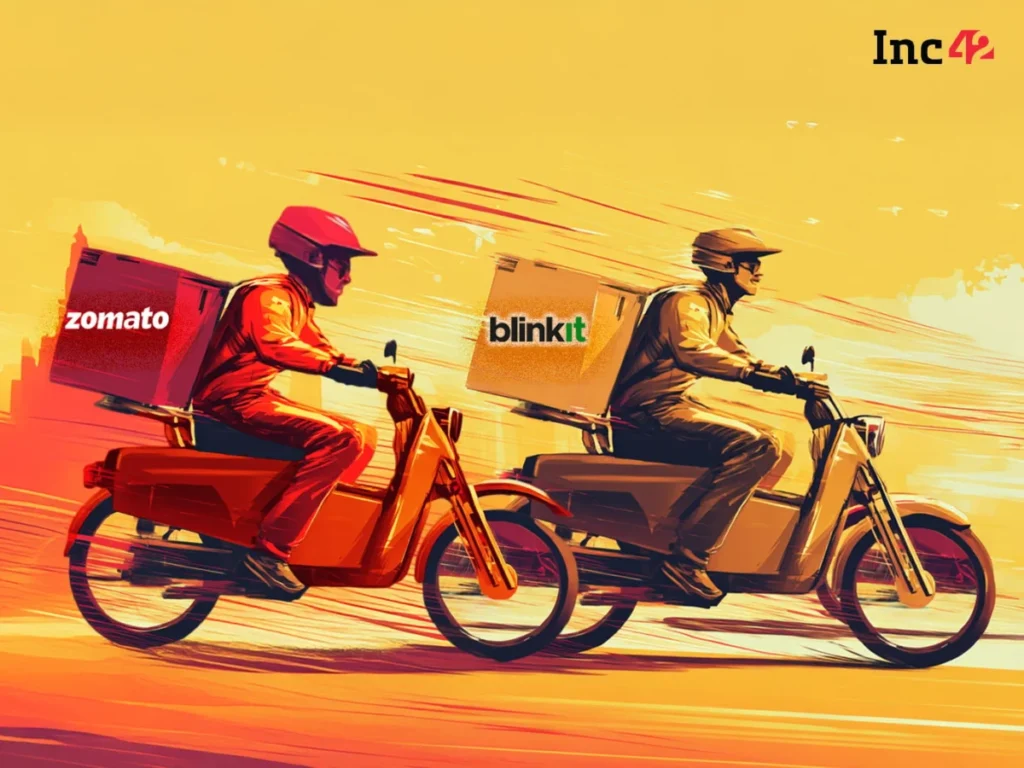
NEW DELHI — In yet another high-profile secondary market transaction within India’s burgeoning foodtech and quick commerce sectors, global financial powerhouse Goldman Sachs has successfully offloaded 53.4 lakh shares of Eternal. Executed through a significant block deal on the National Stock Exchange (NSE), the transaction amounted to INR 168.7 Cr.
The strategic share sale highlights a growing trend of institutional investors booking profits amid a sustained rally in Eternal’s stock price, driven by robust financial turnarounds and the dominant market positioning of its quick commerce arm, Blinkit. While Goldman Sachs capitalized on the elevated stock valuations to trim its holdings, the equity was swiftly absorbed by another Wall Street titan, Bank of America (BofA), signaling continued institutional confidence in the listed tech giant’s long-term trajectory.
1. Main Facts and Transaction Breakdown
According to comprehensive trading data released by the NSE, the latest block deal involved multiple precise financial mechanics:
- The Seller: Goldman Sachs, operating via its dedicated European entity, Goldman Sachs Bank Europe SE.
- The Buyer: Bank of America, executing the purchase through its affiliate, BofA Securities Europe.
- Volume of Shares: 53,40,000 (53.4 Lakh) equity shares.
- Transaction Value: INR 168.7 Cr.
- Execution Price: INR 316 per share.
- Discount Margin: The shares were offloaded at a discount of more than 2.6% compared to Eternal’s closing price on the preceding Thursday. On the BSE, Eternal’s shares had closed the previous trading session up 2.77% at INR 324.35.
This transaction underscores the fluid nature of institutional portfolios in India’s public markets, where foreign institutional investors (FIIs) frequently rebalance assets to lock in gains following sharp market rallies. Despite the discounted entry price secured by BofA Securities Europe, the seamless absorption of over 53 lakh shares reflects deep market liquidity and sustained appetite for dominant consumer-tech equities.
2. Chronology of Institutional Movements in Eternal
The Goldman Sachs-BofA transaction does not occur in a vacuum; rather, it is the latest in a string of high-stakes capital movements surrounding Eternal over the past two quarters. A chronological review of institutional activity highlights a pattern of profit-booking by early backers, seamlessly counterbalanced by fresh or expanding positions from alternative global funds.
Early September 2024: The Massive BNP Paribas and Millennium Block Deals
Just weeks prior to the current transaction, Eternal witnessed one of its largest block deals of the year. In early September, French financial services giant BNP Paribas alongside US-based hedge fund Millennium Management executed a massive collective sell-off.
- The two institutional heavyweights together offloaded over 9.9 crore shares of the listed foodtech giant.
- The total transaction value for that multi-party block deal touched an astounding INR 3,264.8 Cr.
- Despite the sheer volume of shares dumped onto the public market, the stock absorbed the supply with remarkable resilience, pointing toward strong underlying demand.
October to November 2024: Steady Upward Trajectory
Following the September block deals, Eternal’s stock avoided any prolonged downward pressure. Instead, retail and institutional buying helped the stock maintain an upward bias. Over the trailing three months preceding the Goldman Sachs deal, Eternal’s share price surged by nearly 10%. On a year-to-date (YTD) basis, the counter has posted an impressive 16.2% gain, outperforming several traditional indices and matching the growth narratives of top-tier consumer tech stocks.
Late November 2024: Goldman Sachs Trims Stake
Capitalizing on this persistent bullish momentum, Goldman Sachs stepped in to monetize a portion of its holdings. By executing the INR 168.7 Cr block deal at INR 316 per share, the investment bank successfully realized substantial capital gains, clearing the path for BofA Securities Europe to step in as a primary stakeholder of the newly acquired block.
3. Supporting Data and Financial Performance
The willingness of institutional giants like Goldman Sachs to sell—and entities like Bank of America to buy—is deeply anchored in Eternal’s recent financial results. Contrary to skepticism surrounding the cash-burn heavy quick commerce ecosystem, Eternal has demonstrated a rare ability to scale revenues while simultaneously expanding its bottom-line profitability.
Q1 FY27 Financial Highlights
Eternal’s financial disclosures for the first quarter of fiscal year 2027 paint a picture of aggressive operational growth:
- Consolidated Net Profit: The company reported a consolidated net profit of INR 92 Cr for Q1 FY27. This represents a phenomenal 3.7x (nearly 300%) increase compared to the INR 25 Cr net profit recorded in the corresponding quarter of the previous fiscal year.
- Sequential Dynamics: While year-on-year growth was staggering, sequential performance showed a minor normalization, with profit dipping approximately 47% compared to the previous quarter due to seasonal marketing spends and expansion outlays.
- Operating Revenue: Revenue from operations witnessed explosive expansion, soaring 182% year-on-year (YoY) and 17% quarter-on-quarter (QoQ) to touch INR 20,211 Cr during the review period.
The Blinkit Factor and Quick Commerce Dominance
The primary engine powering Eternal’s financial ascent—and by extension, its soaring stock valuation—is its quick commerce arm, Blinkit.
Over the past year, the instant delivery sector in India has transformed into a high-stakes battlefield. Traditional quick commerce players have been forced to defend their turfs against an influx of aggressive new entrants and diversified tech giants, including:
- Rapido’s quick commerce vertical, Ownly
- E-commerce titan Flipkart scaling up its rapid delivery pilots
- Hyper-local instant delivery startups like Swish
Despite this intensifying competitive landscape—which has naturally triggered concerns regarding margin compression and customer acquisition costs—Blinkit has successfully defended, and in some regions expanded, its market share. By optimizing its dark store supply chains, improving inventory turnover, and leveraging high-density urban delivery networks, Blinkit has transformed from a cash-draining auxiliary service into Eternal’s primary profit and valuation driver.
4. Official Responses and Market Reactions
As is customary with high-value secondary market block deals involving global investment banks, official public statements from the direct corporate entities—Eternal, Goldman Sachs, and Bank of America—have remained measured, focusing primarily on standard regulatory compliance filings mandated by the Indian stock exchanges (BSE and NSE).
Regulatory Filings and Transparency
Both Goldman Sachs and Bank of America completed the transaction through standard block-deal windows, ensuring complete transparency and adherence to Securities and Exchange Board of India (SEBI) guidelines. Market regulators view these transparent, exchange-facilitated bulk trades as healthy indicators of institutional liquidity, allowing large-scale capital reallocations without destabilizing the continuous trading market for retail investors.
Market Analyst Perspectives
Market analysts and brokerage houses have offered nuanced interpretations of the transaction:
- The Bearish/Cautious Take: Some analysts suggest that repeated large-scale block deals—such as the massive September exits by BNP Paribas and Millennium Management, followed now by Goldman Sachs—indicate that institutional investors believe Eternal’s stock may be nearing valuation caps in the short term. Offloading shares at a 2.6% discount reflects an eagerness to lock in profits rather than risk exposure to potential macroeconomic headwinds or aggressive margin pressures in the quick commerce sector.
- The Bullish Take: Conversely, prominent market strategists emphasize the counter-party behavior. The fact that BofA Securities Europe immediately deployed INR 168.7 Cr to absorb the entire block demonstrates that institutional smart money remains fundamentally bullish on Eternal. Rather than signaling a loss of faith in the company, the transaction is viewed as a routine portfolio rebalancing exercise where early-stage risk capital is replaced by institutional consolidation.
5. Broader Market Implications
The successful execution of the Goldman Sachs-BofA block deal carries several critical implications for India’s broader startup ecosystem, the foodtech industry, and the evolving quick commerce landscape.
A Maturing Tech Ecosystem
The recurring participation of global financial heavyweights like Goldman Sachs, Bank of America, BNP Paribas, and Millennium Management in Eternal’s equity lifecycle illustrates the deep institutionalization of India’s listed tech companies. Unlike the early days of Indian tech IPOs—where public market debuts were frequently followed by chaotic, panic-driven sell-offs from early-stage venture capital funds—the current phase features sophisticated, orderly secondary market handoffs. Institutional capital is rotating smoothly, providing a blueprint for upcoming tech unicorns eyeing public listings.
Validation of the Quick Commerce Model
For years, skeptics argued that 10-minute and 15-minute delivery models were economically unviable due to high delivery costs, high SKU return rates, and low average order values (AOV). Eternal’s strong financial numbers—highlighted by a multi-fold jump in net profit and massive operating revenue growth—serve as a powerful counter-narrative. The willingness of global banks to park hundreds of crores in these equities validates the operational viability of quick commerce at scale.
Increased Scrutiny on Hyper-Competition
Even as institutional investors display confidence through multi-crore block deals, the underlying market dynamics remain fiercely contested. The entry of deep-pocketed competitors like Flipkart, alongside agile regional players like Swish and Rapido’s Ownly, means Eternal cannot afford to rest on its laurels. Blinkit’s ability to maintain its market dominance will depend heavily on capital efficiency, supply chain technology, and dark store unit economics.
Outlook for Eternal’s Stock
Moving forward into the remainder of FY27, market watchers will closely monitor how Eternal manages its operational margins amidst ongoing price wars in the quick commerce and food delivery sectors. For retail investors, the seamless absorption of large blocks of shares by institutional buyers like Bank of America serves as a stabilizing psychological anchor, mitigating fears of prolonged downward pressure from institutional liquidations.
As Eternal continues to consolidate its leadership across both food delivery and instant grocery commerce, transactions of this magnitude will likely remain a defining characteristic of its journey as a publicly traded Indian tech titan.