Empowering Enterprise Cloud Architecture: Amazon Web Services Introduces Cross-Account Copy for Amazon EBS Volume Clones
SEATTLE, WASH. — In a significant enhancement to its core cloud storage offerings, Amazon Web Services (AWS) has announced the official rollout of cross-account copy capabilities for Amazon Elastic Block Store (Amazon EBS) Volume Clones. This powerful new functionality bridges the gap between isolation and accessibility, allowing cloud administrators and DevOps teams to seamlessly replicate and securely distribute instant, point-in-time volume copies across disparate AWS accounts.
By integrating with AWS Resource Access Manager (RAM) and AWS Key Management Service (AWS KMS), the new capability aims to streamline environment refreshes for development, testing, and analytics while strictly adhering to enterprise security baselines and production environment isolation protocols.
Main Facts: What is Cross-Account EBS Volume Clones?
Building upon the foundation of Amazon EBS Volume Clones—which AWS launched last year to enable instantaneous, within-Availability-Zone volume duplication—the new cross-account copy feature extends this utility past organizational boundaries.
Key technical and operational facts about the release include:
- Cross-Account Replication: Users can now generate exact point-in-time copies of EBS volumes and transfer or recreate them within entirely separate AWS accounts.
- Target-Account Re-Encryption: Upon copying to a secondary account, administrators have the option to re-encrypt the data utilizing a designated AWS Key Management Service (AWS KMS) key native to the target account, ensuring strict adherence to multi-tenant or multi-account security boundaries.
- Streamlined Integration with AWS RAM: Volume sharing is coordinated securely through AWS Resource Access Manager, allowing resource owners to share blocks either individually or as part of broader AWS Organizations resource shares.
- Immediate Availability: The feature is live today across all AWS Regions that currently support standard Amazon EBS Volume Clones.
Chronology of Development: From Instant Copies to Multi-Account Governance
To understand the weight of this release, it is necessary to examine how AWS has systematically evolved its block-storage ecosystem over recent years.
Phase 1: The Quest for Instantaneous Backups
Historically, creating copies of large-scale production block storage required taking traditional EBS snapshots, which—while reliable—demurred in terms of speed and initial performance overhead when provisioning new volumes from multi-terabyte datasets. Developers and administrators routinely sought faster ways to spin up staging environments without enduring lengthy data hydration cycles.

Phase 2: The Introduction of EBS Volume Clones
Addressing this bottleneck, AWS introduced Amazon EBS Volume Clones. This feature allowed engineers to create instant, zero-wait, point-in-time copies of their EBS volumes directly within the same Availability Zone. By leveraging underlying storage pointer mechanisms rather than traditional physical data duplication upfront, teams could instantiate working copies of massive databases and high-performance file systems in mere seconds.
Phase 3: Solving the Multi-Account Challenge
While Volume Clones drastically improved intra-account workflows, enterprise architectures heavily favor multi-account strategies (often managed via AWS Control Tower or AWS Organizations) to sandbox production workloads away from development, staging, and sandboxing environments. Confining clones to a single account forced organizations to perform cumbersome intermediate snapshot sharing workflows, defeating much of the velocity promised by native cloning.
With today’s announcement, AWS bridges this architectural divide, synthesizing the speed of volume clones with the organizational flexibility of multi-account governance.
Supporting Data, Workflows, and Architecture
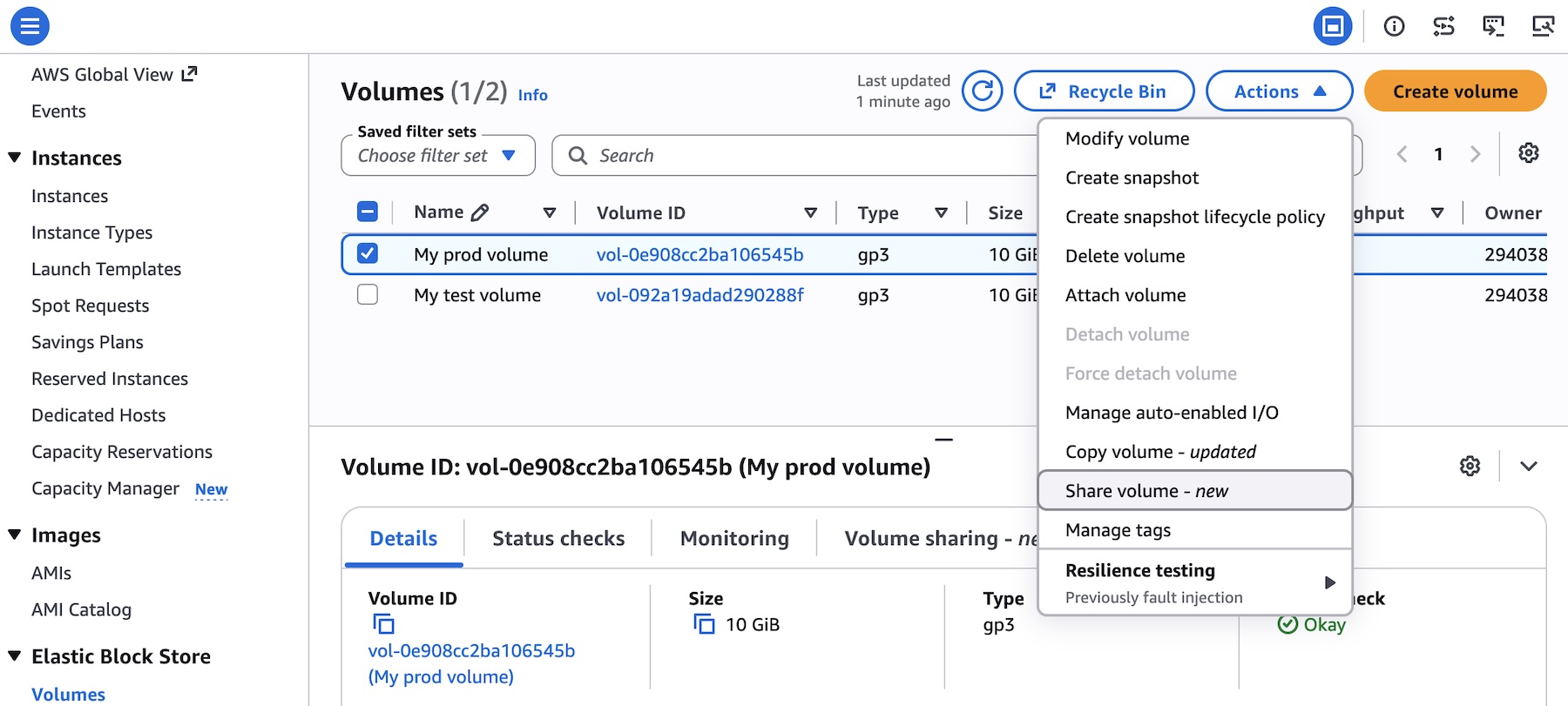
The operational mechanics of cross-account EBS volume cloning are engineered to minimize friction while maximizing access control. The lifecycle of a cross-account clone spans a structured sequence of permissions management, resource sharing, and execution.
The Step-by-Step Operational Workflow
- Initiation via the Amazon EBS Console: A volume owner navigates to the Amazon EBS console, selects the source production volume, and chooses the Share volume option.
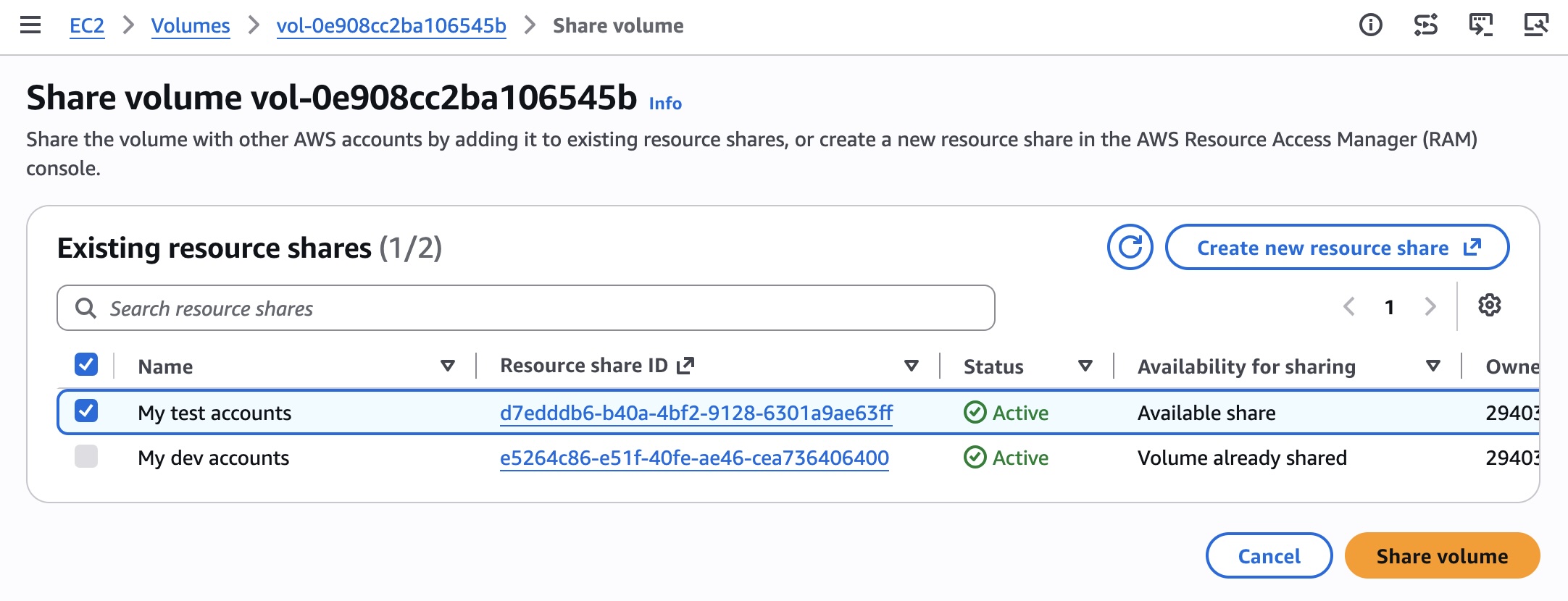
- Resource Sharing via AWS RAM: The volume is appended to an existing resource share or a newly minted one within the AWS Resource Access Manager console. RAM governs who can view and interact with the resource across AWS accounts or an entire AWS Organization.
- Verification in Volume Details: Volume owners can immediately verify the sharing status via the dedicated Volume sharing tab on the volume’s detail page.
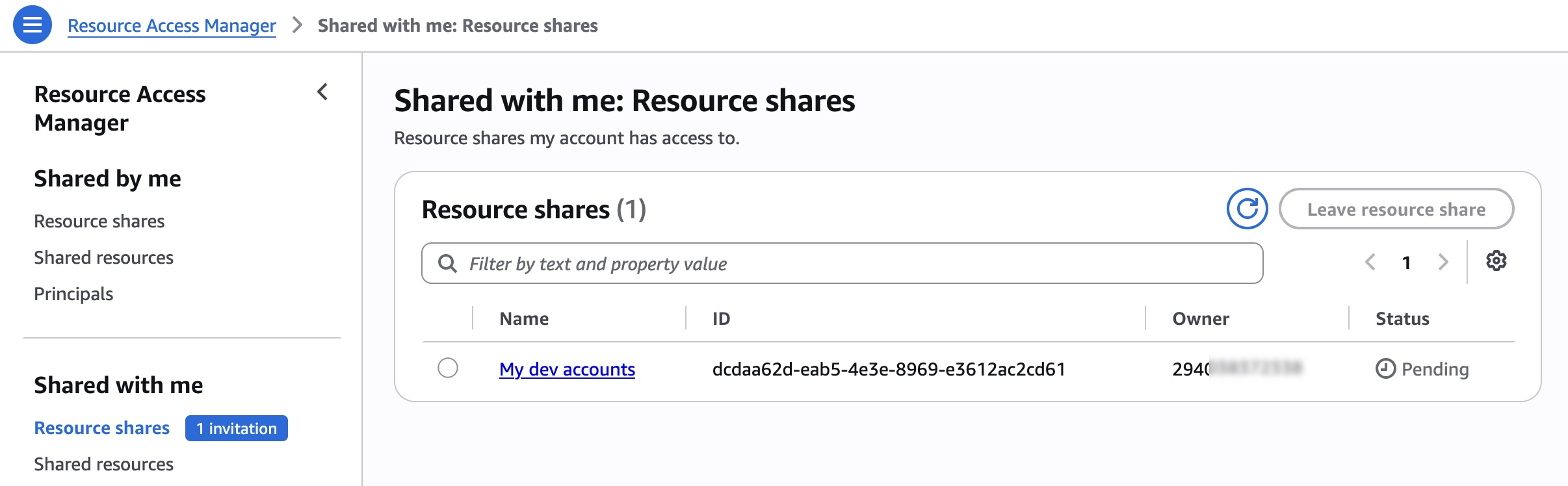
- Acceptance by the Target Account: The designated target AWS account must log into its local RAM console to formally accept the incoming resource share.
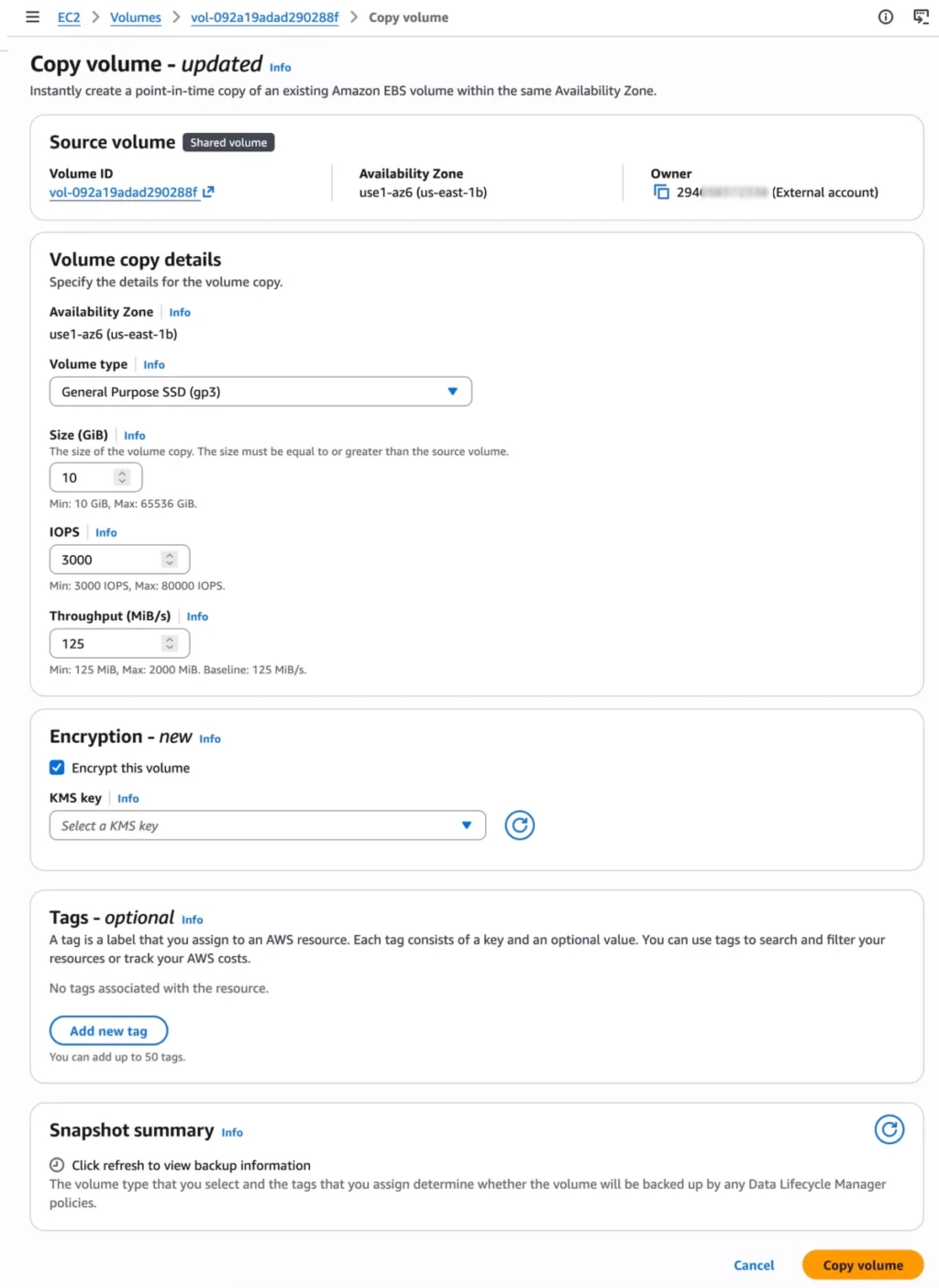
- Execution of Copy and Re-Encryption: Once accepted, the shared volume populates within the target account’s EBS console interface. The target administrator selects Copy volume, at which point they can allocate custom performance tiers, assign tags, and apply a target-account-specific AWS KMS encryption key.
Programmatic and AI-Driven Integration
Modern cloud engineering teams rarely rely solely on graphical management consoles. Recognizing this, AWS has ensured full programmatic support for cross-account volume clones via standard APIs and AWS Command Line Interface (CLI) commands. Furthermore, organizations leveraging modern developer tooling can utilize the AWS MCP Server and associated plugins to query documentation, automate volume sharing configurations, and manage APIs directly through their preferred AI-assisted coding environments.
Official Responses and Strategic Outlook
While AWS spokespeople and engineering leaders continue to gather telemetry and user feedback via communities such as AWS re:Post for Amazon EBS, early reactions from the cloud architecture community highlight the profound impact this feature will have on enterprise software delivery lifecycles.
Enterprise architects have long wrestled with the paradox of data freshness versus environment isolation. To properly debug a production defect or test a major database migration, staging environments must mirror production down to the exact block structure. However, exposing production credentials, keys, or direct storage attachments to development accounts introduces unacceptable security vulnerabilities.
By enabling cross-account volume cloning coupled with granular, target-account KMS re-encryption, AWS has effectively solved this dilemma. Development teams can now draw down the absolute latest production application states into isolated sandboxes, sanitize or manipulate the data under distinct cryptographic keys, and run rigorous tests without ever exposing the core production boundary.
Implications for Enterprise IT and DevOps
The deployment of cross-account Amazon EBS Volume Clones carries far-reaching implications across several technical domains:

1. Accelerated CI/CD and Testing Velocity
Continuous integration and continuous deployment (CI/CD) pipelines rely heavily on realistic test data. When staging environments suffer from stale or artificially generated datasets, subtle bugs frequently evade detection until reaching production. Cross-account clones allow automated pipelines to continuously refresh testing architectures with live, high-fidelity data safely isolated in dedicated test accounts.
2. Enhanced Security and Compliance Posture
Compliance frameworks—such as SOC 2, HIPAA, and PCI-DSS—mandate strict segregation of duties and data compartmentalization between production and non-production environments. The ability to route clones across accounts while simultaneously re-encrypting them under separate KMS keys ensures that developers operating in the sandbox environment have zero cryptographic access to the production master keys, satisfying rigorous auditing requirements.
3. Storage Optimization and Cost Management
Because volume clones build upon efficient underlying block-storage mechanisms, organizations avoid the financial and performance penalties traditionally associated with full-scale data duplication. Teams can spin up multiple isolated copies across different business units or project accounts without unnecessarily multiplying raw underlying storage footprints until writes diverge significantly from the source.
Availability and Next Steps
Cross-account volume clones for Amazon EBS are generally available starting today. Organizations operating workloads in supported AWS Regions can immediately access the capability through the Amazon EC2 and EBS consoles, or via automated infrastructure-as-code (IaC) templates and API scripts.
As enterprises continue to scale out complex multi-account AWS environments, features like cross-account EBS cloning represent a crucial step forward—harmonizing the twin enterprise imperatives of breakneck development velocity and uncompromising security governance. Administrators are encouraged to review the official Amazon EBS User Guide for deep-dive technical documentation and to submit feedback through AWS Support channels or the AWS re:Post community forums.