Hyundai Motor Group’s $15.5 Billion Bet: A Strategic Shift for India’s Automotive Future
By Lakshya Rana
October 14, 2026
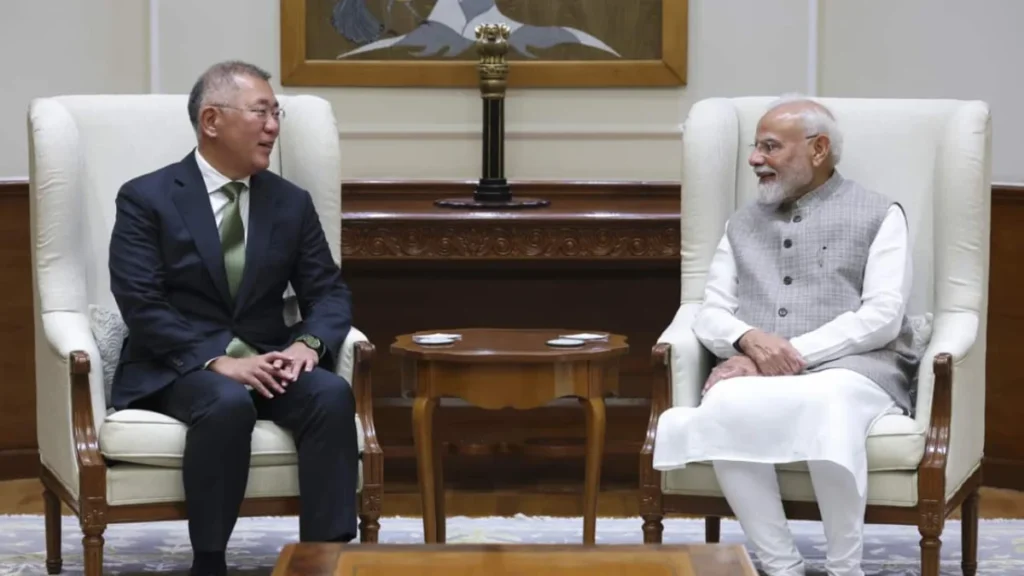
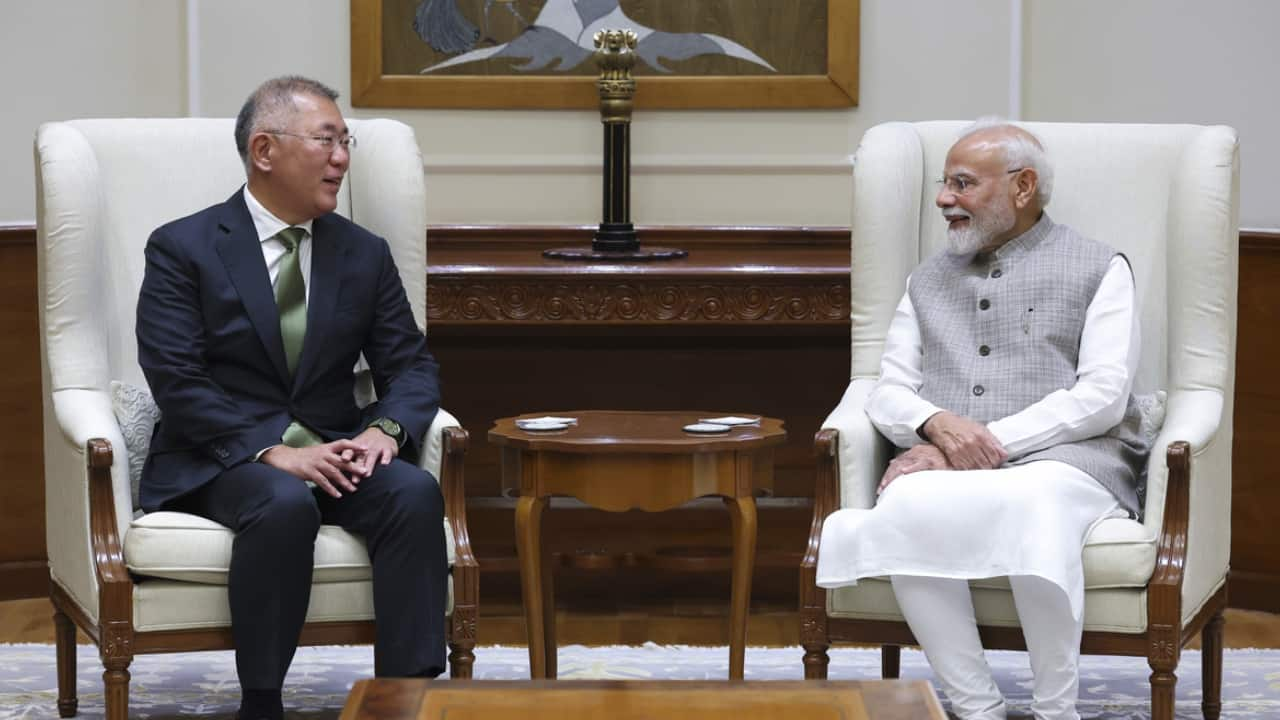
In a monumental development for the Indian automotive sector, Hyundai Motor Group (HMG) has officially committed to a massive investment of $15.5 billion in India. This capital infusion, set to span through 2032, represents one of the largest foreign direct investments (FDI) in the history of the Indian manufacturing landscape. The announcement was made by Euisun Chung, Executive Chair of Hyundai Motor Group, following a high-level meeting with Prime Minister Narendra Modi in New Delhi on Tuesday.
This commitment underscores a pivotal shift in the global automotive supply chain, positioning India not merely as a high-volume consumer market, but as a critical export hub and a nerve center for next-generation mobility technology.
Main Facts: The Scope of the Investment
The $15.5 billion investment is designed to be multi-faceted, targeting infrastructure expansion, research and development (R&D), and the electrification of the company’s product portfolio. According to industry insiders, the funds are earmarked for three primary pillars:
- Manufacturing Capacity Expansion: Hyundai aims to significantly increase its production footprint in India, moving toward a goal of exceeding 1.5 million units annually by 2032. This includes the modernization of existing Chennai facilities and the scaling of the Talegaon plant acquired from General Motors.
- Electric Vehicle (EV) Ecosystem: A substantial portion of the capital will be directed toward building a localized EV supply chain. This involves the construction of a dedicated battery gigafactory and the development of an "India-first" EV platform tailored to the unique climate and road conditions of the subcontinent.
- Advanced Technology and Software: Hyundai is looking to integrate its "Software-Defined Vehicle" (SDV) architecture into its Indian offerings, fostering local talent in software engineering, AI, and autonomous driving research.
Chronology: The Journey to $15.5 Billion
The journey leading to this historic announcement has been a decade in the making, reflecting Hyundai’s deepening ties with the Indian economy.
- 2015–2018: Strengthening the Foundation. Hyundai focused on solidifying its position as India’s second-largest automaker, consistently upgrading its product lineup and establishing the Creta as a segment-defining SUV.
- 2021: The Pivot to Electrification. The group signaled its intent to transition by launching the Ioniq 5 in India, marking its entry into the premium EV space.
- 2023: The Talegaon Acquisition. Hyundai finalized the acquisition of the General Motors plant in Talegaon, Maharashtra. This was the first major signal that the company intended to expand its manufacturing capacity beyond the Chennai cluster.
- 2025: The Regulatory Push. Throughout 2025, the Indian government’s PLI (Production Linked Incentive) schemes and the "Make in India" initiative created a favorable climate for global manufacturers to localize production.
- October 2026: The Formal Commitment. In a meeting at the Prime Minister’s residence in New Delhi, Euisun Chung presented the roadmap for the next six years, culminating in the $15.5 billion commitment.
Supporting Data: Why India?
To understand why a global titan like Hyundai would commit such a massive sum, one must look at the data driving the decision.
Market Penetration and Growth
India is currently the third-largest automotive market in the world. With a growing middle class and increasing urbanization, the demand for SUVs and premium mobility solutions has surged. Hyundai has successfully maintained a double-digit market share in India for years, proving its brand resonance with the Indian consumer.
Export Potential
Hyundai Motor India Limited (HMIL) has already established itself as a top exporter. By 2032, the company aims to use its Indian facilities to serve markets in Africa, the Middle East, and Southeast Asia. The $15.5 billion investment will upgrade these facilities to produce globally compliant vehicles, making India a "hub for the world."
Economic Multiplier Effect
Industry experts estimate that for every dollar invested in the automotive manufacturing sector, the local economy gains approximately three dollars through secondary jobs in logistics, component manufacturing, and retail services. This investment is projected to create over 50,000 direct and indirect jobs, contributing significantly to the government’s "Atmanirbhar Bharat" (Self-Reliant India) vision.
Official Responses and Strategic Rationale
Following the meeting with the Prime Minister, the office of the Prime Minister lauded the investment as a "testament to the growing confidence of global giants in India’s manufacturing prowess."
Euisun Chung’s Vision:
In his statement to the press, Chung emphasized that Hyundai views India as a strategic partner rather than just a market. "India is not just a destination for us; it is a center of innovation. Our investment of $15.5 billion is a commitment to the people of India, our workers, and the vision of a sustainable, green mobility future. We are here to build, to invent, and to scale alongside India’s incredible growth story."
Government Perspective:
Union Ministers involved in the trade and industry sectors have noted that Hyundai’s investment will fast-track the development of the EV battery infrastructure. By localizing the value chain, the cost of electric vehicles is expected to drop, effectively bridging the price gap between internal combustion engine (ICE) vehicles and EVs.
Implications for the Future
The implications of this investment are profound and wide-reaching.
1. Competitive Pressure on Domestic Rivals
The sheer scale of Hyundai’s investment puts pressure on domestic players like Tata Motors and Mahindra & Mahindra, as well as competitors like Maruti Suzuki and Kia. To maintain market share, these companies will likely need to accelerate their own R&D and capital expenditure plans, potentially leading to a "golden age" of competition in the Indian automotive space.
2. The EV Revolution
With Hyundai pumping billions into battery technology and charging infrastructure, the "range anxiety" and high-cost barriers currently plaguing the Indian EV market are likely to diminish. The arrival of an India-specific, affordable EV platform could be the tipping point that transitions the mass market from petrol/diesel to electric.
3. Strengthening the Supply Chain
The investment is expected to bring a host of Tier-1 and Tier-2 component suppliers from South Korea to India. This influx of technical expertise and high-end manufacturing processes will elevate the overall quality standards of the Indian automotive ecosystem, potentially leading to a higher localization of high-tech components like semiconductors and power electronics.
4. Job Creation and Skill Development
Beyond the raw numbers of job creation, the focus on software-defined vehicles will require a shift in the labor force. Hyundai’s commitment to setting up tech hubs will likely lead to partnerships with Indian universities and technical institutes, fostering a generation of engineers specialized in automotive software and sustainable energy systems.
Conclusion
The $15.5 billion commitment by Hyundai Motor Group is a landmark event that signals India’s maturation as a global manufacturing powerhouse. As the world transitions toward cleaner, smarter mobility, Hyundai’s strategy aligns perfectly with India’s long-term economic goals.
While the challenges—ranging from energy grid readiness to the complexities of supply chain management—remain, the sheer scale of this investment suggests that the roadmap for the next decade is clear. By 2032, the landscape of Indian roads will look radically different, characterized by quieter, cleaner, and more intelligent vehicles, all built within the country. For India, this is more than just a business deal; it is a vital step toward securing its place at the center of the global automotive revolution.