Judicial Independence Under Scrutiny: Former Justice Sanjay Kishan Kaul’s Memoir Sparks Political Firestorm
By Editorial Desk
October 25, 2026
The delicate balance of power between the executive and the judiciary—a cornerstone of Indian democracy—has been thrust into the national spotlight following the emergence of excerpts from the forthcoming memoir of former Supreme Court judge, Justice Sanjay Kishan Kaul. Titled Without Fear of Favour, the manuscript has become a flashpoint for a fresh political confrontation, with the Indian National Congress demanding an urgent audit of the judicial appointment process and the alleged erosion of institutional autonomy under the Modi administration.
The Core Allegations: A Breach of Institutional Firewall
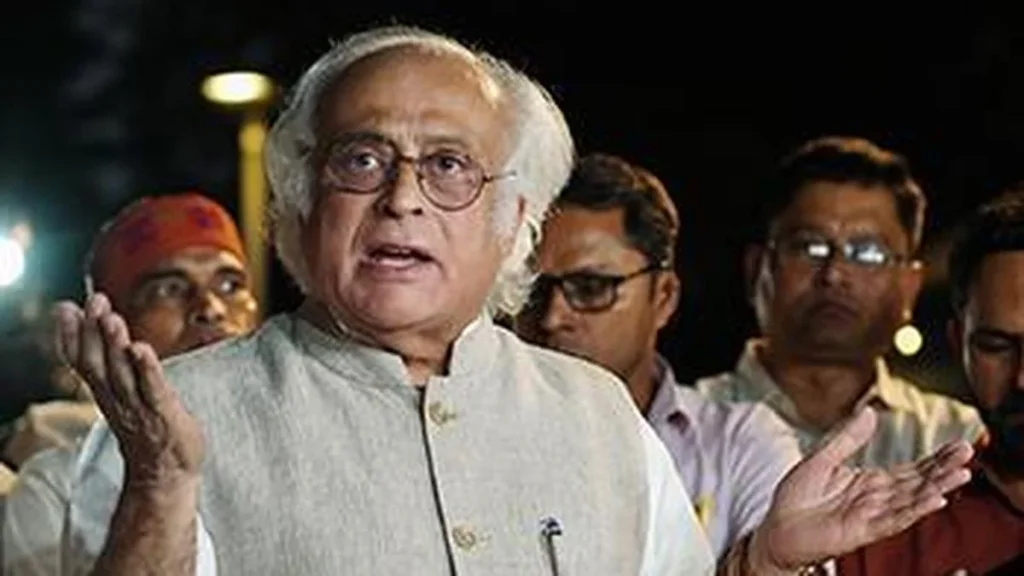
The manuscript, which has begun circulating in political and legal circles prior to its official release, paints a sobering picture of the pressures exerted upon the highest court in the land. According to Congress General Secretary Jairam Ramesh, Justice Kaul’s writings provide a rare, documented account of the "day-to-day interference" by the executive in judicial affairs.
Central to the controversy are three specific allegations detailed by Justice Kaul:
- Executive Pre-approval: The memoir suggests that the government has sought—and in some instances, secured—a form of pre-approval for judicial candidates before formal Collegium meetings take place, effectively undermining the constitutional role of the Collegium.
- The "Caste" Query: Justice Kaul reportedly highlights a deeply troubling instance where the government raised "absurd" and intrusive questions regarding the caste of a judicial candidate belonging to a minority community, a move critics argue was designed to influence the diversity and independence of the bench.
- Bench Rearrangement: Perhaps most damning is the revelation regarding the Prevention of Money Laundering Act (PMLA) cases. Justice Kaul describes a scenario where a bench he presided over sought to reconsider specific aspects of a previous ruling. Subsequently, the matter was reassigned to a different bench without any formal consultation with him, suggesting a systemic manipulation of the court’s roster to influence outcomes in sensitive cases.
Chronology of Tensions: A Pattern of Friction
The allegations brought forward by Justice Kaul do not exist in a vacuum. For years, the relationship between the Supreme Court and the Ministry of Law and Justice has been characterized by intermittent friction, particularly regarding the Memorandum of Procedure (MoP) for judicial appointments.
- 2022-2023: The Collegium, then led by Chief Justice of India D.Y. Chandrachud, frequently clashed with the government over the "inordinate delay" in clearing names for high court and Supreme Court appointments.
- Early 2024: Tensions peaked when the government returned several names recommended by the Collegium, citing "national interest" and "background concerns," prompting unprecedented public pushback from the Supreme Court.
- Mid-2024: Discussions regarding the "engagement" between the CJI’s office and the executive branch became a matter of public debate. Critics began to point to a perceived "deference" by the apex court toward the government in high-stakes political litigation.
- October 2026: The release of excerpts from Without Fear of Favour provides the first "insider" validation of what legal observers have long suspected: that the executive’s informal influence extends deep into the administrative functioning of the court.
The Debate Over Judicial Deference
The Congress party has specifically targeted the tenure of former CJI D.Y. Chandrachud, citing Justice Kaul’s observations that the former CJI was "too deferential" to the government. Jairam Ramesh emphasized that when a former Chief Justice acknowledges that the government engages with the CJI prior to appointments, it signals a systemic normalization of executive intervention.
"When there is pressure to obtain government approval for judicial appointments, and when benches hearing sensitive cases are altered, one must ask—in the interest of safeguarding democracy—if this does not constitute pressure on the judiciary," Ramesh stated in his address to the press.
Legal analysts note that the core of the grievance is not merely the interaction between the two branches, but the nature of the interaction. While the executive is a constitutional stakeholder in the appointment process, the Supreme Court has historically maintained that the primacy of the Collegium is non-negotiable. If, as Justice Kaul suggests, that primacy is being eroded through back-channel negotiations and the weaponization of bureaucratic delays, the foundational principle of "checks and balances" is effectively nullified.
Institutional Implications: Safeguarding Democracy
The implications of these revelations are profound. If the judiciary is perceived as being susceptible to executive pressure, public trust—the ultimate currency of the courts—is severely diminished.

1. The Erosion of Public Confidence
The judiciary derives its authority not from the power of the purse or the sword, but from the faith of the citizenry. If citizens believe that the court is "managed" or "deferential" to the political executive, the legitimacy of every verdict, particularly those involving the government, becomes a subject of intense public skepticism.
2. The Threat to Constitutionalism
The PMLA case reassignment mentioned by Justice Kaul serves as a cautionary tale. When the "master of the roster" (the CJI) or the administrative wing of the court allows for the reassignment of benches based on the sensitivity of a case, it creates a "chilling effect" on the judiciary. Judges may become less inclined to challenge the state if they fear that their cases will be stripped away or that their professional trajectory will be stalled by a government-influenced appointment process.
3. The Need for Transparency
The Congress party has signaled that it will continue to demand a parliamentary debate on the matter. There is a growing call from legal activists for a "White Paper" on the appointment process, demanding that the judiciary establish a more robust, transparent mechanism for dealing with the executive, one that does not rely on informal, undocumented "engagements."
Official and Political Responses
As of the date of this report, the government has remained largely silent on the specific claims made by Justice Kaul. Historically, the Ministry of Law and Justice has maintained that its role in the appointment process is to perform due diligence and ensure that candidates meet constitutional and ethical standards.
BJP spokespersons have previously argued that the Collegium system itself is "opaque" and that the government’s involvement is a necessary democratic check against a "judiciary that appoints itself." However, the specific, measured language used by a former Supreme Court judge—an insider who served on the bench—makes it increasingly difficult for the government to dismiss these concerns as mere political rhetoric.
Conclusion: The Path Ahead
Justice Kaul’s Without Fear of Favour is poised to be more than just a memoir; it is a historical record of a pivotal era in the Indian judiciary. By documenting the pressure points and the "deliberate language" of interference, he has challenged the legal fraternity to confront uncomfortable truths.
As Jairam Ramesh noted, "In a democracy, the independence of the judiciary is not merely an option; it is an absolute necessity." Whether the judiciary will take institutional cognizance of these claims, or whether they will be relegated to the realm of political debate, remains to be seen. What is clear, however, is that the judiciary stands at a crossroads. To maintain its status as the final arbiter of the Constitution, it must demonstrate that it is, in fact, free from the pressures of those in power—not just in name, but in practice.
The coming months will likely see a push for judicial reforms, with the opposition expected to raise the "Kaul Manuscript" in the upcoming Winter Session of Parliament, demanding accountability for the administrative practices that have allowed the executive to play a role in judicial appointments that goes beyond its constitutional mandate.