Expanding Horizons on Amazon Bedrock: OpenAI’s GPT-6 Lineup and Anthropic’s Claude Opus 5.5 Redefine AI Strategy
Main Facts
The landscape of generative artificial intelligence continues to evolve at a blistering pace, shifting the core architectural question from "How intelligent is the model?" to "Which model achieves the optimal balance of capability, latency, and cost for this specific workflow?"
Addressing this strategic demand head-on, Amazon Web Services (AWS) announced major model integrations on Amazon Bedrock. The platform has rolled out GPT-6 Sol and GPT-6 Luna from OpenAI, alongside Claude Opus 5.5 from Anthropic—marking the debut of Anthropic’s anticipated Claude 5.5 model family.
These additions fundamentally alter the enterprise AI calculus:
- GPT-6 Sol: Tailored specifically for high-demand, recurring software development and complex cloud operations (DevOps) workflows.
- GPT-6 Luna: Engineered for hyper-efficient, high-volume execution of focused, repeatable business and computational tasks.
- Claude Opus 5.5: Designed to maximize token efficiency, offering superior performance in agentic coding and long-running autonomous operations while consuming significantly fewer tokens than its predecessor, Opus 5.
Crucially, OpenAI’s new GPT-6 offerings introduce a dramatic deflation in cost, launching at substantially lower price points than the preceding GPT-5.6 generation. This pricing strategy validates a new era of enterprise AI adoption, where indiscriminate deployment of monolithic, ultra-large models is increasingly replaced by precision-engineered, task-specific model routing.
Chronology of the Release and Strategic Shift
To understand how the artificial intelligence market arrived at this juncture, it is helpful to trace the rapid escalation of model choices over recent product cycles:
- Late 2024 to Mid-2025 (The Era of Raw Capability): The market was dominated by a race for frontier reasoning benchmarks. Enterprises primarily focused on deploying the absolute smartest models available—such as early reasoning engines and initial generative flagships—regardless of compute overhead or latency penalties.
- Late 2025 (The Cost and Efficiency Reality Check): As generative AI scaled from pilot projects to core enterprise infrastructure, operational expenditure (OpEx) related to token consumption became a primary board-level concern. Organizations realized that running generalized frontier models for narrow tasks was economically unsustainable.
- Early 2026 (The Granular Routing Paradigm): Providers began focusing on verticalized efficiency. The introduction of optimized sub-families (such as specialized coding and reasoning variants) set the stage for granular, multi-model architectures.
- Last Week (The Amazon Bedrock Expansion): AWS crystallized this paradigm shift. By onboarding GPT-6 Sol, GPT-6 Luna, and Claude Opus 5.5 simultaneously, Amazon Bedrock cemented its position as an orchestration layer where developers can dynamically mix and match models based on real-time telemetry, latency budgets, and cost constraints.
Supporting Data and Technical Architecture
The newly integrated models introduce significant performance enhancements and economic efficiencies for cloud architects and enterprise developers.
1. OpenAI GPT-6 Sol and GPT-6 Luna
- GPT-6 Sol (Development & Operations): Built for complex, multi-step code synthesis, infrastructure-as-code (IaC) generation, and automated debugging. Sol maintains deep context windows required to reason through tangled microservices logs and extensive codebase repositories. Despite its advanced reasoning capabilities, it debuts at a fraction of the cost per token compared to the GPT-5.6 generation.
- GPT-6 Luna (High-Volume Automation): Optimized for low-latency, high-throughput environments. Luna excels at data extraction, classification, structured text generation, and routine customer interaction workflows. By driving down per-token inference costs, Luna makes large-scale, automated batch processing financially viable for enterprise data pipelines.
2. Anthropic Claude Opus 5.5
- Token Efficiency: Claude Opus 5.5 marks a structural breakthrough in attention mechanism optimization. It accomplishes complex reasoning tasks utilizing noticeably fewer tokens than Claude Opus 5, directly translating to faster response times and reduced API expenses.
- Agentic Coding Mastery: Tuned natively for agentic workflows—where AI agents write, test, execute, and self-correct code autonomously over extended periods—Claude Opus 5.5 reduces drift and hallucination rates during long-running tasks.
Comparative Vector Table: Intelligence vs. Efficiency
| Model Family | Primary Use Case | Cost Profile vs. Predecessor | Latency Profile | Standout Capability |
|---|---|---|---|---|
| GPT-6 Sol | Dev/Ops, complex code generation | Substantially Lower (vs. GPT-5.6) | Moderate-High | Deep context retention, structural system reasoning |
| GPT-6 Luna | High-volume batch tasks, automation | Highly Optimized | Ultra-Low | High throughput, cost-effective routine execution |
| Claude Opus 5.5 | Agentic coding, long-form autonomous tasks | Improved Token Economy (vs. Opus 5) | Moderate | Superior token efficiency, reduced context drift in multi-step agents |
Official Responses and Industry Perspective
Industry leaders and cloud architects have widely praised the move toward precision model selection. Daniel Abib, writing in the latest AWS weekly developer updates, underscored the overarching theme of the recent product drops:
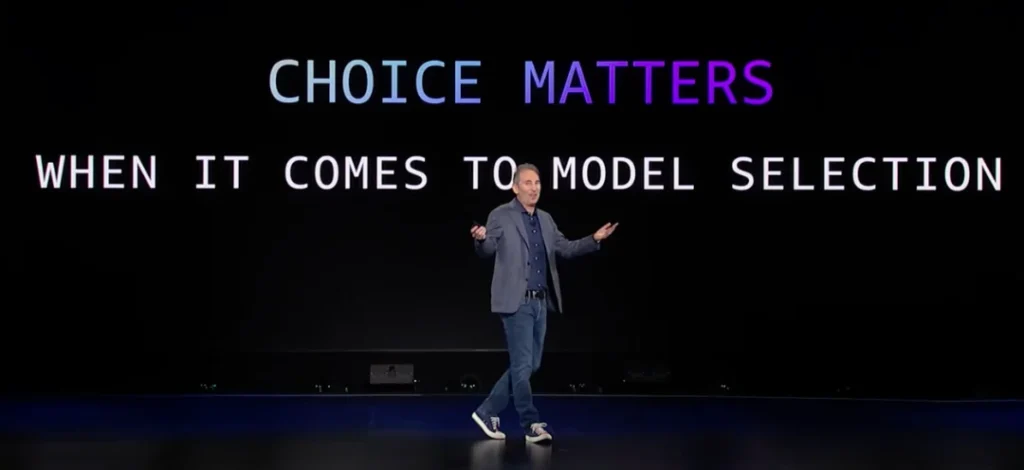
"If there’s one theme that defined last week, it’s choice. The frontier models keep arriving, and the interesting question is no longer just ‘how smart is it?’ but ‘which model fits this step, at this cost, at this latency?’ That’s exactly what landed on Amazon Bedrock over the past few days… What I like about all three is that they push toward the same idea: match the model to the job instead of reaching for the biggest one every time."
Enterprise technology analysts point out that AWS’s model-agnostic approach via Amazon Bedrock provides a critical defensive moat. By refusing to lock customers into a single proprietary ecosystem, AWS allows enterprises to dynamically adopt OpenAI’s latest reasoning engines alongside Anthropic’s state-of-the-art agentic models under a unified API, security, and governance umbrella.
Implications for Enterprise Architecture and Developers
The integration of GPT-6 Sol, GPT-6 Luna, and Claude Opus 5.5 on Amazon Bedrock has immediate, far-reaching implications for software development lifecycle (SDLC) management, cloud economics, and artificial intelligence deployment strategies.

1. The Rise of Multi-Model Orchestration
Architects can no longer rely on a static, one-size-fits-all LLM strategy. Modern enterprise applications will increasingly leverage intelligent routing layers. For example:
- A user query or system alert can first be evaluated by a lightweight classifier.
- Routine text classification or formatting is routed to GPT-6 Luna for near-instant, low-cost execution.
- Complex architectural decisions, vulnerability patching, or multi-file code refactoring are automatically escalated to GPT-6 Sol or Claude Opus 5.5.
- Long-running background jobs that require autonomous agent loops utilize Claude Opus 5.5 to minimize token consumption and prevent context window degradation.
2. Compression of Operating Margins for AI Workloads
With OpenAI reducing price points significantly compared to the GPT-5.6 era, profit margins for software-as-a-service (SaaS) providers embedding AI features will expand. Businesses that previously struggled to justify the ROI of generative features in high-volume transactional systems can now re-evaluate automation projects using Luna’s high-efficiency framework.
3. Maturation of Agentic Workflows
The capability of Claude Opus 5.5 to perform deep, multi-step programming tasks with lower token overhead removes a major bottleneck in autonomous software engineering. Development teams can design asynchronous "nightly build and test" agents that verify pull requests, write unit tests, and deploy patches to staging environments with minimal human intervention.
Next Steps for Builders
To assist developers in navigating these new capabilities, AWS continues to expand its community and educational resources:
- AWS Builder Center: Builders are encouraged to join the platform to connect with peers, share multi-model deployment patterns, and access documentation tailored to advanced agentic architectures.
- Continuous Updates: Teams can track ongoing infrastructure developments and service rollouts by monitoring the official What’s New with AWS and AWS Blogs pages.
As artificial intelligence matures from an experimental novelty into the core fabric of global enterprise infrastructure, the strategic alignment of cost, capability, and latency—exemplified by these latest Amazon Bedrock integrations—will separate market leaders from the rest.