A Historic Milestone: PM Modi’s Maiden Visit to Slovakia Marks New Chapter in India-Central Europe Ties
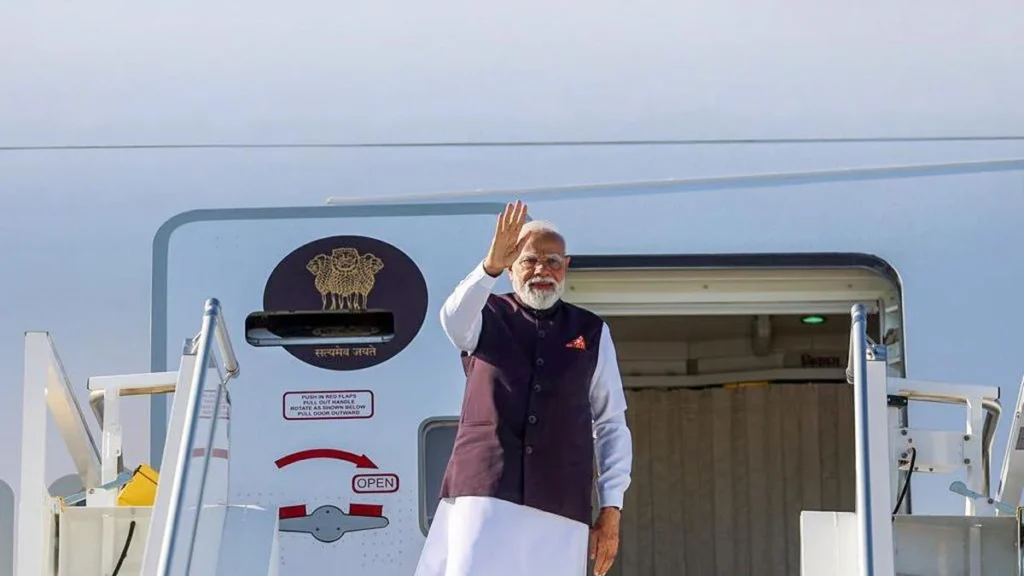
Bratislava, Slovakia — In a landmark diplomatic development, Prime Minister Narendra Modi arrived in the Slovakian capital of Bratislava on Sunday, marking the first-ever visit by an Indian Prime Minister to the nation since it gained independence in 1993. This historic visit represents the second leg of a high-stakes two-nation tour, following productive bilateral engagements in France.
The visit is viewed by geopolitical analysts as a strategic recalibration of India’s engagement with Central Europe, signaling New Delhi’s intent to diversify its partnerships beyond traditional power centers and tap into the industrial and technological potential of the Visegrád Group nations.
Main Facts: The Agenda in Bratislava
Prime Minister Modi’s two-day itinerary in Slovakia is packed with high-level diplomatic interactions aimed at formalizing a strategic roadmap for the coming decade. Upon his arrival, he was received with traditional honors, setting the stage for a series of consequential meetings.
- Bilateral Summits: PM Modi is scheduled to hold extensive talks with Slovakian President Peter Pellegrini and Prime Minister Robert Fico. Discussions are expected to cover a broad spectrum of issues, including defense cooperation, civil nuclear energy, and supply chain resilience.
- Economic Diplomacy: A key component of the visit is the interaction with top Slovakian business leaders. Slovakia, often referred to as the "Detroit of Europe" due to its world-class automotive manufacturing sector, offers immense potential for Indian companies looking to expand their footprint in the European Union.
- Strategic Positioning: The visit aims to elevate the bilateral relationship to a "Strategic Partnership," focusing on digital infrastructure, green energy, and joint research in deep-tech sectors.
Chronology of the Visit
The Departure from Nice
The Prime Minister’s journey to Bratislava began following a successful stopover in Nice, France. In France, Mr. Modi held critical bilateral discussions with President Emmanuel Macron. The talks centered on the "Horizon 2047" roadmap, focusing on security, space, and technology transfers. The successful conclusion of the French leg provided the necessary diplomatic momentum for his arrival in Central Europe.
Arrival and First Impressions
Touching down in Bratislava, the Prime Minister was greeted by senior Slovakian officials. In a post on X (formerly Twitter), Mr. Modi captured the significance of the moment: "This visit provides an opportunity to deepen India-Slovakia relations and explore new avenues of cooperation. Looking forward to productive meetings with President Pellegrini and Prime Minister Fico."
The Upcoming Itinerary
The next 48 hours will be defined by "closed-door" diplomatic sessions. These sessions are designed to move beyond ceremonial exchanges and dive into technical cooperation, specifically regarding the harmonization of trade regulations and potential investment treaties between the two nations.
Supporting Data: The Economic Context
Slovakia, a member of the European Union and the Eurozone, provides a unique strategic gateway for India into the heart of Europe. While bilateral trade between India and Slovakia has historically been modest, the potential for exponential growth is significant.
The Automotive and Industrial Link
Slovakia boasts the highest per-capita car production in the world. As India’s automotive sector seeks to integrate further into the global value chain, the partnership with Slovakia offers a critical opportunity for technological collaboration in Electric Vehicle (EV) battery manufacturing and automotive software development.
Trade Figures and Potential
Current trade volumes primarily consist of chemical products, textiles, and engineering goods. However, diplomatic sources suggest that the upcoming discussions will focus on moving up the value chain. By leveraging Slovakia’s expertise in industrial automation and India’s prowess in IT services, both nations aim to create a synergy that benefits their respective domestic markets.
Official Responses and Diplomatic Sentiment
The Slovakian government has signaled its enthusiasm for the visit, framing it as a testament to the "growing global footprint of India."

From the Slovakian Perspective:
President Peter Pellegrini’s office issued a statement highlighting that the visit is a "pivotal moment" that reflects the evolving geopolitical reality where Central European states are increasingly looking toward the Global South for sustainable partnerships. Prime Minister Robert Fico has previously expressed interest in collaborating with India on energy security, particularly in the context of the ongoing energy transition in Europe.
From the Indian Perspective:
The Ministry of External Affairs (MEA) has emphasized that this visit is part of a broader vision to strengthen India’s presence in the European theater. The MEA spokesperson noted, "Prime Minister Modi’s visit is not just a diplomatic formality; it is a conscious effort to build bridges with nations that are critical to the future of European industrial stability."
Implications: A Geopolitical Recalibration
The implications of this visit extend far beyond the bilateral realm. As the European geopolitical landscape undergoes a profound transformation, India is positioning itself as a "stabilizing partner" for smaller, yet industrially significant, EU member states.
1. Diversification of European Partnerships
For years, India’s European policy was heavily focused on capitals like Paris, Berlin, and London. By engaging with Bratislava, New Delhi is signaling that it recognizes the importance of the "New Europe"—nations that are economically vibrant, technologically advanced, and increasingly influential in EU policy-making.
2. Strengthening the "Make in India" Initiative
Collaborations with Slovakian firms are expected to bring high-end manufacturing technology to India. If the proposed agreements on civil nuclear energy and specialized engineering come to fruition, it would significantly boost India’s domestic manufacturing capabilities, aligning with the "Make in India" campaign’s push for high-tech self-reliance.
3. A Strategic Bridge to the Visegrád Group
Slovakia’s membership in the Visegrád Group (V4)—which also includes Poland, Hungary, and the Czech Republic—makes it a key influencer in regional politics. Strengthening ties with Bratislava provides India with a strategic "in" to the V4, allowing New Delhi to advocate for its interests in multilateral forums within the European Union.
4. Global Security and Cooperation
The visit also underscores a shared commitment to international law and stability. Both India and Slovakia have expressed concerns regarding the current global supply chain disruptions. By coordinating on logistics and supply chain resilience, the two nations are working to insulate their economies from future global shocks.
Conclusion: The Path Ahead
As Prime Minister Modi concludes his stay in Bratislava, the tangible outcomes—likely to be formalized in a series of Joint Statements—will serve as a blueprint for India-Slovakia cooperation for the next decade.
The visit is a clear manifestation of the "New India" approach to foreign policy: proactive, partnership-driven, and focused on tangible economic outcomes. By bridging the distance between New Delhi and Bratislava, PM Modi has successfully opened a new door for Indian industry and diplomacy. As the world watches, the success of this visit will be measured by how quickly these high-level discussions translate into concrete infrastructure projects, trade agreements, and academic exchanges that benefit the citizens of both nations.
This historic trip is more than a diplomatic handshake; it is the foundation of a modern, multi-dimensional partnership designed to navigate the complexities of the 21st-century global order. Whether in the halls of the Slovakian Parliament or the boardrooms of Bratislava’s industrial hubs, the message is clear: India and Slovakia are ready to write a new, collaborative chapter in their shared history.