A New Industrial Titan: Inside Maruti Suzuki’s Massive Rs 35,000 Crore Haryana Manufacturing Complex
By Editorial Staff
Published: July 02, 2026 | Updated: July 02, 2026
In a landmark moment for India’s automotive sector and the broader "Make in India" initiative, Prime Minister Narendra Modi and his Japanese counterpart officially inaugurated Maruti Suzuki India Limited’s (MSIL) colossal new manufacturing complex in Haryana today. Representing a staggering investment of Rs 35,000 crore, the facility is poised to redefine the scale and sophistication of vehicle production in the country.
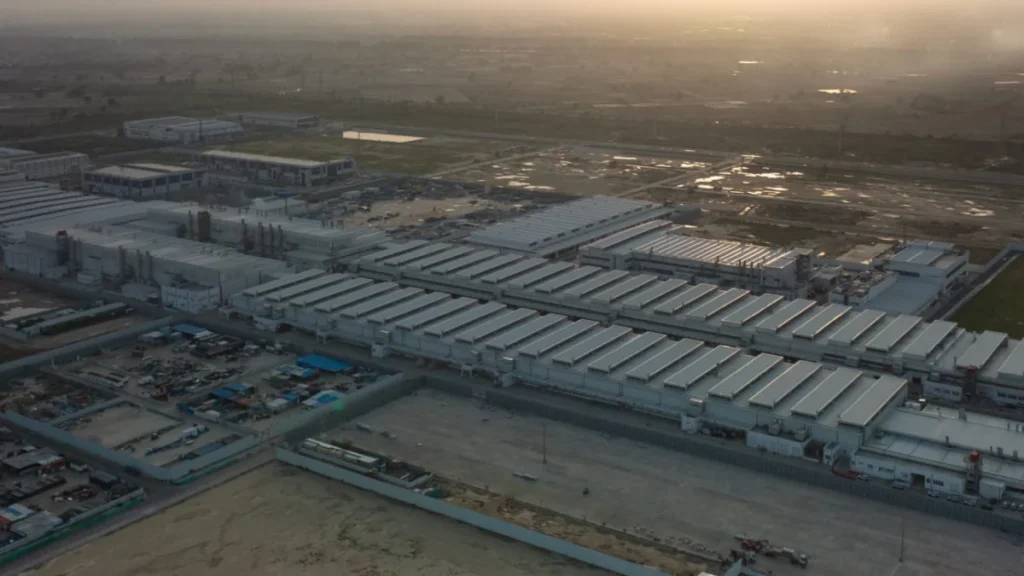
Sprawled across 800 acres, the integrated complex is far more than a traditional assembly plant. Designed as a global hub, it incorporates an adjoining supplier park and is engineered to become one of the world’s largest and most technologically advanced vehicle manufacturing facilities once it reaches full operational capacity.
Main Facts: The Anatomy of a Mega-Project
The scale of the Haryana project is difficult to overstate. As the cornerstone of Maruti Suzuki’s long-term growth strategy, the plant has been designed to meet both domestic demand and the company’s burgeoning export ambitions.
- Financial Outlay: A total capital expenditure of Rs 35,000 crore, signaling deep confidence in the Indian market.
- Physical Footprint: Covering 800 acres, the site is a self-contained industrial ecosystem.
- Strategic Design: Unlike legacy plants, this facility features an integrated supplier park, which streamlines logistics, reduces carbon footprints by minimizing transport distances, and ensures "just-in-time" manufacturing efficiency.
- Capacity: When fully operational, the plant is expected to add a significant multi-million unit capacity to the company’s annual output, cementing Maruti Suzuki’s dominance in the domestic market.
- Technology: The facility integrates Industry 4.0 standards, utilizing Artificial Intelligence (AI), robotics, and Internet of Things (IoT) connectivity to monitor quality and efficiency in real-time.
Chronology: From Blueprint to Reality
The journey to this inauguration has been a multi-year effort involving complex land acquisition, high-level diplomatic coordination, and intense engineering feats.
Phase 1: Conceptualization (2022–2023)
Following the post-pandemic recovery, Maruti Suzuki identified the need for a massive capacity expansion. The company entered into discussions with the Haryana State Government, focusing on creating a site that could handle both Internal Combustion Engine (ICE) vehicles and the transition toward Electric Vehicles (EVs).
Phase 2: Land Acquisition and Groundbreaking (2024)
The state government allocated the 800-acre site in a strategic industrial corridor. Infrastructure development—including power grids, water treatment plants, and logistical road networks—began in early 2024.
Phase 3: Construction and Infrastructure Integration (2025)
The "integrated supplier park" model was implemented during this phase. By inviting key Tier-1 suppliers to set up shop adjacent to the main assembly lines, Maruti Suzuki sought to insulate itself from global supply chain shocks.
Phase 4: Inauguration (July 2, 2026)
The ceremonial ribbon-cutting by the two Prime Ministers marks the commencement of Phase 1 of production. This initial stage focuses on high-demand passenger vehicles, with plans to scale up to hybrid and battery-electric platforms by 2027.
Supporting Data: Economic Impact and Capacity
The economic ripples of a project of this magnitude are significant. According to industry analysts, the facility is expected to generate thousands of direct jobs and tens of thousands of indirect opportunities within the ancillary and service sectors.
Production Scalability
The facility has been built with modularity in mind. Each assembly line is capable of producing multiple vehicle architectures, allowing the company to pivot production based on changing market trends—a critical feature in an era where consumer preference is rapidly shifting toward SUVs and green mobility.
Supply Chain Resilience
The adjoining supplier park is the most critical innovation. By localizing the production of complex components (such as electronic control units and drivetrain parts), Maruti Suzuki is effectively lowering the cost of production while improving supply chain visibility. Data suggests that the proximity of suppliers could reduce logistics-related CO2 emissions by up to 15% compared to standard distributed manufacturing models.
Official Responses: Strengthening Indo-Japanese Ties
The presence of the Japanese Prime Minister at the inauguration underscores the strategic importance of the Maruti Suzuki partnership—a symbol of the enduring economic relationship between India and Japan.
In his address, Prime Minister Narendra Modi highlighted the facility as a beacon of India’s manufacturing prowess. "This plant is a testament to the success of the ‘Make in India’ mission. It is not just about the volume of cars produced; it is about the quality of the ecosystem we are building. The integration of high-end technology and sustainable practices reflects our commitment to a future-ready economy."
The Japanese Prime Minister emphasized the shared vision of both nations. "Maruti Suzuki has been a bridge between our two cultures for decades. This facility represents the next level of that partnership—investing in the future of mobility, automation, and industrial excellence. We are proud to support this vision, which will create a template for industrial parks across the world."
MSIL Management stated, "This plant is the culmination of years of strategic planning. By creating a facility that is inherently modular and sustainable, we are ensuring that Maruti Suzuki remains the heartbeat of Indian mobility for the next generation."
Implications: A New Era for the Auto Industry
The opening of the Haryana complex carries several profound implications for the Indian and global automotive landscape.
1. Global Export Hub
While the Indian domestic market remains the primary focus, the sheer scale of the plant allows Maruti Suzuki to significantly bolster its export business. With high-quality manufacturing standards that meet global benchmarks, this plant will likely serve as the primary source for exports to markets in Africa, the Middle East, and Latin America.
2. The EV Transition
The plant has been designed to accommodate EV battery pack assembly lines. As the Indian government continues to push for the adoption of electric vehicles, Maruti Suzuki is now perfectly positioned to leverage this massive infrastructure to roll out affordable, mass-market EVs, potentially capturing a large share of the nascent EV segment.
3. Industrial Cluster Effect
The project acts as an anchor tenant for the region. The infrastructure developed to support the plant—including connectivity to major highways and reliable power infrastructure—will likely attract other auxiliary industries, transforming the region into a bustling industrial hub. This "cluster effect" is expected to boost the regional GDP and drive urbanization.
4. Setting Global Benchmarks
By integrating a supplier park, Maruti Suzuki is challenging the conventional wisdom of large-scale manufacturing. If successful, this model could become the gold standard for global automakers, proving that large-scale operations do not have to be inefficient or environmentally taxing.
5. Skill Development and Training
The facility includes a dedicated training academy designed to upskill workers in robotics and digital manufacturing. This focus on human capital is essential for India’s goal of becoming a "Factory to the World." By training a workforce capable of managing sophisticated automated systems, the project is contributing to the long-term competitiveness of India’s labor force.
Conclusion: The Road Ahead
As the first vehicles roll off the line today, the Rs 35,000 crore investment stands as more than just a capital expenditure; it is a statement of intent. In a rapidly evolving global automotive sector, where the pressure to innovate and decarbonize is higher than ever, Maruti Suzuki’s new Haryana complex provides the foundation for the company to navigate the complexities of the 21st-century mobility landscape.
With its strategic location, massive scale, and integrated supplier ecosystem, the plant is well-positioned to drive growth, foster technological innovation, and solidify India’s status as a premier global manufacturing destination. The eyes of the global industry will remain fixed on this 800-acre site in Haryana, watching to see how it shapes the future of mobility in the years to come.