Apple’s Siri AI Unveiled: A New Era for Search and a Wake-Up Call for Marketers
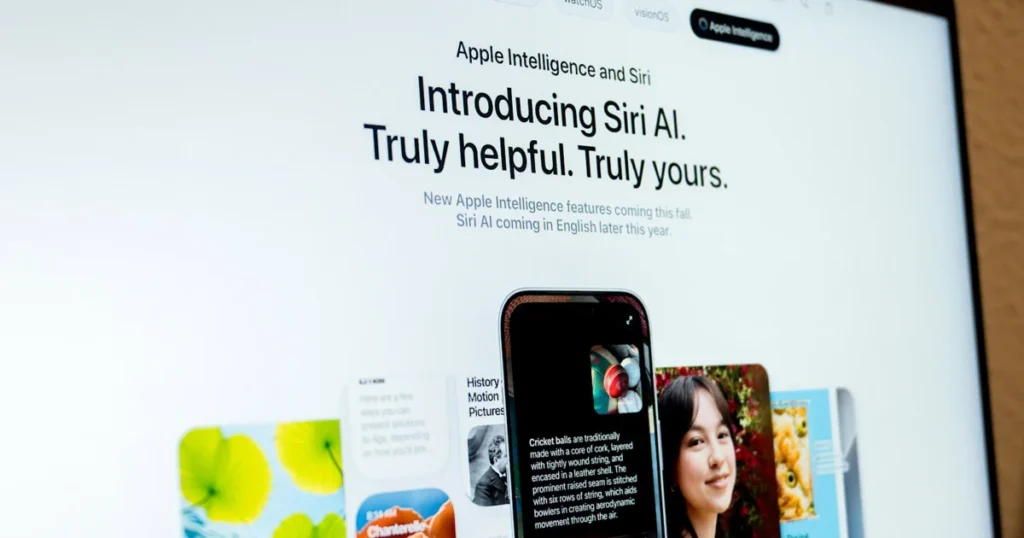
CUPERTINO, CA – June 2026 – Apple’s annual Worldwide Developers Conference (WWDC) this week marked a pivotal moment for the future of artificial intelligence and, more specifically, for the landscape of digital search. The introduction of Siri AI, a dramatically reimagined version of Apple’s venerable virtual assistant, heralds a new "answer layer" that could fundamentally alter how users find information and interact with the web. For search marketers, the implications are profound, yet shrouded in uncertainty, particularly regarding content attribution and measurement.
At the heart of the announcement are two critical developments: Siri’s newfound ability to draw up-to-date information directly from the web to generate comprehensive answers on virtually any topic, and its deep integration into key Apple interfaces like Spotlight on iPad and Mac, and the Dynamic Island on iPhone – places where users already initiate queries. While Apple positioned these advancements as a leap forward in user convenience, the immediate question for the digital ecosystem revolves around the fate of websites and content creators in this AI-driven paradigm.
Main Facts: Siri AI Redefines User Interaction
The keynote address revealed a Siri AI rebuilt from the ground up, powered by the next generation of Apple Intelligence. Apple describes this as a sophisticated conversational assistant capable of understanding personal context, possessing broad world knowledge, and exhibiting an acute awareness of on-screen content. This new iteration promises a more natural and proactive interaction with Apple devices, moving beyond simple commands to nuanced, multi-turn conversations.
Craig Federighi, Apple’s senior vice president of Software Engineering, encapsulated the vision: “We’re excited to introduce Siri AI, a dramatically more capable and conversational assistant designed to help users find information and get things done throughout the day. With access to broad world knowledge for up-to-date answers on virtually any topic, along with onscreen awareness and personal context understanding, Siri AI can help users take action across apps more naturally than ever.”
From a search marketing perspective, three core components of this announcement stand out:
- Web Answers: Siri can now “get up-to-date information from the web on virtually any topic and generate a helpful answer.” This capability directly competes with traditional search engine results pages, potentially resolving user queries without requiring a browser visit. The ability for users to extend almost any response into a follow-up conversation suggests a fluid, iterative search experience.
- Pervasive Integration: Siri AI is no longer just a voice assistant. A dedicated Siri app will sync conversations across devices via iCloud. Crucially, it’s integrated directly into Spotlight on iPad and Mac, transforming this ubiquitous search bar into an AI-powered answer engine. On iPhone, a simple swipe down from the Dynamic Island initiates a conversation. Furthermore, systemwide context menus allow users to query images, files, or on-screen text, with personal context extending to third-party apps that integrate with Spotlight. This deep embedding ensures Siri AI is the default interface for information retrieval across the Apple ecosystem.
- Visual Intelligence: A novel Siri mode within the iPhone Camera app enables users to gain information about objects in their immediate environment simply by pointing their camera. This Visual Intelligence extends to iPad and Mac, opening entirely new modalities for search that bypass text-based queries altogether. Imagine pointing your phone at a plant and asking Siri what it is, or at a menu item and asking for its nutritional information.
The rollout of Siri AI will occur in stages. A user beta is slated for later this year, initially in English. The broader Apple Intelligence features are expected to reach users this fall with iOS 27. Notably, Siri AI will not be immediately available in the EU on iOS, iPadOS, and watchOS, nor in China, as Apple navigates regulatory requirements. This phased, geographically segmented launch introduces complexities for global brands and provides an initial testing ground for early adopters.
Chronology: The Road to Siri AI and the Google Partnership
The journey to this week’s announcement began long before the WWDC keynote. Speculation about Apple’s intensified push into generative AI gained significant traction in early 2024.
- March 2024: Bloomberg first reported that Apple was engaged in discussions with Google to license its Gemini AI models for integration into the iPhone, specifically for iOS 18’s generative AI tools. This news signaled a strategic shift for Apple, which had historically preferred to develop its core technologies in-house.
- Spring 2025 (Antitrust Trial): The discussions resurfaced publicly during Google’s antitrust remedies trial. Sundar Pichai, Google’s CEO, testified, expressing optimism about reaching an agreement with Apple by mid-2025. This public acknowledgment underscored the strategic importance of such a partnership for both tech giants.
- January 2026 (Formal Announcement): The partnership was formally announced through a joint statement. This confirmed that Gemini models and Google’s cloud technology would indeed form the foundational layer for Apple’s next-generation Foundation Models, paving the way for a more personalized and capable Siri. Our coverage at the time highlighted the inherent tension: if Siri became significantly better at answering queries directly, fewer users would need to navigate to external websites.
- Financial Details: While Apple has not officially confirmed figures, Bloomberg has reported that the deal involves Apple paying Google approximately $1 billion per year for a custom-built Gemini model, estimated to have around 1.2 trillion parameters. This substantial investment underscores the scale of Apple’s ambition and the value it places on high-quality AI capabilities.
- WWDC 2026 (Product Launch): Monday’s WWDC keynote transformed this strategic partnership into a tangible product, showcasing the deeply integrated Siri AI and Apple Intelligence features that will soon reach millions of users worldwide.
Supporting Data & Analysis: The Evolving Search Landscape
Siri AI’s arrival is not in a vacuum; it accelerates an existing trend towards "zero-click" searches and AI-driven answer generation that has been reshaping the digital ecosystem for years.
The "Second Answer Layer"
Google has spent the past two years aggressively integrating AI answers into its own search results, primarily through features like AI Overviews and AI Mode. Siri AI extends this pattern to another critical default interface. By positioning an advanced assistant on iPhone, iPad, and Mac that can deliver web-derived answers before a browser even opens, Apple introduces a "second answer layer." This layer sits atop the operating system, intercepting user intent at its earliest point, potentially resolving queries before they ever reach a traditional search engine or website. This fundamental shift means content creators must now consider not just appearing in Google, but also being "understandable" by Siri.
Existing Trends in Search
Third-party data consistently illustrates why the question of website clicks is paramount.
- SparkToro’s analysis of Similarweb clickstream data found that a significant majority of Google searches now conclude without a click to the open web. This "zero-click" phenomenon indicates that users are increasingly satisfied with answers provided directly within the search interface, whether through rich snippets, knowledge panels, or AI-generated summaries.
- SE Ranking’s referral tracking earlier this year showed Google Gemini surpassing Perplexity as a traffic source, though AI platforms collectively still represent a small fraction of overall site traffic. This data, while not directly measuring Siri, describes the highly competitive and evolving environment Siri AI enters. It highlights that AI assistants, even in their nascent stages, are already influencing referral traffic patterns. The challenge with Siri is its ubiquitous distribution, which could scale its impact far more rapidly.
Distribution Advantage: The Default Power
Perhaps the most significant aspect of Siri AI’s introduction for search professionals is its distribution method. Unlike niche AI tools or browser extensions that require conscious user installation or habit changes, Siri AI ships as the default on hardware that hundreds of millions of people already own and use daily. This inherent advantage is analogous to the billions Google pays annually to remain the default search engine on Safari – a placement that ensures unparalleled reach and user engagement simply by being the path of least resistance.
Siri AI doesn’t ask users to change their behavior; it simply enhances the tools they already use. When a Mac or iPad user types a question into Spotlight, they will now seamlessly receive an AI-generated answer. When an iPhone user swipes down from the Dynamic Island, they’re engaging with this powerful new assistant. This "default" status is a game-changer, guaranteeing massive exposure and rapid adoption, irrespective of user intent to specifically use "AI."
Safari’s AI Enhancements: Beyond Siri
The WWDC announcement wasn’t solely about Siri; Safari also received its own suite of AI-powered features, two of which directly interact with websites in novel ways:
- Notify Me: This feature allows users to instruct Safari to monitor a specific web page for changes, such as product restocks, price drops, or updated content. Safari will then send a notification when the desired change occurs.
- Passwords App Navigation: The Passwords app can now autonomously navigate through websites on a user’s behalf to upgrade weak passwords, automating a previously manual and cumbersome security task.
Both "Notify Me" and the enhanced Passwords app embody the concept of "agentic search," where software agents interact with websites and complete tasks on behalf of the user, often without direct human browsing. This aligns with a broader industry trend towards task-based AI, where the goal is completion rather than mere information retrieval. For website owners, these features raise critical questions about how these automated visits will identify themselves in analytics logs, and whether existing bot management strategies are equipped to differentiate between legitimate agentic activity and malicious bots. Without clear identification, accurately measuring legitimate user engagement and managing server load becomes increasingly complex.
Regional Rollout Nuances
The phased rollout and geographical exclusions add another layer of complexity. Siri AI will first launch as a user beta later this year, initially in English. The broader Apple Intelligence features will arrive this fall with iOS 27. Crucially, Siri AI will not be available in the EU on iOS, iPadOS, and watchOS at launch, nor in China, due to ongoing regulatory requirements. This means:
- Early Data Limitations: Any early insights or behavioral patterns observed from the beta will reflect a partial rollout, primarily English-speaking markets outside the EU and China. This makes it challenging to draw universal conclusions about its impact.
- Global Strategy Challenges: For multinational brands, this creates a fragmented landscape. As Nitin Manhar Dhamelia noted, a brand "may be discoverable through an assistant in one market, constrained in another, and governed by different platform rules in a third.” This necessitates highly localized digital strategies and content planning.
- Regulatory Impact: The EU exclusion, in particular, highlights the growing influence of regulatory bodies on the deployment of advanced AI technologies. It suggests that Apple may be working to address concerns around data privacy, competition, or algorithmic transparency before a broader rollout.
Official Responses & Industry Reactions: A Call for Clarity
Apple’s official communications surrounding Siri AI reveal a carefully constructed narrative, particularly concerning its partnership with Google, and offer limited explicit guidance for web publishers.
Apple’s Presentation of the Google Deal
Apple’s two main press releases detailing the Siri AI and Apple Intelligence announcements mention Google only once. This solitary reference appears in the architecture section of the broader Apple Intelligence release, crediting the new capabilities to Apple Foundation Models "custom-built in collaboration with Google and its Gemini models."
The dedicated Siri AI press release, however, makes no mention of Google at all, instead attributing Siri’s enhanced capabilities solely to Apple Intelligence, Apple Foundation Models, and Private Cloud Compute. This deliberate linguistic choice underscores Apple’s desire to brand the consumer-facing product as distinctly "Apple," with the underlying model partnership relegated to technical architecture.
This distinction is crucial for search marketers. Apple’s characterization of the models as "custom-built," rather than simply "licensed off the shelf," suggests that Siri AI’s behavior may not perfectly mirror that of Google’s public Gemini models. Apple has not explained how closely Siri’s answers will align with Gemini’s, or what proprietary layers Apple has added. This ambiguity makes it difficult to predict Siri’s content interpretation behavior based on existing knowledge of Gemini.
Applebot Support Page Updates: The Rules Emerge
The most direct official communication regarding website interaction came not in a flashy press release, but through an updated Applebot support page published on the same day as the keynote. This page serves as the de facto rulebook for web publishers.
Key takeaways from the updated Applebot support page:
- Data Usage: Crawled data "may be used to provide additional context and up-to-date content when AI models are used to generate output." This explicitly confirms that Applebot is feeding data into Siri AI.
- Source Links (Conditional): The page states that answers, particularly for "broad world knowledge questions in Siri and Search," "may include links to sources and websites used to help generate the answer." This is the only mention of source links across all of Apple’s announcement materials, and its conditional phrasing ("may include") offers little certainty. It doesn’t specify when, how often, or for which types of queries links will appear.
- Opt-Out Mechanisms: Apple provides granular controls for websites:
robots.txtDisallow: /forApplebot-Extendedopts a site out of foundation model training.- A
nosnippettag prevents Apple from using a page as context for AI-generated answers. - Structured data indicating a page is paywalled ensures it remains in search results but won’t be used for answer generation.
- Main Applebot Agent: None of the above mechanisms remove a site from Apple’s core search index. To block content entirely from Spotlight, Siri, and Safari search features, sites must disallow the main
Applebotagent. - Googlebot Fallback: Importantly, if a
robots.txtfile doesn’t explicitly mentionApplebotbut containsGooglebotrules, Applebot will follow theGooglebotinstructions. This provides a default safety net for many sites but highlights the need for explicit Applebot directives for precise control.
Industry Perspectives: Converging Disciplines
Early reactions from industry leaders underscore the seismic shift Siri AI represents.
Jim Yu, founder and CEO of BrightEdge, views Apple’s strategy as a shrewd bet on distribution over sole model ownership. In a LinkedIn post, he highlighted the immediate implications for brands: “A new answer surface just opened between your brand and your customer. Siri AI reads screens, acts across apps, and replies from ‘personal context.’ More and more, the customer never lands on your site. They land on an answer about you.” His advice aligns with Apple’s subtle guidance: the critical question is “whether your content is accessible, accurate, and structured for AI to read and cite.” This shifts the focus from traditional ranking factors to content clarity and machine-readability.
Nitin Manhar Dhamelia, global digital performance manager at Barilla Group, echoed this sentiment from a brand perspective, emphasizing the convergence of various digital disciplines. On LinkedIn, he wrote: “SEO, GEO, content design, product data, service information and brand governance are converging. The question is no longer only ‘can people find us?’ but ‘can an assistant correctly interpret us at the moment of intent?’” This perspective highlights the need for a holistic content strategy that caters not just to human users, but also to intelligent assistants designed to synthesize and interpret information.
Implications for Search Professionals & Future Outlook: Navigating the Unknown
The arrival of Siri AI presents a complex challenge for search marketing professionals. While the potential for increased visibility on Apple devices is clear, the path to achieving and measuring that visibility is currently opaque.
The Measurement Gap: A Blind Spot for Analytics
Perhaps the most pressing concern for marketers is the complete absence of any described reporting surface for Siri answers. There is no equivalent of Google Search Console impressions, no citation reports, and no stated referrer behavior. Apple’s support page merely says links "may appear," offering no insight into frequency, specific queries, or how a site would even detect them.
This "measurement gap" is critical. If Siri answers a question directly without generating a click to a website, there may be nothing for traditional analytics tools to record. This makes it impossible to:
- Quantify Impact: Brands cannot measure how often their content is being used by Siri, its reach, or its influence on user behavior.
- Attribute Value: Without referral data or specific citation reports, connecting Siri’s use of content to brand awareness, conversions, or other business outcomes becomes a guessing game.
- Optimize Strategy: In the absence of data, optimizing content for Siri AI becomes a speculative exercise rather than a data-driven process.
The regional exclusions further complicate this. Any early behavioral patterns observed will be from a partial rollout, making it difficult to extrapolate global impact or refine strategies for different markets. Brands face a fragmented landscape where discoverability and platform rules vary significantly by region.
No Siri Optimization Playbook (Yet)
For agencies and in-house teams, clients will undoubtedly ask for a "Siri optimization playbook." The honest, and currently most accurate, answer is that no such playbook exists. Anyone selling one right now is speculating. The mechanisms for influencing Siri’s answers, ensuring accurate content interpretation, and generating traffic are largely unknown.
Spotlight’s Evolving Role
Spotlight’s transformation into an AI-powered answer engine deserves focused attention. Mac and iPad users who previously opened a browser tab for quick informational queries can now receive an answer directly from the same search box they use to launch apps. This inserts another crucial step between a user’s question and a potential visit to a publisher’s website. Publishers heavily reliant on quick informational queries for traffic may see a significant impact as more queries are resolved natively within Spotlight.
Visual Intelligence: New Query Types, New Challenges
Visual Intelligence introduces entirely new query types that bypass traditional text search altogether. Pointing a camera at a product, a dish, or a storefront and asking Siri about it represents a search without a conventional results page. E-commerce businesses and local enterprises have the most exposure here. Apple has not yet revealed where these visual-first answers originate, leaving a vast unknown about how to optimize for them. Does it leverage Apple Maps data? Product feeds? Image recognition databases? These questions remain unanswered.
The "Transfer Question": Resisting Assumptions
It is tempting for marketers to assume that content currently cited by Google’s Gemini will automatically surface in Siri AI answers due to the underlying partnership. However, Apple’s careful language works against this assumption. By calling the models "custom-built" and emphasizing its own "Apple Foundation Models" and "Private Cloud Compute," Apple suggests a proprietary layer that could significantly alter the output. Therefore, resisting the urge to transfer Gemini visibility assumptions directly to Siri visibility is critical. The two platforms, while sharing a foundation, may diverge in their behavior and content preferences.
Key Actionable Steps Now
Given the current uncertainties, search professionals can take immediate, prudent steps:
- Review Applebot Policies: Websites should immediately review their
robots.txtfiles andnosnippettags. Decide whether to explicitly disallowApplebot-Extendedfor foundation model training or implementnosnippetto control how content is used for AI-generated answers. Understanding these controls is the only concrete action available to influence Siri AI’s content consumption. - Focus on Content Clarity and Structure: As Jim Yu suggests, prioritize making content accessible, accurate, and structured for AI to read and cite. This means clear headings, well-defined entities, schema markup, and concise answers to common questions.
- Prepare for a Multi-Assistant World: Acknowledge that content must be optimized for multiple AI assistants, each with potentially different interpretation models and presentation layers.
Looking Ahead: The Beta Will Tell All
The developer beta, now live, and the user beta, arriving later this year in English, will be the first real sources of evidence. Early reports from testers will be crucial for understanding:
- Link Behavior: Do Siri’s web answers consistently cite sources? When do links appear?
- Source Attribution: Are sources explicitly named within the answer, or only linked?
- Referrer Data: Does traffic arriving from Siri AI include a referrer, or does it appear as direct traffic?
Each of these details will determine whether websites can ever connect a Siri answer to a visit or measure its impact. Until these beta reports fill in the blanks, the fundamental question for websites – "What’s in it for us?" – remains largely unanswered by Apple, beyond a single, conditional sentence in a support page. The digital ecosystem watches with anticipation, preparing for a future where the answers themselves become the new battleground for visibility and engagement.