AWS Revolutionizes Semantic Search and RAG: Amazon S3 Vectors Introduces Metadata Pre-Filtering for Up to 5x Higher Recall
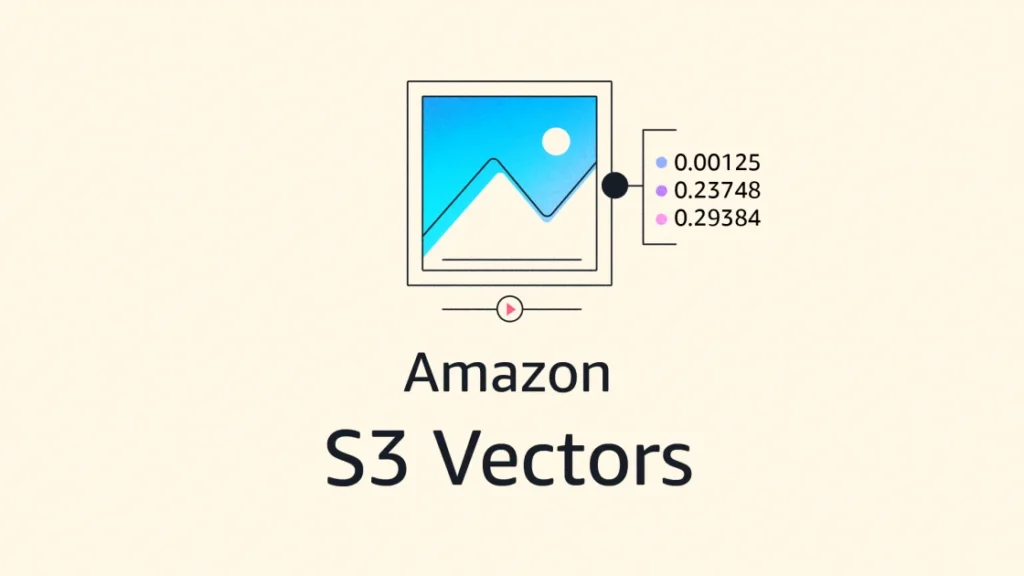
SEATTLE — In a major development for artificial intelligence infrastructure, Amazon Web Services (AWS) has announced the official launch of metadata pre-filtering for Amazon S3 Vectors. The newly introduced capability is designed to drastically improve search accuracy for applications utilizing retrieval-augmented generation (RAG), semantic search, and autonomous AI agents. By evaluating metadata filters prior to executing similarity searches, the update promises up to a fivefold increase in relevant matches (recall) on highly selective queries—all without requiring data re-ingestion, altering query syntax, or incurring additional costs.
Authored by Daniel Abib, the announcement marks a significant architectural step forward for developers managing massive datasets in cloud-native environments. As modern applications increasingly pivot toward hyper-personalized, multi-tenant architectures, the ability to cleanly scope vector searches without sacrificing search quality has transitioned from a convenience to a critical operational requirement.
Main Facts: What is Metadata Pre-Filtering?
At its core, vector search relies on mathematical distance metrics (such as cosine similarity) to find data points that closely resemble a query vector in a high-dimensional space. However, enterprise applications rarely search an entire index indiscriminately. Instead, they scope searches to specific boundaries: a particular user account, a tenant ID, a product category, a date range, or an administrative status.
Traditionally, vector search engines have relied on "post-filtering" or tandem evaluation, where vector matching and metadata filtering occur simultaneously. Under this legacy approach, if a filter is highly selective—such as isolating records belonging to a single user out of a multi-million-row database—the system might evaluate thousands of vectors that ultimately get discarded because they fail the metadata condition. Consequently, the search misses relevant matches, leading to poor recall.
Amazon S3 Vectors now solves this bottleneck through metadata pre-filtering.
- Prioritized Evaluation: On indexes configured with the new
ENHANCEDmode, S3 Vectors resolves the metadata filter first, limiting the subsequent similarity search strictly to the subset of vectors that match the criteria. - Rich Metadata Support: Each vector can carry up to 2 KB of application-defined metadata. A single query can support up to up to 100 filter constraints.
- Advanced Operators: Developers can filter across attributes using standard logical operators (
$and,$or,$gt) and introduce prefix matching via$startsWithfor hierarchical keys, paths, and URLs. - Zero Cost and Friction: The upgrade requires no data re-ingestion, involves no changes to existing query syntax, and is offered at no additional cost beyond standard S3 Vectors storage, PUT, and query pricing.
Chronology: The Evolution of S3 Vectors and the Push for Enhanced Retrieval
The path to metadata pre-filtering reflects AWS’s broader strategy to streamline infrastructure for generative AI workloads.
- The Rise of S3 Vectors: AWS introduced vector management directly within Amazon S3 to bridge the gap between massive unstructured object storage and high-performance vector databases. Organizations historically had to sync S3 buckets with external, memory-intensive vector databases, introducing architectural complexity, synchronization lags, and heightened costs.
- The Legacy Challenge (
CLASSICMode): Upon its initial rollout, S3 Vector indexes operated primarily under a traditional paradigm. Indexes ran under what AWS now designates as theCLASSICindex mode, performing vector search and filter evaluation in tandem. While functional for broad queries, developers noticed limitations when dealing with hyper-selective, multi-tenant constraints. - The
ENHANCEDMode Breakthrough: Recognizing the pain points of developers building large-scale RAG pipelines and multi-tenant applications, AWS engineers engineered theENHANCEDindex mode. By flipping the execution order—filtering first, then searching—AWS eliminated the candidate starvation problem inherent in legacy tandem searches. - Global Availability: Today, metadata pre-filtering is rolling out globally, immediately available across all commercial AWS Regions where Amazon S3 Vectors is supported, as well as AWS China Regions.
Supporting Data: Quantifying the Performance Leap
To understand the tangible benefits of pre-filtering, consider a real-world enterprise scenario provided by AWS: a customer support knowledge base containing 8 million tickets.
Imagine a support agent investigating a recurring technical error across a specific customer’s history. Suppose that particular customer accounts for 400 tickets out of the 8-million-record corpus.
- Under
CLASSICMode: The similarity search candidates were drawn from the entire 8 million rows concurrently. Because the filter was evaluated alongside the vector math, the final result set frequently missed relevant historical tickets belonging to that specific user, drowning out signal with noise from unrelated accounts. - Under
ENHANCEDPre-Filtering Mode: S3 Vectors resolves thecustomer_idfilter first, narrowing the working set to exactly those 400 tickets. The similarity search then runs across that dedicated pool, guaranteeing that the agent surfaces the customer’s precise prior occurrences.
According to AWS benchmark metrics, on highly selective filters, pre-filtering returns up to 5x more matching vectors than previous iterations running on CLASSIC indexes.
Furthermore, the introduction of the $startsWith operator allows data architects to handle complex URI and folder structures effortlessly. For example, a legal document store encoding folder paths into document IDs can now scope an entire search subtree with a single condition:
--filter '"$startsWith": "document_id": "matter-4417/exhibits/"'Official Responses and Technical Implementation
AWS has designed the transition to metadata pre-filtering to be seamless for existing users. Existing S3 Vector indexes retain their CLASSIC designation by default, ensuring zero unexpected behavior disruptions, but can be upgraded instantly in place via the UpdateIndexMode API.
aws s3vectors update-index-mode
  --vector-bucket-name my-vector-bucket
  --index-name product-catalog
  --index-mode ENHANCED
For developers building new workloads, setting up an index, populating vectors with metadata, and querying the data involves a straightforward three-step workflow using the AWS Command Line Interface (CLI):
-
Create the Vector Index:
aws s3vectors create-index --index-name product-catalog --vector-bucket-name my-vector-bucket --dimension 1536 --distance-metric cosine -
Ingest Vectors with Metadata:
aws s3vectors put-vectors --index-name product-catalog --vector-bucket-name my-vector-bucket --vectors '[ "key": "doc-001", "data": "float32": [0.1, 0.2, 0.3, ...], "metadata": "tenant_id": "t-10428", "category": "legal", "created_date": "2026-03-15", "active": true ]' -
Execute a Filtered Query:
aws s3vectors query-vectors
 --index-name product-catalog
 --vector-bucket-name my-vector-bucket
 --query-vector '"float32": [0.1, 0.2, 0.3, ...]'
 --top-k 50
 --return-metadata
 --filter '"$and": [
   "tenant_id": "t-10428",
   "category": "legal",
   "active": true
 ]'
Once validated, administrators can configure entire vector buckets to default to ENHANCED mode for all future indices automatically:
aws s3vectors put-vector-bucket-default-index-mode
  --vector-bucket-name my-vector-bucket
  --default-index-mode ENHANCED
Implications for the Generative AI Ecosystem
The release of metadata pre-filtering for Amazon S3 Vectors carries broad implications for software architects, security compliance officers, and enterprise AI developers.
1. Hardened Multi-Tenancy Security and Precision
In enterprise SaaS applications, data leakage between tenants is catastrophic. Pre-filtering guarantees that vector computations are strictly mathematically bounded to a tenant’s isolated data subset before similarity ranking occurs. This hard structural boundary reinforces data governance compliance frameworks (such as GDPR and HIPAA) within AI pipelines.
2. Enhanced Agentic AI Workflows
As autonomous AI agents grow more sophisticated, they rely heavily on tool-use and localized memory retrieval to complete multi-step tasks. An agent tasked with searching a user’s personal document vault or private email history requires absolute precision. By lifting recall rates on selective queries by up to 5x, agents are far less likely to experience "hallucinations" driven by incomplete context retrieval.
3. Reduced Infrastructure Complexity
Historically, developers attempting to achieve high-recall filtered vector searches had to maintain complex external indexing tricks, metadata sidecar databases, or over-provisioned vector clusters. By integrating pre-filtering directly into S3 Vectors at no extra cost, AWS continues to lower the total cost of ownership (TCO) for enterprise generative AI deployments.
Getting Started
Developers and system administrators can begin implementing metadata pre-filtering today across all supported AWS commercial and China Regions. Comprehensive documentation is available via the official Amazon S3 Vectors User Guide, with community feedback channels active on AWS re:Post for S3.