Amazon Unveils CloudWatch Omni: An AI-Powered Observability Platform Transforming Incident Management and Application Monitoring
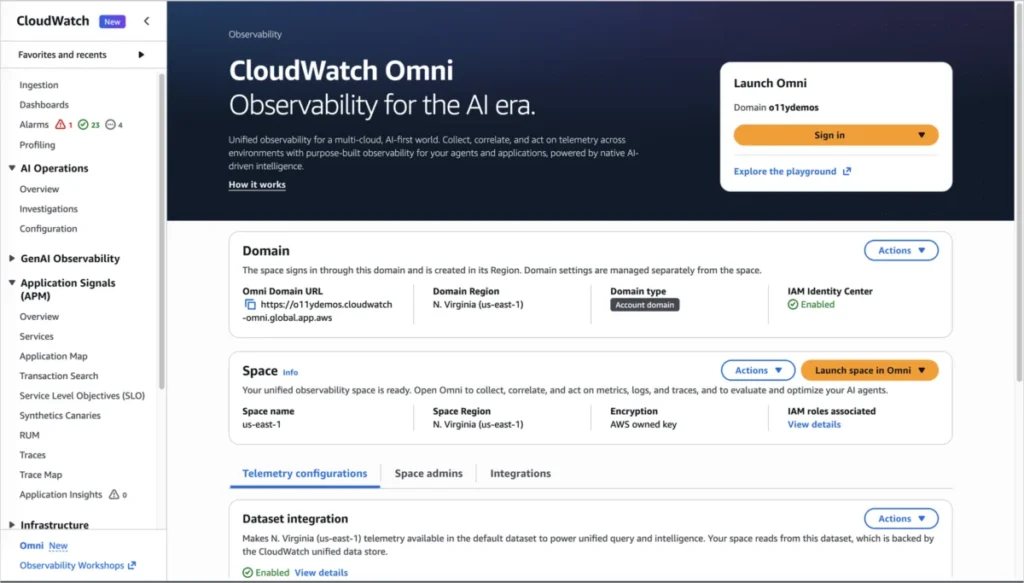
SEATTLE — In a major development for enterprise software engineering and cloud operations, Amazon Web Services (AWS) has officially launched Amazon CloudWatch Omni, a groundbreaking, AI-powered observability experience designed to unify the monitoring of traditional applications, microservices, and modern generative AI agentic workloads.
Unveiled by Daniel Abib, CloudWatch Omni bridges a longstanding operational divide in software development: the friction between isolated telemetry signals, fragmented toolchains, and cross-functional silos. By combining OpenTelemetry (OTel) standards, enterprise single sign-on (SSO) collaboration spaces, and the automated diagnostic capabilities of the Amazon DevOps Agent, Omni aims to radically streamline how Site Reliability Engineers (SREs), developers, database administrators, and engineering managers investigate incidents, understand system topologies, and maintain application health.
Unlike traditional monitoring setups that require deep, credentialed access to the core AWS Management Console, CloudWatch Omni delivers a dedicated, application-centric workspace. Teams can securely log in via enterprise identity providers such as Okta or Microsoft Entra ID, ensuring that all stakeholders—from on-call engineers to executive managers—have simultaneous, real-time access to the exact same diagnostic context during a crisis.
Main Facts: What is Amazon CloudWatch Omni?
At its core, Amazon CloudWatch Omni is an evolution of AWS’s market-leading observability portfolio. It addresses three chronic pain points that engineering organizations have grappled with for decades: fragmented tool usage, the high administrative burden of maintaining static dashboards, and the loss of critical context when incidents escalate across team boundaries.
Key Architectural and Functional Pillars:
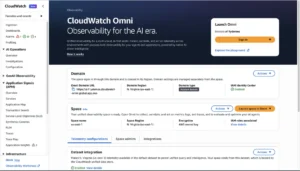
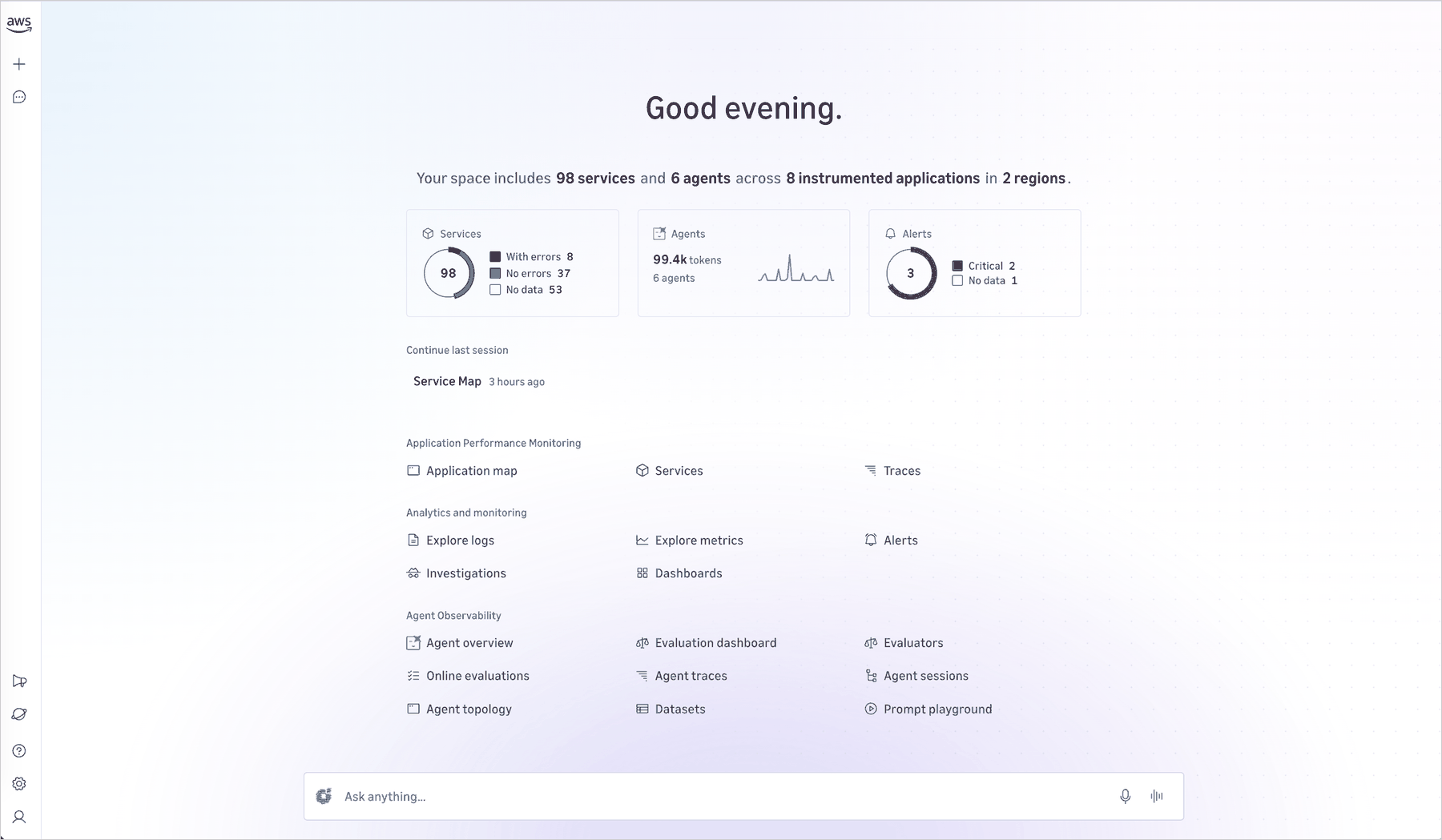
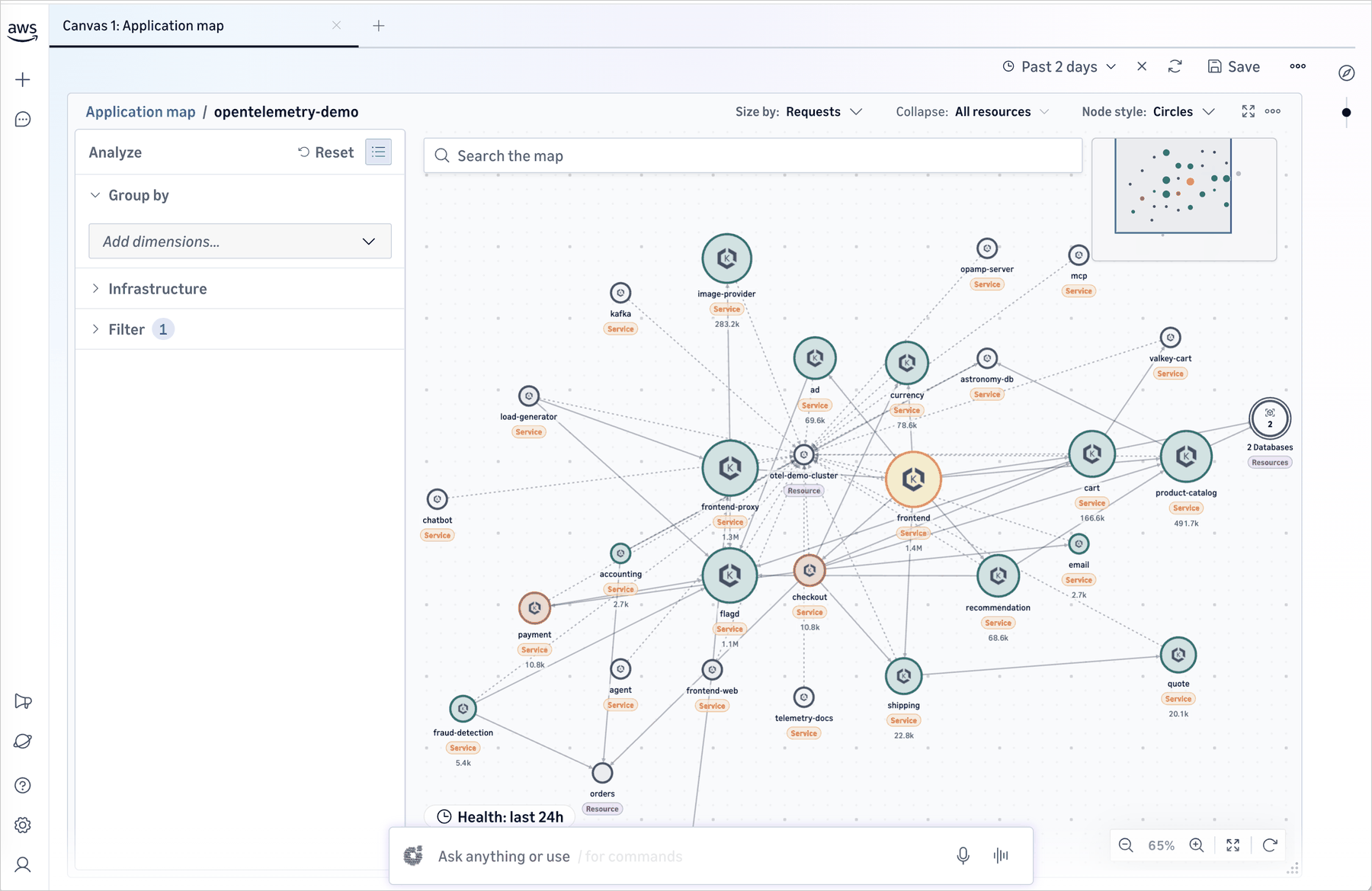
- Application-Centric Organization ("Spaces"): Instead of forcing teams to sift through individual logs, metrics, alarms, and infrastructure components separately, Omni groups telemetry by the applications themselves. A dedicated workspace called a "Space" automatically aggregates data for applications owned by specific teams without requiring any data movement or duplication of existing CloudWatch stores.
- Built on OpenTelemetry (OTel): Omni is natively engineered around open standards. Telemetry data already streaming into CloudWatch appears automatically inside Omni with zero reconfiguration. Furthermore, any workload instrumented with OpenTelemetry can seamlessly transmit data directly to an OpenTelemetry Protocol (OTLP) endpoint.
- AI-Powered Investigation via Amazon DevOps Agent: The platform features deep integration with the Amazon DevOps Agent. This AI assistant actively participates in incident investigations alongside human engineers, correlating cross-service signals, charting root-cause paths through automatically generated dependency graphs, and maintaining a complete, searchable history of the investigation for automated post-incident reporting.
- Frictionless Enterprise Access: Through IAM Identity Center, Omni supports seamless SAML 2.0 integrations with identity providers like Okta and Microsoft Entra ID. Engineers can collaborate in a shared web workspace via a dedicated organization URL, entirely bypassing the need for administrative AWS Console access.
Chronology: The Road to Agentic and Application Observability
The release of CloudWatch Omni represents the culmination of a multi-year industry shift toward open-standard telemetry, generative AI integration, and collaborative incident response.
- The Pre-OTel Era: Historically, cloud observability was plagued by vendor lock-in and fragmented tool ecosystems. Engineering teams relied on disparate monitoring tools for metrics, logs, and traces, making cross-platform correlation manual and error-prone.
- The Rise of OpenTelemetry: As microservices architectures proliferated, OpenTelemetry emerged as the industry standard for vendor-agnostic data collection. AWS progressively aligned its monitoring ecosystem to support OTel, laying the groundwork for unified telemetry pipelines.
- The Generative AI Explosion: With the advent of large language models (LLMs) and complex multi-agent generative AI workflows, standard application monitoring proved insufficient. Enterprises required observability frameworks capable of tracking non-deterministic agentic behavior, prompt-response latencies, and token consumption.
- Companion Post and Dual-Release Strategy: AWS introduced the agent observability capabilities of Omni in a companion architectural post, focusing heavily on generative AI and agentic workloads. Shortly thereafter, the company rolled out the comprehensive application observability experience, culminating in the general availability announcement detailed in Abib’s launch briefing.
- General Availability (Current State): CloudWatch Omni is now globally available. Existing CloudWatch users can activate the feature instantly with a single click in the CloudWatch console, while enterprise administrators can configure organization-wide domain spaces and IAM Identity Center mappings.
Supporting Data & Workflow Analysis: How an Investigation Unfolds
To understand the practical impact of CloudWatch Omni, it is necessary to examine how an incident flows through the platform compared to traditional monitoring workflows.

The Traditional Incident Lifecycle vs. Omni
In a traditional engineering environment, an alarm triggers a pager alert. An on-call engineer wakes up, logs into a primary monitoring tool, opens multiple tabs to check logs and metrics, searches through a separate tracing platform, and attempts to correlate a deployment timestamp from a CI/CD tool. If the issue stems from a downstream dependency owned by another team, the engineer takes screenshots, pastes them into a Slack channel, and summarizes the findings for the secondary team, often losing critical diagnostic granularity in the process.
Under CloudWatch Omni, this multi-step, friction-heavy process is compressed into an intelligent, collaborative workspace:
- Automated Alarm and Contextual Ingestion: When an error-rate spike hits a critical service (e.g., a checkout microservice), Omni immediately opens a unified investigation session. The system pre-loads the session with the service topology, highlights recent correlated events (such as a deployment executed 10 minutes prior), and displays elevated latency metrics from downstream APIs.
- AI-Assisted Root Cause Isolation: The Amazon DevOps Agent reviews the telemetry in real time. It analyzes the dependency graph and surfaces a suspected correlation—for instance, tracing the latency back to a recent configuration change within a third-party payment provider’s API gateway.
- Seamless Cross-Team Escalation: The primary SRE pulls in a database or payments engineer. Because both engineers enter the exact same web session via the dedicated team URL, the incoming specialist immediately sees all prior analysis, trace waterfalls, and AI-driven insights without needing to catch up via chat transcripts.
- Automated Incident Documentation: Once the root cause is identified and a rollback or patch is executed, the entire conversation, telemetry snapshot, and diagnostic trail are archived automatically. The need to manually draft exhaustive post-mortem incident reports is virtually eliminated.
Setup and Configuration Metrics
Deploying Omni within an enterprise infrastructure requires minimal overhead:
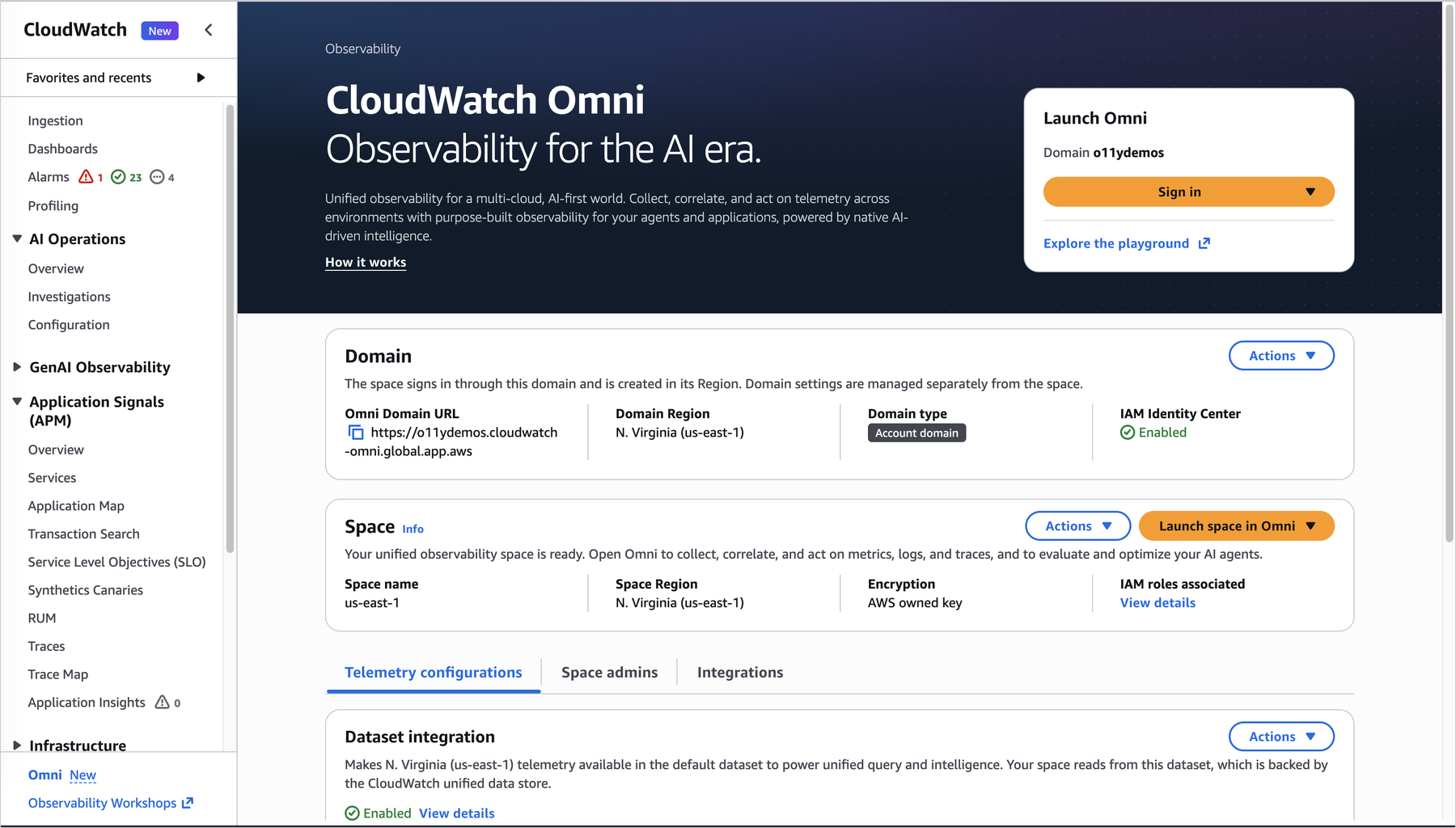
- Activation Time: Existing CloudWatch customers can launch their first Space in minutes by selecting "Try CloudWatch Omni" directly from the AWS Console.
- Data Migration: Zero data movement is required. Omni acts as an intelligent abstraction and collaboration layer sitting directly on top of pre-existing CloudWatch logs, metrics, traces, and alarms.
- External Telemetry Support: Dedicated connectors allow organizations to ingest telemetry from hybrid, multi-cloud, or on-premises environments, unifying all operational data into a single pane of glass.
Official Responses and Industry Perspectives
AWS representatives and systems architecture experts have emphasized that Omni is designed not merely as a tool upgrade, but as a cultural shift for engineering organizations.
"Engineering teams spend an unacceptable portion of their valuable time maintaining dashboards, tuning static thresholds, and context-switching between disparate tools just to figure out what broke," noted Daniel Abib in the official AWS launch documentation. "CloudWatch Omni changes this paradigm by organizing observability entirely around your applications rather than individual telemetry signals, bringing your entire cross-functional team into a single, cohesive workspace."
Industry analysts point out that as software systems grow increasingly complex—incorporating distributed microservices, serverless components, and autonomous AI agents—human operators are rapidly approaching cognitive saturation. Platforms like CloudWatch Omni, which leverage AI agents as active participants in incident triage, represent the necessary next evolution in cloud operations management. By grounding AI suggestions directly in raw OpenTelemetry data rather than generalized training parameters, AWS has prioritized technical accuracy and operational trust.
Implications for the Future of Cloud Operations
The introduction of Amazon CloudWatch Omni carries profound implications for software engineering organizations, cloud architects, and the broader enterprise software market.
1. The Death of the Static Dashboard
For decades, SRE teams have built and maintained sprawling suites of static dashboards, constantly adjusting alerting thresholds to combat alert fatigue. Omni’s dynamic, intent-driven monitoring model allows teams to declare high-level business and operational objectives (such as availability targets, latency budgets, and error rate thresholds) while the system automatically adapts its topology maps and alarms as services scale and evolve.
2. Bridging Generative AI and Core Infrastructure
As generative AI shifts from experimental proofs-of-concept to mission-critical enterprise production environments, operations teams face the challenge of monitoring non-deterministic workloads alongside deterministic backend services. By providing a unified observability experience that handles both traditional microservices and agentic AI workflows under one roof, AWS ensures that engineering organizations do not have to fracture their operational tooling when adopting AI technologies.
3. Democratization of Diagnostic Data
By decoupling Omni access from the restrictive permissions of the core AWS Management Console via IAM Identity Center integrations, AWS has lowered the barrier to entry for non-technical stakeholders. Product managers, customer success leads, and technical executives can now participate in high-level operational reviews and view system health without risking accidental infrastructure modifications within the cloud console.
4. Competitive Pressure on Independent Observability Vendors
With the release of CloudWatch Omni, AWS is tightening its grip on the native observability market. By offering native OTel ingestion, advanced AI root-cause analysis via the DevOps Agent, and frictionless collaboration spaces at zero additional data-migration cost, AWS provides a compelling, cost-effective alternative for enterprises that might otherwise have considered third-party monitoring platforms.
Getting Started and Availability
Amazon CloudWatch Omni is generally available now across supported AWS regions.
- Existing CloudWatch Customers: Administrators and engineers can initiate the setup process immediately by navigating to the Amazon CloudWatch console and selecting "Try CloudWatch Omni."
- New and Multi-Cloud Deployments: Organizations seeking organization-wide deployment can configure identity federation through IAM Identity Center (supporting Okta, Microsoft Entra ID, and other SAML 2.0 identity providers), establish dedicated team "Spaces," and connect hybrid workloads using standard OpenTelemetry protocols.
- Pricing and Support: Comprehensive pricing structures and tier breakdowns are available on the official Amazon CloudWatch Pricing Page. Technical documentation, API references, and regional availability guidelines can be accessed via the AWS Management Console or through the AWS MCP Server and plugin ecosystem for AI-assisted tooling.