AWS Weekly Roundup: Streamlining Web Deployments, Autonomous Agent Governance, and the Shift Toward Frictionless Cloud Infrastructure
By Daniel Abib
AWS Weekly Roundup Series
Main Facts
The latest cycle of Amazon Web Services (AWS) announcements highlights a strategic shift across the cloud ecosystem: reducing the physical and cognitive distance between developer intent and production-ready code. Rather than introducing entirely isolated compute paradigms, recent updates focus on removing friction—enabling standard frameworks to run natively without cumbersome adapters, while simultaneously addressing the governance and security challenges posed by increasingly autonomous artificial intelligence agents.
The core developments center on two monumental updates:
- AWS Lambda Web Functions: A brand-new form factor designed to execute standard, port-listening HTTP web applications directly on AWS Lambda without requiring developers to rewrite their code into proprietary event handlers or custom adapters.
- "Trust in Depth" Governance Framework: A strategic security blueprint from AWS addressing the operational paradox of AI agents—specifically, how to scale autonomous systems safely without fatiguing human reviewers or compromising system integrity.
These updates illustrate a dual-pronged approach by AWS: making deployment faster and more intuitive while hardening the guardrails required for enterprise-grade automation.
Chronology
Early Week: Frictionless Compute and Infrastructure-as-Code Convergence
The week began with a philosophical pivot in how developers interact with AWS infrastructure. Instead of inventing entirely novel compute engines, AWS focused on shortening the lifecycle of existing codebases.
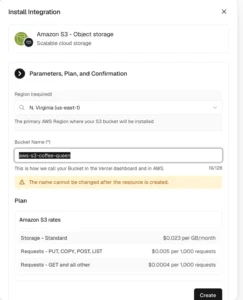
AWS Lambda quietly absorbed the capability to run a plain, unadapted HTTP server. Concurrently, Amazon S3 evolved to allow provisioning directly from local development tools, bypassing the need to navigate the traditional AWS Management Console. These distinct service updates pointed toward a unified vector: developers should spend less time orchestrating cloud infrastructure and more time delivering application logic.
Mid-Week: The Deployment Breakthrough
On Wednesday, AWS officially announced AWS Lambda Web Functions, fundamentally expanding how serverless architectures handle web traffic. Built on top of the robust Firecracker microVM isolation technology, Web Functions bridged the gap between traditional containerized web servers and serverless elasticity.
Deploying applications built with popular frameworks like Express, Hono, Fastify, or Next.js was reduced to a single command: aws lambda-web deploy. Within a minute, developers receive a live HTTPS URL with zero infrastructure scaffolding or framework lock-in required.
Thursday: The Counterweight—AI Governance and Agent Safety
As deployment barriers dissolve, the imperative to govern what software can execute in production grows exponentially. On Thursday, AWS published a deep-dive security piece titled "Trust in Depth: giving agents more autonomy without losing control."
Addressing the unsustainable nature of "human-in-the-loop" verification at scale, the publication outlined a comprehensive architectural approach to managing AI agents using Amazon Bedrock AgentCore policies enforced directly at the API gateway level.
Supporting Data and Technical Architecture
The technical mechanics behind the latest AWS announcements reveal significant architectural advancements aimed at enterprise performance, economic efficiency, and security scale.
AWS Lambda Web Functions: Under the Hood
Lambda now supports three distinct form factors operating on the same underlying Firecracker isolation engine, allowing them to compose seamlessly within a single application:
- Event Functions: The traditional asynchronous model for event-driven architectures.
- Web Functions: The newly introduced user-facing layer optimized for standard HTTP request-response patterns.
- MicroVMs: Stateful sandboxes tailored for running untrusted code.
Key technical differentiators of Web Functions include:
- Concurrent Request Handling: Unlike traditional Lambda models that map a single request to a single execution environment, each Web Function execution environment can handle up to 128 concurrent requests. This drastically improves resource utilization by sharing warm environments during traffic spikes.
- CPU-Only Billing: Rather than charging for total wall-clock execution time, billing meters strictly measure the CPU time your code actively consumes. For server-side rendering (SSR), API backends, and token-streaming AI inference endpoints—where execution cycles are frequently bottlenecked waiting on I/O—this fundamentally alters cloud economics.
- Global Distribution and Traffic Splitting: Appending
--regionsto the standard deployment command automatically replicates code and configuration behind a latency-based routing architecture tied to a single global URL. Furthermore, traffic can be split across revisions by precise weight parameters to facilitate safe canary rollouts. - Initial Specifications: At launch, Web Functions are available in five AWS Regions, natively running Node.js 24 on Arm64 architecture with full Virtual Private Cloud (VPC) connectivity. Additionally, Amazon CloudFront now supports using a Web Function endpoint as an origin, complete with Origin Access Control (OAC).
Automated Reasoning and IAM Scale
To contextualize the new AI governance framework, AWS highlighted its decade-long track record with automated reasoning. Most notably, AWS Identity and Access Management (IAM) successfully processes more than 2.1 billion requests per second using automated logic verification. The new "Trust in Depth" model leverages this proven verification engine to evaluate agent behavioral boundaries before code or actions execute.
Official Responses and Industry Perspectives
The release of AWS Lambda Web Functions has drawn immediate praise from the developer community, who have long sought the scalability of serverless without the operational tax of rewriting monolithic web apps into specialized event handlers.
Industry analysts note that while PaaS (Platform as a Service) providers have historically forced a compromise between framework flexibility and operational overhead, AWS is effectively neutralizing that trade-off. By supporting native Node.js web frameworks out of the box, AWS makes serverless architecture accessible to legacy web developers who previously viewed cloud-native refactoring as cost-prohibitive.
Regarding AI governance, security architects have widely endorsed the shift away from reliance on human vigilance. As enterprise deployment of generative AI agents accelerates, the consensus within the AWS ecosystem is clear: security controls must be exogenous to the agent itself. Because an AI agent cannot override security policies enforced at the gateway layer—policies it does not own or control—enterprises gain a mathematically verifiable boundary against unintended or malicious agent behavior.
Implications for Cloud Architects and Developers
The convergence of frictionless deployment tools and robust governance frameworks signals a maturation phase in cloud computing.
1. The Death of the Adapter
For years, running a standard Express or Fastify app on serverless compute required third-party adapters (such as serverless-http) to translate HTTP events into Lambda event objects, and vice versa. This introduced maintenance overhead, debugging blind spots, and version-compatibility nightmares. By baking native HTTP server handling directly into Lambda, AWS validates standard web architectures, allowing developers to write local code that behaves identically in production.
2. Redefining Serverless Economics
The shift to CPU-time billing for concurrent request-handling environments changes how engineering teams calculate cloud TCO (Total Cost of Ownership). Applications heavily reliant on network latency, external database queries, or streaming AI tokens will see significant cost optimizations, as they are no longer penalized for idle waiting time within the execution lifecycle.
3. Operationalizing Autonomous AI
As autonomous agents transition from experimental toys to core business infrastructure, the "scope, know, bound, and observe" methodology introduced by AWS provides a vital blueprint. Enterprises can no longer rely on prompting techniques to keep AI agents safe. By shifting governance into Amazon Bedrock AgentCore and enforcing rules at the network and API gateways, organizations can scale AI autonomy without compromising regulatory compliance or operational stability.
That concludes this week’s comprehensive AWS news analysis. Be sure to check back next Monday for the next installment of the Weekly Roundup series, tracking the latest evolutions across the AWS ecosystem.