Beyond the "Do More with Less" Trap: A New Paradigm for Data-Driven Pipeline Growth
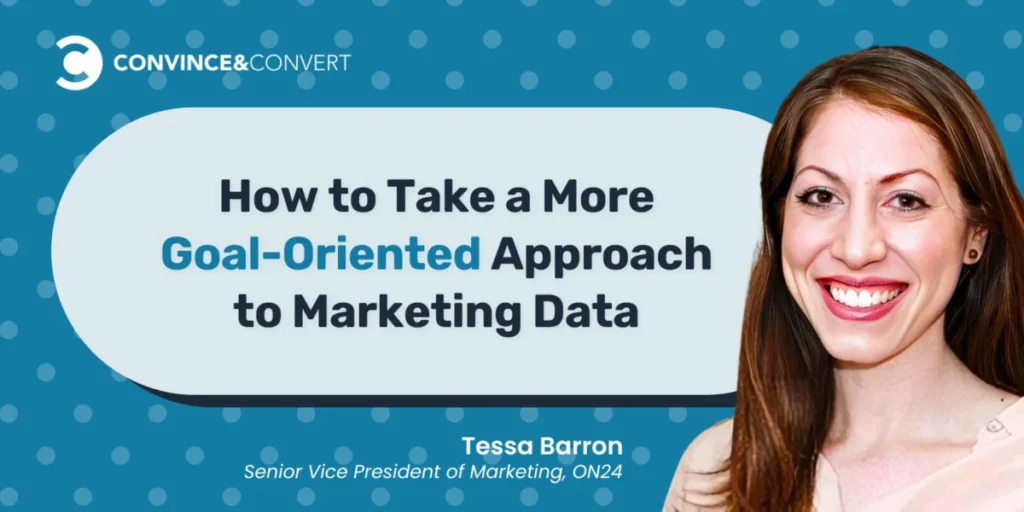
The prevailing mantra in modern marketing departments—"do more with less"—is a source of profound exhaustion for many professionals. As macroeconomic pressures mount and corporate budgets tighten, the pressure to maintain or exceed aggressive pipeline targets often feels like a mathematical impossibility. For many, the instinctive response is to ramp up the volume of activity: more webinars, more whitepapers, more social posts, and more email campaigns.
However, Tessa Barron, former Senior Vice President of Marketing at ON24 and a guest on the Data-Driven Decisions podcast, suggests that this "tactic-first" mentality is a strategic relic. In an era where buyer behavior has fundamentally shifted, the solution isn’t to increase output, but to radically transform the relationship between data, goal-setting, and sales alignment.
The Myth of the "More" Mindset
The post-pandemic landscape has reshaped how, when, and why consumers engage with brands. Yet, many marketing organizations remain tethered to playbooks written years ago.
"We as marketers have to check in with ourselves and ask: Are we still doing what we were doing three years ago?" Barron notes. "If the answer is yes, that is the first sign that we need to stop expecting that if we execute the same way, we’re going to get more in return."
The core of the issue is the industry’s reliance on "tried-and-tested" content formats. While webinars, blogs, and videos are effective, they are frequently treated as ends in themselves rather than instruments to achieve a specific business outcome. When marketers begin with the tactic—planning four webinars for Q1, for example—they prioritize activity over impact.
Barron argues that the shift must be from being tactic-oriented to goal-oriented. Instead of asking, "How many webinars can we host?" marketers should be asking, "What is our Q1 pipeline target, and how can we achieve a 10% uplift in conversion rates to get there?"
Chronology of a Strategic Shift
To transition from a busy-work culture to a high-impact culture, organizations must undergo a deliberate shift in their operational framework:
- Diagnosis: Acknowledge that historical performance metrics no longer guarantee future results.
- Goal Setting: Define the specific business outcome (e.g., reaching X number of new accounts or increasing conversion rates by a specific percentage).
- Data Identification: Determine what specific prospect behaviors serve as "signals" for that goal.
- Strategic Capture: Design content experiences (like webinars) that aren’t just informative, but are built to capture those specific signals.
- Sales Integration: Validate those signals with the sales team to ensure the data captured is actually useful for the revenue organization.
Supporting Data: From Noise to Signals
In the digital age, marketers suffer from a surfeit of information. The challenge is no longer data acquisition, but data discernment. Barron distinguishes between "noise" and "signals." A signal is an interaction that indicates a buyer’s intent or propensity to convert.
ON24’s internal operations serve as a case study for this approach. By utilizing over 20 different interactive features within their webinar platform—such as real-time polls, surveys, and Q&A sessions—they transform passive viewership into active data collection.
Industry Examples of Targeted Data Capture
The efficacy of this strategy is best illustrated by its application in highly specialized fields:
- The Technology Sector: A cloud provider software company needed to recapture market share. They identified that prospects using a specific competing cloud infrastructure were 10 times more likely to convert. By embedding a simple, direct question in their webinar registration or live session—"Which cloud provider are you currently using?"—they were able to segment their audience instantly, prioritizing the leads that held the highest potential for immediate conversion.
- The Pharmaceutical Industry: A healthcare firm wanted to reach doctors treating patients with high-risk needs. They hosted a specialized webinar focused on drug therapy breakthroughs. By asking, "How would you rate the risk of your patient base: High, medium, or low?" they gathered actionable intelligence that allowed them to tailor follow-up communications, focusing their high-touch efforts only on the doctors who indicated a "high" need.
These examples prove that when you tie data collection directly to a business goal, the "tactic" (the webinar) becomes an intelligence-gathering engine.
The Critical Nexus: Sales and Marketing Alignment
A common pitfall is that marketers often design content to please other marketers, or they focus on metrics that reflect the quality of the content rather than the quality of the lead.
Barron emphasizes that the most critical, yet often neglected, partner for a marketer is the sales representative. "Salespeople sit at the front lines of the prospect’s communication," she explains. "They know the needs, the hesitations, the doubts, and the expectations better than anyone else."
The "Net" vs. The "Pipeline"
Perhaps the most significant takeaway from Barron’s framework is the distinction between creating a lead and building a pipeline. Marketers are not the architects of the pipeline; they are the designers of the "net." Their job is to catch prospects and provide the sales team with the clearest, most qualified picture of who they are about to contact.
When sales and marketing teams work in silos, the result is a disconnect in messaging. When they work in tandem, the marketer can use the sales team’s feedback to refine the "traps" (data capture points) that filter leads. If the sales team is struggling to close because of a specific objection, the marketing team can build a webinar or whitepaper specifically designed to address that objection, thus smoothing the path to a deal.
Implications for Future Operations
The long-term implication of this philosophy is a leaner, more intentional marketing organization. By focusing on the "little steps" between a cold lead and a pipeline opportunity, teams can uncover inefficiencies that have nothing to do with budget size.
Outdated lead forms, vague messaging, or a lack of engagement opportunities are often the true culprits behind poor conversion rates. By shortening forms and tailoring messaging based on real-time signal capture, companies can see significant improvements in ROI without spending an extra dollar on advertising.
Presenting Value to Stakeholders
Finally, this data-driven approach solves a perennial problem for marketing leaders: reporting to the C-suite. When marketers focus on "noisy" data—like click-through rates or page views—stakeholders are often unimpressed.
However, when a marketer can present a simple, visually engaging dashboard that demonstrates how specific data signals are directly impacting the pipeline or conversion rates, the conversation changes. It stops being about "how much money did we spend on ads?" and starts being about "how have we improved our efficiency in moving prospects through the funnel?"
Conclusion
The call to "do more with less" is only a burden if you define "more" as "more effort." If you redefine it as "more precision," the pressure dissipates. By moving away from the safety of repetitive, tactic-heavy marketing and toward a strategy defined by signal capture and deep sales alignment, marketing leaders can move the needle on revenue regardless of the economic climate.
As Barron concludes, the goal is to be intentional. By understanding the specific needs of the audience and creating the right environment to uncover their intent, marketers can evolve from being a cost center into the primary engine of predictable revenue growth.
For those looking to refine their data strategy, the full conversation with Tessa Barron can be found on the Data-Driven Decisions podcast, part of a comprehensive eight-episode series dedicated to bridging the gap between raw data and actionable marketing outcomes.