Bridging Borders: How Spring GDS is Redefining the Future of E-Commerce Logistics
In the contemporary digital economy, e-commerce has transcended geographical boundaries, transforming from a local convenience into a global necessity. However, the backbone of this transformation—logistics—remains the most complex hurdle for merchants. Without a robust, reliable, and scalable delivery infrastructure, the promise of online shopping remains unfulfilled. Enter Spring GDS, a global logistics powerhouse designed to bridge the gap between merchants and international consumers. By combining the stability of a market leader with the agility of a modern tech innovator, Spring GDS is positioning itself as an essential partner for businesses navigating the intricacies of cross-border trade.
Main Facts: The Pillars of Global Delivery
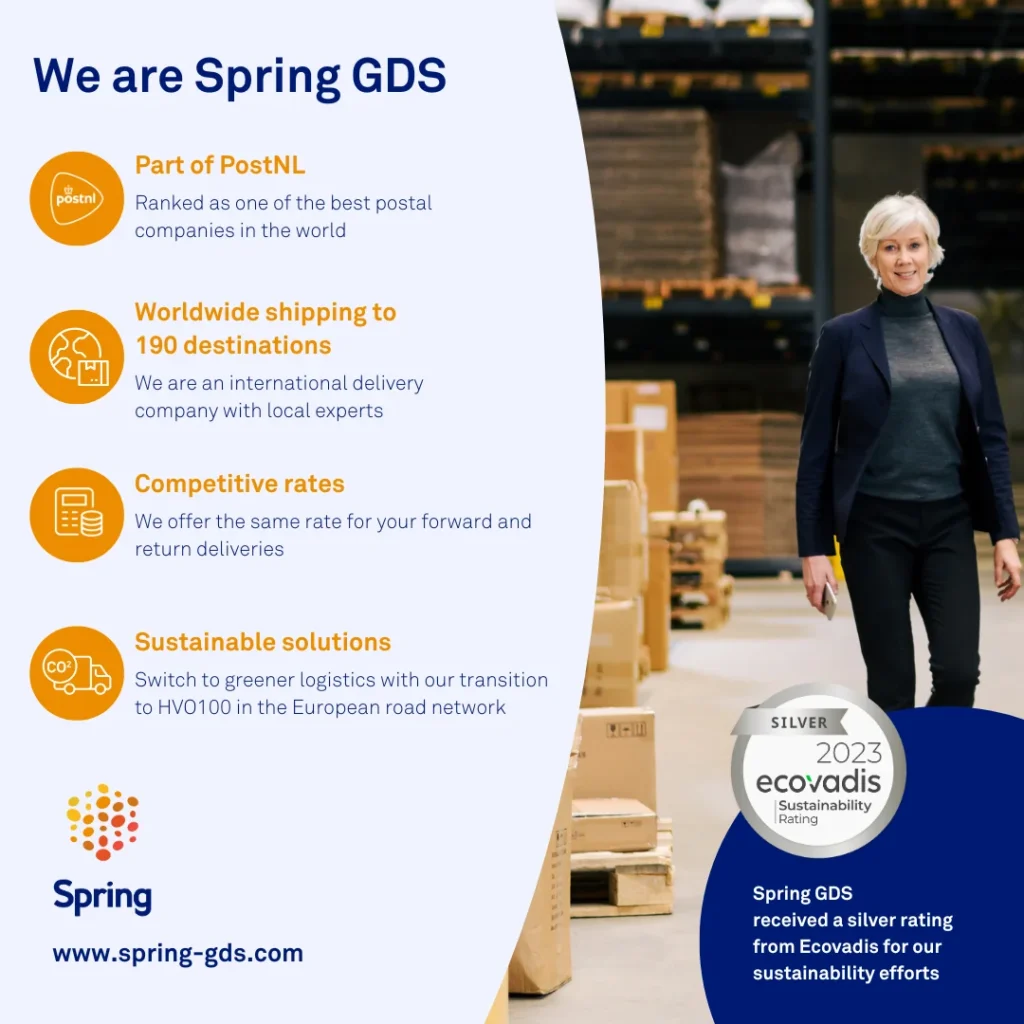
At its core, Spring GDS is the international subsidiary of PostNL, the Dutch postal and parcel corporation listed on the Euronext Amsterdam. This pedigree provides the company with a unique vantage point in the industry: the stability of a century-old national postal service married to the dynamic, fast-paced requirements of modern e-commerce.
Spring GDS operates with a singular mission: to simplify the complexity of international logistics. With 18 operation centers strategically located across three continents and a network of over 230 international logistics partners, the company offers access to 190 destinations worldwide. This vast infrastructure allows merchants to maintain a "global vision" while executing with "local expertise," ensuring that whether a parcel is destined for a major metropolitan hub in Europe or a remote address in the Asia-Pacific region, the delivery process remains seamless.
A Chronology of Growth and Sustainability
The trajectory of Spring GDS is intrinsically linked to the evolution of PostNL. While the parent company established its reputation for reliability and postal excellence, Spring GDS was carved out to specifically address the unique pain points of the digital retail era.
- Foundation and Expansion: Following its inception, Spring GDS focused on building a robust cross-border network. By leveraging the existing postal infrastructure of PostNL—consistently ranked among the top ten postal companies globally by the Universal Postal Union (UPU)—Spring GDS was able to scale rapidly, moving beyond traditional mail to specialized parcel delivery services.
- The Digital Pivot: Recognizing the surge in global e-commerce, the company invested heavily in its proprietary IT platform, XBS (Cross Border Shipping). This shift marked a transition from a purely physical delivery service to a tech-enabled logistics partner, providing merchants with end-to-end visibility.
- The Sustainability Commitment: In recent years, the company has pivoted toward a "Green Logistics" mandate. This transition was accelerated by the 2015 Paris Climate Agreement. Since then, Spring GDS has systematically embedded environmental, social, and governance (ESG) criteria into its operations, culminating in the 2023 EcoVadis Silver Medal.
Supporting Data: Why Reliability Matters
The e-commerce sector is notoriously unforgiving when it comes to shipping errors. According to industry data, high shipping costs and long delivery times are the two primary reasons for cart abandonment. Spring GDS counters this by utilizing high-density distribution networks that optimize the "last mile"—the most expensive and critical part of the delivery chain.
The company’s commitment to quality is validated by its performance metrics:
- Sustainability Metrics: Through the adoption of circular materials, Spring GDS has significantly reduced its reliance on single-use items, such as carton pallet boxes and wooden pallets.
- Environmental Targets: The organization has aligned its operations with the 1.5-degree Celsius goal of the Paris Agreement, targeting net-zero emissions by 2040.
- Assessment Rankings: The Dow Jones Sustainability Index (DJSI) frequently highlights PostNL and its subsidiaries, reflecting a long-term strategy that prioritizes ethical supply chain management over short-term gains.
Official Stance: The Strategic Vision for Logistics
In recent statements, leadership at Spring GDS has emphasized that logistics is no longer just about moving goods from Point A to Point B. It is about creating a "customer experience" that begins the moment a user clicks "buy."
"Our goal is to act as an extension of the merchant’s team," says a representative of the logistics provider. "By offering localized solutions—such as customs clearance expertise, local address formatting, and flexible delivery options—we reduce the friction that typically deters brands from expanding internationally."

The company maintains that their primary competitive advantage is the "XBS platform." By integrating this tool, merchants are no longer forced to juggle multiple carriers or navigate disparate tracking systems. Instead, XBS acts as a centralized dashboard that manages labels, tracking, customs documentation, and performance reporting. This is a crucial development, as it allows SMEs to compete with retail giants by providing the same level of transparency and speed that consumers have come to expect from market leaders.
Implications: The Future of Cross-Border Trade
The implications of partnering with a provider like Spring GDS are significant for the broader e-commerce ecosystem. As consumer expectations for "green" shipping continue to rise, companies that fail to account for their carbon footprint will likely face consumer backlash and regulatory pressure.
The Rise of Eco-Conscious Shipping
Spring GDS’s aggressive pursuit of net-zero status by 2040 places them at the forefront of the green transition. By utilizing circular logistics, they are effectively helping their clients lower their "Scope 3" emissions—the indirect emissions that occur in a company’s value chain. For brands looking to market themselves as sustainable, this partnership is not just a logistical decision; it is a branding and compliance necessity.
The Technological Edge
The integration of IT systems like XBS suggests that the future of logistics is data-driven. With predictive analytics, Spring GDS helps retailers anticipate shipping bottlenecks before they occur. This level of foresight is invaluable in a market prone to supply chain disruptions. By outsourcing the logistical heavy lifting to a firm that understands international customs, tax regulations, and local delivery idiosyncrasies, merchants can redirect their capital toward product development and marketing rather than troubleshooting delivery failures.
The "Global-Local" Paradigm
Finally, the company’s success highlights a fundamental shift in retail strategy. Brands no longer need a physical presence in every country to capture international market share. By utilizing the 18 operation centers of Spring GDS, a merchant based in Europe can essentially "warehouse" or "transit" their products with a local touch. This democratization of global trade allows for a more diverse marketplace, where a boutique brand from Amsterdam can just as easily satisfy a customer in Tokyo as it can a neighbor in Utrecht.
Conclusion
The evolution of e-commerce is inextricably linked to the efficiency of the logistical systems that support it. Spring GDS has carved out a unique position by recognizing that true success in this field requires more than just trucks and planes—it requires a commitment to sustainability, a mastery of digital integration, and an unwavering focus on the local needs of a global customer base.
As we look toward the future, the integration of green initiatives and high-tech management tools will likely become the standard rather than the exception. By staying ahead of this curve, Spring GDS is not merely facilitating shipments; it is helping to define the standards of excellence for the next generation of global commerce. Whether it is through their ambitious climate goals or their sophisticated XBS infrastructure, the company remains a vital conduit for any business looking to move beyond the limitations of their own borders and into the hearts and homes of consumers worldwide.