Digital Battlegrounds: Brazil’s Election Crisis and the Global Scrutiny of Meta’s Political Neutrality
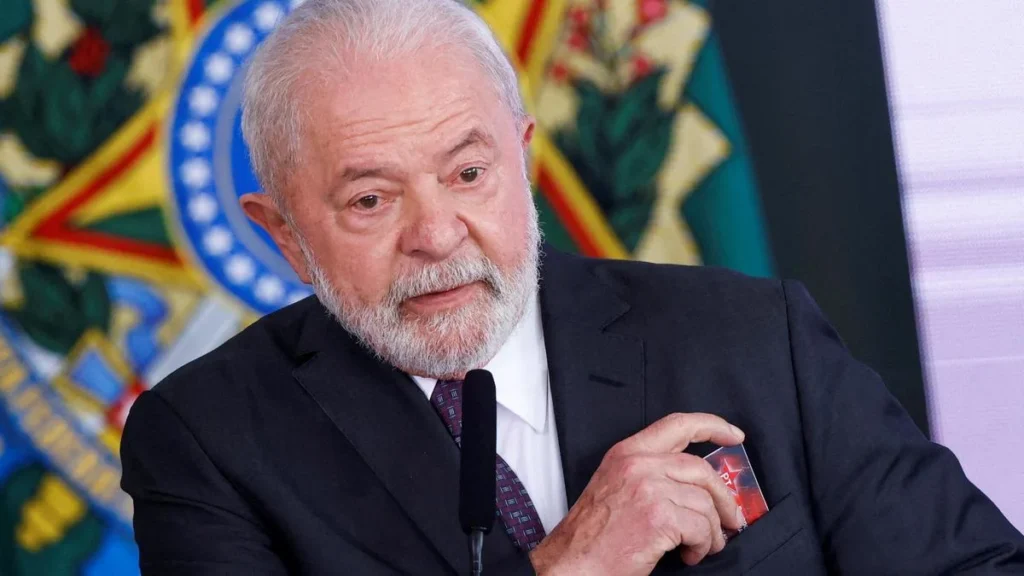
RIO DE JANEIRO — As Brazil hurtles toward a fiercely contested presidential runoff, the intersection of democratic integrity and big tech has once again ignited a global firestorm. On Sunday, October 11, 2026, the election campaign of incumbent Brazilian President Luiz Inácio Lula da Silva officially accused tech giant Meta—the parent company of Facebook, Instagram, and WhatsApp—of deliberate election interference. The accusation centers on alleged systematic shadow-banning and algorithmic suppression designed to handicap the leftist leader’s digital outreach ahead of the final showdown.
With the stakes at an all-time high, the controversy has thrown a glaring spotlight on the immense power social media conglomerates hold over modern democratic processes. It has also reopened deep-seated international debates regarding transparency, algorithmic bias, and the historical precedents of platform manipulation across multiple continents.
Main Facts of the Brazil Crisis
The core of the dispute emerged in the critical window between the first round of Brazil’s general elections on October 4, 2026, and the upcoming decisive runoff scheduled for October 25. President Lula da Silva, seeking a historic fourth non-consecutive term, finds himself locked in a bitter ideological battle against far-right candidate Flavio Bolsonaro, the son of former President Jair Bolsonaro.
According to an official statement released by Lula’s campaign team, the incumbent president’s official profiles were abruptly barred from promoting paid advertisements on Instagram, severely crippling his ability to mobilize voters during the final stretch of the campaign. Furthermore, the campaign reported that immediately following the first round of voting—which saw Flavio Bolsonaro edge ahead in the initial tally—the search visibility of Lula and several other prominent leftist political figures experienced a precipitous drop, effectively vanishing from Instagram’s internal search functions.

“This series of technical anomalies and sudden visibility restrictions cannot be dismissed as mere coincidence,” the campaign’s legal team stated. “It raises profound and alarming suspicions that Meta’s actions constitute a direct attempt to interfere in the Brazilian electoral process to the undue benefit of Flavio Bolsonaro’s candidacy.”
The allegations have transformed the closing weeks of the election into a referendum not just on economic and social policy, but on who controls the information highway in Latin America’s largest democracy.
Chronology of Events
To understand the gravity of the current confrontation, it is essential to trace the timeline of events leading up to the October 2026 showdown:
- October 4, 2026: Brazil holds the first round of its presidential elections. Far-right candidate Flavio Bolsonaro finishes the initial round with a strong plurality, setting up a high-stakes runoff against incumbent President Luiz Inácio Lula da Silva.
- October 5–10, 2026: Lula’s digital campaign team notices sudden restrictions on promotional content across Instagram. Concurrently, independent campaign monitors flag that searches for official leftist candidate profiles yield anomalous results or fail entirely.
- October 11, 2026: Lula da Silva’s campaign officially denounces Meta, accusing the tech conglomerate of targeted election interference and algorithmic bias favoring the Bolsonaro camp.
- October 12–13, 2026: Meta’s regional office in Brazil issues a categorical denial, labeling the allegations as “simply false” and maintaining that technical glitches, if any, were global and non-partisan in nature.
- October 25, 2026 (Upcoming): The scheduled date for the decisive presidential runoff election in Brazil.
Supporting Data and Historical Precedents
The accusations leveled against Meta in Brazil do not exist in a vacuum. They echo a long, troubled history of platform governance controversies, data privacy scandals, and accusations of political partiality that have plagued Silicon Valley giants over the past decade.

1. The Cambridge Analytica Watershed (United States, 2016)
The most infamous historical precedent involving Meta (then operating as Facebook) remains the 2016 U.S. presidential election cycle. The Cambridge Analytica scandal revealed how third-party entities could weaponize platform architecture. A personality-based quiz app harvested the personal data and political preferences of millions of Facebook users without their explicit, informed consent.
This harvested data was funneled to Cambridge Analytica, a political consultancy working on Donald Trump’s successful 2016 campaign. The firm utilized the data to build psychographic profiles of American voters, bombarding them with hyper-targeted micro-ads designed to alter voter behavior and suppress turnout. The breach ultimately affected up to 87 million users. The fallout forced CEO Mark Zuckerberg to testify before a joint session of the U.S. Congress, where he admitted, "We didn’t take a broad enough view of our responsibility, and that was a big mistake. It was my mistake, and I’m sorry."
2. Algorithmic Favoritism Investigations (India, 2019–2022)
Similar questions regarding political neutrality arose in India during the 2019 general elections. An exhaustive investigative report published in 2022 by The Reporters’ Collective and ad.watch analyzed over half a million political advertisements run on Facebook.
The investigation revealed systemic disparities, noting that Meta’s ad-delivery algorithms offered significantly cheaper ad rates to the ruling Bharatiya Janata Party (BJP) compared to its political opponents. Furthermore, the investigation uncovered a proliferation of "dummy" or surrogate ads—promotional content funded by opaque third-party entities that bypassed official electoral codes of conduct. These surrogate ads attacked opposition figures and boosted ruling party narratives without disclosing their true financial backers. Despite these extensive findings, Meta strongly refuted the claims, maintaining that its advertising policies were applied uniformly regardless of political affiliation.

Official Responses and Stakeholder Positions
The response from Meta to the Brazilian campaign’s allegations has been swift and uncompromising. In statements issued through its Brazil office, the company flatly rejected any notion of election meddling.
“These accusations are simply false and are not supported by the facts,” a Meta spokesperson stated. “We remain deeply committed to ensuring a level playing field during democratic elections globally. Any technical inconsistencies or disruptions reported recently were part of routine global infrastructure updates and platform adjustments, entirely devoid of any intention to tamper with or favor any political candidacy.”
Despite these assurances, civil liberties groups and Brazilian electoral watchdogs have expressed skepticism. Legal experts note that while proving malicious intent behind algorithmic changes is notoriously difficult, the opaque nature of social media recommendation engines leaves tech companies uniquely vulnerable to public distrust during high-stakes political transitions. Brazil’s Superior Electoral Court (TSE) has frequently clashed with major tech platforms in recent years over the regulation of disinformation and hate speech, establishing a rigorous legal framework aimed at holding digital intermediaries accountable for content moderation failures.
Broader Implications for Global Democracy
The collision between Brazil’s democratic institutions and Meta’s algorithmic infrastructure carries profound implications for the future of governance worldwide:

- The Crisis of Platform Transparency: As political discourse migrates almost entirely to privately owned digital ecosystems, the lack of real-time algorithmic transparency breeds inherent suspicion. When technical glitches occur during sensitive electoral windows, they are rarely viewed as benign system errors; instead, they are immediately interpreted as deliberate thumb-on-the-scale tactics.
- Regulatory Sovereignty vs. Silicon Valley: Nations across the Global South are increasingly unwilling to allow foreign tech corporations to police themselves. The events in Brazil underscore a growing regulatory appetite to mandate independent third-party audits of social media algorithms, particularly during election cycles.
- The Threat of Micro-Targeting and Shadow-Bans: Whether through the overt manipulation of ad-bidding systems or the subtle mechanics of shadow-banning, the ability of platform operators to amplify or suppress political voices gives them unprecedented leverage over electoral outcomes.
As Brazil heads toward the October 25 runoff, the eyes of the international community remain fixed on both the ballot boxes in Brasília and the server rooms in Menlo Park. Regardless of the election’s ultimate outcome, the crisis has permanently altered the conversation surrounding digital sovereignty, demanding a fundamental reckoning over how tech monopolies wield influence in the fragile arenas of modern democracy.