E3 Electric.Ai Secures ₹100 Cr Series A to Pioneer AI-Driven Personal Mobility in India
The landscape of India’s electric two-wheeler (E2W) market is undergoing a seismic shift. As the nation pivots toward sustainable mobility, a new entrant, E3 Electric.Ai, is looking to disrupt the status quo by leveraging artificial intelligence to redefine the relationship between rider, machine, and road. The Bengaluru-based startup has successfully raised ₹100 Cr ($10.4 Mn) in a Series A funding round, a significant capital injection that underscores investor confidence in the future of "intelligent" electric vehicles.
Led by BluVenture Holdings, with support from a consortium of undisclosed angel investors, the funding round—comprised of a strategic mix of 75% equity and 25% debt—positions E3 to aggressively scale its operations ahead of the commercial launch of its debut flagship product, the E3 TRION.
The Genesis of an AI-First Mobility Vision
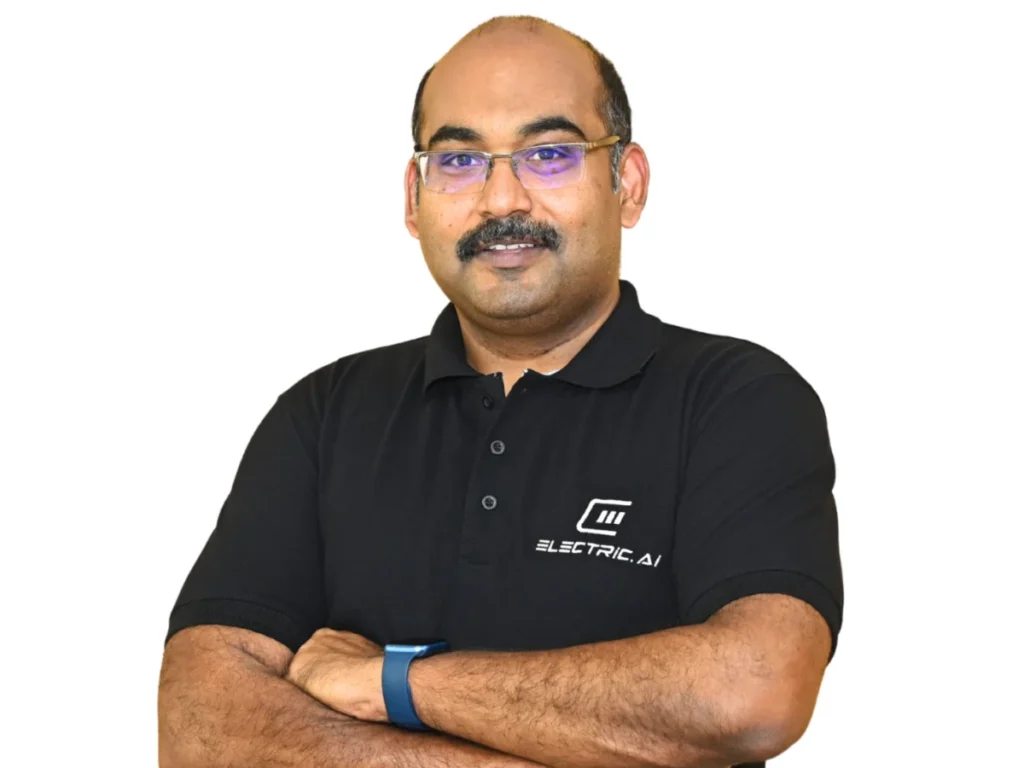
Founded in 2024, E3 Electric.Ai is the brainchild of P Sanjeev, a seasoned industry veteran who previously spearheaded the EV division at TVS Motor. Sanjeev’s departure from a legacy automotive giant to build a technology-first startup reflects a growing trend in the Indian ecosystem: the transition from mechanical manufacturing to software-defined hardware.
E3 is not positioning itself as just another scooter manufacturer; it is building a "mobility intelligence" company. By adopting an asset-light business model, the startup is consciously avoiding the capital-heavy trap of massive, company-owned assembly plants. Instead, the firm is channeling its resources into the development of proprietary intellectual property (IP), software algorithms, and a modular vehicle architecture that promises to keep its products future-proof in a rapidly evolving technological climate.
Chronology of Growth and Strategic Roadmap
The journey of E3 Electric.Ai has been swift, characterized by a focus on "stealth-mode" R&D before making its public debut.
- Early 2024: E3 Electric.Ai is incorporated in Bengaluru, with a founding team comprising experts in automotive engineering and AI/ML software.
- Mid-2024: Development of the "modular platform" concludes. This platform allows E3 to build diverse scooter variants on a single chassis, enabling rapid iteration of batteries, motors, and controllers.
- Q3 2024: The company opens a digital waitlist to gauge market interest, signaling the upcoming launch of the TRION.
- Late 2024: Closing of the ₹100 Cr Series A funding round led by BluVenture Holdings.
- Upcoming (FY 2024-25): Commercial launch in Bengaluru and select southern markets, with plans to expand to 90 key urban centers, including a targeted entry into the Delhi market.
The Technological Differentiator: Why AI?
In a market dominated by range anxiety and durability concerns, E3 Electric.Ai is banking on intelligence to solve the fundamental pain points of EV ownership. The E3 TRION is designed to be more than a vehicle; it is intended to be a responsive companion.
Predictive Intelligence and Battery Health
The startup’s AI suite is built on the premise that data can prevent failure. By monitoring riding patterns—such as acceleration habits and charging cycles—the vehicle’s software generates personalized range estimates that are significantly more accurate than standard distance-to-empty calculations. More importantly, the system employs predictive maintenance algorithms that identify potential hardware degradation long before it leads to a breakdown.
The 10-Second Health Scan
Perhaps the most notable feature for the everyday commuter is the "10-second vehicle health scan." Before a trip, the rider can initiate a diagnostic check that assesses the integrity of the motor, battery, and controller. If the system flags a potential issue, it automatically triggers a link to roadside assistance, effectively removing the uncertainty often associated with electric vehicle reliability.
Safety as a Core Pillar
Safety remains a paramount concern for Indian consumers. E3 is integrating an SOS feature that utilizes onboard sensors to detect a fall. In the event of an accident, the vehicle automatically transmits incident details to pre-registered family members and emergency helplines. Additionally, the software’s "smart routing" feature optimizes travel paths based on real-time traffic and the vehicle’s current state of charge, ensuring that riders do not find themselves stranded.
Market Implications: Navigating a $132 Bn Opportunity
The Indian electric vehicle sector is no longer a niche segment; it is a burgeoning powerhouse. According to recent reports, the sector is projected to hit a valuation of $132 Bn by 2030. However, the path to profitability is fraught with competition.
The Competitive Landscape
E3 enters a market where it must contend with well-entrenched incumbents:
- Ola Electric: Known for its aggressive scaling and software-heavy approach.
- Ather Energy: The pioneer of premium electric scooters in India, favored for its build quality.
- Legacy Automakers: TVS Motor (Sanjeev’s former employer) and Bajaj Auto, both of which have successfully transitioned their massive distribution networks to accommodate EVs.
Despite this, E3’s CEO, P Sanjeev, remains undeterred. By focusing on an asset-light model and prioritizing IP over physical assembly, the company is aiming for a level of agility that larger players often struggle to maintain. The goal is to provide a "premium-tech" experience that remains accessible to the mass market.
Official Perspective: The Visionary’s View
In conversations following the funding announcement, P Sanjeev emphasized that the capital is intended to catalyze the firm’s growth trajectory. "We are focusing our capital on technology and IP," Sanjeev noted. This strategic pivot away from heavy infrastructure suggests that E3 expects to partner with existing manufacturing ecosystems rather than reinventing the wheel—a common strategy among modern deep-tech startups.
The decision to focus on 90 markets indicates a rapid expansion strategy. Rather than limiting themselves to the "tech-savvy" Tier-1 cities, the company aims to establish a pan-India presence, recognizing that the demand for reliable, smart, and safe electric scooters is equally high in Tier-2 cities where EV adoption is currently surging.
Supporting Data: The EV Boom
The urgency of this funding is underscored by the current state of the industry. In June alone, India saw 1.81 Lakh electric two-wheeler registrations. This growth, roughly 5% month-over-month, demonstrates that consumer appetite is robust. With TVS Motor leading the pack and legacy players gaining momentum, the window for new entrants to capture significant market share is narrowing.
Investors are clearly betting that the next wave of EV adoption will not be driven by battery size alone, but by the "smart features" that make the vehicle more intuitive to the user. E3 Electric.Ai, with its 10 core AI and software features set to debut with the TRION, is positioning itself to be the "smartphone equivalent" of the two-wheeler world.
Future Outlook: A Critical Juncture
As E3 Electric.Ai moves toward its commercial launch, the company faces a critical juncture. The technology is compelling, and the funding provides a robust runway. However, the true test will be the reliability of its AI systems in the harsh, unpredictable conditions of Indian roads—characterized by extreme heat, heavy traffic, and varying infrastructure quality.
The company’s plan to debut 10 core AI features at launch will likely serve as the primary marketing differentiator. If these features perform as promised, E3 could effectively redefine consumer expectations for what a mid-segment scooter should be.
Ultimately, the success of E3 will hinge on its ability to balance software innovation with the ruggedness required by the Indian consumer. If the startup can maintain its asset-light efficiency while scaling its software infrastructure across 90 cities, it may well become one of the defining success stories of India’s electric mobility revolution. The $132 Bn opportunity is vast, but it belongs to those who can make the electric transition not just cleaner, but smarter.