Navigating the AI Frontier: Inside Inc42’s Inaugural CTO Summit 2026 and India’s Next Tech Evolution
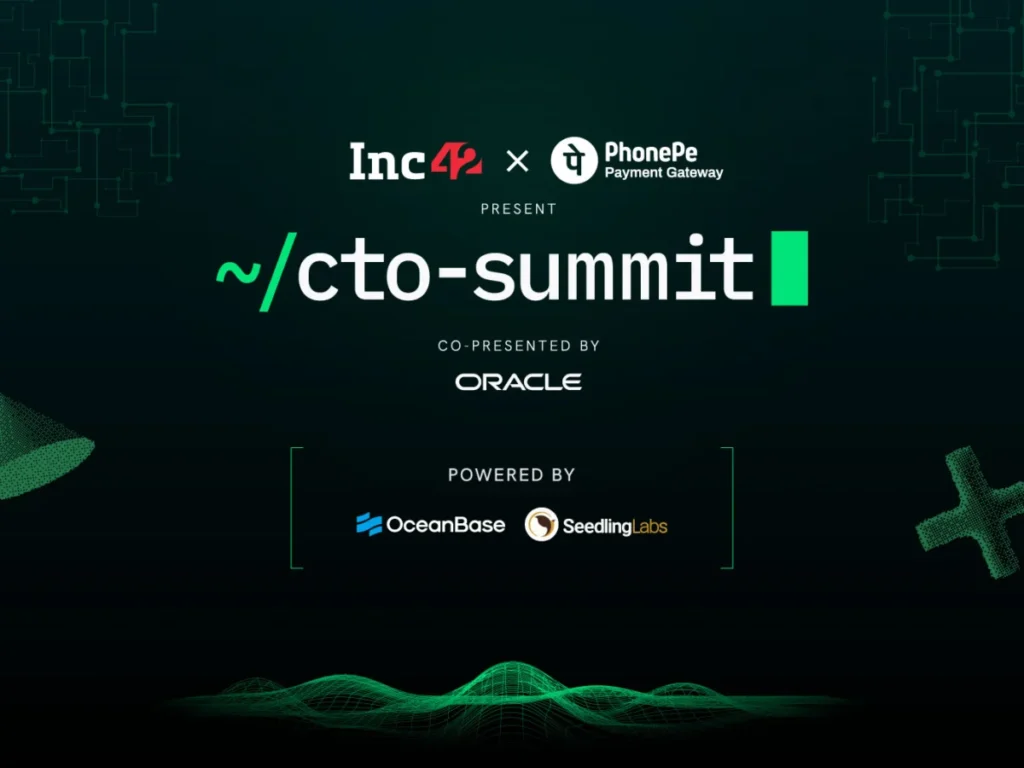
BENGALURU — On September 30, the JW Marriott in Bengaluru transformed into a crucible of technological foresight as Inc42 hosted the inaugural edition of the CTO Summit 2026. Gathering over 200 senior technology leaders, engineering heads, and visionary founders from India’s most prominent startups—including heavyweights like Meesho, Swiggy, Flipkart, and Rapido—the summit moved decisively past the industry’s honeymoon phase with artificial intelligence.
No longer centered around abstract experimentation or proof-of-concept sandboxes, the dialogue at the CTO Summit focused intensely on production: how India’s engineering elite are building, scaling, securing, and monetizing AI systems designed to operate reliably and economically at unprecedented scale.
Main Facts: The AI Pragmatism Shift in India
The primary takeaway from the day-long summit was clear: India’s technology ecosystem has matured past the initial gold rush of generative AI hype. CTOs and product leaders are now confronting the structural, financial, and operational realities of running complex AI workloads in production environments.
- High-Level Attendance: Over 200 senior technology executives, including CTOs, Chief Product & Technology Officers (CPTOs), and VPs of Engineering from India’s top-tier digital enterprises.
- Core Themes: Moving AI from experimentation to production, optimizing inference and infrastructure economics, overcoming data fragmentation, redefining engineering productivity through AI agents, and engineering specifically for India’s unique constraints—such as diverse consumer devices, multi-linguality, and varying connectivity.
- Key Industry Showcases: Cutting-edge technical demonstrations by Zomato (Nugget), Rapido, and Razorpay revealed proprietary internal agents, autonomous coding tools, and LLM gateways already operational at scale.
- Key Partners: The summit was backed by industry leaders including Presenting Partner PhonePe Payment Gateway, Co-presenting Partner Oracle, and Powered-by Partners OceanBase and Seedling Labs.
Chronology: A Day of Deep-Dive Sessions and Technical Masterclasses
The summit unspooled across more than 10 highly curated sessions, balancing macro-level architectural strategies with tactical, hands-on engineering insights.
Morning Plenaries: Redefining Products and Intent
The day opened with a deep dive into how AI is fundamentally altering consumer touchpoints. Swiggy’s CTO, Madhusudhan Rao, took the stage to outline how the food delivery giant is utilizing AI agents to project commerce far beyond the traditional boundaries of its core mobile application. Simultaneously, Flipkart CPTO Balaji Thiagarajan deconstructed the monumental industry shift from rigid, keyword-led product discovery toward cognitive systems capable of divining authentic consumer intent in real time.
Mid-Day Tracks: Architecture, Infrastructure, and Scale
As the afternoon progressed, conversations pivoted from user interfaces to the heavy machinery humming beneath the hood. Panels such as “The Architecture Of 10X: Engineering For India’s Next Scale Curve”—featuring Oracle’s Palanivel Saravanan, Kuku CTO Vikas Goyal, BookMyShow CTO Noel Curtis, and Razorpay SVP of Engineering Prabu Ram—tackled the grim realities of capacity planning, cross-stack resilience, and designing systems capable of graceful degradation when external infrastructure fails.
Concurrently, a technical roundtable titled “Building The AI Stack For Scale, Cost And Control”, moderated alongside Seedling Labs Founder & CEO Shanti Kuropati, brought together executives from Gravitas, Matters.ai, BigHaat, Vahan.ai, CoinSwitch, Oxmiq Labs, and Netradyne. The assembly debated the hard metrics of unit economics, model selection trade-offs, and the guardrails required to keep autonomous systems compliant and cost-effective.
Afternoon Technical Demos: Real-World AI in Action
The summit’s most anticipated segment featured three live technical demonstrations illustrating how Indian startups are operationalizing advanced AI workflows:
- Nugget (by Zomato): Dushyant Garg, Lead for Strategy & Enterprise Growth, demonstrated how Zomato is translating its massive consumer-scale AI operational experience into robust enterprise software via specialized agents, real-time intelligence loops, and comprehensive governance layers.
- Rapido: CTO Srivatsa Katta walked the audience through Rapido’s complete infrastructural overhaul for the AI era, detailing the deployment of internal coding agents, an enterprise-grade LLM Gateway, and their proprietary "AI Catalyst" framework.
- Razorpay: SVP of Engineering Prabu Ram showcased Slash, Razorpay’s autonomous engineering agent engineered to ingest company context, hook into connected developer tools, and execute complex engineering workflow triggers independently.
Supporting Data: Efficiency Gains and Operational Metrics
Behind the architectural philosophies lay hard numerical proof of AI’s impact on corporate bottom lines and engineering velocity. Several speakers quantified the productivity transformations occurring inside their engineering organizations:
- PhonePe’s Agentic Workforce: PhonePe Payment Gateway CTO Srijon Biswas revealed that the fintech giant has deployed over 200 internal AI agents utilized daily by roughly 1,600 employees.
- Dramatic Time Reductions: Through these AI implementations, PhonePe reported saving approximately 22 person-days per application release cycle. Furthermore, internal audit processes that historically demanded four grueling days of manual labor were compressed down to a staggering three minutes.
- Data Foundation Realities: Discussions led by Kisalay Ranjan (Head of Engineering, Merchant Payments, PhonePe), Anil Sinha (CTO, Fibe), and Bhanu Jamwal (GM, India Business, OceanBase) underscored that data hygiene remains the ultimate bottleneck. Without pristine data lakes, stringent access controls, and low-latency distributed databases, even the most sophisticated LLMs hallucinate or fail to deliver production-grade value.
Official Responses and Perspectives
Industry leaders at the summit offered candid assessments of the hurdles and structural transformations facing the tech landscape:
"As AI takes on more routine engineering work, you need more people who can make stronger decisions and get them correct more often."
— Srijon Biswas, CTO, PhonePe Payment Gateway
Biswas emphasized that while junior tasks are rapidly being automated, the demand for high-level architectural judgment and critical system thinking is skyrocketing.
"Everybody is looking at how they can get the models much closer to their data, so that the model can learn better and respond to the user better."
— Palanivel Saravanan, Head of Infrastructure Cloud Engineering, Oracle
Saravanan’s observation highlighted a major shift in enterprise data strategy: moving away from centralized, monolithic data processing toward edge-proximate architectures that reduce latency and enhance contextual relevance.
Implications: Building for India’s Unique Scale and Constraints
The overarching philosophy crystallized at the Inc42 CTO Summit 2026 was the absolute necessity of contextual engineering. Scaling AI in India is categorically different from scaling it in Silicon Valley or Western Europe.
1. The Multi-Constraint Equation
Indian technology companies must build AI applications that function seamlessly across a hyper-fragmented hardware spectrum—from high-end flagship devices down to budget smartphones operating on patchy cellular connections. Furthermore, models must natively comprehend India’s linguistic diversity. Designing AI workflows that respect these physical and cultural constraints without blowing up inference budgets emerged as a defining engineering challenge.
2. The Evolution of the Engineering Team
With coding agents like Razorpay’s Slash and Rapido’s internal automation pipelines taking over boilerplate coding, debugging, and routine syntax generation, the role of the software engineer is pivoting upward. The modern developer is evolving from a code-writer into a systems architect, curator, and ethical validator. Designing for resilience, verification, and governance is superseding raw lines of code as the primary marker of engineering competence.
3. Economic Sustainability
The euphoria of early model adoption has been sobered by the cold economics of API calls, GPU infrastructure rentals, and token consumption. As highlighted by partners like Seedling Labs and OceanBase, the next wave of Indian unicorns will be defined not just by how smartly they deploy AI, but by how tightly they control unit economics and maintain deterministic guardrails in production.
Partner Spotlight
The inaugural Inc42 CTO Summit 2026 was made possible through the collaboration of key technology partners who are actively laying the tracks for India’s digital future:
- PhonePe Payment Gateway (Presenting Partner): A dominant force in India’s digital financial ecosystem, processing massive transaction volumes while pioneering the integration of Digital Public Infrastructure (DPI) with enterprise AI.
- Oracle (Co-presenting Partner): Providing foundational enterprise cloud infrastructure, high-performance databases, and advanced cloud engineering solutions designed to handle the rigorous scale curves of modern startups.
- OceanBase (Powered By Partner): Delivering robust, distributed database technology built to handle massive transactional workloads and complex data queries required by enterprise AI applications.
- Seedling Labs (Powered By Partner): Specializing in cutting-edge AI infrastructure and systems architecture, helping organizations build production-ready, reliable, and cost-controlled AI environments.
As the summit drew to a close, the consensus in Bengaluru was unmistakable: India’s tech ecosystem has crossed the threshold of novelty. Armed with advanced agents, robust data foundations, and a hard-nosed focus on unit economics, the nation’s CTOs are no longer just imagining the AI era—they are engineering its production-grade reality.