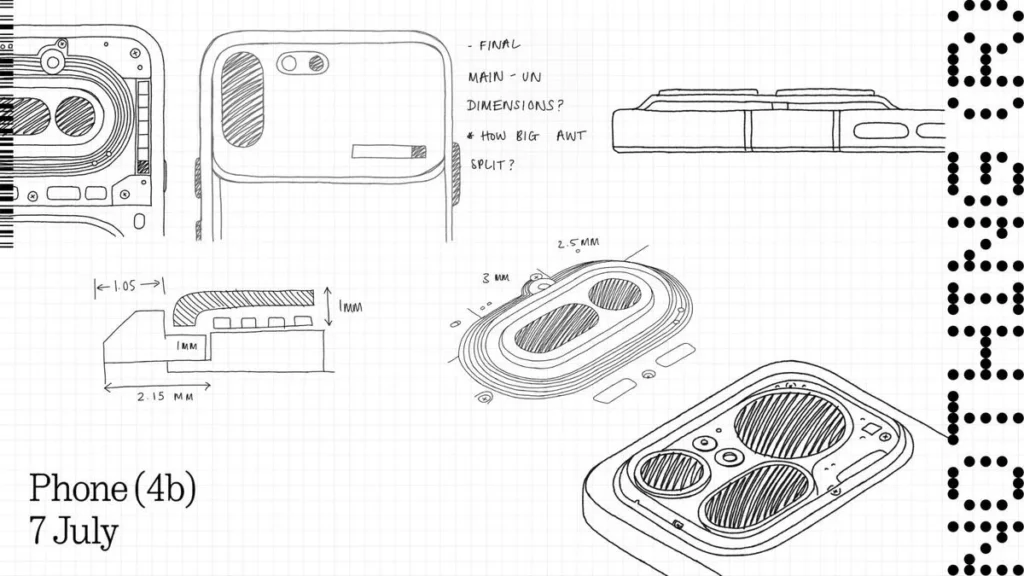
NEW DELHI — In a move designed to democratize its design-forward philosophy and capture a larger share of the world’s second-largest smartphone market, London-based consumer electronics brand Nothing has officially announced the upcoming launch of its new smartphone, the Nothing Phone 4b. Scheduled for an official unveiling in India on July 7, 2026, the device marks the debut of the company’s new "B" product series.
The announcement, made on Tuesday, June 23, 2026, signals a calculated shift in Nothing’s market strategy. By introducing the B-series, Nothing aims to establish a highly accessible entry point into its hardware and software ecosystem, specifically targeting budget-conscious and mid-segment buyers in India. The Phone 4b is expected to retail in the competitive sub-₹25,000 (approximately $300 USD) price bracket, a segment currently dominated by established players such as Xiaomi, Realme, Samsung, and OnePlus.
Main Facts: The Nothing Phone 4b and the ‘B’ Series
The Nothing Phone 4b represents a new tier in the company’s expanding product hierarchy. Positioned below the premium mid-range "A" series and the flagship numbered series, the "B" series is designed to deliver Nothing’s signature aesthetic and user experience at a more aggressive price point.
According to preliminary specifications and industry expectations, the Nothing Phone 4b will balance cost-efficiency with competitive hardware:
Display: The device is expected to feature a 6.7-inch LCD display. While opting for LCD over OLED is a clear cost-saving measure, Nothing is mitigating this compromise by offering a smooth 120 Hz refresh rate, ensuring fluid scrolling and UI transitions.
Processor and Performance: Under the hood, the Phone 4b is anticipated to house a mid-range MediaTek chipset, moving away from the Qualcomm Snapdragon processors often found in its higher-end models. The device will likely be offered in configurations featuring up to 8 GB of RAM and up to 256 GB of onboard storage.
Camera System: On the imaging front, the smartphone is tipped to sport a dual rear camera configuration. This setup will be anchored by a 50-megapixel primary sensor. For selfies and video calls, a 12-megapixel front-facing camera will be housed within a punch-hole cutout.
Battery and Charging: The phone will be powered by a robust 5,000 mAh battery, designed to easily provide all-day battery life. In line with modern environmental and cost-saving industry standards, the retail packaging is highly likely to exclude a charging brick, requiring users to purchase one separately or use existing USB-C chargers.
Pricing and Availability: The Nothing Phone 4b is projected to launch in India’s sub-₹25,000 price segment. It will be sold primarily online, leveraging Nothing’s established e-commerce partnerships in the region.
Chronology: The Evolution of Nothing’s Smartphone Portfolio
To understand the strategic significance of the Phone 4b, it is essential to trace the chronological evolution of Nothing’s product strategy since its inception by OnePlus co-founder Carl Pei in late 2020.
[2021] Launch of Ear (1) - Establishing Design Identity
  │
[2022] Nothing Phone (1) - Entry into Mid-Premium Segment (Glyph Interface introduced)
  │
[2023] Nothing Phone (2) - Push into Flagship Territory (Premium Pricing)
  │
[2024] Introduction of 'A' Series (Phone 2a) - High-Value Mid-Range Segment
  │
[2025] Consolidation of Flagship and Mid-Range Lines
  │
[June 2026] Announcement of 'B' Series (Phone 4b) - Entry-Level Mid-Range Segment
  │
[July 7, 2026] Scheduled Launch of Nothing Phone 4b in India
October 2020: Carl Pei departs OnePlus and subsequently founds Nothing, promising to "remove the barriers between people and technology."
July 2021: Nothing launches its first product, the Ear (1) wireless earbuds, showcasing a distinctive semi-transparent design language that would become the brand’s hallmark.
July 2022: The company releases its first smartphone, the Nothing Phone (1). Priced in the mid-premium segment, it introduces the "Glyph Interface"—a unique arrangement of LED strips on the transparent back panel.
July 2023: The Nothing Phone (2) is launched. This device features upgraded specifications, a more refined Glyph interface, and a higher price tag, moving the brand closer to the premium flagship tier.
March 2024: Recognizing the need for a high-volume volume driver, Nothing introduces the Phone (2a), the pioneer of the "A-series." It retains the core design DNA and software experience of the flagship models but at a more accessible mid-range price point.
June 23, 2026: Nothing officially announces the B-series and schedules the launch of the Nothing Phone 4b for July 7, 2026, marking its deepest push yet into the budget-conscious consumer segment.
Supporting Data: The Indian Smartphone Market Dynamics
The decision to target the sub-₹25,000 price bracket in India is backed by compelling market data. India remains one of the most dynamic and volume-heavy smartphone markets globally, with the mid-range segment experiencing the most intense competition and growth.
Market Share by Price Band in India (Projected 2026)
Price Segment (INR)
Market Share (%)
Key Competitors
Entry-Level (< ₹15,000)
35%
Xiaomi (Redmi), Realme, Motorola, POCO
Mid-Range (₹15,000 – ₹25,000)
30%
OnePlus (Nord CE), Samsung (A-Series), Vivo (T-Series), Nothing (B-Series)
Premium Mid-Range (₹25,000 – ₹45,000)
20%
Nothing (A-Series), OnePlus (Nord), Google Pixel (A-Series)
Premium/Flagship (> ₹45,000)
15%
Apple (iPhone), Samsung (S-Series), OnePlus Pro
Market analysis indicates that the ₹15,000 to ₹25,000 price band acts as a critical transition zone for Indian consumers upgrading from entry-level devices. Consumers in this bracket demand premium-tier features—such as high-refresh-rate displays, fast charging, and capable cameras—without the premium price tag. By entering this segment, Nothing is positioning itself to capture young, tech-savvy users who prioritize design aesthetics and software cleanliness over raw, unoptimized hardware specifications.
Official Responses: Clarifying the Product Hierarchy
Following the announcement, Nothing’s executive leadership took to social media and public forums to clarify the company’s product roadmap and alleviate potential consumer confusion regarding the naming conventions.
Akis Evangelidis, Co-founder and India President of Nothing, detailed the introduction and placement of the B-series in a comprehensive post on X (formerly Twitter) on June 22, 2026:
"The B Series builds on the success of the A Series by expanding into a new segment, while maintaining a clear product hierarchy."
Evangelidis went on to explain the distinction between the different product lines to ensure consumers understand where the Phone 4b sits in the ecosystem:
"The A Series has been our best-selling smartphone line, bringing the best of Nothing’s design innovation while focusing on the features that matter most. The A Series remains our most premium line below our flagship products, which don’t carry a letter designation. This avoids overusing suffixes and provides a clearer naming structure as the portfolio expands. Hope this is clear."
Through this statement, Nothing aims to avoid the "naming bloat" that plagues many of its competitors, who frequently utilize confusing suffixes such as "Pro," "Max," "Ultra," "Neo," "Lite," and "Plus" within the same generation of devices. Under Nothing’s streamlined hierarchy:
Flagship Series (e.g., Phone 4): Uncompromised performance, premium materials, and the latest innovations.
A-Series (e.g., Phone 2a, 3a): Premium mid-range, focusing on core premium features at a balanced price.
B-Series (e.g., Phone 4b): Entry-level mid-range, offering the essential Nothing experience, clean software, and unique design to a broader audience.
Implications: Strategic Consequences for Nothing and the Industry
The launch of the Nothing Phone 4b carries significant implications not only for the London-based startup but also for the broader smartphone ecosystem in India and beyond.
1. Democratization of Design and Software
For years, the sub-₹25,000 smartphone market in India has been criticized for a lack of design innovation, with many brands relying on generic plastic backs and highly customized, ad-heavy software skins (bloatware). Nothing’s entry into this segment with its clean, near-stock Nothing OS and unique industrial design could force competitors to reconsider their software and hardware choices. A clean user interface free of pre-installed bloatware is a major selling point that has historically been restricted to more expensive devices.
2. Ecosystem Onboarding and Customer Lifetime Value
The B-series serves as a "gateway drug" to the broader Nothing ecosystem. By lowering the financial barrier to entry, Nothing can onboard younger demographics who may later upgrade to flagship Nothing phones, or purchase ecosystem accessories such as the Nothing Ear series, CMF by Nothing wearables, and future smart home products.
3. Supply Chain and Margin Pressures
Operating in the sub-₹25,000 segment requires tight cost control. To achieve this price point, Nothing has had to make strategic hardware concessions, such as opting for an LCD display instead of an AMOLED panel, utilizing a MediaTek processor instead of Qualcomm, and omitting the charging adapter from the retail box. Managing these compromises without diluting the premium feel of the brand will be a delicate balancing act for Nothing’s engineering team.
4. Intensified Competition with OnePlus and Xiaomi
The launch of the Phone 4b sets up a direct confrontation with OnePlus’s highly successful Nord CE series and Xiaomi’s Redmi Note Pro lineup. Given Carl Pei’s historical connection to OnePlus, the rivalry is particularly poignant. If Nothing can successfully deliver a more polished software experience and a more striking design than the Nord CE series at a comparable price, it could capture a significant portion of OnePlus’s historical enthusiast fan base in India.
As the July 7, 2026 launch date approaches, the tech industry will be watching closely to see if Nothing can translate its design prestige into mass-market volume, turning the Phone 4b into a commercial cornerstone for the company’s global ambitions.