Razorpay Deepens OpenAI Partnership to Power ChatGPT Ads and Conversational Commerce in India
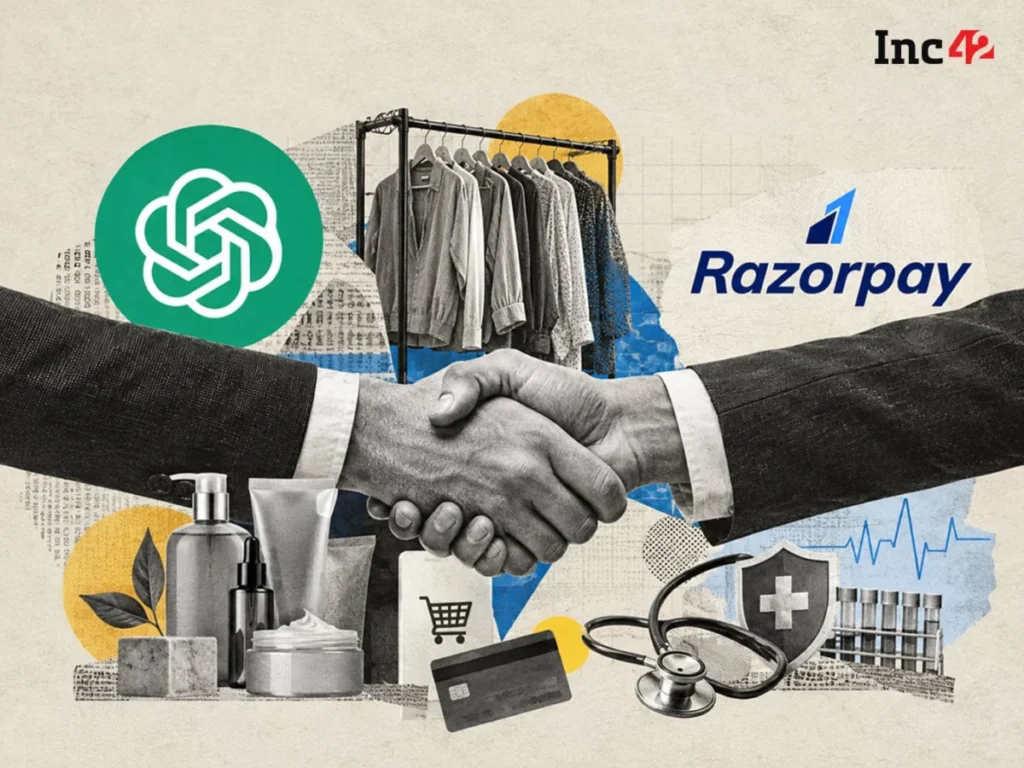
MUMBAI — In a milestone development that bridges fintech and artificial intelligence, IPO-bound digital payments giant Razorpay has announced a major expansion of its strategic partnership with AI pioneer OpenAI. The collaboration is designed to equip Indian brands with the technological infrastructure required to advertise, engage consumers, and complete transactions directly within ChatGPT.
The initiative leverages Razorpay’s growth marketing platform, Razorpay Engage, which will now function as an official technology and operational layer for ChatGPT Ads in India. As consumer behavior rapidly shifts from traditional keyword-based search engine queries to dynamic, conversational interactions with AI chatbots, this partnership positions Razorpay at the forefront of the emerging "agentic commerce" revolution.
Main Facts: The OpenAI-Razorpay Alliance
The expanded partnership aims to solve a fundamental challenge for modern digital marketers: how to maintain visibility and drive sales in an ecosystem where consumers increasingly rely on large language models (LLMs) rather than traditional web browsers to discover products.
Under the updated collaboration, Razorpay Engage will serve as the primary engine helping Indian brands prepare product catalogs, launch targeted campaigns, and manage advertisements on ChatGPT. An initial cohort of prominent Indian brands has already been onboarded to test and utilize the platform, including retail heavyweights such as Tanishq, Fastrack, Tata Neu, Rivaah by Tanishq, and Palmonas, alongside consumer tech and service platforms like Traya, Shaadi.com, Axis Max Life, and the Narsee Monjee Institute of Management Studies (NMIMS).
Key Pillars of the Razorpay Engage Integration:
- Catalog Readiness and Optimization: The platform assesses existing product feeds, structures unstructured data, and ensures brand inventories are formatted correctly to surface accurately during complex user queries on ChatGPT.
- AI-Driven Campaign Management: Utilizing an advanced AI agent built around OpenAI’s best practices, brands can automate the creation, deployment, and contextual targeting of ads across various user intents.
- Real-Time Performance Tracking: The AI agent continuously monitors campaign metrics, optimizing performance dynamically with human oversight provided by Razorpay’s dedicated support teams.
- End-to-End Transaction Capabilities: Beyond advertising, Razorpay is working alongside OpenAI and the National Payments Corporation of India (NPCI) to build native checkout infrastructure, allowing users to complete purchases securely within the chat interface using protocols like UPI Circle and UPI Reserve Pay.
Chronology: Evolution of Razorpay’s AI and Commerce Journey
Razorpay’s transformation from a traditional payment gateway into a comprehensive AI-driven commerce infrastructure provider has been rapid and deliberate.
2014–2023: Foundation and Marketing Tech
- 2014: IIT Roorkee alumni Shashank Kumar and Harshil Mathur founded Razorpay, initially focusing on streamlining online payment gateways for Indian businesses. Over the subsequent decade, the company expanded into business banking, payroll, and credit solutions, raising over $800 million from marquee investors including Tiger Global, Y Combinator, and Lightspeed Venture Partners.
- 2023: Razorpay launched Engage as a full-stack growth marketing platform, providing enterprises with customer acquisition, retention, and engagement tools, alongside a massive inventory of personalized rewards, gift cards, and incentives.
August 2025: The Pivot to Conversational AI and Agentic Commerce
- Early August 2025: Razorpay launched Vulcan, a proprietary AI foundation model engineered specifically to enhance payment success rates, bolster fraud detection, and optimize transaction routing.
- Mid-August 2025: The fintech innovator initiated agentic commerce pilots, collaborating with OpenAI, NPCI, and roughly 50 marquee brands and ecommerce marketplaces to test ChatGPT-native storefronts. The company demonstrated that its automated tools could slash the time required for a Shopify merchant to deploy a ChatGPT storefront from 8–10 weeks down to approximately 30 minutes.
- Late August 2025: OpenAI officially commenced the rollout of ChatGPT Ads in India, targeting logged-in adult users on Free and Go plans, with major global ad agencies WPP and Omnicom joining as launch partners.
Current Milestone: The Official ChatGPT Ads Layer
- Today: Razorpay deepens its alliance with OpenAI, formalizing Razorpay Engage as a dedicated conduit for Indian brands to manage ChatGPT Ads seamlessly alongside native checkout integrations.
Supporting Data and Technical Architecture
The transition toward AI-first commerce is backed by significant shifts in consumer habits and heavy infrastructural investments by Indian fintech players.
The Operational Bottleneck of AI Discovery
When a consumer asks an AI assistant for gift recommendations, travel insurance, or apparel options, the underlying LLM requires highly structured, context-rich data to recommend specific products accurately. Manually managing product feeds, tailoring descriptions to conversational prompts, and synchronizing inventories across multiple LLM platforms poses a massive operational hurdle for enterprises. Razorpay Engage addresses this friction by automating the ingestion and optimization of product catalogs at scale.
Beyond Advertising: The Agentic Payments Layer
Advertising is merely the top of the funnel for Razorpay’s broader strategy. The company is actively building the infrastructure required for agentic commerce—where AI agents not only recommend products but execute transactions on behalf of users.
- Security and Consent: Utilizing protocols like UPI Circle and UPI Reserve Pay, Razorpay ensures that sensitive payment credentials remain completely shielded from the AI model, requiring explicit user authorization and multi-factor authentication for every transaction.
- Agent Studio: Alongside Engage, Razorpay has been scaling Agent Studio, its platform enabling businesses to deploy task-specific AI agents. In beta testing as of August, over 200 businesses utilized Agent Studio for operational tasks such as abandoned-cart recovery, payment reconciliation, and subscription management.
Competitive Landscape
Razorpay is not alone in recognizing the paradigm shift toward conversational interfaces. Rival Indian fintech firms, including Cashfree and Pine Labs, are similarly developing proprietary infrastructure for agentic commerce. This collective push indicates that payment providers view AI platforms not merely as alternative checkout channels, but as a foundational intermediary layer sitting securely between consumers and merchants.
Official Responses and Industry Perspectives
Industry leaders have underscored the profound nature of this shift, framing conversational AI as the next great frontier in digital retail and customer acquisition.
Highlighting the changing psychology of consumer discovery, Rahul Kothari, Chief Operating Officer at Razorpay, remarked:
"The way people discover products is changing. The next customer may not search for a product or scroll through a traditional display ad; they may simply ask an AI assistant for help deciding what to buy. For businesses, we believe that opens up an entirely new moment to be discovered."
Kothari emphasized that merchants can no longer rely solely on legacy search engine optimization (SEO) or social media ads. To capture high-intent buyers in the age of generative AI, brands require synchronized storefronts, optimized product feeds, and frictionless in-chat payment pathways—all of which Razorpay aims to provide as a unified service layer.
Implications: What This Means for Brands, Consumers, and Razorpay’s IPO
The deepening partnership between Razorpay and OpenAI carries far-reaching consequences for the Indian digital ecosystem as the fintech unicorn prepares for its anticipated public market debut.
1. For Indian Brands and Advertisers
- Shift in Marketing Budgets: Brands will need to reallocate digital ad spends toward conversational AI channels. Success will depend heavily on data structuring—ensuring product attributes are legible and attractive to LLMs.
- Democratization of Enterprise Tools: Small-to-medium enterprises (SMEs) and large conglomerates alike can leverage automated platforms like Razorpay Engage to establish immediate visibility on ChatGPT without requiring massive in-house AI engineering teams.
2. For Consumers
- Hyper-Personalized Shopping: Shopping journeys will become intensely conversational and contextual. Instead of navigating cluttered ecommerce websites, consumers can evaluate, compare, and purchase items through a continuous dialogue with an AI assistant.
- Frictionless, Secure Checkout: Integrated payment solutions ensure that moving from an AI recommendation to a completed purchase requires minimal taps, all while safeguarding personal financial data.
3. For Razorpay’s Business Model and Upcoming IPO
- Diversification Beyond Payments: By evolving into an end-to-end infrastructure provider for marketing, advertising, AI agents, and conversational commerce, Razorpay is successfully diversifying its revenue streams away from traditional payment gateway margins.
- Valuation Catalyst: As Razorpay gears up for its public markets debut backed by over $800 million in institutional funding, positioning itself as an essential technological bridge between global AI giants (like OpenAI) and millions of merchants significantly strengthens its narrative as a forward-looking, high-growth technology leader.