Slicing Through Expectations: An In-Depth Review of Insomniac Games’ Marvel’s Wolverine
Main Facts: Unleashing the Beast on PlayStation 5
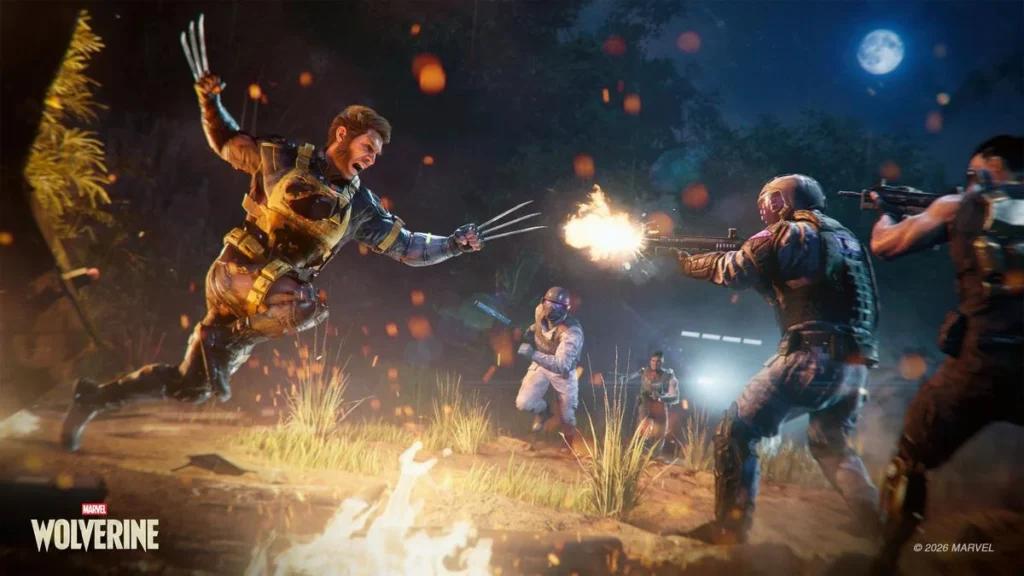
Insomniac Games, the studio renowned for critically acclaimed open-world titles like the Spider-Man trilogy, has pivoted in a dramatically different direction with Marvel’s Wolverine. Priced at ₹5,499 for the PlayStation 5, the title steps away from the friendly neighborhood web-slinger’s expansive sandbox playgrounds to deliver a linear, bloody, and visceral action-packed experience. Rather than aiming for open-world exploration, Wolverine functions more akin to a high-octane blockbuster shooter or a cinematic hack-and-slash adventure.
Ditching standard cinematic timelines, the game carves out its own distinct alternate reality. The narrative bypasses iconic mainstays like Professor X and Magneto, centering instead on the shadowy black-ops outfit known as Team X. Players step into the adamantium-laced boots of Logan, a ferocious, pain-wracked hero surrounded by classic comic book figures such as Sabretooth, Mystique, and the mastermind Dr. Nathaniel Essex—better known to comic fans as Mr. Sinister. Meanwhile, Bolivar Trask oversees a systematic mutant hunt, setting the stage for a gritty, uncompromising confrontation.
Visually and mechanically, the game leans heavily into its Mature rating. The gore is unapologetic, showcasing exposed metallic skeletal frames on a damaged Logan alongside cinematic dismemberments. Backed by stellar spatial audio design and a relentless combat cadence, Wolverine delivers a targeted, story-driven thrill ride that concludes with a definitive, self-contained narrative arc.
Chronology: The Evolution of Insomniac’s Next Big Marvel Gamble
The journey toward Marvel’s Wolverine represents a calculated evolution for developer Insomniac Games and publisher Sony Interactive Entertainment.

- The Spider-Man Blueprint (2018–2023): Following the massive commercial and critical success of Marvel’s Spider-Man, Spider-Man: Miles Morales, and Spider-Man 2, Insomniac established itself as the undisputed master of modern superhero sandboxes. Fans naturally expected the studio’s next venture to apply the same open-world template to Marvel’s most famous mutant.
- The Announcement and Shift in Scope: Early teasers and subsequent deep-dives revealed a stark stylistic departure. Instead of swinging through skyscrapers, players would navigate tight, scripted corridors. The developers confirmed that the game would break away from existing movie continuities to forge a standalone, darker narrative focused on Team X and Mr. Sinister.
- Release and Initial Reception (2025): Launching exclusively on the PlayStation 5, Wolverine arrived to praise for its combat mechanics and narrative fidelity, though critics quickly noted its strictly linear design philosophy and pacing friction between emotional beats and adrenaline-fueled carnage.
Supporting Data: Combat Mechanics, Performance, and Pricing
Analyzing Marvel’s Wolverine requires looking at how its technical architecture, design choices, and combat systems intersect on the PlayStation 5 hardware.
- Pricing and Platform: Available exclusively on the PlayStation 5 for ₹5,499, positioning it firmly as a premier AAA first-party release.
- Combat System Synthesis: The game marries the fluid fluidity of Insomniac’s previous work with a Sekiro-inspired parry system. Successful parries trigger stylish cinematic counters, while a dedicated lunge mechanic allows Logan to close gaps against towering bosses instantly.
- Health and Rage Meters: Logan’s iconic healing factor is gamified; while he absorbs massive damage, his health pool drains quickly and refills as he channels offensive fury. A special "Rage Meter" pushes him into an unstoppable killing frenzy.
- Level Design and Pacing Metrics: Unlike the open vistas of Spider-Man, Wolverine employs a strictly linear framework reminiscent of classic God of War titles. Investigation segments utilize animal-like tracking senses—famously highlighted by meme-worthy blue gas trails.
- Enemy Variety Data: Combat encounters lean heavily on wave-based skirmishes featuring repetitive cyborg units equipped with shields, swords, and firearms, requiring systematic execution of parry-attack-kick loops.
Official Responses and Developer Intent
Insomniac Games has been transparent about its design philosophy regarding Marvel’s Wolverine, emphasizing that the title was never intended to be a clone of their previous superhero work.
In pre-release statements and post-launch commentary, studio representatives highlighted the necessity of tailoring the gameplay loop to fit Logan’s specific character archetype. Because Wolverine is a lethal, single-minded force of nature rather than a quippy, agile acrobat, the development team felt a linear, tightly scripted narrative structure would better serve a tight-knit character study.
Sony Interactive Entertainment has similarly positioned the game as a premier showcase for the PlayStation 5’s technical capabilities, emphasizing the title’s advanced spatial audio implementation, high-fidelity gore rendering, and rapid loading transitions that keep the cinematic momentum uninterrupted. While addressing mild fan critique regarding the linearity of the levels, developers have defended the choice as vital to maintaining the breakneck, relentless pacing of a black-ops military thriller.

Implications: What Wolverine Means for Future Marvel Video Games
The release of Marvel’s Wolverine carries significant implications for the expanding slate of superhero video games, particularly under the Sony and Marvel Games partnership.
Redefining Superhero Game Diversity
For years, the industry standard for superhero adaptations skewed heavily toward open-world urban sandboxes. Wolverine shatters that mold, proving that players are receptive to linear, narrative-focused, and unapologetically brutal character studies. This success opens the door for future titles to adopt tighter, more focused campaign structures rather than forcing every hero into a sprawling, collectible-heavy open map.
Narrative Independence from Cinematic Universes
By completely divorcing itself from the Marvel Cinematic Universe (MCU) and past cinematic franchises, Insomniac has demonstrated the creative freedom that comes with alternate-reality storytelling. The bold choice to sideline mainstream X-Men icons like Professor X and Magneto in favor of deep-cut comic villains like Mr. Sinister and Bolivar Trask sets a strong precedent for future adaptations to dig deeper into comic book lore without being bound by live-action continuity.
Balancing Adrenaline and Emotion
One of the critical lessons drawn from Wolverine lies in structural pacing. The game highlights the inherent difficulty of transitioning players from high-octane, gory combat sequences directly into quiet, emotional character moments. As studios continue to develop mature, story-driven titles, mastering the tonal shift between visceral action and genuine emotional beats will remain a vital frontier in game design. Ultimately, Wolverine stands as a triumphant, bloody proof-of-concept that proves Logan doesn’t need an open world to leave a lasting mark.