Sovereignty, Silicon, and the Decolonial Dream: Lessons from India’s Historic Struggle for Computing Self-Reliance
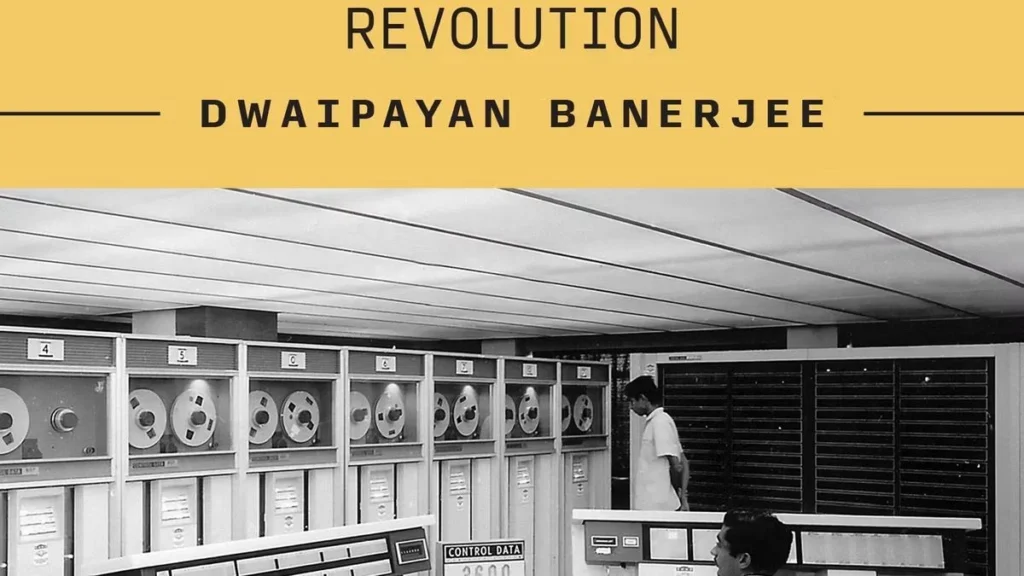
In an era dominated by global debates over chip shortages, supply chain vulnerabilities, and technological nationalism, the quest for "technological sovereignty" has become a central pillar of modern statecraft. For India, this pursuit is not new. In his book, Computing in the Age of Decolonization, MIT-based historian Dwaipayan Banerjee uncovers a largely forgotten chapter of the global digital revolution: India’s ambitious, yet ultimately thwarted, efforts to build a self-reliant computing industry between the 1950s and the 1980s.
Banerjee’s historical excavation offers a sobering look at how early postcolonial promises of technological independence collided with the realities of domestic policy missteps, corporate monopolization, and Cold War geopolitics. As India today commits billions of dollars to establish itself as a global semiconductor hub, the successes and failures of this bygone era provide critical warnings and lessons for contemporary policymakers.
Main Facts: The Postcolonial Push for Indigenous Computing
The story of Indian computing begins not with software outsourcing, but with an ambitious state-backed push for hardware sovereignty. In the decades following independence in 1947, the Indian state viewed science and technology as indispensable tools for preserving its newly won freedom.
The Birth of TIFRAC
The epicenter of this early movement was the Tata Institute of Fundamental Research (TIFR) in Bombay (now Mumbai). Operating under the belief that computing was integral to national sovereignty, TIFR scientists set out to design and construct an indigenous digital computer. By approximately 1960, they completed the TIFRAC (Tata Institute of Fundamental Research Automatic Calculator).
While the postcolonial state fully supported TIFRAC as a prestigious flagship project, it failed to build a broader industrial and commercial ecosystem around it. The technical expertise remained concentrated within a few elite academic institutions, leaving the country with a weak domestic electronics manufacturing base.
The IBM Monopoly and the 1977 Expulsion
While India struggled to commercialize its academic breakthroughs, multinational corporations stepped into the vacuum. IBM quickly established a near-monopoly in the captive Indian market. The American tech giant did not manufacture cutting-edge machines locally; instead, it leased refurbished, outdated computers to Indian enterprises and government departments at high profit margins. By the early 1970s, IBM was responsible for roughly three-quarters of all computers operating in India.
This corporate hegemony ended abruptly in 1977. Armed with the stringent equity dilution requirements of the Foreign Exchange Regulation Act (FERA) of 1973, and driven by the political resolve of the then-Industry Minister George Fernandes, the Indian government pushed IBM out of the country. Though IBM would return years later in a joint venture with the Tata Group, its departure in the late 1970s marked a dramatic moment of nationalistic assertion.
The Rise and Fall of ECIL
To fill the void left by multinational exit, India turned to public-sector enterprises, most notably the Electronics Corporation of India, Ltd. (ECIL), established in 1967. In 1968, ECIL achieved a major milestone by developing the Trombay Digital Computer (TDC-12), India’s first computer built using semiconductor technology.
+-------------------------------------------------------------+
|                  THE EARLY INDIAN COMPUTING ECOSYSTEM       |
+-------------------------------------------------------------+
|  [TIFR] ---------> Designed TIFRAC (c. 1960)                |
|                    (Elite academic computing milestone)     |
|                                                             |
|  [ECIL] ---------> Developed TDC-12 (1968)                  |
|                    (First semiconductor-based computer)     |
|                                                             |
|  [CMC]  ---------> Created to service foreign hardware      |
|                    (Maintained system operations post-IBM)  |
+-------------------------------------------------------------+
To support these machines, the state also set up the Computer Maintenance Corporation (CMC), which took over the servicing of the country’s existing IT infrastructure. However, ECIL’s operations remained highly dependent on imported components. Despite attempts by the Department of Electronics (DoE) to foster domestic component manufacturing, a combination of bureaucratic infighting, international trade imbalances, and the geopolitical pressures of the Cold War prevented India from achieving true self-sufficiency in hardware.
Chronology of India’s Computing Evolution (1950s–Present)
- Late 1950s: TIFR scientists begin designing India’s first indigenous computer to secure technological sovereignty.
- 1960: Completion of the TIFRAC, demonstrating Indian capability in computer engineering.
- 1960s: IBM dominates the Indian market by leasing refurbished, legacy machines to government and private enterprises.
- 1967: Electronics Corporation of India, Ltd. (ECIL) is established as a public sector undertaking to spearhead commercial electronics.
- 1968: ECIL develops the TDC-12, India’s first semiconductor-based digital computer.
- Early 1970s: Cold War tensions and U.S. export controls limit India’s access to high-performance computing, stalling collaborations with international firms like Control Data Corporation (CDC) due to nuclear proliferation concerns.
- 1973: Passage of the Foreign Exchange Regulation Act (FERA), requiring foreign firms to dilute their equity in Indian operations.
- 1977: Under Industry Minister George Fernandes, the Indian government enforces FERA, leading to the high-profile exit of IBM. The Computer Maintenance Corporation (CMC) is established to service abandoned systems.
- 1980s: Shift in national policy. The government decouples software from hardware, paving the way for the software export boom. IBM returns to India through a joint venture with Tata.
- 1990s–2010s: India emerges as a global IT services powerhouse, driven by software exports, while domestic hardware manufacturing remains largely neglected.
- 2020s: The Indian government launches the India Semiconductor Mission (ISM), committing billions of dollars in subsidies to establish domestic chip fabrication and reduce reliance on imported silicon.
Supporting Data: The Cost of the Hardware-Software Split
According to Banerjee, the decisive "wrong turn" in India’s technological trajectory occurred when the state decided to decouple software from hardware. Rather than making the massive, capital-intensive investments required to build a domestic hardware and semiconductor fabrication industry, India’s technocratic elite chose a more profitable, low-risk path: exporting technical services.
This strategic pivot created a sharp divergence between India’s software success and its hardware dependency:
| Indicator / Sector | Software & IT Services | Hardware & Semiconductor Fabrication |
|---|---|---|
| Primary Economic Focus | Export-oriented technical services, maintenance, and custom software development. | Dependent on imported components, silicon, and assembly kits. |
| Capital Intensity | Low; required human talent, office space, and satellite links. | High; requires multi-billion-dollar fabrication plants (fabs) and complex supply chains. |
| Key Milestones | Rise of IT giants (TCS, Infosys, Wipro); explosion of Global Capacity Centres (GCCs). | TDC-12 (1968); followed by decades of stagnation in domestic manufacturing. |
| Geopolitical Vulnerability | Low; resilient to physical supply chain blockades. | High; vulnerable to export controls, embargoes, and localized monopolies (e.g., Taiwan, US). |
The long-term consequence of this policy shift is highly visible today. While India became the "back office of the world," it remained almost entirely dependent on foreign countries for the physical chips and hardware that power its digital economy. This dependency dynamic is not unique to India; it reflects a global division of labor where intellectual property and advanced fabrication are concentrated in a few select geographies (such as Taiwan, the US, and South Korea), while the Global South is often relegated to extraction, assembly, or low-margin services.
Expert Critique and Counter-Perspectives
While Banerjee’s book has been praised for its historical depth, some technology policy analysts and economists argue that his framework suffers from structural determinism, flattening the complex realities of postcolonial policymaking.
The Defense of the Software Export Boom
Critics, including Krishna Ravi Srinivas (Adjunct Professor of Law and Director of the Centre of Excellence in AI and Law at NALSAR University of Law), argue that Banerjee’s critique of the software export industry is overly reductionist.
Srinivas points out that the software boom brought immense macroeconomic benefits to India, including:
- Foreign Exchange Earnings: Software exports provided India with crucial foreign currency reserves during periods of economic instability.
- Job Creation: The sector created millions of high-paying, white-collar jobs, fueling the rise of India’s urban middle class.
- Global Capacity Centres (GCCs): Over time, the software push led to the establishment of over 1,500 GCCs in India. These are not mere call centers; they are sophisticated R&D units owned by multinational corporations that leverage Indian talent for high-end research, product development, and global business processes.
                    INDIAN SOFTWARE EXPORT MULTIPLIER

   +---------------------------------------------------------------+
   |  Software Export Boom (1980s-Present)                         |
   +---------------------------------------------------------------+
           |
           +---> Massive Foreign Exchange Inflows
           |
           +---> Direct & Indirect Employment (Millions of Jobs)
           |
           +---> Evolution of Global Capacity Centres (GCCs)
                 (High-end R&D, Global Product Development)
The Limits of Structural Determinism
Furthermore, critics argue that India’s failure to build a hardware base cannot be blamed entirely on colonial legacies or international structures. The Indian government’s choices regarding industrial policy, import substitution, and high tariffs were active, reversible political decisions.
By focusing heavily on the motivations of historical actors and presenting their failures as inevitable, Banerjee’s narrative overlooks counterfactual scenarios where different policy adjustments—such as earlier integration into global supply chains or targeted joint ventures—might have yielded a viable domestic hardware industry.
Implications for Today: The India Semiconductor Mission
The historical struggle detailed in Computing in the Age of Decolonization is highly relevant to India’s current policy landscape. Today, the Indian government is pouring billions of dollars into the India Semiconductor Mission (ISM), offering massive subsidies to attract global chipmakers and build domestic silicon fabrication plants.
+-----------------------------------------------------------------+
|               LESSONS FOR THE INDIA SEMICONDUCTOR MISSION       |
+-----------------------------------------------------------------+
|  1. AVOID "SCREWDRIVER ELECTRONICS"                             |
|     * Move beyond simple assembly of imported components.       |
|     * Focus on domestic IP, design, and equipment ownership.    |
|                                                                 |
|  2. BUILD AN INTEGRATED INNOVATION ECOSYSTEM                     |
|     * Link academic research, raw fabrication, and deployment.  |
|     * Avoid isolated "flagship projects" that lack industry.    |
|                                                                 |
|  3. FOSTER PUBLIC-PRIVATE-ACADEMIC COLLABORATION                |
|     * Reject outdated, purely state-led isolationist models.     |
|     * Leverage global Indian talent and private capital.        |
+-----------------------------------------------------------------+
As India embarks on this high-stakes venture, the history of TIFRAC and ECIL offers three critical warnings:
1. Beware of "Screwdriver Electronics"
True technological sovereignty cannot be achieved through the mere assembly of imported components. If India only builds assembly, testing, marking, and packaging (ATMP) facilities without mastering deep-tech design, semiconductor fabrication, and equipment manufacturing, it will remain dependent on foreign intellectual property. The goal must be to transition from a low-margin assembly hub to an ecosystem where Indian entities own patents and design IP.
2. Flagship Projects Are Not Enough
The failure of TIFRAC demonstrates that scientific breakthroughs in elite, isolated laboratories do not automatically translate into industrial capability. Subsidies and state-backed initiatives are necessary, but they are insufficient on their own. The state must cultivate a broader innovation ecosystem that bridges the gap between academic research, commercial fabrication, and market deployment—a link that failed to materialize in the 1960s and 1970s.
3. Reject Purely State-Led Isolationism
The global tech landscape of the 21st century is vastly different from the Cold War era. Today, technological sovereignty cannot be achieved through isolation or purely state-run enterprises like the ECIL of the past. Modern semiconductor supply chains are highly globalized and capital-intensive.
To succeed, India’s contemporary strategy must move beyond old state-centric models. It must forge dynamic partnerships that bring together state incentives, private venture capital, domestic research institutions, and the vast network of global Indian tech talent. Only by building a collaborative, IP-driven ecosystem can India hope to realize its long-deferred dream of true technological self-reliance.