Strategic Standoff: India Demands Tariff Parity as Prerequisite for US Trade Deal
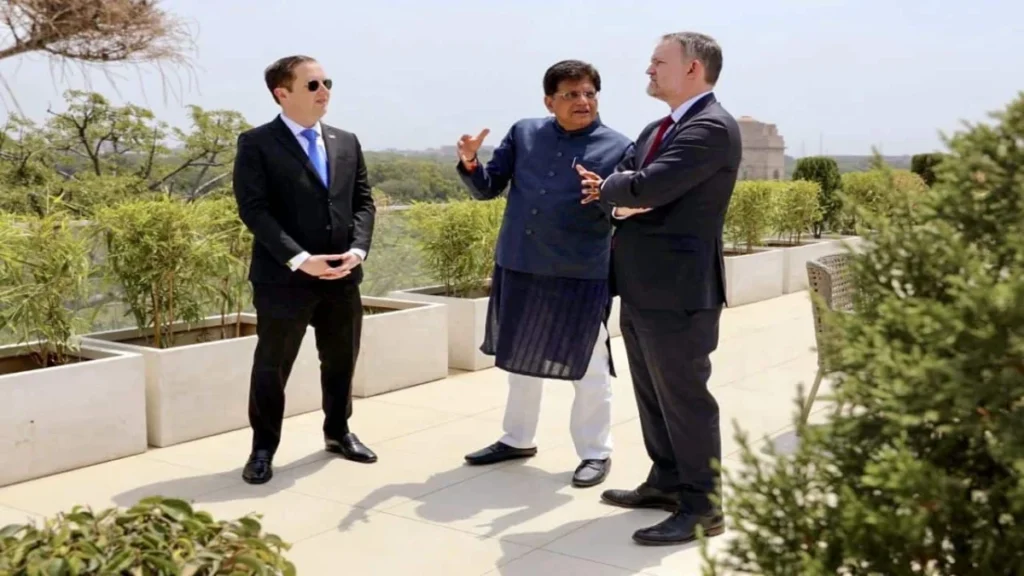
New Delhi – In a move that underscores India’s growing assertiveness in international economic diplomacy, the government has signaled that a long-awaited trade agreement with the United States will remain in a state of suspended animation until specific tariff conditions are met. New Delhi is insisting on securing "better or at least equivalent" tariff terms compared to its regional neighbors, a stance that represents a significant pivot in the ongoing negotiations between the world’s two largest democracies.
As of June 26, 2026, high-level discussions are continuing, yet officials have confirmed that final approval hinges entirely on this demand for market-access parity. The message from the Indian government is clear: while both nations recognize the strategic necessity of the partnership, India is no longer willing to settle for trade terms that place its domestic industries at a disadvantage relative to competitors in the Indo-Pacific.
The Core of the Contention: Defining "Better Terms"
At the heart of the current stalemate is a fundamental disagreement over market access. India’s trade negotiators, led by Union Minister Piyush Goyal, are pushing back against historical trade frameworks that have favored regional competitors. The Indian position is predicated on the idea that if the U.S. grants preferential tariff treatment to other nations in the region, India—as a strategic partner—should be entitled to, at minimum, the same level of market access.
For New Delhi, this is not merely a matter of economic calculation but one of industrial sovereignty. Domestic manufacturers in sectors ranging from textiles and pharmaceuticals to light engineering have long argued that they are being squeezed out of the U.S. market by competitors who enjoy lower tariff barriers. By insisting on "better terms," India is seeking to ensure that its "Make in India" initiative is not undermined by an unfavorable export environment.
Chronology of Negotiations: A Path Marked by Incremental Progress
The road to the current negotiating juncture has been complex, spanning several years of diplomatic engagement and shifting geopolitical priorities.
- Pre-2024 Foundations: Initial discussions were framed within the context of the U.S.-India Trade Policy Forum (TPF), focusing on resolving legacy issues such as intellectual property rights and specific agricultural barriers.
- 2025 – The Strategic Pivot: As the geopolitical landscape in Asia shifted, the trade discourse moved from narrow sector-specific grievances to a broader, comprehensive bilateral framework. Both nations recognized that a robust trade deal was the missing link in an otherwise strong strategic and defense partnership.
- Early 2026: The intensity of negotiations accelerated. Following several rounds of high-level ministerial meetings in both Washington and New Delhi, a preliminary understanding was reached on several non-tariff barriers.
- June 2026 – The Standoff: In the most recent round of talks involving Union Minister Piyush Goyal, U.S. Ambassador to India Sergio Gor, and U.S. Trade Representative Ambassador Greer, the Indian side officially codified the requirement for tariff parity. This move effectively paused the momentum of the final deal, placing the burden of negotiation back on the U.S. administration.
Supporting Data: Why Parity Matters
The economic rationale for India’s demand is grounded in trade volume data and competitive analysis. India’s export basket to the United States is currently weighted heavily toward services, IT, and high-value pharmaceuticals. However, in the manufacturing sector, Indian goods often face a "tariff wall" that is significantly higher than those faced by Southeast Asian or Latin American exporters who operate under different trade agreements.
According to trade analysts, if India were to secure parity, it could see an immediate 15–20% boost in export volume for medium-scale manufacturing units. Furthermore, the "China Plus One" strategy—where global firms seek to diversify their supply chains away from China—is currently being hindered by these tariff discrepancies. Indian officials argue that if the U.S. truly intends to support India as a global manufacturing hub, the trade deal must reflect that ambition through concrete tariff reductions.
Official Responses and Diplomatic Posturing
The diplomatic choreography surrounding these talks has been deliberate. Union Minister Piyush Goyal has maintained a consistent narrative: India is eager for a deal, but it must be a "fair deal."
"We are not looking for charity; we are looking for competitive equity," a senior official close to the negotiations stated on the condition of anonymity. "The United States is our largest trading partner, and that relationship must be built on the bedrock of fair market access. If our neighbors get a preferential tariff, and we do not, that is a structural imbalance that we cannot accept in a comprehensive deal."
On the U.S. side, the response has been one of cautious engagement. While the U.S. Trade Representative’s office has not publicly conceded to the "better terms" demand, they have acknowledged the necessity of a deal to solidify the U.S.-India strategic partnership. Observers note that the U.S. is caught between its domestic protectionist pressures—which often limit the administration’s ability to lower tariffs—and the geopolitical imperative of tethering India closer to the Western economic orbit.
Geopolitical Implications: The Indo-Pacific Context
The failure to conclude a trade deal has implications that extend far beyond economics. In the broader Indo-Pacific, India and the U.S. are working together to ensure a "free and open" region. A trade deal would be the economic anchor of this security framework.
If the U.S. refuses to budge on tariffs, it risks signaling to India—and other emerging economies—that the U.S. is not a reliable partner for industrial growth. This could inadvertently push India to seek further economic integration through frameworks like the BRICS+ expansion or other regional arrangements that do not require the same concessions.
Conversely, if a compromise is reached, it could trigger a "virtuous cycle" of investment. American corporations, currently hesitant to shift large-scale operations to India due to cost volatility, would have the certainty they need to make long-term capital investments.
Economic Outlook: What Happens Next?
The path forward for the India-U.S. trade deal is likely to follow a pattern of "shuttle diplomacy" throughout the remainder of 2026. Experts suggest that a breakthrough might involve a phased approach, where tariff parity is achieved in specific, high-priority sectors first, rather than across the entire spectrum of trade.
- Sector-Specific Deals: Negotiators may choose to isolate sectors where India faces the stiffest competition from neighbors, creating a "fast-track" tariff adjustment for these goods.
- Regulatory Harmonization: Beyond tariffs, the two sides may look to lower non-tariff barriers, such as complex certification processes and sanitary/phytosanitary measures, which currently act as a hidden tax on Indian exporters.
- The "Grand Bargain": There is a possibility that a broader geopolitical agreement, perhaps involving defense procurement or energy security cooperation, could be used as a lever to unlock the trade stalemate.
Ultimately, the onus is on the U.S. negotiators to determine how much they are willing to yield to secure India’s full participation in a high-standard trade agreement. For India, the message remains firm: the era of signing trade deals without securing a level playing field is over. The coming months will be a test of whether the two nations can align their economic interests as effectively as they have aligned their strategic ones.
As the world watches, the negotiations serve as a reminder that in the modern global economy, trade policy is the ultimate expression of national interest. For India, the deal is not just about exports; it is about the long-term viability of its domestic industrial base in an increasingly competitive global market. Whether the U.S. will view this demand as a hurdle or a necessary evolution of the partnership remains the central question of the 2026 economic agenda.