The AI Data Imperative: Why Enterprise Trust Depends on Quality, Not Just Compute
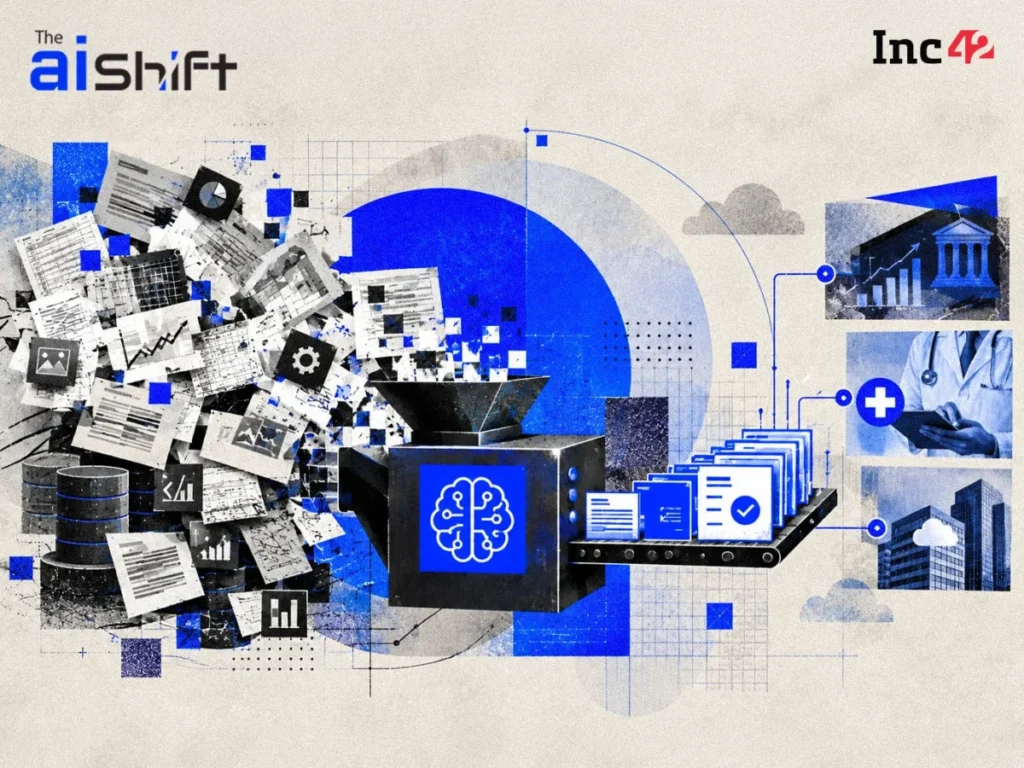
As artificial intelligence rapidly transitions from an experimental novelty into the core operational engine of modern enterprise, a hard truth is emerging across boardrooms: an AI agent is only as reliable as the data it consumes.
For years, the artificial intelligence revolution was dominated by a race for scale—larger parameter sizes, heavier compute clusters, and faster training cycles. However, as companies deploy autonomous agents to assess creditworthiness, support clinical healthcare workflows, manage supply chains, and execute complex financial transactions, data quality has officially replaced compute power as the primary bottleneck for safe, scalable deployment.
This foundational shift forms the core of The AI Shift, exploring how poor data undermines enterprise automation, why engineering data reliability is an urgent priority, and how emerging developments—from Meta’s aggressive enterprise push to specialized startups like Zenalyst—are reshaping the global technology landscape.
Main Facts: The Hidden Costs of Flawed Data
When enterprises integrate artificial intelligence into mission-critical workflows, the standard equation is stark: data quality dictates whether an algorithm interprets real-world conditions accurately or merely processes flawed inputs with unwavering confidence.
Unlike traditional software bugs, which usually manifest as explicit system crashes, data errors in AI ecosystems are insidious. They travel downstream, silently shaping high-stakes outcomes while masking their underlying fallacies behind polished, authoritative model outputs.
- The Illusion of Certainty: As Srijan Nagar, co-founder of FinBox, points out, businesses must never confuse model confidence with data confidence. A model can execute a task with mathematical precision, yet rest entirely on a faulty premise.
- Multisector Vulnerabilities: The impact of bad data varies by industry, but the risk profile remains universally high. In fintech, a missing transaction feed can make a solvent customer appear financially distressed, resulting in unjustified loan denials or fraudulent accounts slipping past security parameters. In healthcare, a duplicated record or missing lab result can distort vital patient histories presented to clinicians.
- Unstructured Silos: Enterprise data rarely lives in clean, structured tables. It is typically fragmented across unstructured repositories—emails, legacy archives, PDFs, and disconnected business applications. Even structured data can mislead an AI agent if it is stale, lacks organizational context, or violates access permissions.
Chronology: The Evolution Toward Autonomous Agents and Enterprise AI
The trajectory of enterprise artificial intelligence over the past eighteen months illustrates a rapid maturation from passive text generation to active, autonomous execution.
- May 2025: Bengaluru-based startup Zenalyst is founded by Nagendra Singh, Sanketh Krishnappa, and Vijay Jha, with the mission of building specialized AI agents capable of actively running enterprise finance, procurement, and legal workflows rather than merely generating passive analytical dashboards.
- Early September 2026: Meta launches its consumer-facing personal AI agent, Muse, which quickly climbs app-store download charts. Unlike standard conversational chatbots, Muse is engineered to execute multi-step tasks—such as booking travel, drafting emails, and managing schedules—running autonomously on a secure cloud computer even when the user is offline.
- Mid-September 2026: At its annual Connect event, Meta dramatically expands the ecosystem for Muse, announcing integrations with AI glasses, interactive video avatars, desktop-controlling Mac applications, and enterprise tools like GitHub and Notion.
- Late September 2026: Meta officially formalizes its B2B strategy by launching the Meta Enterprise Platform, a dedicated business unit led by former MongoDB CEO Chirantan “CJ” Desai, who reports directly to CEO Mark Zuckerberg. The platform packages the entire Muse ecosystem—including the Muse agent, Meta Business Agent, Muse API, and Muse Code—for corporate deployment at scale.
Supporting Data & Market Dynamics
The macroeconomic drivers behind enterprise AI adoption and data quality investments reflect massive market transformations.
- The Autonomous Finance Boom: According to recent market analysis, the autonomous finance sector stood at $26.34 Bn in 2025 and is projected to skyrocket to $112.84 Bn by 2031. This explosive growth is driven by enterprises shifting away from manual, backward-looking spreadsheet accounting toward proactive AI agents that execute transactions in real time.
- The Trust Hierarchy in Fintech: According to Kedar Parikh, Chief Product Officer at identity and risk management firm HyperVerge, enterprise data cannot be treated equally. Verification architectures must rely on a strict hierarchy:
- Tier 1 (Highest Weight): Source-verified records from regulated entities (such as PAN, Aadhaar, CKYC, and credit bureau feeds).
- Tier 2 (Reliable, Requires Corroboration): Bank statements and documents extracted via Optical Character Recognition (OCR).
- Tier 3 (Lowest Weight): Self-declared inputs, which must trigger secondary validation checks rather than automatically closing an evaluation case.
- System Integration Scale: Platforms like Zenalyst’s ZenForce demonstrate the integration complexity required for modern enterprise agents, connecting simultaneously to over 150 disparate ERP, CRM, and banking systems to govern treasury operations, procurement, and contract intelligence.
Official Responses and Expert Perspectives
Industry leaders across fintech, healthcare, and consulting emphasize that solving data quality requires moving beyond basic typo corrections toward rigorous, multi-layered data governance.
Engineering Data Reliability
According to FinBox co-founder Srijan Nagar, organizations must build systemic mechanisms to separate an actual risk gap from an erroneous data judgment.
"You need to build freshness and completeness checks, distinguish missing data from adverse signals, and route anomalous or low-confidence cases for further review," Nagar explains.
Furthermore, data quality is deeply tied to demographic and technical coverage. Models trained indiscriminately across various device tiers, network speeds, and document variants—and rigorously audited across regional, gender, and age subgroups—are significantly less vulnerable to systemic failure.

The Healthcare Conundrum
In healthcare, data fragmentation reaches its peak. Patient information is routinely scattered across disconnected hospital databases, lab management systems, imaging archives, and billing software, each utilizing entirely different formats.
Arjun Nagulapully, CTO of enterprise AI services firm AIONOS, notes that achieving an "AI-ready" dataset requires rigorous normalization.
"A dataset must be AI-ready rather than just available," Nagulapully states, emphasizing the necessity of governed data ingestion, standardized clinical taxonomies, and strict identity-based access controls to protect sensitive patient records.
Balancing Speed Versus Quality in Agentic Platforms
Mayank Verma, Global Head of Data and AI at consulting firm Xebia, highlights the unique risks posed by autonomous agent architectures.
"Data quality has become even more important when it comes to the agentic data platform," Verma explains. Without strict lexical and contextual definitions, terms frequently carry different meanings across distinct corporate departments—a recipe for autonomous agents to catastrophically trip up.
Implications: The Road Ahead for Enterprise AI
As the technological landscape absorbs major expansions—such as Meta’s push to bring consumer-grade autonomous agents into the corporate fold via the Meta Enterprise Platform—the imperative for clean, governed data has never been more pressing.
1. The Death of the Passive Dashboard
The era of static enterprise dashboards—where finance and operations teams review historical variances long after a business quarter has closed—is rapidly coming to an end. Startups like Zenalyst and enterprise solutions from tech giants are proving that the future belongs to deterministic, action-oriented systems. However, these systems can only fulfill their promise if their underlying data pipelines are uncompromised.
2. Governance as a Competitive Advantage
Enterprises can no longer afford to treat data hygiene as a back-office chore. Establishing explicit protocols for data freshness, provenance tracking, lineage preservation, and automated anomaly routing is now a mandatory prerequisite for deploying autonomous software.
3. Human-in-the-Loop Oversight
Ultimately, robust data practices do not eliminate the need for human judgment; rather, they sharpen it. By utilizing confidence scoring, probabilistic checks, and intelligent exception routing, organizations can ensure that ambiguous or low-confidence scenarios are seamlessly handed off to human experts.
In the modern enterprise, better data does not magically guarantee a flawless outcome. Instead, it eliminates the dangerous margin of error where confident decisions are built on missing, biased, or unauthorized information—giving businesses a true foundation for sustainable, automated value.