The Architecture of Autonomy: Building an AI Agent from Scratch in Python
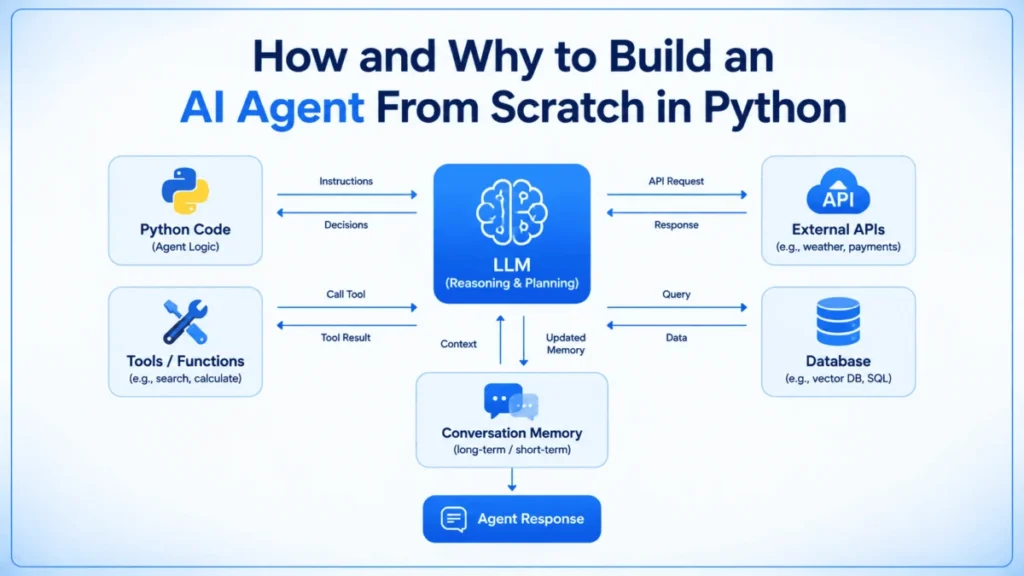
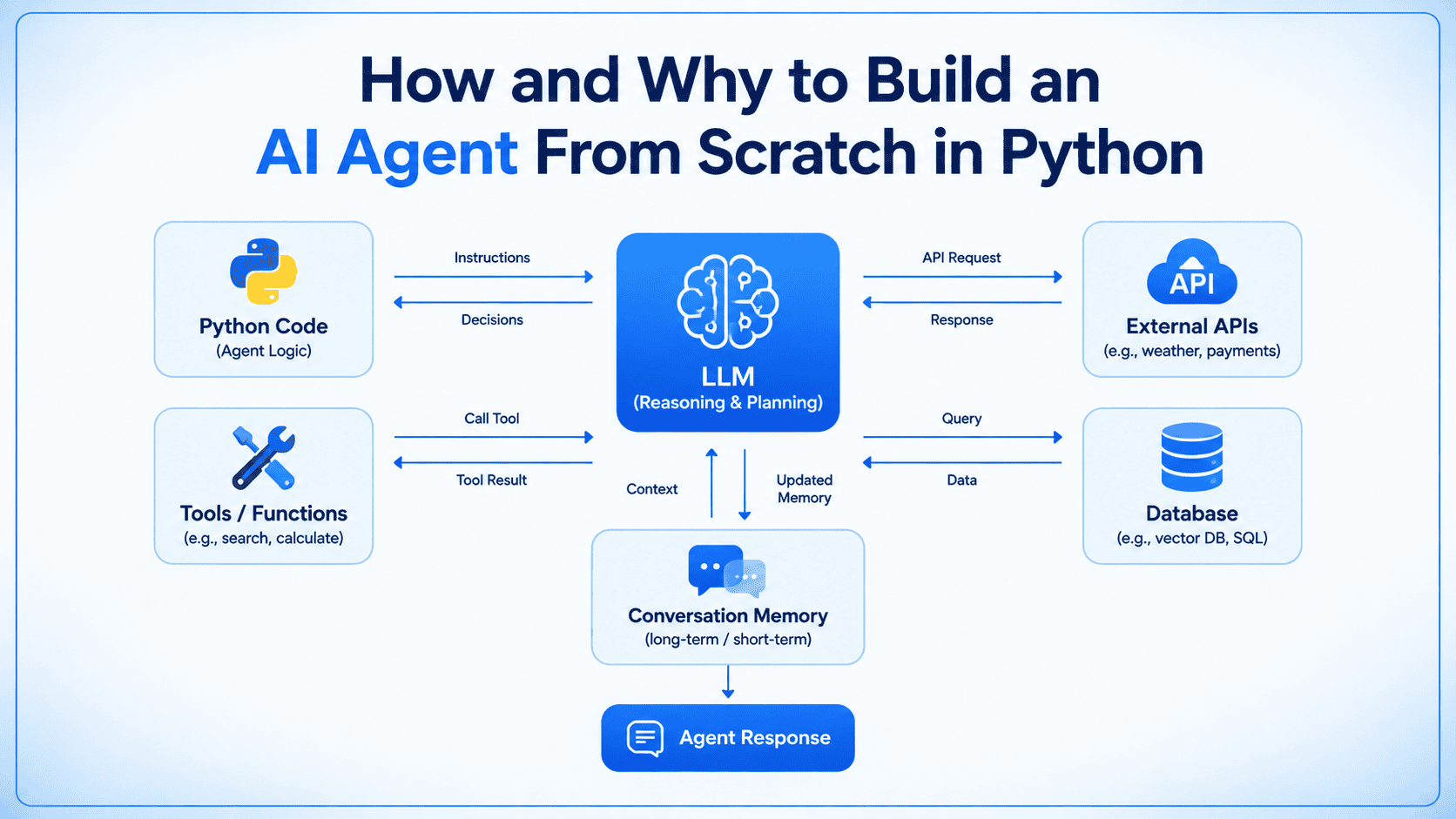
In the rapidly evolving landscape of artificial intelligence, the term "AI Agent" has become a buzzword, often obfuscated by complex orchestration frameworks. However, beneath the layers of abstraction, an AI agent is a remarkably elegant concept: it is a Large Language Model (LLM) equipped with the capacity to interact with the external world. While frameworks like LangChain or CrewAI are invaluable for enterprise-scale deployments, they can often hide the fundamental mechanics of how these systems function.
By stripping away these abstractions and building an agent from the ground up in plain Python using the Anthropic API, developers can gain a profound understanding of the "agentic loop." This article explores the architecture of autonomous interaction, the mechanics of tool calling, and the essential role of persistent memory in creating truly functional AI assistants.
The Evolution of the AI Agent: Beyond Static Inference
To understand why we need agents, we must first recognize the limitations of standard LLMs. A typical call to a model like Claude is a "closed" system. If you ask the model to summarize a document or draft an email, it relies entirely on its training data. This works perfectly for tasks involving general knowledge or linguistic synthesis.
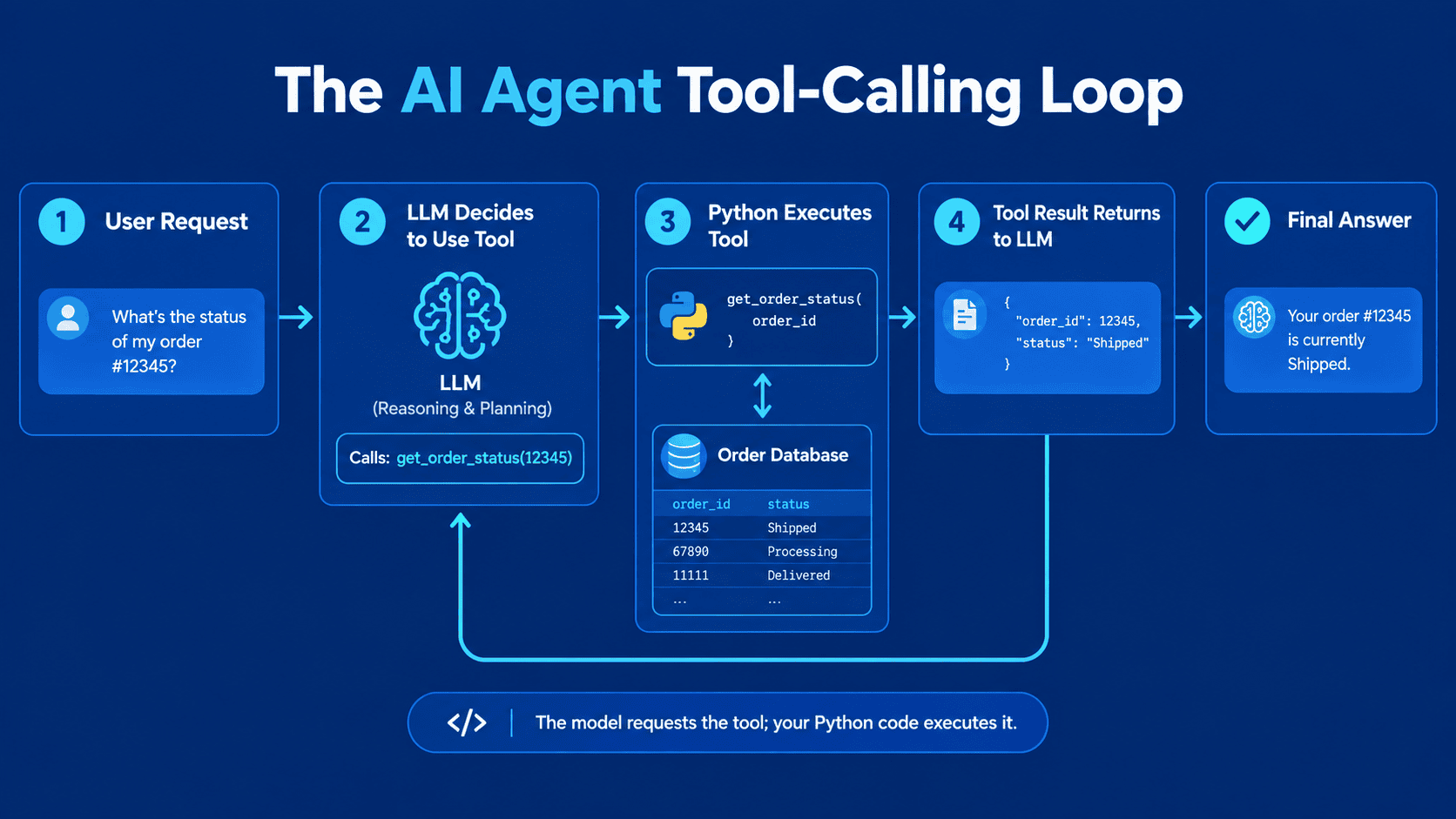
However, the utility of an LLM drops precipitously when the required answer resides outside its training set. If a user asks, "What is the status of my order #4471?" the model is inherently incapable of providing an accurate, real-time answer. It lacks a connection to your live database. Historically, developers attempted to solve this through "Prompt Engineering," feeding the model vast amounts of context. This is inefficient, expensive, and ultimately brittle.
The breakthrough is Tool Calling. Instead of forcing the model to "know" everything, we provide it with a set of tools—functions—that it can invoke to fetch data. An AI agent is essentially a model that can pause its generation, execute code, receive a result, and integrate that result into its final response.
Prerequisites and Setup
To construct this from scratch, you will need:
- Python 3.10 or later: Essential for modern type hinting and asynchronous capabilities.
- Anthropic API Key: The engine that powers the reasoning.
- Anthropic Python SDK: The bridge between your local environment and the model.
The Foundation: Initializing the Client
By setting your API key as an environment variable (ANTHROPIC_API_KEY), you ensure that your credentials remain secure and decoupled from your source code.
import anthropic
client = anthropic.Anthropic()
Note: As of late 2026, developers should be mindful of model deprecation cycles. Always ensure your implementation targets the latest supported version of the Claude family to maintain optimal performance.
Defining the Tool: The Model’s Interface to Reality
Giving a model "tools" is a two-part process. First, you must write the function that performs the action (e.g., querying a database). Second, and more importantly, you must provide a "schema"—a structured description that tells the model what the function does, what arguments it requires, and why it should be used.
The schema is the "instruction manual" for the model. It defines the input_schema using JSON-like structures. When you pass this schema to the API, you are not just sending text; you are providing the model with a set of capabilities.
The Agentic Loop: Execution and Feedback
The core of an agent is the "Loop." When you send a request that requires a tool, the model does not give you a final answer. Instead, it sends back a tool_use signal. It is effectively saying, "I cannot answer this yet; please run this specific function with these specific arguments."
The Two-Step Dance
- Request Phase: The user asks a question. The model identifies the need for a tool and responds with a
tool_useblock. - Execution Phase: Your Python script catches this block, executes the function locally, and retrieves the data.
- Synthesis Phase: You pass the tool’s output back to the model as a
tool_result. The model then processes this new information to construct a final, grounded answer.
This sequence is the fundamental "Agentic Loop." By repeating this process, an agent can perform a chain of actions—for example, searching a product database, checking shipping logistics, and then calculating a delivery window—without human intervention.
Why We Must Cap the Loop
One of the most critical aspects of agent design is the max_iterations parameter. Without a hard cap on how many times an agent can cycle, you risk an "infinite loop" scenario, where the model may get stuck in a repetitive cycle of requesting the same information. Implementing a clear exit condition—returning a fallback message if the iteration limit is reached—is not just a performance optimization; it is a vital safety feature for production-grade applications.
Adding Memory: The Persistence Layer
A stateless model is a "forgetful" agent. If you ask a follow-up question like, "And when will it arrive?", the model will fail because it has no record of the previous order lookup. To make an agent conversational, we must implement memory.
The Class-Based Approach
By wrapping our agent logic in a class, we can maintain a self.messages list that persists across turns. This list acts as the agent’s short-term memory, holding the history of the conversation, including the tool calls and their results.
class Agent:
    def __init__(self, tools, tool_map):
        self.messages = []
        # ... initialization logic

    def run(self, user_input):
        self.messages.append("role": "user", "content": user_input)
        # ... logic to cycle through model calls and tool execution
This simple architectural shift allows the agent to maintain context. It understands that "it" refers to the order mentioned three messages ago because that data is physically present in the message list passed to the API in every iteration.
Implications for Production
While this "from-scratch" approach is excellent for learning, transitioning to production requires addressing several real-world constraints:
- Context Window Management: As the conversation grows, the
messageslist will eventually exceed the model’s token limit. Production agents require a strategy to summarize old turns or prune irrelevant history. - Persistence: Currently, our memory is volatile (RAM-based). A true agent requires a persistent storage layer—such as a PostgreSQL database or a Redis cache—to save session states across server restarts.
- Security: When you give a model the power to call tools, you are giving it the power to execute code. It is imperative to strictly validate the inputs generated by the model before passing them to your functions to prevent prompt-injection attacks.
Conclusion: The Power of Clarity
Building an AI agent from scratch reveals that there is no "magic" in agentic behavior. It is simply a combination of a powerful reasoning engine (the LLM), a structured interface for external actions (the tools), and a mechanism for maintaining context (the message history loop).
By mastering these fundamentals, you gain the ability to build systems that are not just "chatbots" that talk, but agents that act. Whether you are automating customer support, internal data retrieval, or complex workflows, the principles remain the same. The next step in your journey involves exploring more sophisticated tools, implementing long-term memory via vector databases, and refining the "system prompt" to improve the agent’s personality and reliability.
The framework-less approach offers the most valuable lesson of all: when you understand how the agent works under the hood, you are no longer limited by what a framework can do—you are limited only by the tools you choose to build.