The Art of Efficiency: Why Redundancy is the Enemy of Web Accessibility
In the rapidly evolving landscape of web development, the pursuit of "perfect" accessibility often leads developers down a path of over-explanation. While the intention is noble—ensuring that every user, regardless of their ability, understands the structure and content of a webpage—the result can often be a cluttered, noisy experience for those relying on assistive technologies.
A recent discussion sparked by web developer Mark Underhill has brought a critical, often overlooked aspect of user experience (UX) to the forefront: the danger of linguistic redundancy in code. Specifically, the practice of including the word "navigation" within <nav> labels has come under fire for creating unnecessary friction for screen reader users.
The Core Issue: Why "Navigation" is Redundant
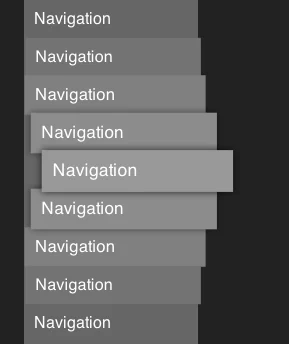
The <nav> element is a semantic HTML5 landmark. When a screen reader encounters this tag, it automatically announces to the user that they have entered a navigation region. If a developer labels that region as "Primary Navigation," the screen reader will announce, "Navigation, Primary navigation."
This is more than just a minor stylistic faux pas; it is a breakdown in communicative efficiency. For a user navigating a site via a screen reader, every extra word represents a cognitive load. By repeating the word "navigation," developers are essentially forcing the user to listen to redundant information that provides no additional context.
As Underhill points out, the fix is simple: label the landmark based on its function, not its technical nature. "Primary" or "Main" is sufficient, as the browser and assistive technology already handle the "navigation" portion of the declaration.
Chronology of Accessibility Best Practices
The evolution of web accessibility has shifted from a "check-the-box" mentality to a focus on user-centric design.
- Early Web (1990s–2000s): Accessibility was largely focused on basic compatibility, ensuring that text-based browsers could read content. Labels were often sparse or absent.
- The Rise of ARIA (2010s): With the introduction of Accessible Rich Internet Applications (ARIA), developers gained the power to define roles and labels more explicitly. However, this also led to an era of "over-tagging," where developers added labels to every single element, often confusing the accessibility tree.
- Modern Accessibility (2020–Present): The current focus is on "semantic minimalism." Experts now emphasize that the most accessible code is often the cleanest code. If a browser can infer meaning from a native HTML element, adding extra labels or descriptions is discouraged.
Supporting Data and The User Experience
Data from accessibility audits consistently shows that users of assistive technology prefer brevity. A study conducted by the WebAIM community suggests that screen reader users rely heavily on landmark navigation to jump between sections of a page. When landmarks are cluttered with repetitive names, the user’s ability to quickly scan the page is significantly hindered.
Furthermore, the "Alt Text Paradox" serves as a parallel to the navigation label issue. For years, newcomers to web development were told to include the word "image" in their alt text (e.g., "Image of a sunset"). However, screen readers automatically announce "Graphic" or "Image" when they encounter an <img> tag. Adding the word "image" to the alt description creates a loop that sounds like, "Image: Image of a sunset."
This pattern of redundancy extends to other areas of the DOM:
- Button Labels: Using "Click here" instead of a descriptive action (e.g., "Download Report").
- ARIA Labels: Over-using
aria-labelwhen the text content already provides the necessary information. - Nested Controls: As highlighted by recent discussions on Piccalilli, overly complex interactive controls often suffer from "accessible name length" bloat, where the accessible name becomes a paragraph rather than a title.
Expert Perspectives and Industry Standards
Industry experts, including those from the W3C (World Wide Web Consortium), have consistently pushed for a "less is more" approach. The Web Content Accessibility Guidelines (WCAG) emphasize that content should be perceivable and understandable, but they also caution against creating content that is needlessly verbose.
"The goal of accessibility is to remove barriers, not to build a new set of instructions for every interaction," says one accessibility consultant. "When we label a navigation menu as ‘Navigation Menu,’ we aren’t helping the user; we are forcing them to wait for the screen reader to finish reading a title that they already know is a navigation menu."
Implications for Web Design and Development
The implications of this shift are profound for developers, designers, and content creators. Adopting a mindset of "semantic efficiency" requires a change in how we approach the entire development lifecycle.
1. Training and Onboarding
Development teams need to move beyond simple technical implementation. Training should focus on the output—what the user actually hears—rather than just the input—the code written in the IDE. By testing designs with screen readers, developers can quickly identify where redundancy occurs.
2. The Role of Content Strategy
Content strategists must understand that accessibility is a linguistic task as much as a technical one. Writing concise alt text and meaningful, short labels is a crucial skill. A "novel-length" description for a simple icon is not helpful; it is a distraction.
3. Impact on SEO and Performance
Interestingly, cleaner code often correlates with better performance. Reducing the amount of redundant text and unnecessary ARIA attributes can slightly reduce the overall weight of the DOM, contributing to faster page loads. While the impact per element is minimal, the cumulative effect on large, complex applications is tangible.
4. Improving User Retention
For users with disabilities, the web is a primary tool for work, commerce, and communication. Websites that respect their time and cognitive energy are more likely to be used and trusted. By stripping away the "navigation labels for navigation" and other similar redundancies, developers create a smoother, more professional interface that benefits everyone.
The Future of "Succinct Accessibility"
As we look toward the future, the integration of AI in web development may automate some of these accessibility checks. However, the human element—the consideration of how a user experiences a site—cannot be replaced by an algorithm.
The movement toward "succinct accessibility" is a reminder that the best UX is invisible. When a user can navigate a site without having to parse through layers of redundant, machine-generated noise, they are free to engage with the actual content.
In conclusion, the next time you find yourself typing aria-label="Navigation menu" inside a <nav> tag, take a moment to pause. Ask yourself: "Does the user need to know this?" In most cases, the answer is no. By trusting the semantic power of HTML and keeping our descriptions short and punchy, we can create a web that is truly accessible—not just in name, but in practice.
The path forward is one of refinement. By stripping away the unnecessary and focusing on the essential, we ensure that the web remains a place where information is easily reachable, regardless of the tools used to access it. Let us strive to make our code as elegant as it is inclusive, remembering always that when it comes to accessibility, sometimes silence—or at least, brevity—is the most powerful tool we have.