The Constitution Does Not Sleep: The Push for a 24/7 Institutionalized Justice System in India
Introduction: A Constitutional Demand for Continuous Access
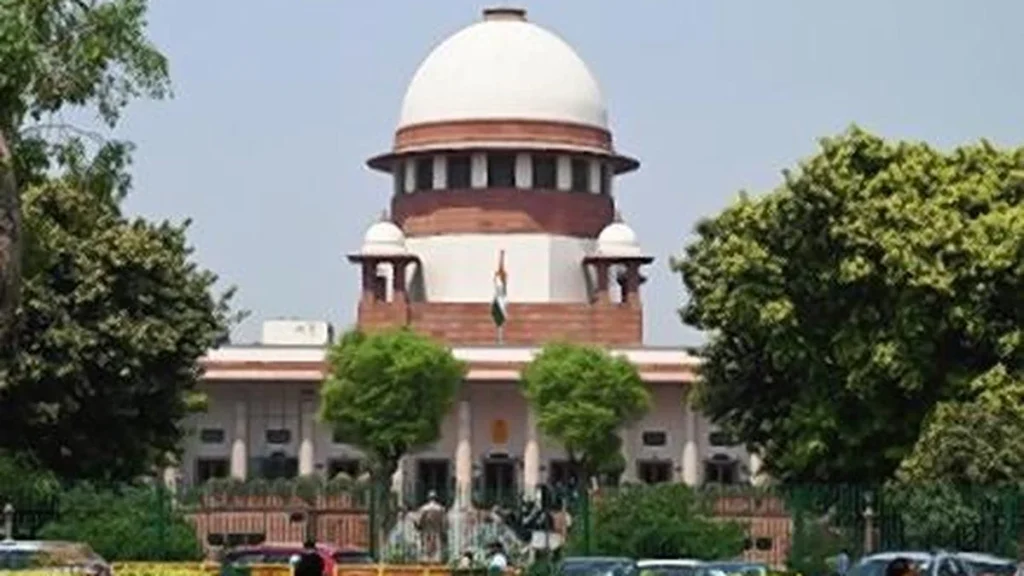
In a landmark development for the Indian judiciary, the Supreme Court of India initiated a critical examination on July 14 regarding a writ petition that could fundamentally alter the landscape of legal access in the country. Filed by advocate Maheravish Rein, the petition calls for the establishment of a uniform, institutionalized framework for “Emergency Constitutional Benches.” The goal is to ensure that citizens, regardless of the hour, can approach constitutional courts—including State High Courts—to seek protection in matters involving life, liberty, and urgent fundamental rights.
Ms. Rein’s plea arrives at a time of heightened public discourse surrounding executive excesses, including allegations of late-night arrests, illegal detentions, pre-dawn home demolitions, and instances of custodial abuse. The petition posits a fundamental question: In an era where the executive branch operates around the clock, why should the judiciary be constrained by the "temporal boundaries" of a 9-to-5 working day?
The Historical Context: The "People’s Court"
The struggle for judicial accessibility is not new. It traces its roots back to the 1986 Constitution Bench judgment in Bihar Legal Support Society versus Chief Justice of India. At the time, the Supreme Court was navigating the fallout of a late-night sitting held to hear the bail application of two prominent industrialists. This move sparked intense public scrutiny and a subsequent writ petition, which challenged the court to prove whether it would show the same urgency for the "small man"—the marginalized citizen who lacks the resources or influence of the wealthy.
The 1986 Bench famously underscored that the Supreme Court must act as the "people’s court," serving as the "symbol of the hopes and aspirations of millions." Forty years later, Ms. Rein argues that the institutional framework remains largely unchanged, effectively tethering access to justice to designated court hours, working days, and limited, unpredictable Vacation Benches. She warns that without a formalized Standard Operating Procedure (SOP), the absence of continuous judicial accessibility often results in "irreversible consequences"—such as the demolition of a home or a permanent deportation—before a victim can secure a hearing.
Is There a Fundamental Right to Access Justice at All Times?
The core of the argument is philosophical as much as it is procedural: the Constitution does not sleep. As a "living and continuous guarantee of liberty," the Constitution’s protective shield cannot logically be suspended at night or on weekends.
Ms. Rein argues that the current system is archaic, failing to reflect the realities of modern governance. While global counterparts in the United Kingdom, Singapore, Sweden, and the United States have integrated digital ecosystems to provide out-of-hours justice, India’s constitutional courts have largely lagged behind. While the state of Kerala once pioneered a 24/7 online court initiative to reduce pendency, such innovations have yet to be integrated into the systemic architecture of the Supreme Court or High Courts.
The Supreme Court has now signaled an openness to this reform, exploring the creation of rosters or "Duty Judges" reachable through electronic filing platforms. This would mark a transition from an ad-hoc, discretionary system to a predictable, rights-based one.
The Current Rulebook: The Boundaries of Time
To understand the necessity of this reform, one must examine the existing Supreme Court Rules. An amendment to the Supreme Court Rules, 2013, which came into force in July 2023, solidified the temporal limitations of the judiciary.
- Standard Days: No work, unless of an "urgent nature," is admitted after 4:30 p.m.
- Saturdays: The registry functions from 10:00 a.m. to 1:00 p.m., with no non-urgent work accepted after noon.
- Holidays: During Christmas, New Year, and partial court holidays, the scheduling remains entirely at the discretion of the Chief Justice of India (CJI).
These rules prioritize administrative efficiency over accessibility. There is currently no codified protocol for initiating a midnight hearing. Instead, the process remains a high-stakes, manual ordeal: a counsel must draft a "letter of urgency," detail why the harm is "irreparable," and submit it to the Judicial Registrar, who then forwards it to the CJI’s residential office. The CJI then acts as the "master of the roster," deciding whether to constitute a bench. This process is inherently subjective, prone to delay, and often opaque.
A Chronology of Off-Hour Hearings: Consistency vs. Selectivity
The history of midnight hearings in India reveals a complex pattern of judicial intervention, ranging from the heroic to the controversial.
- The Heroic Interventions: In 2020, a Delhi High Court bench led by Justice S. Muralidhar famously sat at midnight to direct the police to provide safe passage and medical treatment to victims of the Delhi riots. This act of judicial courage was widely lauded, though its aftermath—Justice Muralidhar’s rapid transfer—remains a subject of intense political debate.
- Death Row Cases: The Supreme Court has frequently convened past midnight to decide the fate of death row convicts, such as the case of Surinder Koli, who received a stay of execution after a midnight hearing. Conversely, the case of Yakub Memon (2015) saw the court sit through the night only to eventually deny relief, with the hearing concluding just an hour before his execution.
- Political Crises: Courts have occasionally intervened in the dead of night to address state-level political instabilities, such as government formation disputes in Karnataka and Maharashtra.
- The Problem of Perception: The "extraordinary urgency" afforded to certain high-profile litigants—most notably the bail hearing of television journalist Arnab Goswami—drew sharp criticism from the bar. Former Supreme Court Bar Association president Dushyant Dave famously penned an open letter questioning why the "little man" languishing in jail for years does not receive the same expedited treatment.
Furthermore, the judiciary’s reputation has been tested by its own internal crises. In 2019, Chief Justice Ranjan Gogoi convened an emergency Saturday sitting to address sexual harassment allegations against him. By presiding over a bench to address his own controversy, he sparked a national debate over the "master of the roster" power and the appearance of a conflict of interest.
Implications of Institutionalizing Off-Hours Justice
The formalization of "Emergency Constitutional Benches" would have profound implications for the Indian democratic fabric:
- Deterrence of Executive Excess: A judiciary that is always "awake" acts as a powerful check on arbitrary state power. If authorities know that a court can be reached at 3:00 a.m. to stop an illegal demolition or a midnight arrest, they are less likely to act with impunity.
- Bridging the Gap: Formalizing the process removes the "discretionary" element that currently favors those with the resources to reach the CJI’s office. It democratizes the process by making the procedure for an urgent hearing accessible to all, including the poor and those residing in remote regions.
- Technological Integration: The shift necessitates a total digitization of the filing process. By leveraging the e-filing systems that were rapidly expanded during the COVID-19 pandemic, the judiciary can create a transparent, loggable, and accountable queue for urgent matters.
- Institutional Health: Moving away from the "master of the roster" reliance and toward a structured duty-roster system would reduce the administrative burden on the CJI and protect the judiciary from accusations of favoritism or bias.
Conclusion: A New Era for the Judiciary
As the Supreme Court mulls over the plea filed by advocate Maheravish Rein, the outcome will define the future of civil liberties in India. The current system, reliant on the extraordinary initiative of judges and the subjective assessment of "urgency," is no longer sufficient for a modern democracy.
To fulfill the mandate of the 1986 Bihar Legal Support Society judgment, the judiciary must evolve. It must transition from a body that is only accessible during "office hours" to a continuous, institutionalized guardian of the Constitution. If the "Constitution does not sleep," then the doors to justice must, at the very least, remain unlatched, ensuring that when the light of liberty flickers, the courts are there to hold the candle.