The Evolution of Interactivity: How CSS is Absorbing JavaScript’s Responsibilities
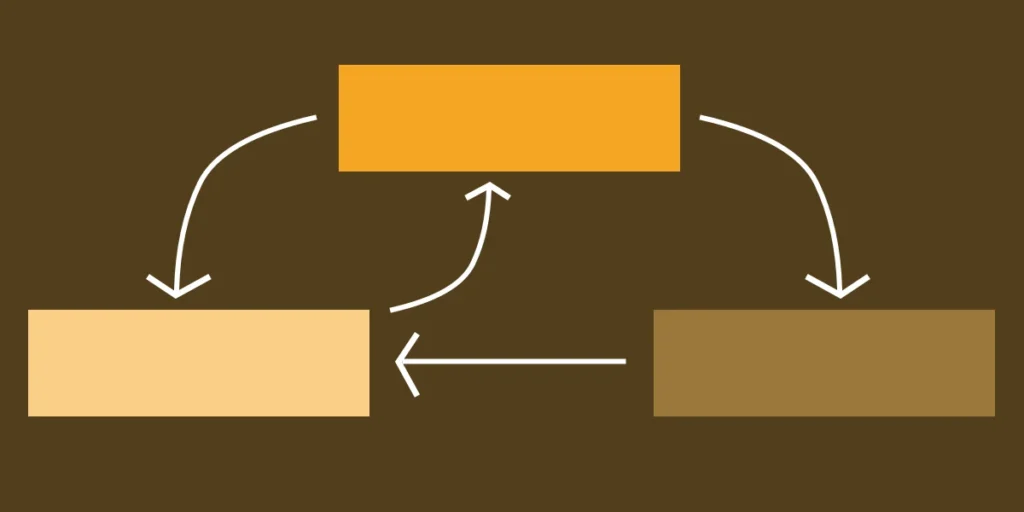
For years, the division of labor on the modern web was clear: HTML provided the structure, CSS provided the aesthetic, and JavaScript provided the intelligence. However, the boundaries of this triad are blurring. In recent years, CSS has quietly evolved from a static styling language into a reactive engine capable of managing complex state transitions that were once the exclusive domain of JavaScript.
Today, CSS is "listening" to the web—not through invasive audio surveillance, but through an expanding suite of pseudo-classes and emerging specifications that allow developers to handle logic, interactivity, and state management directly within the stylesheet.
The Shift: From Static Presentation to Reactive Logic
The core philosophy of CSS has historically been declarative: you define how a page should look, and the browser renders it. JavaScript, conversely, is imperative: it tells the browser exactly what to do step-by-step.
Modern CSS, however, is beginning to bridge this gap. By accumulating pseudo-classes that track element states—such as :hover, :focus, and :checked—CSS has effectively offloaded the need for event listeners in many common UI scenarios. While strictly speaking, CSS tracks states rather than events, the distinction is increasingly academic for the developer. If a style changes the moment a user interacts with an element, the user experience is identical regardless of whether a pointerenter event listener is running in the background or a CSS engine is toggling a state.
Chronology: The Maturation of CSS Pseudo-Classes
To understand where CSS is heading, we must look at the progression of its "event-listening" capabilities.
The Foundation: Pointer and Focus States
In the early days, :hover and :active were the extent of user-driven interactivity. :hover captures the temporal gap between pointerenter and pointerleave, while :active mimics the pointerdown and pointerup sequence.
The introduction of :focus-visible marked a significant leap in maturity. Unlike the standard :focus pseudo-class, which triggers indiscriminately, :focus-visible leverages sophisticated browser heuristics to determine if a focus indicator is necessary based on the user’s input method (keyboard vs. mouse). This transition represented a shift toward "intelligent" CSS that understands context.
The Rise of Relational Selectors: :focus-within and :has()
The most profound shift in CSS power arrived with the :has() selector. Often dubbed the "parent selector," it allows developers to write the kind of conditional logic previously reserved for the DOM-traversal capabilities of JavaScript.
When paired with :focus-within, developers can now style a container—such as a complex navigation menu or a form—based on the state of its descendants. This eliminates the need for JavaScript functions that traverse the DOM tree to add classes to parent elements, resulting in leaner, more maintainable codebases.
Input and Validation Logic
Modern CSS now handles form validation with a level of detail that once required heavy JavaScript libraries. Pseudo-classes like :valid, :invalid, :user-valid, and :user-invalid provide immediate, reactive feedback to the user. Notably, :user-valid and :user-invalid offer a superior experience by waiting for the user to interact with the input before flagging errors, solving a long-standing "eager validation" problem where fields would appear red before the user had even begun typing.
Supporting Data: Mapping CSS to JavaScript Events
The following table illustrates how native CSS states are systematically replacing standard JavaScript event patterns:
| CSS Pseudo-class | JavaScript Event Equivalent | Purpose |
|---|---|---|
:hover |
pointerenter / pointerleave |
Interaction feedback |
:focus |
focus / blur |
Navigation state |
:checked |
change |
Toggle state management |
:valid |
checkValidity() |
Form state validation |
:fullscreen |
fullscreenchange |
Layout state detection |
:target |
hashchange |
URL-based navigation |
Newer specifications, currently in the Interop 2026 roadmap, are extending this to media elements. Soon, developers will be able to style <audio> and <video> tags based on states like :buffering, :muted, :playing, and :stalled without attaching a single event listener to the video source.
Official Proposals: The event-trigger Specification
While current pseudo-classes track state, a bold new proposal from the CSS Working Group—the event-trigger spec—seeks to bring true event-driven animation to CSS.
Unlike pseudo-classes, which reflect a persistent state, event-trigger is designed to respond to discrete events. The proposed syntax allows for a "stateless" or "stateful" connection between events and animations. For example:
button
  event-trigger: --event click;


div
  animation-trigger: --event play-forwards;
  animation: fade-in 300ms both;
In this scenario, the div animation remains dormant until the click event fires on the button. By decoupling the event source from the target, the specification allows for cross-element communication that mimics the capabilities of JavaScript’s EventTarget interface.
Implications for the Future of Web Development
The migration of logic from JavaScript to CSS carries significant implications for the web ecosystem:
- Performance Optimization: CSS is handled by the browser’s optimized rendering engine. Moving UI logic from the main JavaScript thread to the CSS engine can significantly reduce jank, improve frame rates, and ensure smoother interactions, particularly on low-powered mobile devices.
- Reduced Technical Debt: By leveraging declarative CSS, developers write less "boilerplate" code. This reduces the surface area for bugs related to event propagation, memory leaks from dangling event listeners, and race conditions.
- The "CSS-in-JS" Paradox: As CSS absorbs more functionality, the debate surrounding CSS-in-JS libraries may shift. If CSS can handle state-based animations and form validation natively, the need for complex state-management libraries to bridge the gap between JS and UI may diminish.
- Accessibility and Semantics: Because these pseudo-classes are built into the browser, they inherently support accessibility features. Browsers understand what
:focus-visiblemeans for screen readers and assistive technology in a way that custom-coded JavaScript events might not.
Conclusion: A Balanced Ecosystem
Is this the end of JavaScript? Far from it. JavaScript remains the only choice for complex data processing, API interactions, and business-critical logic. However, the "JavaScript-first" mentality—where every minor hover effect or toggle is wired up with an event listener—is becoming outdated.
The goal of these CSS advancements is not to replace JavaScript, but to "stay in its lane" by handling the presentation-layer logic that CSS was always meant to manage. By providing developers with more surgical, declarative tools, the W3C is creating a more resilient and performant web. As we look toward the implementation of event-trigger and further refinements of the CSS language, it is clear that the future of web interactivity is not just faster, but fundamentally more native.
The web is evolving, and for the first time, CSS is leading the conversation.