The Future of Engagement: Mapping the Essential Marketing Trends for the Digital Era
Marketing, much like the e-commerce ecosystem it sustains, is a field in a state of perpetual flux. As consumer behaviors shift in response to rapid technological advancements, brands are forced to pivot, iterate, and innovate to remain relevant. Every year brings a new wave of promotional concepts—some fads, others foundational shifts—driven by influential market leaders and agile agencies.
In recent years, the marketing landscape has been fundamentally reshaped by social interaction. Whether through the rise of short-form video or the dominance of community-led social media engagement, the focus has moved from mass-broadcast advertising to targeted, high-touch interaction. As financial and temporal investments in digital strategies soar, the pressure to reach consumers on the right channel at the exact right moment has never been higher.
In this analysis, we dissect the five core marketing trends that are defining the coming period, providing the data-driven insights necessary to optimize your acquisition channels and future-proof your business.
1. The Imperative of Responsible Artificial Intelligence (AI)
Artificial Intelligence has transcended the "novelty" phase to become the backbone of modern marketing infrastructure. However, the current trend is not merely about adoption, but about responsibility. Responsible AI refers to the ethical, transparent, and socially conscious deployment of algorithms and generative tools.
The Pillars of Ethical AI
For brands, the integration of AI is no longer a "move fast and break things" scenario. It requires:
- Data Privacy and Consent: Respecting the user’s right to data sovereignty, ensuring that AI-driven personalization does not cross the line into intrusive surveillance.
- Algorithmic Transparency: Providing clarity on how AI-generated content is created and ensuring that recommendations are free from harmful bias.
- Human-in-the-loop Oversight: Maintaining human editorial control to ensure brand voice and factual accuracy remain consistent.
The implication here is clear: consumers are becoming increasingly sophisticated regarding how their data is used. Brands that prioritize ethical AI will build long-term trust, whereas those that abuse automation for efficiency at the cost of ethics risk severe reputational damage.
2. Sustainability as a Strategic Differentiator
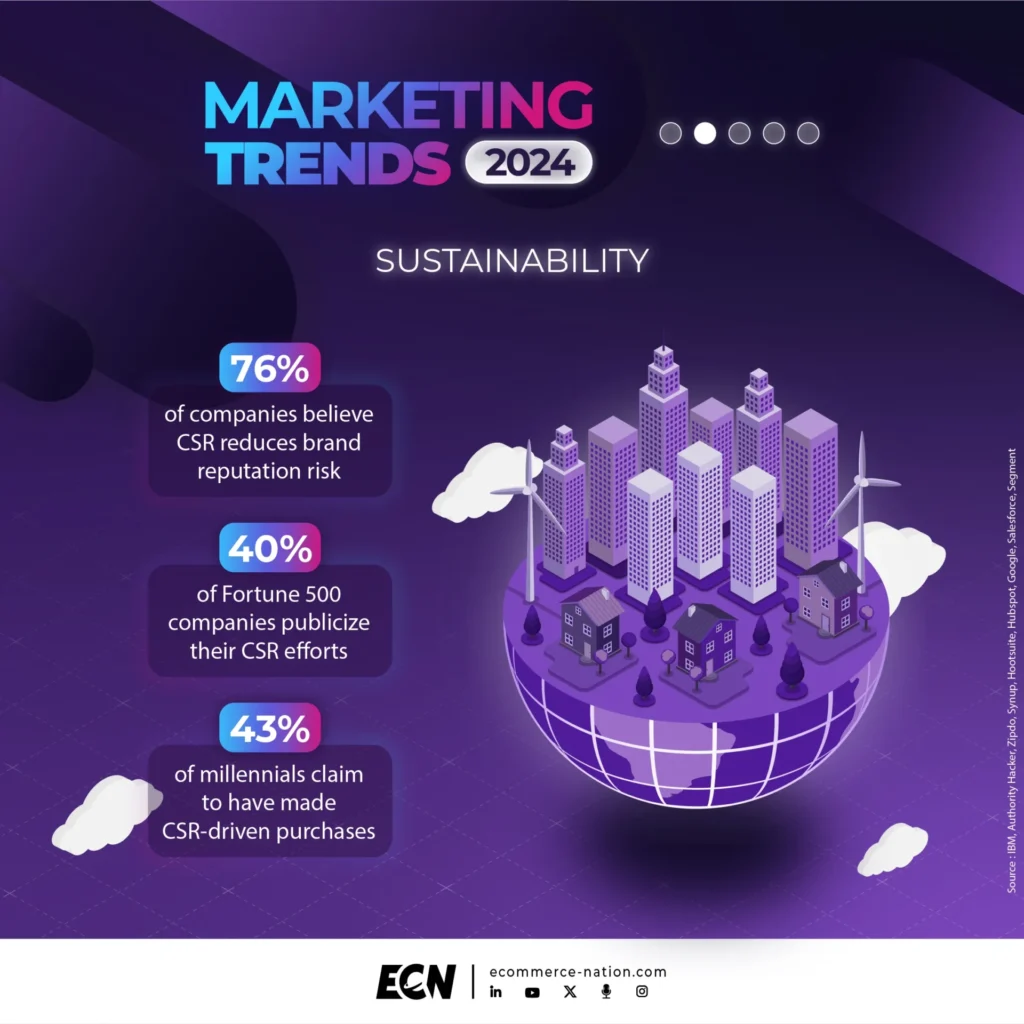
Sustainability has evolved from a corporate social responsibility (CSR) buzzword into a core pillar of digital marketing strategy. Modern consumers, particularly Gen Z and Millennials, are voting with their wallets, favoring brands that demonstrate a tangible commitment to the planet.
Communicating Sustainable Value
Marketing sustainable products requires more than a "green" logo. It involves authentic storytelling across social media, company blogs, and high-production promotional videos. By highlighting the lifecycle of a product—from ethical sourcing to carbon-neutral shipping—brands can create a narrative that resonates with the environmentally conscious consumer.

Engagement Through Digital Transparency
Technology is bridging the gap between promise and proof. Blockchain technology is increasingly being utilized to provide end-to-end traceability, allowing customers to scan a QR code on a product to see its exact journey from factory to doorstep.
Furthermore, digital influencers are shifting from promoting sheer consumption to advocating for "conscious consumerism." Collaborations with eco-conscious creators allow brands to tap into established communities that value sustainability, transforming the brand from a vendor into an advocate for a cause.
3. The Rise of Conversational Search
We are currently witnessing a paradigm shift from keyword-based search to intent-based "conversational" search. As voice assistants—Siri, Google Assistant, and Alexa—become deeply embedded in our daily lives, the way consumers ask questions has changed.
Adapting to Semantic Search
Traditional SEO relied on stuffing keywords into meta tags. Today, marketers must optimize for "semantic search." Users don’t type "best running shoes"; they ask their phone, "What are the best running shoes for marathon training on pavement?"

This necessitates a content strategy that:
- Answers Questions Directly: Creating FAQ-style content that mirrors natural language.
- Focuses on Context: Understanding that search queries are now part of a broader, ongoing conversation between the user and the AI.
- Prioritizes Mobile and Local: Since most voice queries are mobile-based, local SEO and fast page-load speeds are critical for capturing this traffic.
By aligning content with these conversational patterns, brands can secure the "Position Zero" spot in search results, effectively becoming the authoritative voice that smart assistants suggest to users.
4. The Short-Form Video Revolution
Attention spans are shorter than ever, and video has emerged as the primary vehicle for capturing them. The rise of platforms like TikTok, Instagram Reels, and YouTube Shorts has fundamentally altered the cadence of digital marketing.
The Power of Micro-Content
Short, punchy, and highly engaging videos are now the standard for quick-reach acquisition. The challenge for marketers is the "three-second rule": if you do not captivate the viewer within the first three seconds, they will swipe away. Techniques such as rapid-fire storytelling, humor, and high-contrast visual hooks have become essential survival skills for digital marketers.

The Immersive Frontier
While short content captures attention, immersive content—such as Augmented Reality (AR) and Virtual Reality (VR)—retains it. We are seeing a trend where retail brands integrate AR tools directly into their websites or apps. Allowing a customer to "virtually try on" a pair of glasses or see how a couch looks in their living room via their smartphone camera significantly lowers the barrier to purchase. This interactive layer turns passive viewing into an active, decision-making experience, which invariably leads to higher conversion rates.
5. Hyper-Personalization: Beyond the "Dear [Name]" Email
Personalization is no longer about inserting a first name into an email subject line. True hyper-personalization is the art of delivering a unique experience to every single customer based on their individual history, behavior, and predictive intent.
Leveraging Data for Individualized Journeys
By utilizing machine learning (ML), brands can now process vast amounts of customer data in real-time. This allows for:
- Predictive Product Recommendations: Suggesting items not just based on past purchases, but on what the user is likely to need next.
- Dynamic Website Content: Altering the homepage interface to reflect the specific interests of the returning user.
- Behavioral Triggering: Sending an offer exactly when the customer is most likely to convert, based on their unique browsing patterns.
The implication for the industry is a move away from broad-segment marketing toward "segment-of-one" marketing. While this requires a robust data infrastructure, the ROI is significant, as customers feel seen and valued, leading to higher lifetime value (LTV) and brand loyalty.

Implications for the Future: A Summary
The common thread linking these five trends is the transition toward a human-centric, data-driven, and highly transparent digital ecosystem.
- Chronology of Change: We have moved from the "Search Era" (early 2000s) to the "Social Era" (2010s) and are now firmly in the "Intelligent/Personalized Era."
- Strategic Investment: Brands must balance their budgets between long-term brand building (sustainability and ethical positioning) and short-term performance marketing (short-form video and conversational search optimization).
- The Bottom Line: Success in the coming years will not be determined by who has the biggest budget, but by who can most effectively leverage data to provide a seamless, ethical, and highly relevant experience to the consumer.
As we look toward the horizon, the companies that thrive will be those that view these technological shifts not as disruptions to be feared, but as tools to forge deeper, more authentic connections with their audiences. The tools of the trade are evolving—it is time for your strategy to follow suit.