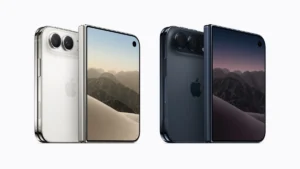
The Global Ambitions of the vivo X Fold6: A Deep Dive into the Premium Foldable Landscape

The landscape of foldable smartphones has shifted from a novelty experiment into a battlefield of high-end engineering. As the vivo X Fold6 makes its way across international borders—following its July 1 launch in China—the industry is forced to reconcile with a device that promises to redefine the power-user experience. With a confirmed European rollout already underway and an imminent arrival in the Indian market, the vivo X Fold6 is positioned not just as a successor to its lineage, but as a direct challenger to the established hegemony of Samsung, Google, and Honor.
Main Facts: The Anatomy of a Flagship Foldable
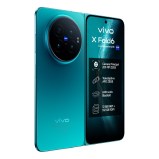
The vivo X Fold6 is a masterclass in hardware optimization. At its core, the device is powered by the MediaTek Dimensity 9500 Super chipset, a powerhouse that signals vivo’s commitment to high-performance computing. Paired with 12GB to 16GB of RAM and storage options reaching up to 1TB, the device is designed for heavy multitasking and professional-grade mobile workflows.

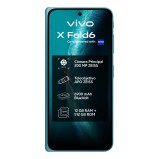
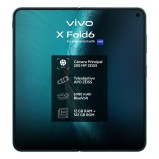
The physical construction of the X Fold6 balances aesthetics with utility. Measuring 9.4mm in thickness when folded and weighing 228g, it avoids the "ultrathin" trap by prioritizing a massive 7,000mAh battery—a capacity that is arguably the highest in its class, supported by 80W wired and 40W wireless charging speeds. The display suite is equally impressive: a 6.51-inch cover display with a 20:9 aspect ratio and a sprawling 8.02-inch inner display. Both panels utilize LTPO technology, offering a dynamic 1–120Hz refresh rate that ensures fluidity while conserving power.
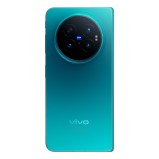
Photography remains the brand’s hallmark. The X Fold6 features a sophisticated ZEISS-branded array, led by a 200MP primary sensor with optical image stabilization (OIS). This is complemented by a 50MP periscope telephoto lens capable of 3x optical zoom and a 50MP ultra-wide sensor with a 119-degree field of view. Selfie enthusiasts are served by two dedicated 20MP front-facing cameras, ensuring consistent quality regardless of the device’s folded or unfolded state.
Chronology: The Journey to Global Markets
The path of the X Fold6 from a domestic Chinese powerhouse to a global contender has been calculated and methodical:
- July 1: The official launch event in China introduces the X Fold6, setting the stage for its high-end specifications and aggressive pricing.
- Late Q3/Early Q4: Following a quiet but steady rollout, the device began appearing on European storefronts. The strategy has been fragmented, with varying degrees of availability in Spain, Austria, and Italy.
- Next Week: The device is slated for its highly anticipated launch in the Indian market, a region where vivo maintains a robust infrastructure and a loyal consumer base.
- Present Day: The device faces a complex "worldwide tour," navigating disparate retail regulations and local pricing strategies that have left some markets with limited supply and others with varying price tags.
Supporting Data: Navigating the Pricing Minefield
The global rollout of the X Fold6 has highlighted a significant challenge for premium foldable manufacturers: price consistency. The vivo X Fold6 is a premium device, and its pricing reflects that, though the variance between regions is stark.
In Spain, consumers can currently find the device for €1,980—a discount from its original MSRP of €2,200. Conversely, markets like Austria and Italy maintain the full €2,200 price tag. These fluctuations are further complicated by the company’s inconsistent presence in markets like Germany and the UK, where official support has been sporadic or effectively dormant.
When compared to its rivals, the value proposition of the X Fold6 becomes clearer—and more contentious. Consider the current competitive landscape:
- Samsung Galaxy Z Fold8 Ultra: Priced at €2,200 for the base model, it offers a sleeker profile (8.9mm, 215g) but relies on a smaller 5,000mAh battery. While its Snapdragon 8 Elite Gen 5 chip is formidable, its telephoto capabilities are widely considered inferior to the vivo’s 200MP-backed system.
- Google Pixel 11 Pro Fold: Starting at €2,000, it struggles with a thicker chassis (10.1mm) and a smaller 4,806mAh battery. With the Tensor G6 chipset, it has received criticism for falling behind in raw performance compared to the Dimensity and Snapdragon alternatives.
- Honor Magic V6: At €2,300, it remains a strong competitor with a 6,660mAh battery and a 64MP telephoto lens. It holds its own against the vivo in terms of slimness (8.8mm) and lightness (219g).
Official Responses and Strategic Implications
vivo has remained tight-lipped regarding the specific reasons for its staggered European availability, though industry analysts suggest this is a tactical decision to prioritize markets where the company has the strongest distribution and repair networks. By launching in Spain, Italy, and Austria, vivo is testing the appetite for ultra-premium hardware before committing to more saturated, competitive markets like the UK or Germany.
The implications for the consumer are significant. For those seeking the absolute maximum battery life in a foldable, the X Fold6 is effectively in a league of its own. However, the lack of a standardized global price and the spotty regional support create a "premium tax" of sorts—where the burden of finding and servicing the device falls largely on the buyer.
Implications: Is the X Fold6 the New King?
The question of whether one should purchase the vivo X Fold6 is not merely a matter of specifications, but a question of ecosystem and long-term support.
From a performance standpoint, the X Fold6 is arguably the most "complete" hardware package currently available. It bridges the gap between the productivity-focused foldable and the photography-centric flagship. The inclusion of the 200MP main sensor and the massive 7,000mAh cell addresses the two most common pain points of the foldable form factor: mediocre camera hardware and poor battery endurance.

However, potential buyers must weigh these benefits against the "fragmented" nature of the launch. When buying a device for €2,000+, the expectation of seamless customer service, software updates, and reliable warranty support is paramount. If vivo can stabilize its supply chain and provide a uniform experience across its new markets, it could potentially unseat the incumbent leaders.
Conclusion: The Verdict for the Early Adopter
As we look toward the Indian launch next week and the continued expansion of the X Fold6, it is clear that vivo is not interested in playing it safe. They have delivered a device that pushes the boundaries of what a foldable can be, both in terms of internal capacity and camera sensor size.

If you are a power user who prioritizes hardware excellence above all else, the vivo X Fold6 is a compelling—perhaps even necessary—investment. If, however, you rely on the ubiquity and support infrastructure of more established Western-focused brands, you may find the current rollout of the X Fold6 to be a bridge too far.
The foldable market is no longer in its infancy. It is in its "ultra" phase, where the margins are thin, the technology is dense, and the competition is fierce. The vivo X Fold6 is a powerful, uncompromising entry into this race, and its success will ultimately depend on whether consumers value pure, unadulterated performance over the comforts of brand-saturated convenience.