The Great Web Value Shift: AWS WAF Unveils AI Traffic Monetization to Reclaim Publisher Revenue
In a move that promises to redefine the economic relationship between content creators and artificial intelligence, Amazon Web Services (AWS) has announced a groundbreaking update to its AWS WAF (Web Application Firewall) service. The new "AI Traffic Monetization" capability allows digital content owners and publishers to directly charge AI bots and automated agents for access to their protected web content at the network edge.
This development marks a seismic shift in the digital landscape. As AI-driven web traffic continues to surge, publishers have found themselves in a precarious position: their content is being used to train large language models (LLMs) and feed AI-generated summaries, yet they receive none of the traditional economic benefits—such as ad impressions or subscription conversions—that define the traditional internet economy. AWS is now providing the technical infrastructure to bridge this "value gap" without requiring publishers to write complex application code or manage custom payment backends.
The Economic Context: A New Paradigm for Web Traffic
For decades, the web has operated on a symbiotic model: publishers provided content, and search engine crawlers indexed that content, driving traffic back to the original site. This "referral traffic" was the lifeblood of the digital economy, fueling advertising revenues and subscription growth.
However, the rapid ascent of generative AI has disrupted this cycle. AI-specific crawlers—which have grown by over 300% year-over-year—now account for more than 50% of web traffic for many providers. Unlike their predecessors, these bots ingest content to synthesize answers within AI interfaces, often providing no outbound link or referral traffic back to the source. Consequently, publishers bear the substantial infrastructure costs of serving this traffic—bandwidth, compute, and server load—while the value generated by their intellectual property is captured entirely by the AI platforms.
AWS WAF’s new monetization feature provides a standardized mechanism to correct this imbalance, transforming AI traffic from a costly burden into a potential revenue stream.
Chronology: From Visibility to Value Capture
The evolution of AWS WAF from a security-first tool to an economic gateway has unfolded in deliberate phases:
- Phase 1: Visibility and Control: Initially, AWS WAF introduced Bot Control, which allowed publishers to gain granular visibility into which bots were accessing their sites. This enabled them to block or rate-limit malicious actors, but it did not solve the underlying issue of how to treat "productive" but non-referral AI traffic.
- Phase 2: The Identification Gap: With the rise of advanced agents like GPTBot, Claude-Web, and Perplexity-Bot, AWS expanded its classification capabilities, now recognizing over 650 distinct AI agent types. This provided the technical foundation for policy-based traffic management.
- Phase 3: Integration of Machine Payments: The final piece of the puzzle—the ability to request and verify payment—was addressed through the integration of the x402 protocol. By leveraging the Coinbase x402 Facilitator, AWS enabled a seamless handshake where the network edge identifies an AI agent and issues a "payment required" request before serving content.
How It Works: The Mechanics of Monetization
The system is designed to be as frictionless as possible for the publisher, operating entirely at the network edge.
1. Defining the Protection Pack
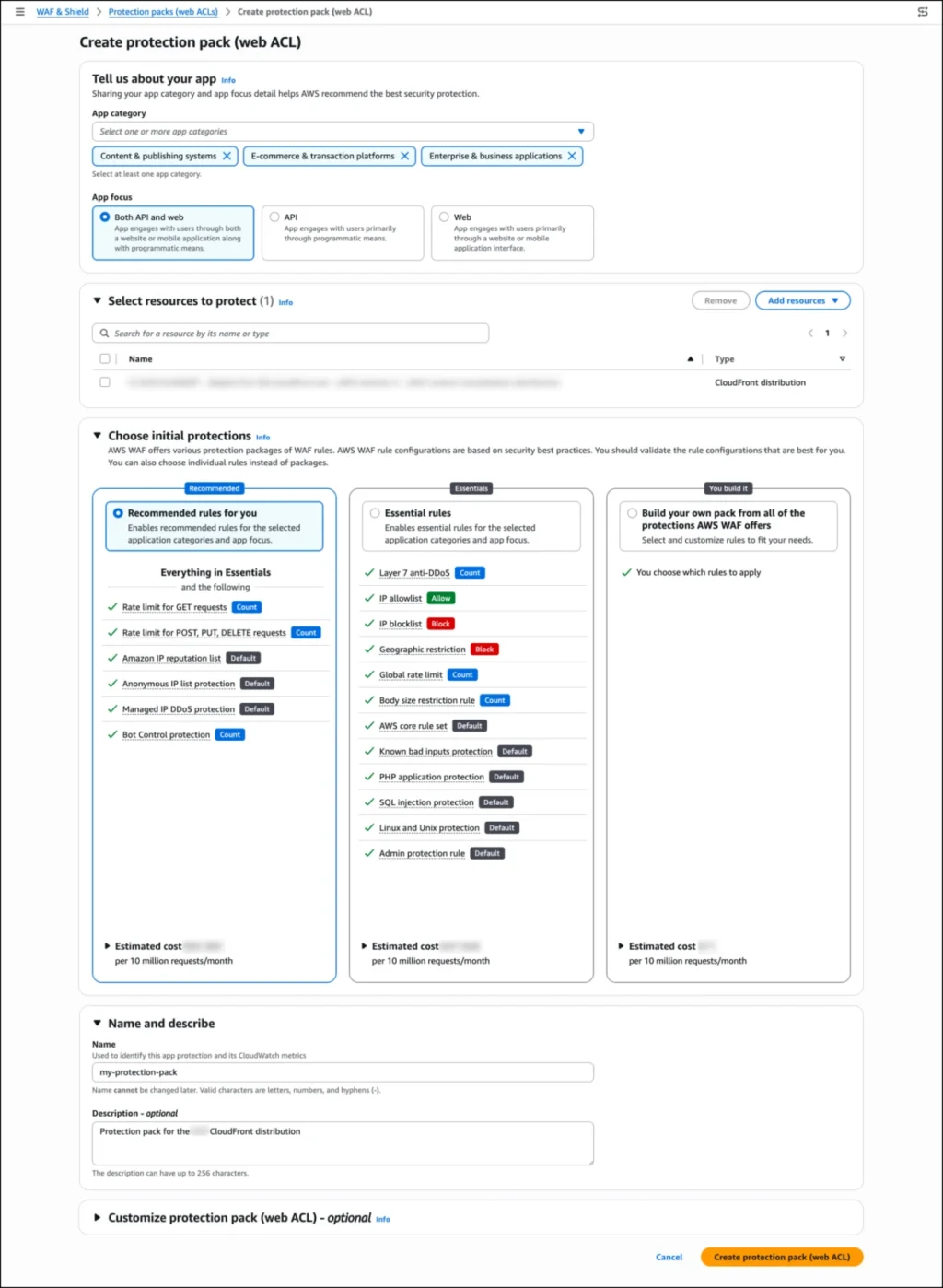
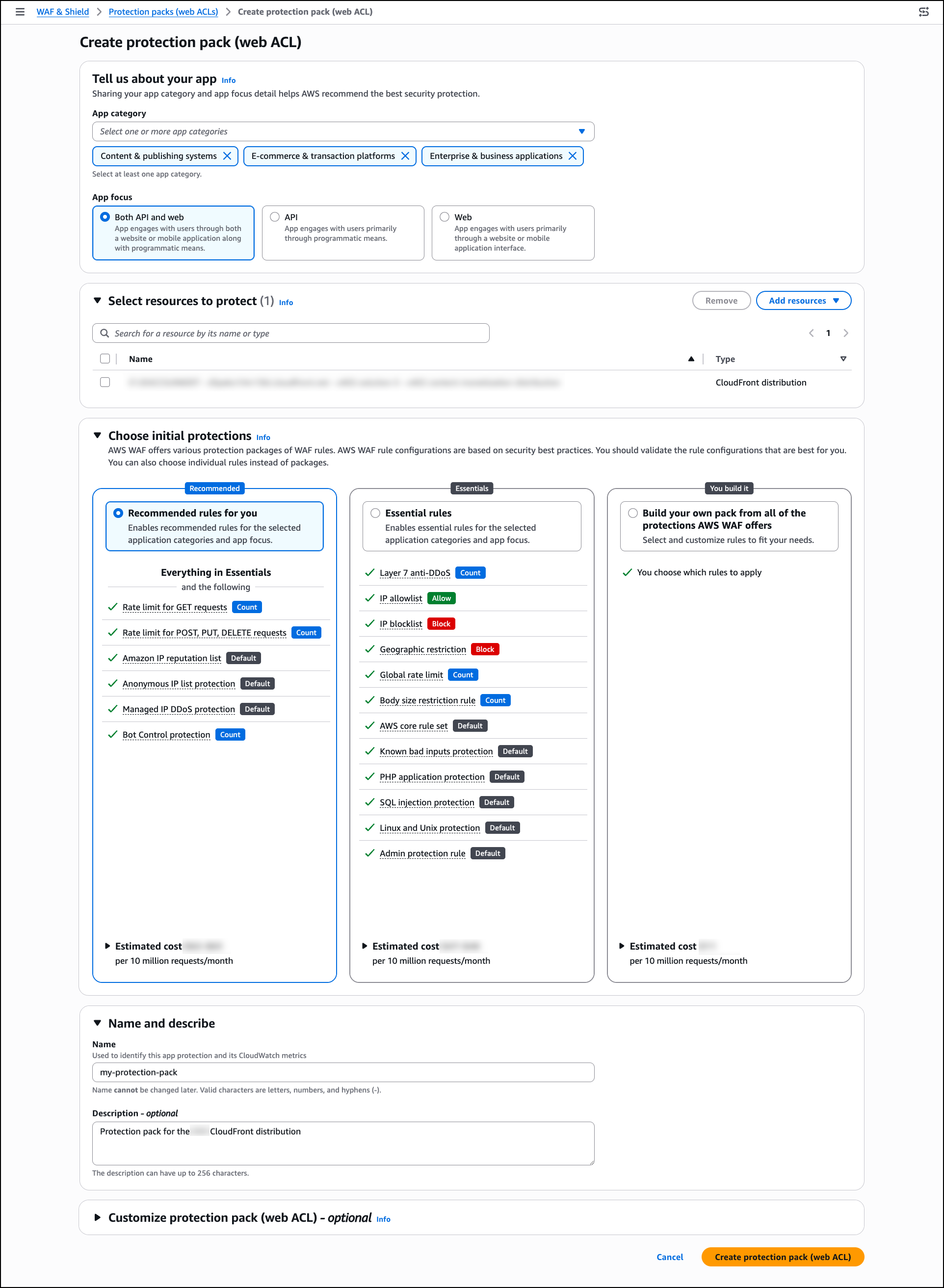
The configuration begins with the creation of a "Protection Pack" within the AWS WAF console. This pack acts as the central policy engine for a specific set of resources, such as a CloudFront distribution. Here, publishers define their content paths, set their pricing tiers, and establish license terms.

2. The AI Traffic Analysis Dashboard
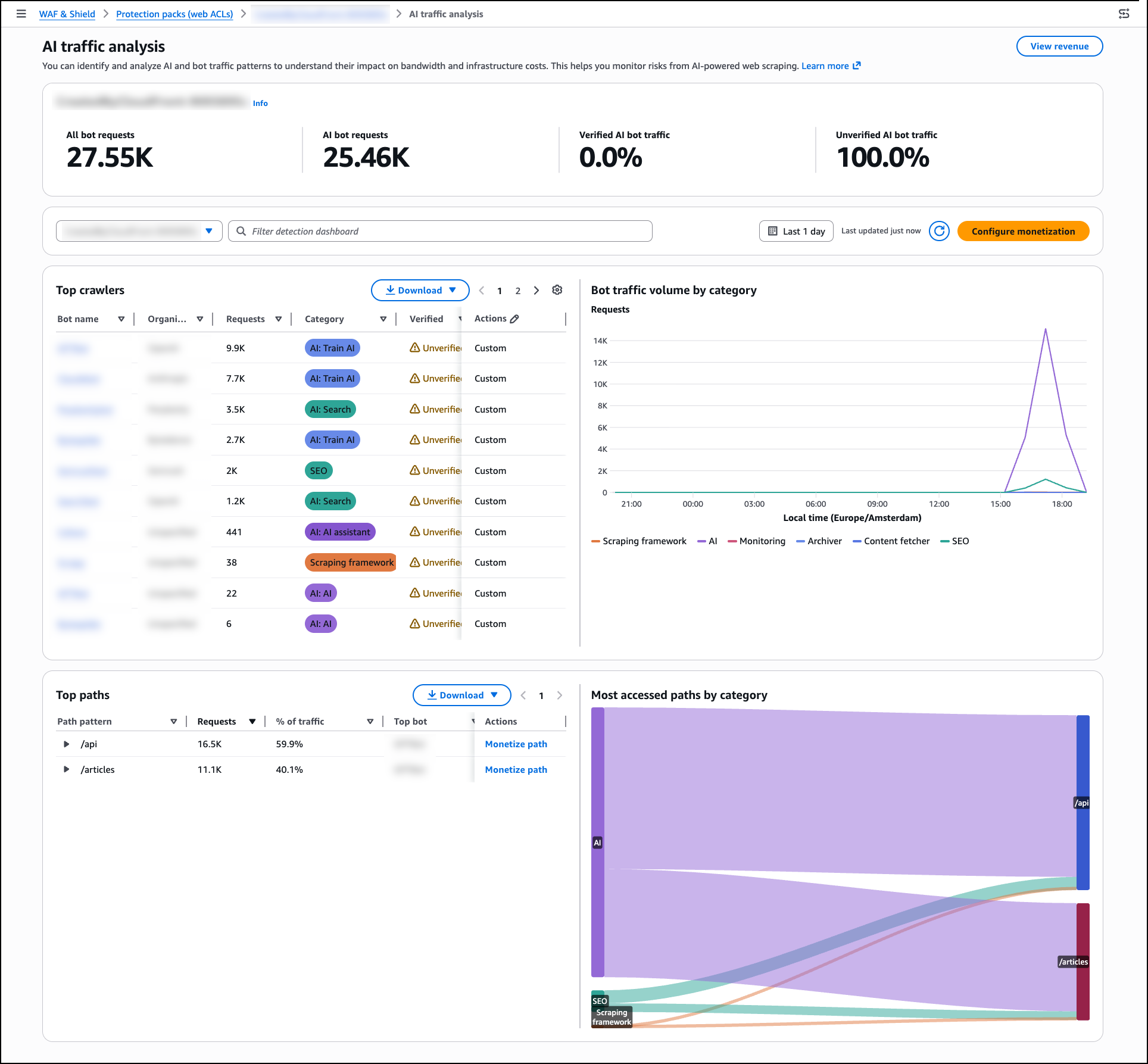
Before implementing a pricing strategy, publishers are encouraged to use the new AI Traffic Analysis dashboard. This tool breaks down incoming traffic into four distinct categories: All bot requests, AI bot requests, Verified AI bot traffic, and Unverified AI bot traffic. By providing metrics on bandwidth consumption and estimated monthly costs, the dashboard empowers owners to make data-driven decisions on how much to charge per request.
3. Implementing the "Monetize" Action
Publishers can assign different actions to specific bot verification tiers. While some bots may be granted free access (to ensure search indexing remains functional), others can be set to "Monetize." When a monetized bot requests content, the WAF returns an HTTP 402 "Payment Required" status.
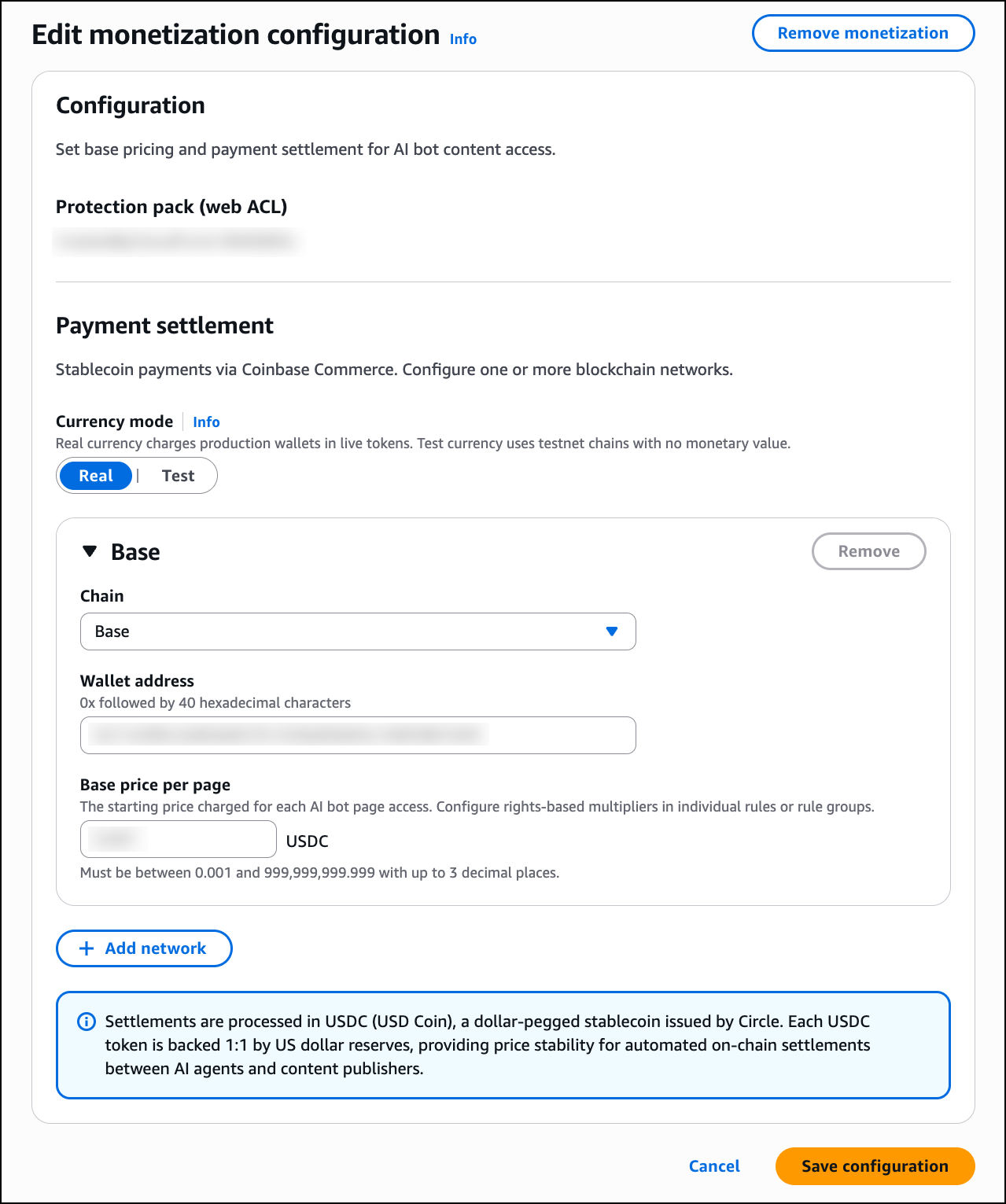
This response includes a machine-readable JSON price manifest via the x402 open protocol. The manifest details the cost in USDC, the accepted blockchain networks (such as Base or Solana), and the destination wallet address.
4. Autonomous Settlement
The process is designed for machine-to-machine interaction. An x402-compatible agent runtime can autonomously complete the payment. The client submits a signed payment authorization on their preferred network; AWS WAF verifies the transaction, facilitates the settlement, and then delivers the requested content to the AI agent.
Supporting Data: The Impact of AI Crawlers
The scale of the issue is difficult to overstate. AWS reports that for many content providers, AI bot traffic is not merely a component of their infrastructure costs—it is the majority. With AI-specific crawlers seeing triple-digit growth, the financial impact on mid-to-large-scale publishers is mounting.
For a publisher serving millions of requests a day, the "cost per request" may seem negligible in isolation, but the cumulative impact on bandwidth and server uptime represents a significant operational expenditure (OpEx). By enabling a "pay-per-request" model, AWS is effectively moving toward a "per-token" or "per-access" billing model for AI providers, mirroring the way these AI companies charge their own end-users.
Official Responses and Strategic Implications
Industry analysts suggest that this feature could lead to a massive consolidation of the AI training landscape. If AI companies are required to pay for the data they ingest, the "free-for-all" era of data scraping may come to an abrupt halt.
"The goal is to provide a standardized, scalable way for publishers to set the terms of engagement," noted a spokesperson close to the development. "We aren’t just providing security; we are providing a marketplace protocol."
Implications for the AI Ecosystem:
- A Filter for Quality: By attaching a price tag to content, AI companies may become more selective about the data they ingest, focusing on high-quality, verified sources rather than mass-scraping the entire web.
- Revenue Diversification: For publishers, this creates a new, automated revenue stream that does not rely on human visitors. It turns their digital archives into a utility, with AI companies effectively becoming enterprise customers.
- The Rise of Machine-to-Machine Finance: This is one of the first mainstream enterprise implementations of the "Machine Payments Protocol." It signals a future where machines conduct business with other machines without human intervention, using blockchain as the settlement layer.
Future Roadmaps
While the system currently supports USDC payments via blockchain, the infrastructure is built for expansion. AWS has indicated that support for Stripe and other traditional payment processors is on the horizon. This will be critical for enterprise publishers who may prefer traditional fiat currency settlement over stablecoins.
Furthermore, the "Test Mode" functionality allows publishers to fine-tune their pricing and agent policies without risking production revenue. By using testnets like Base Sepolia, businesses can validate their x402 flows and ensure that their infrastructure is ready to scale before flipping the switch to "Real" mode.
Conclusion: A New Frontier for Digital Rights
The introduction of AI traffic monetization via AWS WAF is a milestone in the digital age. It acknowledges a fundamental truth: data is the most valuable commodity in the AI era, and those who create that data deserve a seat at the table when it is monetized.
By moving this capability to the network edge, AWS has removed the technical barriers that have historically prevented smaller publishers from demanding payment from large AI labs. As the internet continues to evolve into a collection of AI-indexed knowledge bases, tools like this will be essential in ensuring that the creators of the world’s information are fairly compensated for their contributions to the future of intelligence.
For now, the capability is available to all Amazon CloudFront customers at no additional cost beyond standard AWS WAF pricing, signaling Amazon’s commitment to making this the new standard for web architecture. Publishers would do well to begin auditing their AI traffic today, as the era of "free" data scraping is rapidly drawing to a close.