The Nexus Breach: How a Massive Identity Verification Failure Exposed 153 Million Americans
In a staggering revelation that underscores the fragility of digital identity, a new illicit marketplace known as "Nexus" has surfaced on the dark web, offering for sale a colossal cache of over 153 million drivers’ licenses and sensitive identification documents. The data, primarily belonging to residents of the United States and Canada, includes high-resolution scans—complete with infrared and ultraviolet captures—of licenses, marijuana dispensary cards, and even government-issued Common Access Cards (CAC).
The scale of this breach is difficult to comprehend. With more than 153 million records available, the database represents a significant portion of the North American population. The discovery has prompted an immediate investigation by the Federal Bureau of Investigation (FBI), as the leaked data includes the personal credentials of high-ranking government officials, including U.S. Defense Secretary Pete Hegseth.
The Anatomy of the Nexus Marketplace
The service, which first appeared on the Russian cybercrime forum Exploit, functions like a high-end search engine for identity thieves. When researchers performed a blank search, they were met with approximately 11.5 million pages of results, each containing roughly 15 individual records.
The data is not merely a collection of static images. The perpetrators behind Nexus claim to have been systematically exfiltrating data for over a year, with the repository growing by nearly 400,000 records every 24 hours. The sophisticated nature of the scans—which include front-and-back photos, metadata, and specialized security-spectrum imagery—points toward a professional-grade exfiltration process rather than a casual dump of scraped data.

Chronology of a Digital Catastrophe
The alarm was first raised on Monday, August 31, when a security researcher was alerted to the service. The proprietor of Nexus, in an attempt to establish credibility, provided a free sample: the researcher’s own driver’s license.
The Trail of Metadata
Through forensic analysis, researchers began to notice a pattern in the filenames attached to the stolen images. Each file contained a specific date and timestamp. By cross-referencing these timestamps with personal travel and rental records, investigators made a startling discovery: the images were captured at the exact moment individuals presented their IDs for verification at various service providers.
- June 2025: Several researchers found their own records in the database, with timestamps matching the precise moments they handed their licenses to rental car representatives or entered secure facilities.
- The Hertz Connection: A common denominator among many victims was the use of Hertz car rental services. Even federal employees who utilized alternative identification at airport security found their drivers’ licenses in the Nexus cache, tracing back to the moment they later presented those same licenses at rental car counters.
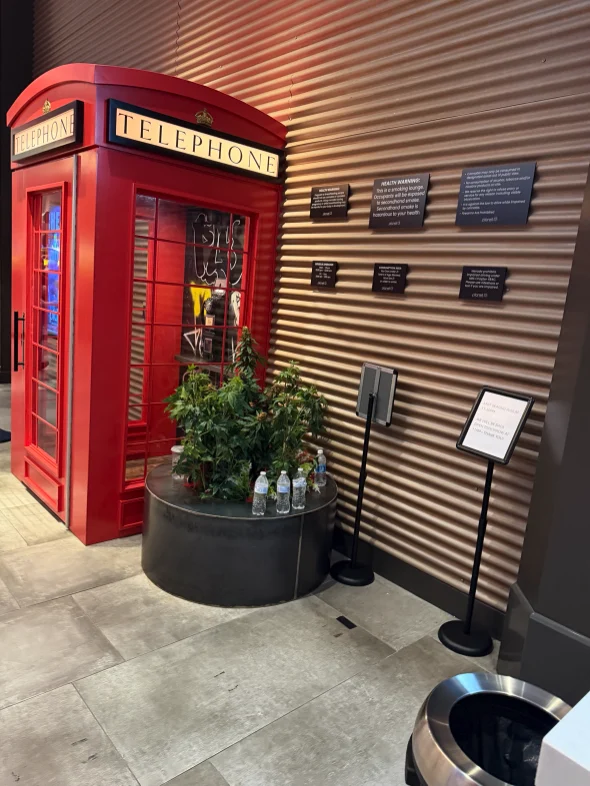
- The Dispensary Link: Security researcher Zach Edwards discovered his own license in the database, with a timestamp linked to a visit to "Planet13," a major marijuana dispensary chain. Investigations confirmed that Planet13 utilizes technology provided by the New Orleans-based identity verification firm, idscan.net.
The Idscan.net Nexus
The investigation shifted focus toward idscan.net, a company that facilitates ID verification for over 20,000 locations worldwide, including major corporations like FedEx, Target, and Motorola Solutions. The firm’s "trust" page lists a vast network of high-profile clients, processing over 21 million verifications monthly.
The "Nexus" service explicitly claimed that the source of their data was an active breach at a "major identity verification company." As researchers began documenting the link between their personal rental/dispensary experiences and the presence of their data in the stolen pool, the connection to idscan.net’s infrastructure became undeniable.

Official Responses and Accountability
As news of the breach spread, the response from both the public and private sectors was rapid.
The FBI Inquiry
The FBI’s New Orleans field office, acting on intelligence regarding the potential exposure of senior government officials, launched an official inquiry. The gravity of the situation was amplified when it was discovered that the credentials of an assistant director of the FBI were among the items for sale. This effectively turned the incident into a national security priority, moving it beyond the scope of simple consumer fraud.
The Corporate Stance
Following initial inquiries, idscan.net issued a statement acknowledging that an "unauthorized third party may have accessed and/or copied certain customer information." The company has since begun the process of notifying affected individuals and offering credit monitoring services.
However, the corporate fallout has been complex. Caesars Entertainment, listed as a partner on the idscan.net website, issued a swift rebuttal, stating they had not utilized the company’s services since February 2025 and that no data should have been retained. This discrepancy highlights the potential for "data hoarding" by verification firms—a practice that creates permanent targets for hackers long after a business relationship has concluded.

Implications: A Crisis of Verification
The Nexus breach is not just a data leak; it is an indictment of the modern "identity verification" industry.
The Erosion of Privacy
Security researchers argue that the proliferation of ID scanning—driven by mandates to "protect children" or verify age—has created a honeypot of sensitive information that is largely unregulated. Every time an individual hands over their license to be scanned, they are effectively entrusting a third-party vendor with their entire legal identity. When that vendor fails, the consumer has no recourse to "reset" their identity.
The Witness Protection Dilemma
Perhaps the most chilling implication involves those who cannot change their identity. Victims of domestic violence or individuals under federal protection rely on the integrity of the state’s identification system. When that system is commoditized and sold on the dark web, those individuals are effectively stripped of their safety, as AI-driven image matching can now track them across the globe regardless of how much they alter their appearance.
The Collapse of the Nexus Site
Shortly after the initial reporting of this breach, the Nexus portal abruptly went offline, leaving behind a brief message: "This service is no longer available." While the site has vanished, the data remains in the wild. Once 153 million records are exfiltrated, they cannot be retracted. The breach has fundamentally altered the threat landscape for millions of North Americans.

Conclusion
The Nexus incident serves as a grim milestone in the history of cybersecurity. It illustrates the extreme risks inherent in the mass collection and storage of government-issued identification data by private entities. As the FBI continues its investigation and victims begin the long process of monitoring their credit and securing their identities, the broader question remains: in an era of mandatory digital verification, how can any citizen be truly secure?
The answer, according to experts like Larry Baldwin, is bleak: the very systems designed to provide authentication have become the primary vector for the destruction of personal privacy. Until stringent regulations are imposed on how long and under what conditions identity verification firms may store data, incidents of this magnitude will remain a recurring nightmare for the digital age.