The PayPal Honey Fallout: A Watershed Moment for Affiliate Marketing Integrity

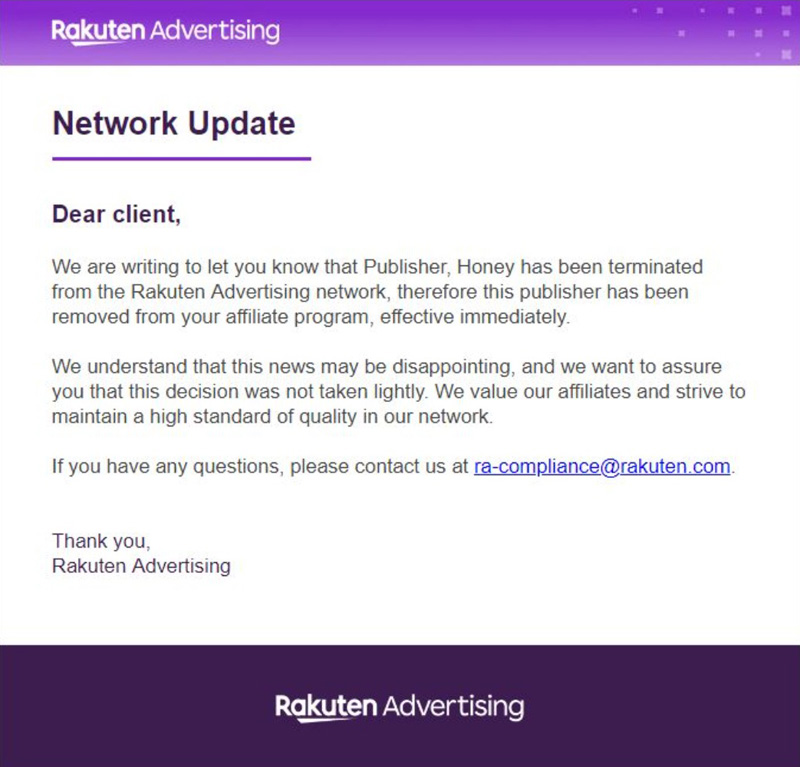
The affiliate marketing industry is currently navigating its most significant regulatory shift in recent memory. This week, the ecosystem was rocked by the unprecedented removal of PayPal Honey—a giant in the browser-extension space—from the two most prominent affiliate marketing networks in the United States: Rakuten Advertising and impact.com.
For years, PayPal Honey has been a household name, synonymous with automated coupon discovery. However, its recent ousting highlights a growing tension between massive, traffic-driving browser extensions and the ethical standards governing the "partnership economy." As industry professionals converge at major summits and across digital forums, the consensus is clear: the era of unchecked attribution manipulation is coming to an end.
The Chronology of a High-Profile Removal
The collapse of Honey’s standing within these major networks did not happen in a vacuum. It was the culmination of mounting industry scrutiny, highlighted by technical investigations from experts like Ben Edelman and exposés by content creators such as MegaLag, who dissected the mechanics of how these extensions often override legitimate affiliate attribution.
Monday, January 12: The Rakuten Advertising Pivot
The first domino fell at the start of the week. Rakuten Advertising, one of the industry’s most established networks, issued a definitive statement: PayPal Honey was “terminated from the network.” In a move that signaled a firm stance on publisher quality, Rakuten framed the decision as a mandatory step to “maintain a high standard of quality” across its ecosystem.
Friday, January 16: The Impact.com Suspension
As the week drew to a close, impact.com confirmed that it had also taken action against the tech giant. Unlike the permanent termination at Rakuten, impact.com characterized its move as a “temporary suspension,” citing that Honey was “out of compliance” with the platform’s established policies. The primary grievance, according to internal communications, was “attribution manipulation”—a practice where a browser extension triggers a commission by overwriting the hard work of a previous, often discovery-focused, affiliate.
The Mechanics of Attribution Manipulation
At the heart of this controversy lies the “last-touch-wins” model that dominates modern affiliate marketing. In this system, the final entity to touch the customer before the purchase receives the full commission.
The issue arises when browser extensions ignore "stand-down" rules. These rules are designed to prevent an extension from injecting its own tracking link if a customer has already interacted with another legitimate affiliate earlier in the journey. By failing to "stand down," these extensions effectively hijack the conversion, stealing credit from content creators, review sites, or influencers who actually drove the initial interest and intent.

When a brand partners with a service that is notorious for such practices, they inadvertently poison the well. Other, more ethical publishers—who rely on transparency and honest tracking—often refuse to work with brands that condone or ignore such "last-touch" hijacking. As a result, the brand suffers, losing out on a diverse, high-value ecosystem of partners in exchange for a short-term, artificial boost in conversion stats.
Official Responses and Industry Sentiment
The timing of these actions was not lost on observers. The news broke simultaneously with the Affiliate Summit, the largest gathering of its kind in the U.S. "Rakuten" and "Honey" became the unavoidable buzzwords of the conference.
The sentiment from leadership at major networks reflects a broader, industry-wide push for accountability. Impact.com’s leadership has been particularly vocal, describing the behavior as an affront to the "trust in the partnership economy." This is not merely a technical dispute; it is a reputational one. Networks are realizing that allowing "bad apples" to continue operating unchecked invites regulatory scrutiny and alienates the very publishers that provide long-term, sustainable growth.
Five Pillars of Program Resilience
For affiliate managers and brand owners, this saga serves as a critical case study in program management. To avoid the fallout of similar situations, programs must adopt a proactive, rather than reactive, approach to compliance.
1. The "Bad Apple" Theory of Program Health
The presence of one aggressive, rule-breaking affiliate does not just harm the bottom line; it degrades the entire program’s reputation. When top-tier affiliates—the kind that build long-term trust with consumers—see a program rewarding "link-jacking" or "forced cookies," they exit. Brands must prioritize the long-term loyalty of ethical partners over the immediate, often illusory, revenue spikes provided by questionable browser extensions.
2. Independent Policing: Don’t Rely on Networks
While networks offer compliance tools, they are not your legal department. A network’s primary goal is volume, and their compliance teams are often tasked with enforcing network policies rather than the specific, granular requirements of your brand. You must ensure your own Terms and Conditions are robust and, more importantly, that you have the internal tools and personnel to audit your affiliate traffic independently. Do not wait for a network to take action; if you see violations, act decisively at the program level.
3. Mastering the Technical Intricacies
Affiliate managers must be literate in the technical differences between "soft clicks," "stand-down" protocols, and "forced redirects." Understanding these nuances is the difference between an efficient program and one that is being bled dry by technical malpractice. Resources like the Performance Marketing Association’s Affiliate Network DSP Policies Comparison and the recent APMA audit in the UK are essential reading for any manager looking to audit their current landscape effectively.
4. Avoiding Dangerous Generalizations
While the Honey case highlights the risks of browser extensions, it is a mistake to ban all extensions or all loyalty sites. Not all tools operate in bad faith. A sophisticated manager evaluates partners on an individual basis. By grouping all "coupon sites" or "browser extensions" into a single, banned category, you risk missing out on legitimate, value-adding partners who use technology to enhance, rather than undermine, the customer journey.
5. The Necessity of Radical Diversification
Perhaps the most damning evidence of a poorly managed program is a sharp drop in revenue following the removal of a single affiliate. If a program experiences a significant revenue decline when one publisher is removed, it was never a healthy program—it was a dependent one.
Diversification is the ultimate hedge against platform risk. Programs should aim for a healthy mix across the 28 distinct types of affiliate marketing, including:
- Content Producers & Influencers: For authentic brand building.
- Affinity Groups: For targeted, high-conversion audiences.
- Post-Checkout Solutions: For incremental growth.
- Consultants & Educators: For long-tail, high-intent traffic.
Future Implications: A Call for Transparency
The removal of PayPal Honey from major networks marks a pivot point for the industry. It signals a move away from the "wild west" of affiliate marketing toward a more professional, transparent, and data-driven environment.
As we look toward the remainder of 2026 and beyond, the brands that thrive will be those that prioritize integrity. This means auditing current partnerships, enforcing strict compliance with attribution rules, and fostering a diverse, multi-channel affiliate ecosystem that rewards real value creation rather than technical trickery.
The "Honey" incident is a wake-up call. It serves as a reminder that in the world of digital partnerships, trust is the most valuable currency. Brands that fail to protect that currency will find themselves increasingly isolated in a marketplace that is rapidly demanding higher standards of operation.
For those ready to step up, the path forward is clear: audit your data, diversify your reach, and enforce your rules. The future of the affiliate economy depends on it.