The Rise of "Minimalist AI": Building Cost-Effective RAG Pipelines with Scikit-Learn
In the rapidly evolving landscape of Artificial Intelligence, Retrieval-Augmented Generation (RAG) has emerged as the gold standard for grounding Large Language Models (LLMs) in proprietary or domain-specific data. However, the prevailing narrative suggests that building a functional RAG system requires a complex, expensive stack: proprietary vector databases, managed cloud services, and heavy-duty orchestration frameworks.
For many developers, researchers, and small-to-medium-sized enterprises, this perceived "barrier to entry" is a misconception. It is entirely possible to construct a highly effective, transparent, and completely free RAG pipeline using only open-source tools and the robust, time-tested capabilities of scikit-learn. By stripping away the bloat of enterprise infrastructure, we can achieve high-performance document retrieval and generation that is both local and privacy-conscious.
The Core Philosophy: Simplicity over Complexity
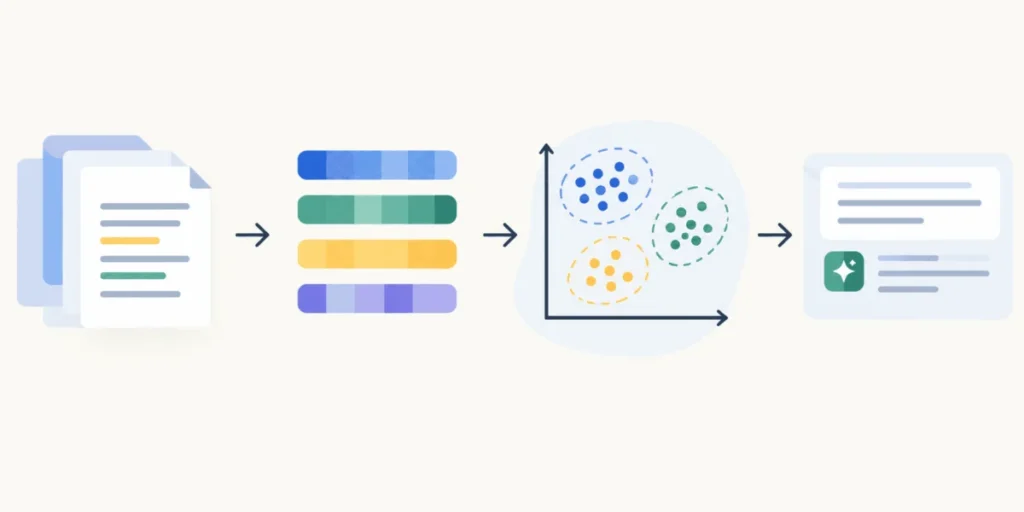
The fundamental mechanism of RAG is surprisingly elegant. At its heart, a RAG system performs two primary tasks: finding the most semantically relevant information to a user’s query (retrieval) and synthesizing that information into a human-readable answer (generation).
Modern industry trends have shifted toward complex "Vector Databases" like Pinecone, Milvus, or Weaviate. While these tools offer incredible scalability for billions of documents, they are often overkill for smaller corpora or initial proof-of-concept (PoC) phases. When your dataset fits comfortably in memory—a scenario that covers the vast majority of personal knowledge bases, internal company documentation, and specialized research archives—you do not need a distributed database.
By utilizing scikit-learn’s NearestNeighbors algorithm, we can perform high-speed cosine similarity searches directly on local NumPy arrays. This approach eliminates the need for network latency, API costs, and the technical debt associated with maintaining external infrastructure.
Chronology of Development: From Raw Text to Intelligent Synthesis
Building an end-to-end RAG pipeline can be broken down into five distinct phases, moving from raw, unstructured data to an interactive AI agent.
Phase 1: Environment Setup
We begin by establishing our local environment. Using tools like Google Colab or a standard Python IDE, we leverage the power of the sentence-transformers library, which provides access to state-of-the-art embedding models, and the transformers library by Hugging Face for the generative engine.
Phase 2: Data Ingestion and Chunking
Raw text is rarely ready for vectorization. To make information retrievable, we must break documents into "chunks." This is a critical step in RAG engineering. Small chunks allow the model to focus on specific facts, while overlapping chunks ensure that context isn’t lost at the boundaries of a slice.
Phase 3: Embedding Generation
We transform our text chunks into numerical vectors—mathematical representations of meaning. The all-MiniLM-L6-v2 model is an ideal candidate here; it is incredibly lightweight, fast, and optimized for mapping semantic similarity.
Phase 4: Vector Indexing with Scikit-Learn
This is the "minimalist" secret. Instead of an external database, we use sklearn.neighbors.NearestNeighbors. By configuring this to use ‘cosine’ distance, we align our retrieval process with the geometric nature of our embedding space.
Phase 5: The Generative Loop
Finally, we employ a small-scale, highly capable LLM, such as Qwen/Qwen2.5-0.5B-Instruct. This model acts as the "reader" that interprets the retrieved chunks and crafts a coherent response, adhering strictly to the provided context.
Supporting Data: Why Lightweight Matters
The shift toward smaller, efficient models is not just about cost; it is about performance and control.
| Metric | Enterprise RAG Stack | Scikit-Learn/Local RAG |
|---|---|---|
| Setup Time | Days (API setup, DB config) | Minutes (Standard Python libs) |
| Infrastructure Cost | High (Monthly subscriptions) | Zero (Open Source) |
| Privacy | Data leaves premises | Data stays local |
| Latency | Network dependent | Memory/CPU bound |
By avoiding the reliance on massive 70B parameter models, we can run our entire pipeline on a standard T4 GPU found on free cloud tiers or even a decent consumer-grade laptop. The Qwen2.5-0.5B model, while small, is specifically tuned for instruction following, making it far more effective for RAG than larger, general-purpose models that haven’t been optimized for context-constrained tasks.
Official Perspectives: The Industry Shift
While major cloud providers continue to push managed RAG services, a growing faction of the AI engineering community is pushing back. Open-source advocates argue that for the "90% use case"—internal wikis, legal document search, or personal digital assistants—the complexity of managed infrastructure is a liability.
"The best way to learn how RAG works is to build it without the abstractions," says one lead engineer at a prominent open-source research collective. "When you use scikit-learn to calculate the distance between your query and your document base, you stop seeing the AI as a ‘black box’ and start seeing it as a geometric search problem. This realization makes you a much better architect of AI systems."
Implications for Future Development
This minimalist approach has profound implications for how we deploy AI:
1. Data Privacy and Sovereignty
In sectors like law, medicine, and finance, data privacy is paramount. By keeping the retrieval and generation loop entirely on-premises or within a self-managed container, companies eliminate the risk of sensitive information being processed by third-party APIs.
2. Rapid Prototyping
Product teams can iterate on their RAG strategy—changing chunking sizes, experimenting with different embedding models, or tuning the system prompt—without waiting for database migrations or managing schema changes in a cloud-hosted vector store.
3. Sustainability and Cost
The environmental and financial costs of running massive, always-on AI clusters are non-trivial. Minimalist RAG pipelines consume a fraction of the compute resources, making them a sustainable choice for organizations committed to green-tech initiatives.
4. Edge AI
As we look toward the future, the ability to run high-quality, RAG-enabled agents on edge devices (like tablets or dedicated industrial controllers) becomes a reality. This "Scikit-Learn first" methodology provides the perfect blueprint for building intelligence that works offline.
Conclusion: Empowering the Developer
Building a RAG pipeline no longer requires a massive budget or a team of cloud infrastructure experts. By embracing the power of libraries like scikit-learn and the efficiency of the latest small-language models, you can build a robust, transparent, and highly functional system in an afternoon.
Whether you are looking to index a few thousand documents, experiment with new retrieval strategies, or simply understand the "magic" behind modern AI systems, this approach provides the control and clarity you need. The future of AI is not just about scale; it is about efficiency, accessibility, and the ability to build sophisticated tools with the building blocks you already have in your toolkit.
As you begin your journey with this minimalist pipeline, remember that the quality of your RAG system is ultimately determined by the quality of your data and the precision of your retrieval logic. Start small, iterate often, and enjoy the process of building intelligence that is entirely your own.