The Silicon Frontier: AWS Unveils Graviton5-Powered EC2 M9g Instances to Power the Next Era of Agentic AI
In the high-stakes arena of cloud computing, where performance is measured in nanoseconds and efficiency is calculated in sustainability metrics, Amazon Web Services (AWS) has once again shifted the tectonic plates of infrastructure. Following its preview announcement at re:Invent 2025, AWS has officially launched its general availability (GA) of the M9g and M9gd instance families, powered by the fifth generation of its custom-designed Graviton processor.
This launch represents more than just a hardware upgrade; it is a strategic maneuver designed to anchor the infrastructure layer of the burgeoning "Agentic AI" economy. As enterprise workloads transition from static data processing to dynamic, multi-step autonomous tasks, Graviton5 emerges as the engine room for this transformation.
The Main Facts: Defining Graviton5 Performance
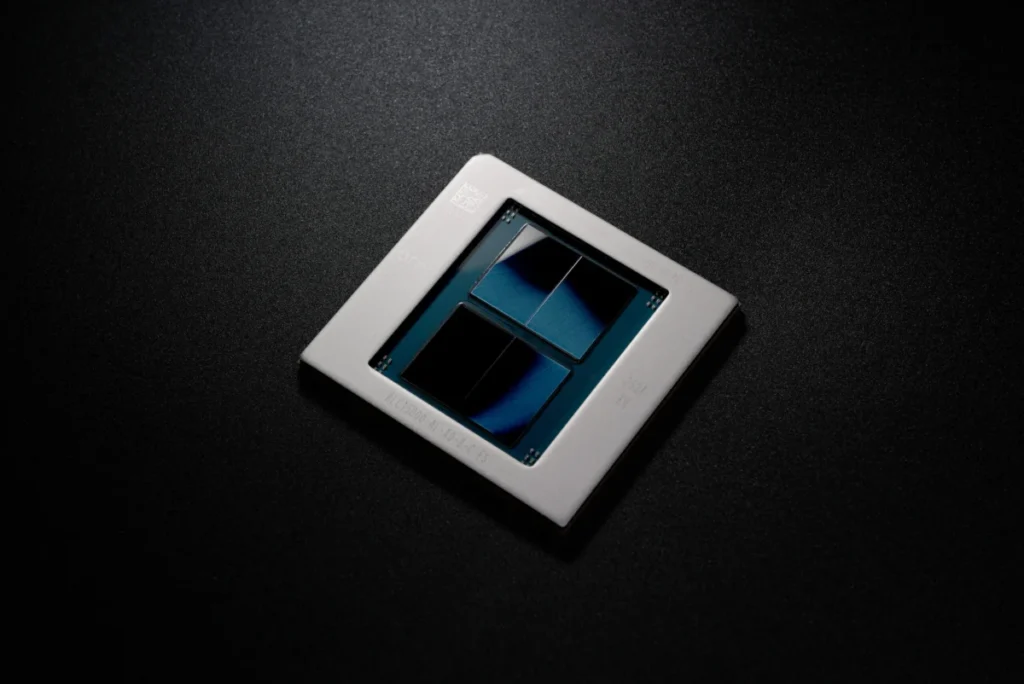
The M9g and M9gd instances, built upon the mature foundation of the AWS Nitro System, introduce a leap in computational capability. Graviton5 features a massive 192-core architecture, a fivefold increase in L3 cache capacity, and a 33% reduction in inter-core latency.
When paired with DDR5-8800 memory, these processors provide the highest memory bandwidth currently available in any cloud instance. For the end user, this translates to tangible gains:
- Web Applications: Up to 35% faster performance.
- Machine Learning Inference: Up to 35% performance improvement.
- Database Management: Up to 30% higher throughput and lower query latency.
The "d" variant—the M9gd—adds high-speed, low-latency local NVMe SSD storage, catering to data-intensive applications like real-time analytics, media processing, and high-performance caching.
A Chronology of Innovation: Eight Years of Silicon Evolution
To understand the significance of the M9g launch, one must look back at the trajectory of AWS’s custom silicon strategy.
- 2018: AWS introduces the first Graviton processor, signaling a move away from total reliance on third-party x86 silicon.
- 2020-2023: Through the iterations of Graviton2, 3, and 4, AWS successfully proved that Arm-based architectures could deliver superior price-performance ratios compared to legacy incumbents.
- December 2025: At re:Invent, AWS announces the M9g preview, marking the debut of the Graviton5 chip.
- June 2026: Following six months of rigorous testing by enterprise partners and startups alike, the M9g and M9gd families enter general availability.
This evolution has been methodical. AWS has not merely chased raw clock speeds; it has focused on the "AWS philosophy"—maximizing compute density, optimizing I/O throughput, and drastically improving power efficiency to meet global sustainability mandates.
Supporting Data: Real-World Benchmarks
The migration to M9g is not merely a theoretical exercise. Industry leaders have already reported significant operational gains:

- ClickHouse: The high-performance database provider observed a 36% performance surge compared to the previous-generation M8g, requiring zero code changes during the transition.
- Honeycomb: In a six-month A/B testing cycle on production observability workloads, Honeycomb recorded 36% better throughput per core over Graviton4, proving the architecture’s stability under sustained load.
- HubSpot: By moving MySQL database workloads to M9g instances, HubSpot reported a reduction in query duration by up to 60%, a massive win for user experience and resource management.
These figures underscore the primary value proposition of Graviton5: it is "drop-in" compatible with modern software stacks, allowing enterprises to capture massive efficiency gains without the technical debt associated with full architecture re-platforming.
The Rise of Agentic AI: Why CPU Matters
As the AI industry matures, a fundamental shift is occurring. The initial excitement surrounding Large Language Models (LLMs) was centered on "chatbots"—systems that provide answers. Today, the focus has shifted to "Agentic AI"—systems that take action, evaluate results, and orchestrate complex, multi-step workflows.
This transition is CPU-intensive. While GPUs are vital for model training, the "reasoning" and "orchestration" phases of AI agents—the logic that determines how to use a tool or when to execute code—rely heavily on general-purpose compute.
Meta, one of the world’s largest users of AWS infrastructure, is currently deploying Graviton at a scale of tens of millions of cores. By leveraging the core density and high memory bandwidth of Graviton5, Meta can maintain thousands of concurrent, lightweight environments, allowing their AI agents to process reasoning steps with minimal latency. Graviton5 ensures that the GPU "accelerators" are never left idle, waiting for the CPU to feed them data or process the next logical step.
Security: The "Mathematically Proven" Standard
With the GA of M9g and M9gd, AWS has introduced a critical security innovation: the Nitro Isolation Engine.
Historically, cloud hypervisors have relied on standard testing to ensure isolation between virtual machines. The Nitro Isolation Engine elevates this by utilizing "formal verification"—a rigorous mathematical technique used to prove that the system behaves as intended under all possible scenarios.
By mediating access to memory, CPU registers, and I/O devices through a minimal set of APIs, the Nitro Isolation Engine provides a level of security assurance that is theoretically absolute. This is a game-changer for financial services, healthcare, and government sectors that require strict regulatory compliance and absolute data separation in multi-tenant cloud environments.
Implications: The New Baseline for Cloud Infrastructure
The general availability of Graviton5 instances signals a permanent shift in how AWS customers will architect their systems moving forward.

1. Cost Efficiency as a Default
With the introduction of the Graviton Savings Dashboard and the AI-powered AWS Transform service (which automates the migration of Java applications from x86 to Graviton), the friction of moving to custom silicon has been effectively eliminated. Companies can now treat cost-optimization as an automated, continuous process.
2. The "Green" Mandate
Sustainability is no longer a corporate buzzword; it is a financial and operational requirement. Because Graviton5 provides more compute per watt than any previous AWS processor, it allows organizations to scale their infrastructure to meet the demands of AI while simultaneously reducing their carbon footprint.
3. Elasticity and Throughput
The introduction of Instance Bandwidth Configuration (IBC) allows users to dynamically reallocate bandwidth between Amazon EBS and VPC networking. This level of granular control is unprecedented, allowing database administrators and system architects to tune their environment for specific traffic patterns, whether it be write-heavy logging or read-heavy query processing.
Conclusion: A Platform for the Future
The launch of the M9g and M9gd instances is a testament to the success of AWS’s vertical integration strategy. By owning the stack—from the custom silicon of the Graviton processor to the hypervisor of the Nitro System—AWS has created a platform that is uniquely suited for the chaotic, compute-hungry reality of modern AI applications.
As developers continue to push the boundaries of what autonomous software can achieve, they will require an infrastructure that is fast, secure, and—above all—efficient. With Graviton5, AWS has provided that foundation. Whether it is a two-person startup optimizing their database costs or a global technology giant deploying massive agentic AI fleets, the message from the cloud leader is clear: the future of computing is ARM-based, and it is more powerful than ever.
For organizations ready to evolve, the tools are now fully available in the US and Frankfurt regions, ready to be integrated into the next generation of cloud architectures.