The Staines Murder Case: Odisha State Sentence Review Board Denies Premature Release for Dara Singh
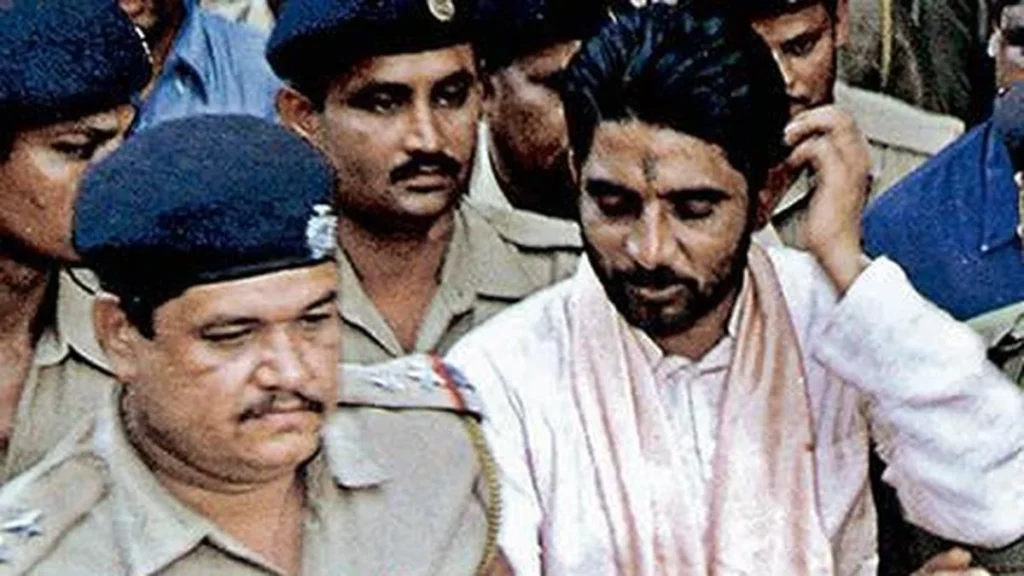
BHUBANESWAR — The legal saga surrounding Rabindra Kumar Pal, infamously known as Dara Singh, has reached a new impasse. The Odisha State Sentence Review Board (SSRB) has formally rejected the petition for the premature release of the man convicted for the brutal 1999 murder of Australian missionary Graham Stewart Staines and his two minor sons.
Despite having served over 26 years behind bars, Singh’s quest for freedom has been stymied by concerns regarding public order and the potential for communal unrest. This decision follows a direct nudge from the Supreme Court of India, which had earlier directed the Odisha government to provide a definitive stance on the matter, ending years of bureaucratic indecision.
The Context: A Legacy of Violence
The murder of Graham Staines remains one of the most harrowing episodes in the history of communal violence in India. On the night of January 22, 1999, in the village of Manoharpur in Odisha’s Kendujhar district, Staines and his two young sons, Philip (10) and Timoti (6), were sleeping inside their station wagon when they were surrounded by a mob led by Dara Singh. The vehicle was set ablaze, leaving the victims with no chance of escape.
The incident sparked international outrage, bringing global scrutiny to the rise of religious intolerance and extremist vigilante groups in the region. The perpetrators justified the act by accusing Staines of engaging in the forced conversion of local tribal populations to Christianity—an allegation that triggered a wave of condemnation from the international community and human rights organizations worldwide.

Chronology of a Legal Battle
The legal proceedings against Dara Singh have been protracted and complex. The following timeline outlines the key milestones in the case:
- January 1999: The murder of Graham Staines and his two sons occurs at Manoharpur.
- September 2003: A Sessions Court in Khurda, Bhubaneswar, convicts Dara Singh and sentences him to death.
- 2005: The Orissa High Court acquits 11 co-accused persons and commutes Singh’s death sentence to life imprisonment.
- 2016–2022: Singh makes multiple applications for premature release. Each attempt is consistently rejected or deferred by the SSRB.
- 2024: Singh moves the Supreme Court of India, seeking a directive to the Odisha government to consider his release under the established "Guidelines for Premature Release."
- August 2026: The Supreme Court orders the Odisha government to make a final decision.
- August 31, 2026: The SSRB holds a meeting and formally declines the request for premature release.
The Grounds for Rejection: Public Safety and "Dara Sena"
The SSRB’s decision to keep Singh in custody was not based solely on the gravity of his crimes, but on contemporary intelligence regarding his influence.
According to the proceedings of the August 31, 2026, meeting, the Board cited a disturbing incident on August 15, 2026. Reports from the Kendujhar district administration indicated that approximately 200 to 250 individuals, allegedly affiliated with an outfit known as "Dara Sena," gathered outside the District Jail in Kendujhar in anticipation of his release. During this assembly, supporters reportedly raised provocative slogans.
The SSRB noted that the report from the prison authorities, while mentioning "good behavior," was ultimately inconclusive regarding the risk factors involved. The Board concluded that the societal ramifications—specifically the credible fear of communal disturbance—necessitated that Singh remain incarcerated.

"In view of all the above-mentioned facts and circumstances, the Board is therefore not inclined to recommend his premature release at this stage," the official record stated.
A History of Criminality
Dara Singh, a 67-year-old native of Kodar village in the Auriya district of Uttar Pradesh, was not merely a peripheral figure in the Staines case. Prior to his arrest, he was a Hindi teacher at Janta High School in Mallipur, a position that allowed him to integrate into the local social fabric.
However, his criminal record extends beyond the Staines tragedy. Singh was also convicted for the murders of Father Arul Doss and a local garment shopkeeper, S.K. Rahaman. For these crimes, he received additional life sentences from the District and Session Judge in Baripada, Mayurbhanj. His appeals in these cases were similarly dismissed by the High Court, reinforcing his status as a habitual offender who has posed a long-term threat to law and order.
Comparative Outcomes: The Case of Mahendra Hembram
The legal pathway for co-accused individuals has not been identical. Mahendra Hembram, who was convicted alongside Singh, successfully secured a premature release on April 16, 2025, from the Kendujhar District Jail. The disparity between Hembram’s release and Singh’s continued imprisonment highlights the specific weight the state places on Singh’s role as the "main defendant" and his continued ability to mobilize supporters.

The Legal and Ethical Implications
The debate over Singh’s potential release touches upon the fundamental tension between the reformative goals of the Indian penal system and the state’s obligation to maintain public order.
The Reformative Argument
Supporters of premature release often point to the "Guidelines for Premature Release," which emphasize that long-term inmates who exhibit "good behavior" and have served a substantial portion of their sentence—in Singh’s case, over 26 years—should be considered for rehabilitation. Advocates for such policies argue that the purpose of imprisonment is not solely retribution but also to allow for the potential reintegration of the convict into society.
The Public Safety and Justice Argument
Conversely, the State’s stance emphasizes the "societal ramification" clause. Legal experts note that in cases involving high-profile communal violence, the impact of a convict’s release on the victims’ families and the broader community cannot be ignored. The gathering of the "Dara Sena" outside the jail serves as a stark reminder that for some, Singh remains a symbol of an ideological movement rather than a reformed individual.
Looking Ahead
The Supreme Court’s intervention in 2026 served as a catalyst for the state to stop deferring the issue. By rejecting the application, the Odisha government has signaled that the threat of communal polarization remains a primary consideration in its decision-making process.

For now, Dara Singh remains in the Kendujhar District Jail. As he approaches his seventh decade, the legal avenues for his release are narrowing. The case serves as a poignant reminder of the enduring scars left by the events of January 1999 and the state’s persistent challenge in balancing justice, human rights, and the maintenance of a peaceful, secular society.
The rejection of his plea by the SSRB is a significant legal blow that underscores the judiciary and administrative caution when dealing with individuals whose release could potentially reignite past communal tensions. As the case continues to be monitored by legal observers and human rights groups, the focus remains on whether any future petition can address the deep-seated security concerns that have kept Singh behind bars for more than a quarter of a century.