Transforming the Pipeline: AWS Unveils Autonomous Release Management for DevOps Agent
In the rapidly accelerating landscape of modern software development, the velocity of code production has outpaced the human capacity for verification. With the widespread adoption of AI-assisted coding tools, development teams are drowning in a sea of pull requests, often leading to "review fatigue," where critical security and architectural flaws are overlooked in the rush to meet deployment deadlines. Today, Amazon Web Services (AWS) is addressing this bottleneck head-on by announcing a powerful new preview capability for the AWS DevOps Agent: autonomous release management.
Designed to function as an "always-available teammate," the AWS DevOps Agent now extends its reach from post-deployment incident resolution to the critical pre-deployment phase. By integrating release readiness reviews and autonomous release testing, AWS is providing teams with a sophisticated, AI-driven guardrail that ensures code is not just written, but verified against production-grade standards before it ever reaches a user.
The Core Innovation: Bridging the "Review Gap"
The challenge facing contemporary DevOps teams is twofold: the sheer volume of AI-generated code and the increasing complexity of cloud environments. When developers rely on automated coding assistants, they generate more frequent, smaller changes. However, if the review and testing infrastructure cannot scale to match this frequency, the result is a massive backlog that stalls innovation.
AWS DevOps Agent’s new release management features act as a force multiplier. By leveraging a deep, contextual understanding of a company’s infrastructure—including cross-repository dependencies and service behaviors—the agent provides a layer of rigorous, objective oversight. It bridges the gap between the speed of AI development and the necessity of operational stability.
Chronology of the Release Management Workflow
To understand the impact of these new features, one must observe how they integrate into the standard CI/CD lifecycle. The workflow is designed to be seamless, acting at both the code-committal stage and the pre-merge verification stage.
1. Configuration and Knowledge Indexing
Before the agent can offer insights, it must understand the "DNA" of the organization’s software environment. By connecting GitHub or GitLab repositories to an "Agent Space," the system builds a comprehensive knowledge graph. This graph tracks how different services interact, mapping out dependencies that are often invisible to human reviewers.
2. Setting the Standards
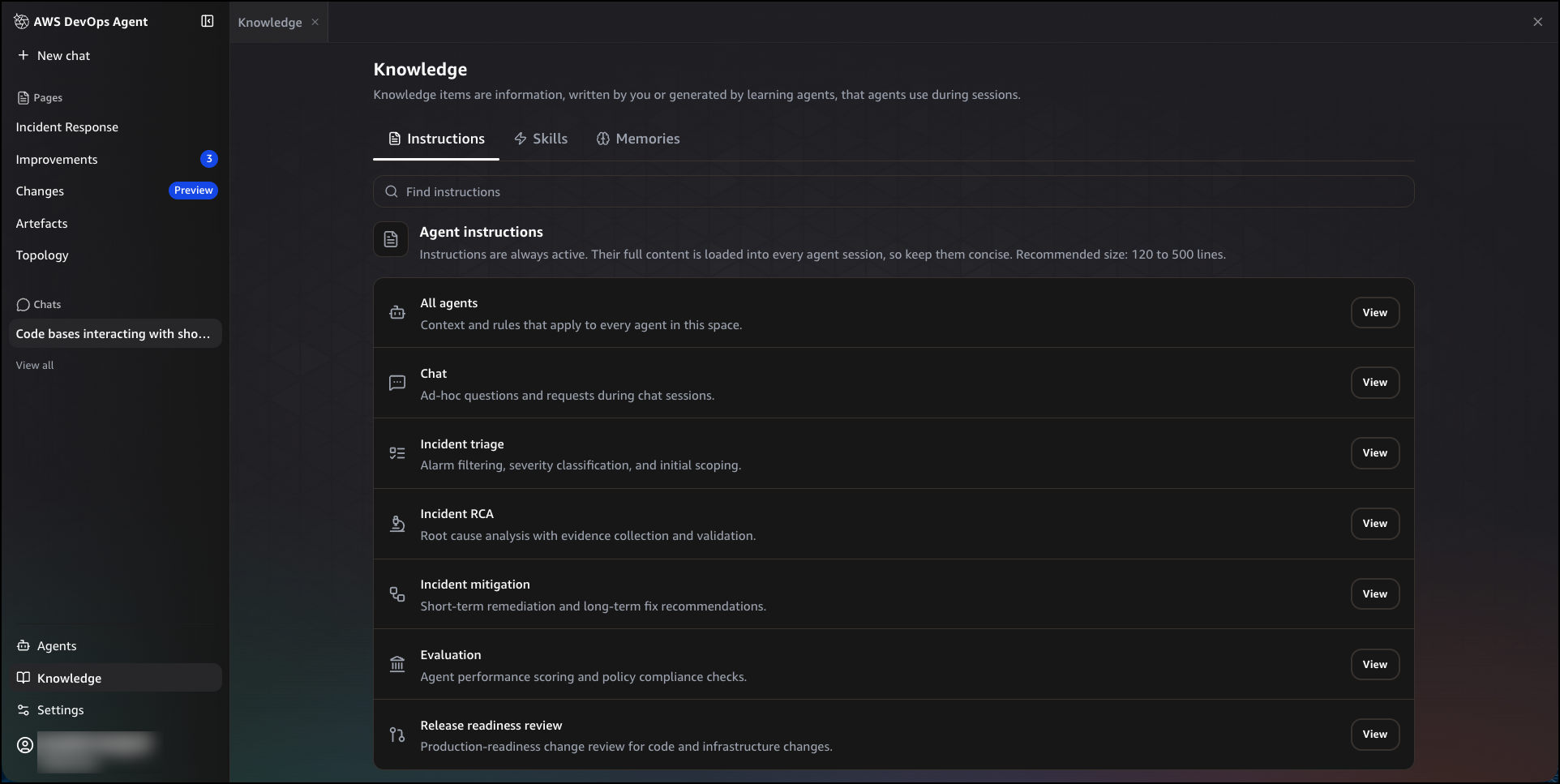
Through the "Instructions" tab in the AWS DevOps Agent console, teams can define their internal best practices in plain English. This is a significant departure from traditional, rigid configuration files. Organizations can set requirements for encryption, network access rules, or data classification. The agent treats these instructions as its operational constitution, checking every proposed change against these criteria.
3. The "Release Readiness Review"
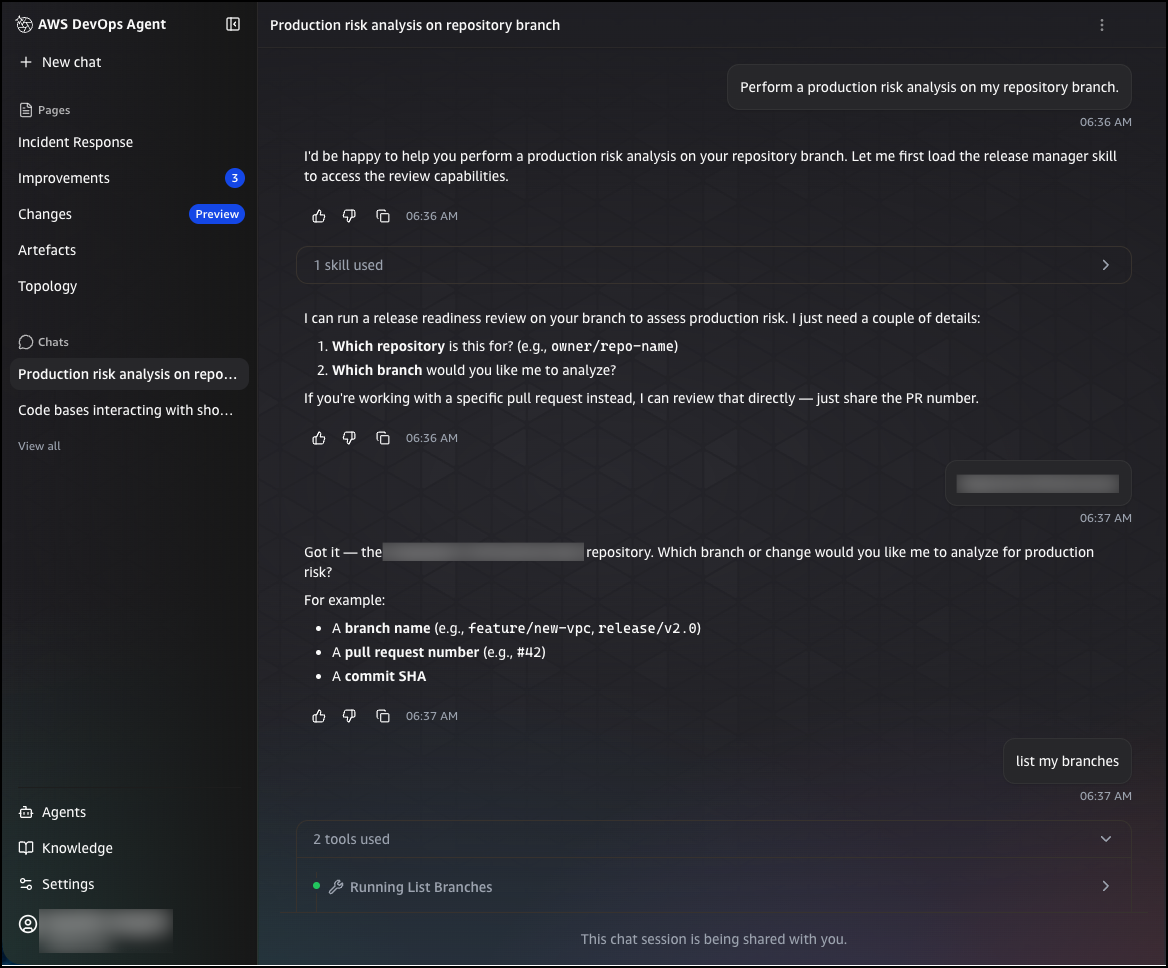
When a pull request is submitted, the agent initiates its review. It performs a three-pronged analysis:

- Dependency Analysis: Identifying risks where a change in one repository might inadvertently break a downstream service.
- Standards Compliance: Verifying that the code adheres to the organization’s custom instructions and the AWS Well-Architected Framework.
- Isolated Functional Verification: Executing the software in an AWS-managed environment to perform lightweight user-journey tests.
4. Autonomous Release Testing
Once the code passes the readiness review, the agent pivots to testing. Unlike static test suites that rely on predefined, often outdated test cases, the agent analyzes the nature of the change. It constructs a dynamic, change-specific test plan that evaluates functional correctness and behavioral regressions, ensuring the code behaves as expected in a production-like environment.
Supporting Data and Technical Capability
The efficacy of the AWS DevOps Agent lies in its transparency. Unlike a "black box" AI, the agent provides a detailed audit trail for every recommendation.
The Anatomy of a Report
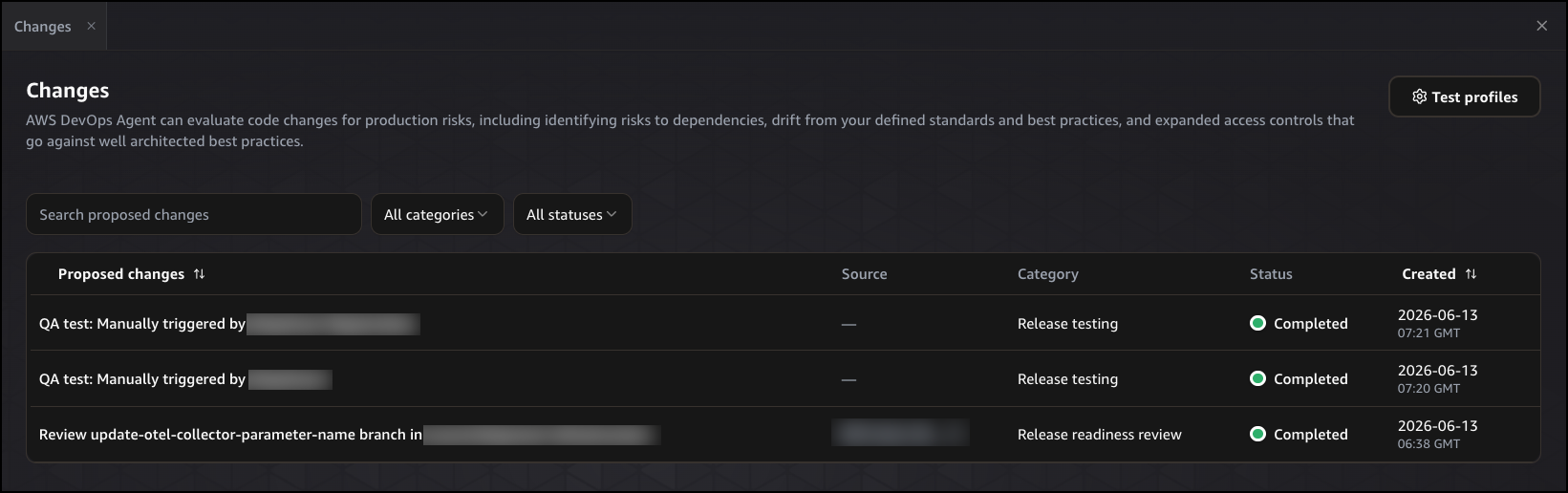
When a review is complete, the agent provides a structured report with one of three clear verdicts: BLOCK, Proceed with Caution, or Safe to Release.
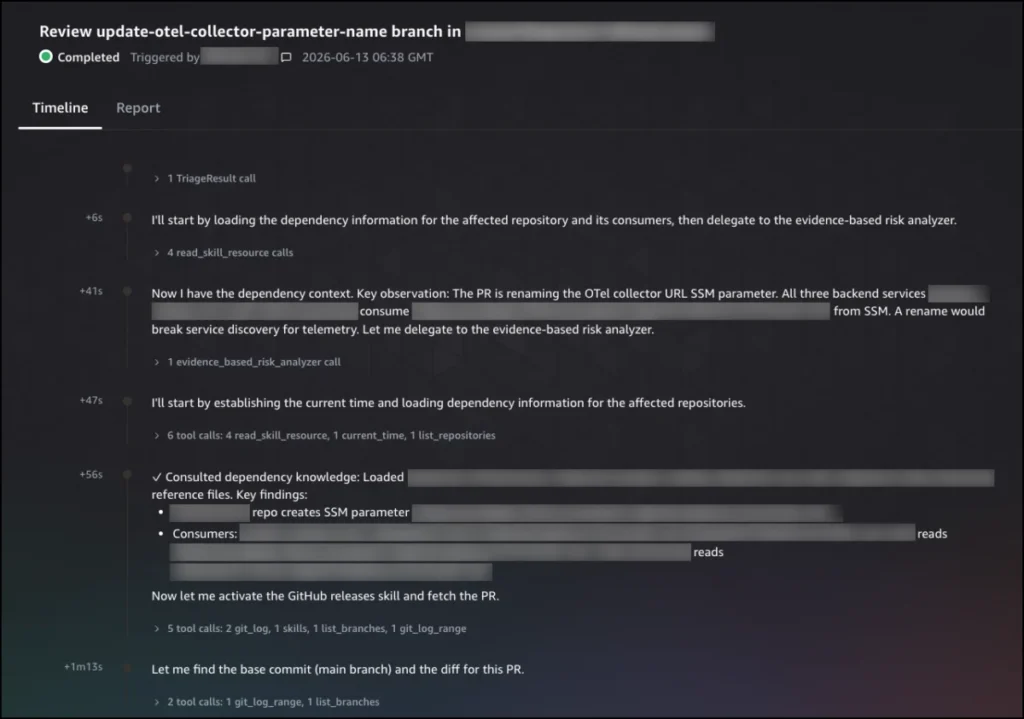
This recommendation is backed by a "Timeline" tab, which documents the agent’s step-by-step reasoning. If a developer is curious why a specific change was flagged, they can see the exact tools called, the dependencies consulted, and the observations made. This level of granularity is essential for debugging and provides the "evidence-based" trust necessary for senior engineers to approve or deny changes based on the agent’s findings.
Integration with Modern IDEs
Recognizing that the best time to fix an error is before it is ever committed, AWS has enabled these reviews to be triggered directly from the developer’s IDE using the Kiro power or Claude Code plugin. This "shift-left" approach allows developers to receive real-time feedback on dependency risks and access control issues while they are still in the flow of coding.
Official Perspectives: The Strategic Shift
The introduction of these features marks a shift in how AWS views the role of AI in the development lifecycle. According to the release documentation, the goal is not to replace human judgment but to augment it. By offloading the "grunt work" of dependency checking, compliance auditing, and basic functional testing to the DevOps Agent, senior developers and SREs can focus on complex architectural decisions and strategic innovation.
The agent’s ability to act as an autonomous reviewer is particularly valuable for teams struggling with "test drift," where the environments used for testing gradually deviate from actual production configurations. By running tests in production-like, AWS-managed environments, the agent ensures that the "it worked on my machine" phenomenon is largely eliminated.
Implications for the DevOps Industry
The arrival of autonomous release management has profound implications for the industry at large:
1. The Death of the "Rubber Stamp" Review
In high-pressure environments, code reviews often become superficial, with reviewers approving PRs without a deep dive into the underlying architecture. By automating the objective verification process, the AWS DevOps Agent restores rigor to the review process. Even if a human is tired, the agent remains vigilant, checking for cross-repository risks that no human could reasonably track in real-time.
2. Standardization at Scale
For large enterprises, maintaining consistent standards across hundreds of microservices is a monumental task. The ability to push "instruction sets" to the agent means that an organization can update its security or compliance policy in one place and have it immediately applied across all repositories, ensuring uniform enforcement of best practices.
3. Accelerated Time-to-Market
By reducing the time spent in review queues and minimizing the frequency of broken builds reaching production, the AWS DevOps Agent effectively increases the velocity of the entire software delivery pipeline. The value proposition is clear: organizations that adopt these agents will likely see a higher volume of successful deployments with a lower incidence of production outages.
4. A New Skill Set for Developers
As these tools become ubiquitous, the role of the developer will evolve. Writing code will become secondary to "curating" the instructions that govern the agent. Developers will need to become skilled at articulating complex architectural and security requirements in natural language, effectively becoming "policy engineers" who manage the agents that manage the code.
Looking Ahead: The Preview Phase
The preview of these capabilities is currently available in the US East (N. Virginia) region at no additional cost. For organizations currently utilizing AWS DevOps Agent, the transition to these new features is relatively straightforward, requiring only the connection of repositories and the definition of instruction sets.
As AWS continues to refine these capabilities, the industry should expect to see deeper integrations with broader cloud-native security tools and more sophisticated, generative approaches to test data management. The future of DevOps, as demonstrated by this release, is increasingly autonomous, inherently collaborative, and deeply intelligent.
For developers, the message is clear: the era of the "always-available teammate" has arrived, and the way we build, test, and release software is fundamentally changing. By embracing this evolution, teams can stop fighting the tide of code complexity and start riding the wave of AI-enabled efficiency.