Beyond ChatGPT: How OpenAI’s Codex is Redefining Business Automation

For years, the promise of Artificial Intelligence in the workplace was tethered to the ability of the user to write code or, at the very least, navigate the complexities of third-party integration platforms like Zapier, Make, or n8n. However, a seismic shift is underway. OpenAI’s Codex—a sophisticated, agentic desktop application—is dismantling the barrier between natural language and complex technical execution.
No longer just a tool for generating text, Codex functions as a digital orchestrator, capable of interacting directly with your local files, legacy software, and web-based workflows. By leveraging natural language, business owners and marketers can now automate multi-step processes that previously required hours of manual oversight or expensive engineering support.
The Evolution of the AI Agent: What is Codex?
The most persistent misconception surrounding OpenAI’s Codex is that it remains the exclusive domain of software engineers. While the name suggests a developer-centric tool, Karl Yeh—a leading voice in AI business strategy—argues that it is, in fact, the ultimate productivity multiplier for the non-technical business owner.

To understand Codex, one must rethink the architecture of AI. If we view a "model" (such as GPT-4o, o1, or similar) as the "brain," then the application you use to access it is the "harness." For years, we have used the web browser as our primary harness. Codex acts as a more advanced, specialized harness. It is a desktop-native application that allows the "brain" to reach outside the browser and interact with the physical and digital environment of your computer.
Unlike standard chatbots, which are reactive—answering questions or drafting emails—Codex is proactive. It can be tasked with creating spreadsheets, auditing file integrity, deleting legacy data, or executing complex, multi-stage business operations. By eliminating the need for intermediary "no-code" platforms, Codex allows the AI to become a direct operator of your tech stack.
Getting Started: Deployment and Initial Configuration
To harness the full power of the platform, users must ensure they are utilizing the dedicated Codex desktop application, rather than the simplified version integrated into standard ChatGPT subscriptions.
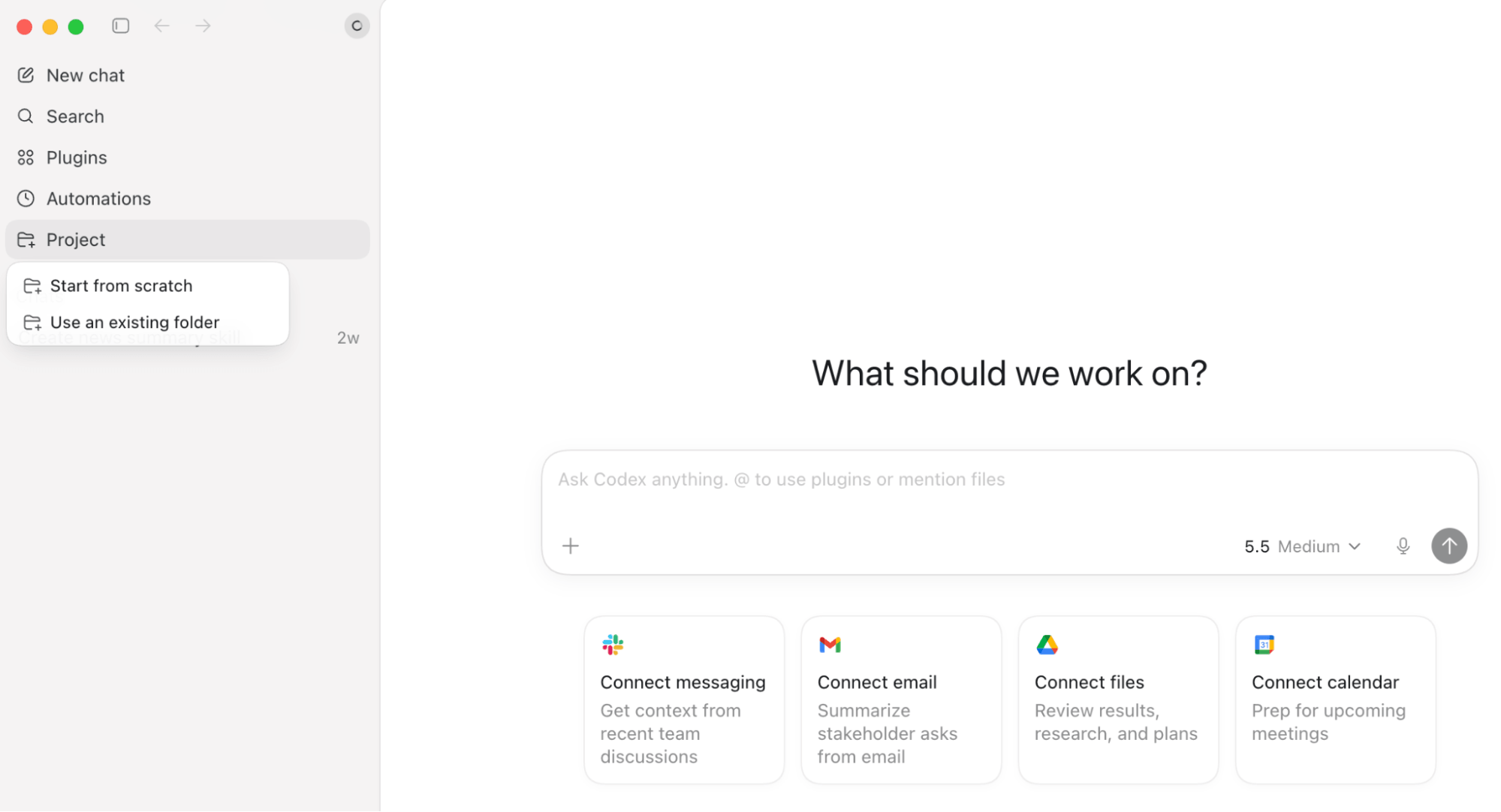
Deployment Strategy
Upon launching the Codex desktop application, users are greeted with an interface that feels familiar, featuring a sidebar for managing conversation threads and dedicated modules for Plugins and Automations. The true value of Codex, however, lies in its ability to bridge the gap between AI and your local file system.
When starting a session, you are prompted to connect specific folders from your local machine or network. Once connected, Codex gains the ability to read, modify, and organize files within those directories. This creates a permanent, auditable log in the sidebar, allowing users to trace every action taken by the AI.
The Security Imperative
For the business user, the power to modify files brings a necessary focus on security. Karl Yeh emphasizes a "Least Privilege" approach to connectivity:

- Use Dedicated Folders: Never connect Codex to a root drive (e.g., C: or your entire Home folder). Create a specific, scoped directory for Codex tasks to prevent the AI from accessing sensitive company data or critical system files.
- Understand Permission Modes: Codex offers varying tiers of access. Start with default, restricted permissions. Only elevate to full access when the specific workflow demands it, and after you have thoroughly tested the agent’s behavior in a sandbox environment.
- The Threat of Prompt Injection: As agents gain the ability to browse the web, they become vulnerable to "prompt injection"—hidden instructions embedded on websites designed to override your agent’s commands. To mitigate this, establish a "clean room" workflow: have one agent gather raw data from the web, a second agent verify the integrity of that data, and only then allow your internal workflow agent to process it.
Executing Recurring Processes: Skills and Plugins
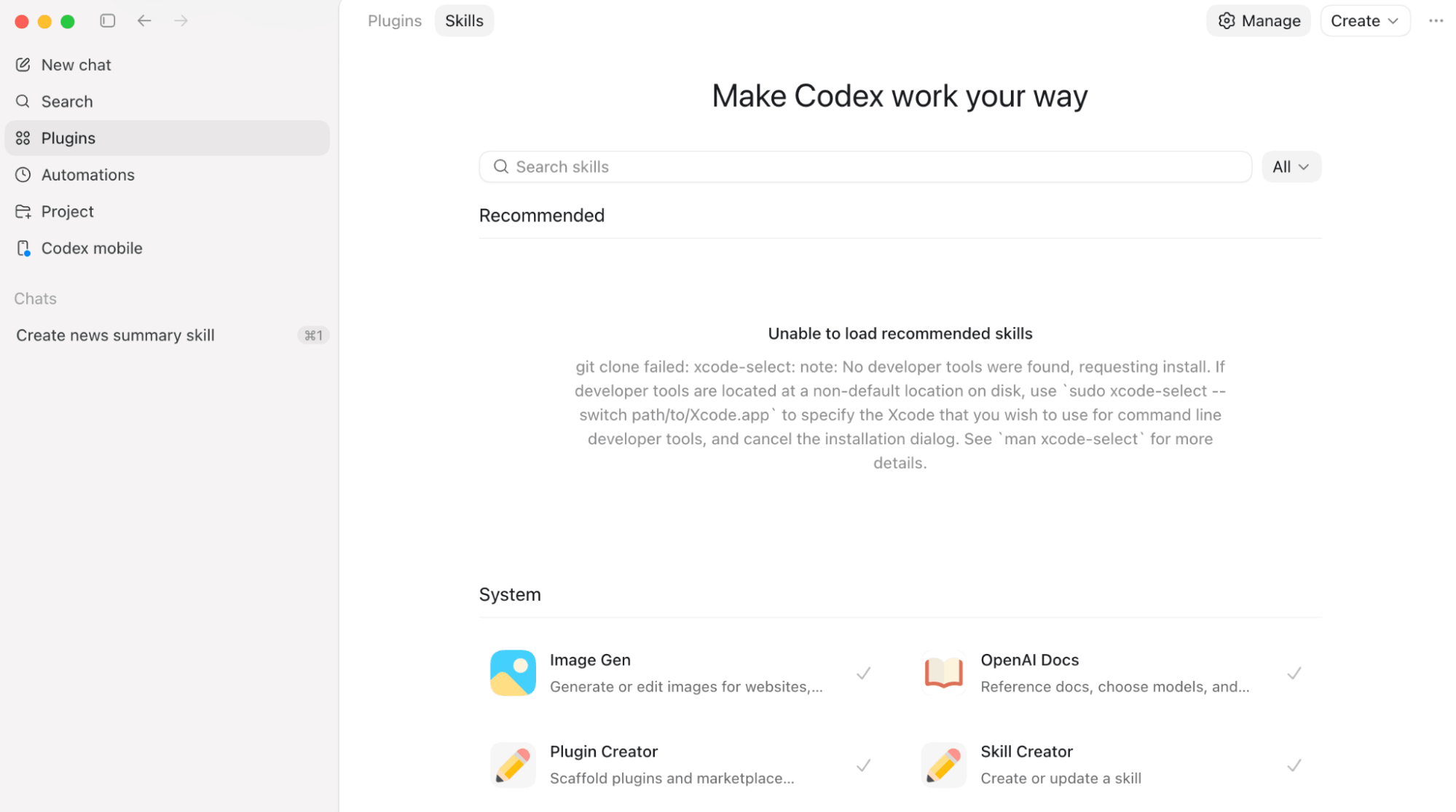
Codex operates on a dual-engine architecture: Skills (what the AI knows how to do) and Plugins (what the AI can connect to).
Building Standardized Skills
A "Skill" serves as a repeatable instruction set. By teaching Codex your specific company brand guidelines, writing style, or invoice formatting, you ensure that the AI produces consistent output every time. This transforms AI from a hit-or-miss generative tool into a standardized production engine. Once a skill is created, it can be deployed across an entire department, ensuring that every document drafted by AI adheres to your organization’s unique voice and standards.
The Power of Plugins
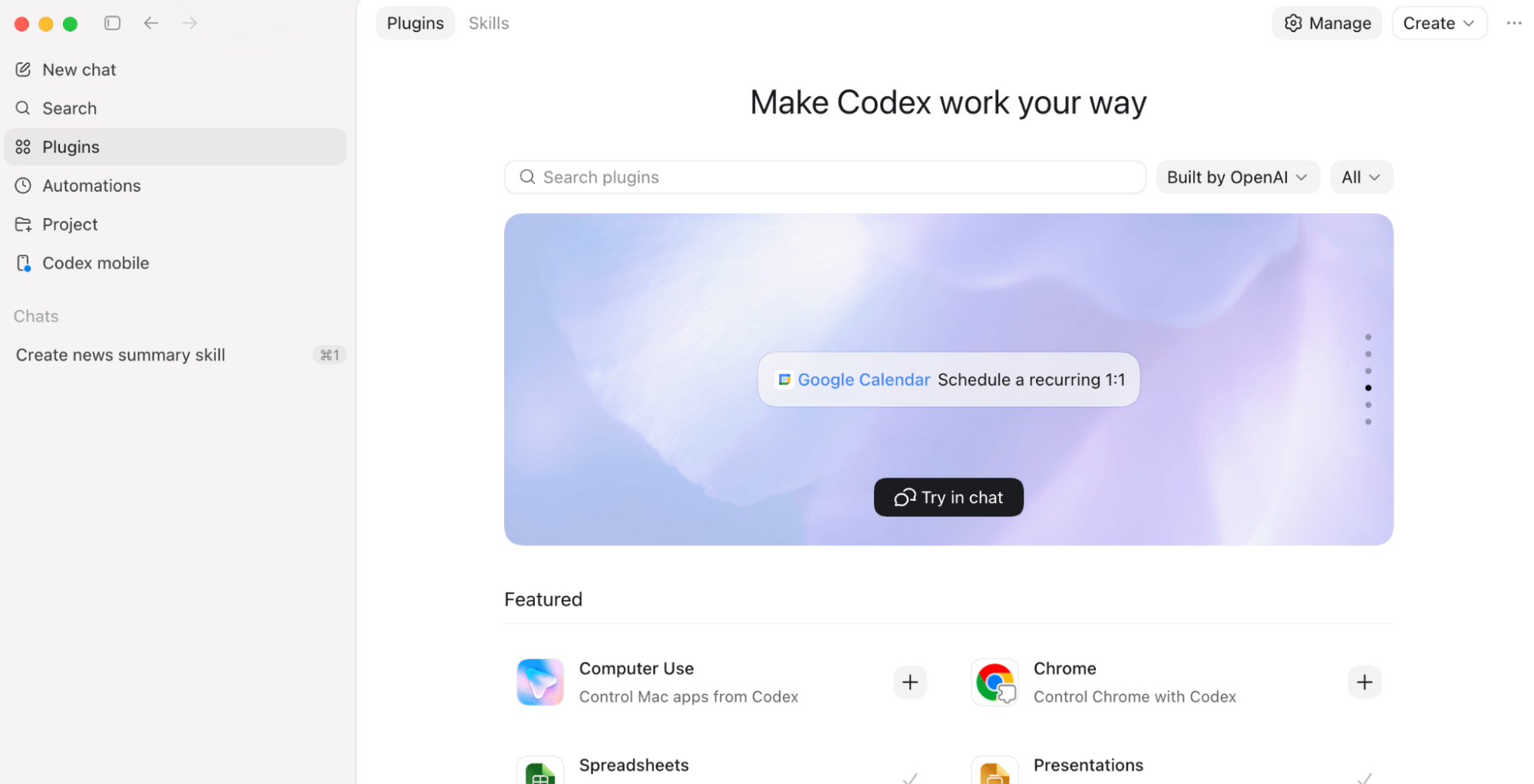
The most significant addition to the Codex ecosystem is the Chrome Plugin, which allows the AI to interact with web-based interfaces as if it were a human operator. It can navigate to specific URLs, click buttons, fill out forms, and pull data from legacy software that does not provide an API.
Beyond Chrome, the "Computer Use" plugin allows Codex to control desktop-native applications. This enables advanced, unattended workflows—such as the AI checking a project management tool (like Notion) every morning at 6:30 AM and synthesizing a meeting brief to be sent to a mobile device.
Advanced Orchestration: Goals, Automations, and Heartbeats
The true potential of Codex is realized when it moves from "answering" to "doing." This is managed through the /goal command, which allows for long-running, autonomous execution.
- The /goal Command: By typing
/goal, you provide a high-level objective. The AI will then independently break this objective down into sub-tasks, working for hours if necessary until the project is completed. - Threaded Automations vs. Heartbeats:
- Threaded Automations create a unique record for every execution. This is ideal for compliance-heavy tasks like financial reporting or audit trails where a clean record of every action is required.
- Heartbeats maintain a continuous, evolving context. The AI periodically "wakes up" at set intervals to check for updates, allowing it to keep track of long-term projects and build on previous progress. This is essential for monitoring live feeds, such as tracking brand mentions or unread communications.
Real-World Implications: Case Studies in Efficiency
The efficacy of Codex is best illustrated through its application in high-volume, repetitive business environments. Consider a construction firm struggling with invoice reconciliation.

Previously, this process required multiple employees to manually cross-reference vendor invoices against master spreadsheets—a process that took days. By utilizing Codex, the firm transitioned to an automated model:
- Subagent Deployment: Upon receiving invoices in a designated folder, Codex spawns a subagent for each vendor.
- Parallel Processing: These agents operate simultaneously, reconciling their specific vendor files against the master records.
- Final Reporting: A master agent synthesizes the results, reducing a task that formerly took three full days to less than 20 minutes of automated, hands-off work.
A similar success story exists for field log management. By using a three-stage subagent workflow, the company was able to automate the navigation of legacy software, the extraction of logs, and the updating of reference spreadsheets. The entire process now runs unattended overnight, ensuring that data is ready for the team every morning at 8:00 AM.
Future Implications for Business Strategy
The rise of Codex signals a transition from "AI as a tool" to "AI as a colleague." As these agents become more adept at navigating both legacy systems and modern cloud environments, the competitive advantage will shift toward companies that can best define their internal processes.
The requirement for success is no longer a degree in Computer Science; it is the ability to document, refine, and clearly communicate your business logic. As Karl Yeh notes, the companies that thrive in this new era will be those that view their workflows as "code"—standardized, repeatable, and ready to be delegated to an AI that never sleeps.
By integrating these tools, organizations can move past the initial novelty of AI and into a phase of deep, structural transformation, where the focus moves from simply "doing" to "scaling." As the technology matures, the ability to orchestrate these agents will likely become the most sought-after skill in the modern workforce.
Whether you are a solo entrepreneur looking to automate administrative burdens or a corporate leader seeking to optimize legacy workflows, the future of business is no longer about writing code—it is about directing the intelligence that does it for you.