The Death of Information Overload: Why Curation is the New Currency in Marketing
In the modern digital landscape, marketing leaders are suffering from a paradox: they are drowning in information, yet starving for wisdom. Every day, an relentless deluge of white papers, podcasts, LinkedIn thought-leadership posts, and industry reports crashes into their inboxes. The result is not enlightenment, but "content fatigue."
The leadership at Convince & Convert (C&C) has identified a critical shift in the B2B marketing paradigm: marketing leaders do not need more content—they need better filters. This realization has triggered a strategic overhaul of the firm’s flagship communication platform, transitioning from its long-standing ON newsletter to a new, insight-driven publication titled The Trendline.
The Core Problem: A Crisis of Attention
The fundamental challenge facing today’s CMOs and marketing directors is not the lack of data, but the lack of time to process it. In an era where "must-read" content is published by the second, the ability to discern signal from noise has become a competitive advantage.
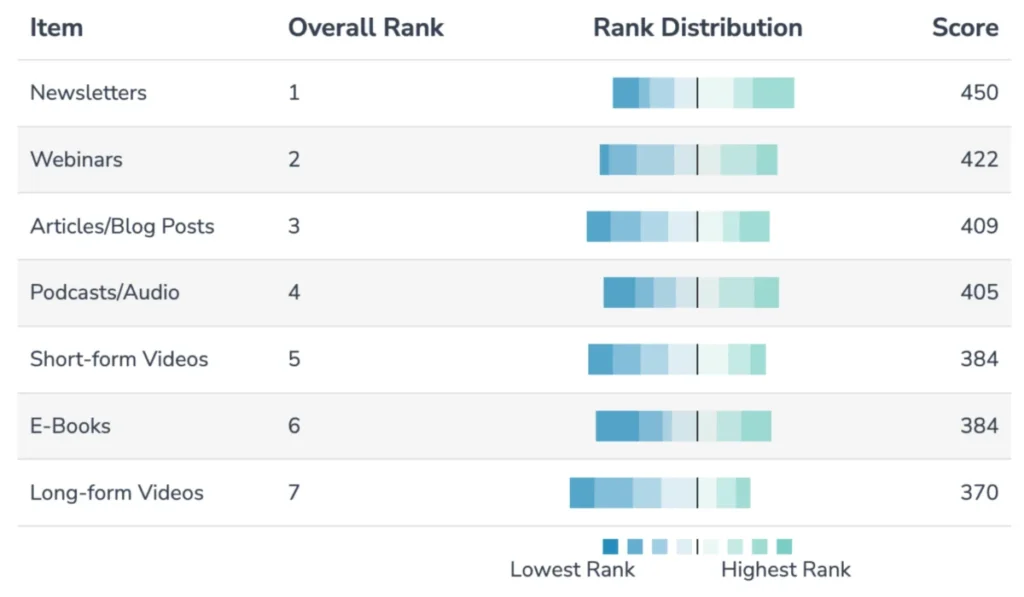
Convince & Convert’s recent annual audience survey provides empirical evidence for this shift. When asked to rank their preferred formats for learning about marketing trends and insights—ranging from short-form video and webinars to blogs and podcasts—respondents consistently ranked newsletters at the top. In fact, newsletters were nearly twice as likely to be ranked as the number-one source for industry intelligence than any other medium.
This preference underscores a behavioral change. Professionals no longer want to hunt for answers across multiple platforms; they want a curated, authoritative voice that does the heavy lifting for them. They are seeking "smart summaries" that explain not just what happened in the industry, but why it matters and how it should influence their strategic decision-making.
Chronology of a Strategic Pivot
The transition from ON to The Trendline was not a reactionary rebranding exercise; it was the result of a deliberate, data-backed evolution.
1. The Audit (Q3–Q4 2024)
The team at C&C began by auditing their existing email ecosystem. They identified that their previous format—which was organized by content medium (e.g., "Latest Podcast," "New Blog Post")—placed the burden of discovery on the reader. It required the audience to click through multiple links to understand the context of the information.
2. The Feedback Loop (Q1 2025)
Following their annual survey, the firm recognized a clear pain point: busy executives do not want to click through to a website to get the "meat" of the story. They want the insight delivered in the inbox. This prompted a move away from the "link-heavy" model of the early 2010s.

3. The Implementation (March 2025)
The launch of The Trendline marked the official sunsetting of ON. The new format was built around a "debrief" philosophy, focusing on synthesis over aggregation.
Supporting Data: Why Newsletters Prevail
The data suggests that the newsletter has returned to its roots as the most intimate and effective channel for B2B communication. Unlike social media algorithms, which are subject to the whims of platforms, the newsletter provides a direct, owned line of communication between the brand and the audience.
According to the internal metrics gathered by C&C, the key to this engagement is "front-loading" value. By presenting summaries, strategic takeaways, and actionable advice directly within the email body, brands respect the reader’s time. This builds authority. When a brand acts as a reliable filter, the reader begins to trust the brand’s strategic lens, eventually turning to them for high-level consulting and partnership.
Official Perspective: The Shift to "The Trendline"
The shift to The Trendline is fundamentally about changing the relationship between the brand and the reader. As noted by the team, the new structure prioritizes:
- Strategic Context: Every featured story includes a "Why this matters" section, which frames the news within the broader context of marketing strategy.
- Conciseness: By enforcing strict editorial guidelines, the team ensures that even complex topics are distilled into digestible formats that can be read in under five minutes.
- Interactivity: The introduction of "Sound Off"—a recurring poll—creates a bi-directional flow of information. It allows the brand to gather real-time sentiment from their audience, moving beyond "muddied" open and click rates to more nuanced engagement data.
"Marketing leaders don’t have time for constant deep dives," a spokesperson for the firm explained. "The Trendline is designed as a strategic debrief. It isn’t just about sharing a link; it’s about initiating the right questions."
Implications for the Future of Content Marketing
The evolution of The Trendline offers a blueprint for other organizations struggling to stay relevant in a saturated content landscape. The implications for marketing leaders are clear:
The "Filter" Economy
We are entering an era where curation is just as valuable as creation. If your brand is not acting as a filter for your audience, you are likely just adding to the noise. Brands that can successfully synthesize information will win the trust of decision-makers.
Owned Media vs. Borrowed Attention
The move highlights the risks of relying solely on social platforms. While social media is excellent for discovery, newsletters are the primary vehicle for retention and trust-building. By prioritizing the newsletter, companies are taking back ownership of their audience relationship.

The Death of the "Click-Bait" Link List
The classic "five links you should read" newsletter is reaching its expiration date. Today’s audiences are sophisticated; they want the value of the link without the friction of the click. If you force your audience to click to get the core message, you are effectively telling them that your email has no intrinsic value.
Designing for the Executive
When designing content for senior leaders, the goal should be efficiency. The most successful communications are those that allow a leader to solve a problem or gain a new perspective without requiring them to sift through irrelevant data. This means presenting actionable insights first, and supporting data second.
Conclusion: A New Standard for Engagement
The transition from ON to The Trendline is a microcosm of a broader, necessary evolution in content marketing. As the digital space becomes increasingly crowded, the winners will not be the ones who produce the most content; they will be the ones who provide the most clarity.
For marketing leaders, the lesson is universal: stop focusing on volume and start focusing on utility. Your audience is signaling that they are tired of being sold to or overwhelmed with generic updates. They are looking for a guide—a partner who can help them navigate the complexities of a rapidly changing industry.
By moving toward a model of curated insight, actionable debriefs, and direct, respectful communication, brands can transform their newsletters from a routine email into a vital, trusted resource. In a world where attention is the scarcest commodity, the most successful brands will be those that respect that scarcity by delivering value, not just noise.
As The Trendline proves, the future of email marketing is not about how many people you reach, but about how much you help those you reach to think, learn, and succeed.