BRND.ME Gears Up for IPO: The Strategic Evolution of an E-commerce Titan
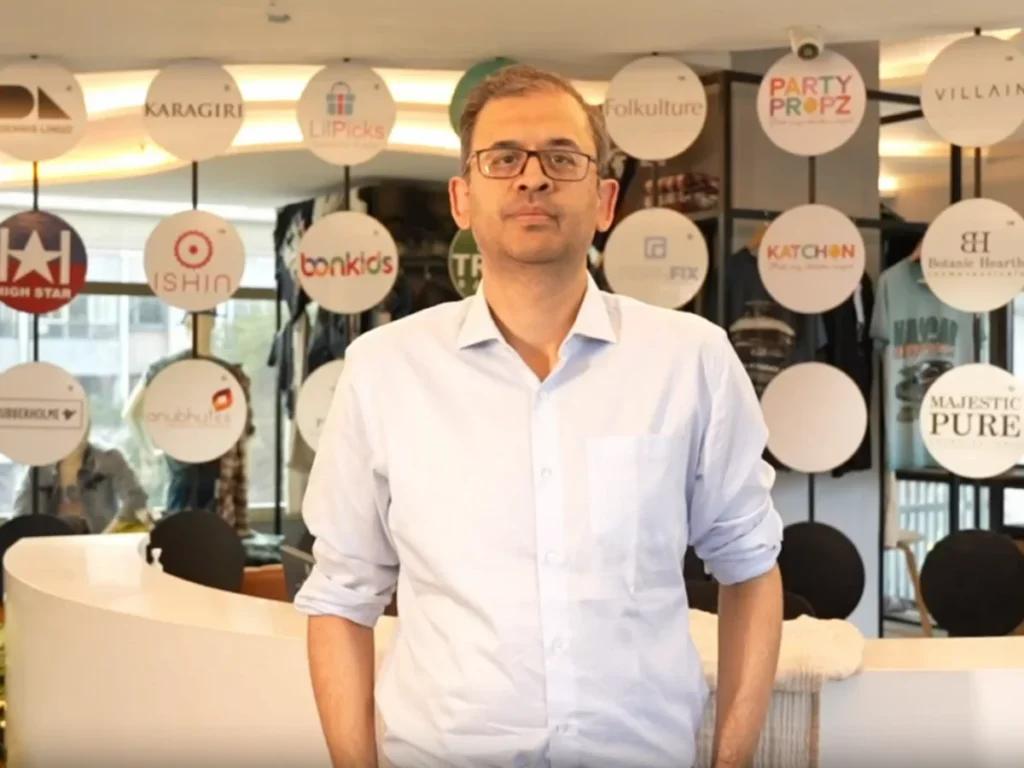
In a decisive move that signals the maturing of the Indian startup ecosystem, e-commerce roll-up unicorn BRND.ME—formerly known as Mensa Brands—has officially transitioned into a public limited entity. This structural transformation, shifting from Mensa Brand Technologies Private Limited to Mensa Brand Technologies Limited, marks a critical milestone in the company’s roadmap toward an Initial Public Offering (IPO). With the goal of hitting the public markets within the next 12 to 18 months, the company is positioning itself as a bellwether for the "house of brands" model in India.
The Journey to Public Listing: A Strategic Transition
The conversion to a public limited company is more than a mere administrative formality; it is a foundational requirement for any startup intending to list on Indian stock exchanges. This move follows the landmark approval by the National Company Law Tribunal (NCLT) earlier this year, which sanctioned the company’s "reverse flip."
By redomiciling from Singapore to India, BRND.ME has effectively aligned its corporate structure with its primary market of operation. This reverse migration, completed after the Chandigarh bench of the NCLT cleared the merger of Mensa Singapore with the Indian entity, serves as a strategic maneuver to simplify tax compliance, increase regulatory transparency, and align with the domestic investment appetite that has recently favored Indian-grown tech companies.
Chronology of a Unicorn: From Inception to IPO Prep
Founded in 2021 by former Myntra CEO Ananth Narayanan, the company burst onto the scene with unprecedented velocity. The following timeline traces its rapid rise:
- 2021: Incorporation as Mensa Brands. The company introduces a "roll-up" e-commerce model, acquiring D2C brands in health, wellness, and lifestyle sectors.
- Late 2021: Achieves "unicorn" status within just six months of operations, setting a record as the fastest Indian startup to reach a $1 billion valuation.
- 2022-2023: The company executes an aggressive acquisition strategy, bringing 20 brands under its umbrella, including Dennis Lingo, MyFitness, and Villain.
- 2024: Initiates a "simplification phase," divesting non-core assets like the India Lifestyle Network (ILN) to focus on high-growth flagships.
- Mid-2024: Receives NCLT approval for reverse migration to India.
- Late 2024: Formally converts to a public limited entity, signaling the commencement of the pre-IPO countdown.
Financial Performance and Operational Discipline
The transition comes at a time when BRND.ME is demonstrating a pivot from "growth at all costs" to "profitable growth." In the fiscal year 2026, the company reported an approximate revenue of ₹1,500 Cr. Most significantly, the company claims to have achieved an adjusted EBITDA and turned cash-flow positive, a vital metric for public market investors who have grown increasingly wary of perennial loss-making tech unicorns.
While the company has not disclosed its exact bottom line for FY26, its FY25 records revealed a complex financial picture. The startup reported a 39% year-on-year increase in losses, reaching $60.4 Mn (approx. ₹501 Cr), up from $43.5 Mn (approx. ₹361 Cr) in FY24. This growth in losses, while typical of an aggressive acquisition-led strategy, highlights why the current shift toward operational discipline and positive cash flow is so essential for the company’s IPO viability.
The Core Portfolio: Flagship Brands and Global Ambitions
BRND.ME’s business model is anchored in the acquisition and scaling of high-potential D2C brands. By applying shared supply chain, marketing, and technology expertise, the company has successfully grown its flagship portfolio.
The current revenue drivers include:
- Majestic Pure (Aromatherapy/Essential Oils): Generated ₹400 Cr in FY26.
- Botanic Hearth (Hair Care): Recorded ₹300 Cr in sales.
- MyFitness (Healthy Snacking): Contributed ₹200 Cr.
- PartyPropz (Party Decor): Contributed ₹200 Cr.
Beyond these leaders, the company maintains a diverse stable of brands such as Ishin, Bonkids, Trust Basket, Villain, and Folkuture. A key pillar of the company’s future valuation lies in its international expansion. The men’s fragrance brand Villain has recently entered the US market, while Botanic Hearth and Majestic Pure have been leading the company’s pilot expansion into Europe for the past 18 months.
Leadership Perspective: "Focus, Transparency, and Discipline"
Ananth Narayanan, Founder and CEO of BRND.ME, has framed this transition as a deliberate evolution. In a recent statement, Narayanan emphasized the importance of the company’s internal restructuring:
"Over the past year, we have taken deliberate steps to simplify our corporate structure, strengthen governance, and build a stronger foundation for the next phase of growth. Our transition to an Indian holding structure, followed by this conversion, gives us the structure to scale with greater focus, transparency, and discipline."
This rhetoric aligns with the expectations of institutional investors, who emphasize corporate governance and clarity in the "house of brands" model—a sector that has faced skepticism globally following the struggles of international peers like the Berlin-based SellerX or the US-based Thrasio.
Market Implications and Future Outlook
The shift of BRND.ME toward the public markets is a bellwether for the Indian D2C sector. As the company prepares for an IPO, several key implications emerge:
1. Validation of the Roll-up Model
If BRND.ME successfully lists and maintains a healthy valuation, it will provide much-needed validation for the "roll-up" e-commerce model in India. Investors will be watching closely to see if the company can maintain organic growth across its diverse portfolio after the initial acquisition-driven growth phase.
2. Investor Confidence and Governance
With nearly $295 Mn raised from global powerhouses like Accel, Alpha Wave Global, Norwest Venture Partners, Tiger Global Management, and Prosus Ventures, the company has a sophisticated cap table. The transition to a public limited company serves as a signal that these investors are looking for an exit strategy that provides liquidity and public validation.
3. The Global-Indian Pivot
By moving its base back to India, BRND.ME is leaning into the "India for the World" narrative. The company is not just selling to the Indian consumer; it is using Indian operational efficiency to build brands that compete on a global stage. Success in the US and European markets will be critical in justifying a high-multiple IPO valuation.
Conclusion: A Critical 18 Months Ahead
As BRND.ME enters the final stretch before its public debut, the focus will undoubtedly shift from acquisition to optimization. The company has moved beyond the "fastest unicorn" phase into a "disciplined growth" phase.
The next 12 to 18 months will be defined by how the company manages its flagship brands’ profitability, expands its footprint in Western markets, and maintains the rigorous governance standards required of a public entity. For the Indian startup ecosystem, BRND.ME’s journey from a venture-backed startup to a public market contender will serve as a definitive case study in how to pivot, consolidate, and ultimately scale for the long term.
As the regulatory filings for the IPO take shape, the market will look for sustained evidence that the company’s cash-flow positivity is not a one-off achievement but a permanent feature of its business model. If successful, BRND.ME could set the gold standard for how Indian D2C brands transition from niche players to household names on the national stock exchange.