The Monetization of Trust: Navigating the Ethics of Modern Media Product Reviews
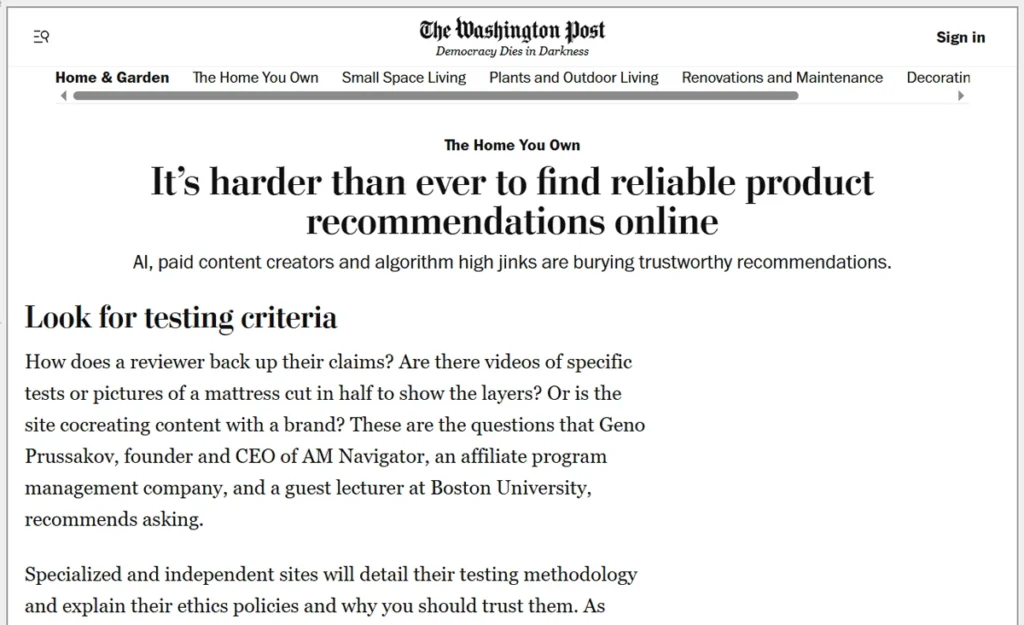
In an era where digital commerce is fueled by content-driven discovery, the line between editorial integrity and affiliate marketing has become increasingly blurred. Earlier this year, The Washington Post turned to industry experts to analyze a growing trend: the shift of legacy media outlets into the role of high-traffic product curators. As the lines between independent journalism and commercial endorsement dissolve, consumers are left asking a fundamental question: Can we trust the “best of” lists that dominate our search results?
The Evolution of Authority: How Media Giants Became Retail Gatekeepers
For decades, the business model of major media organizations was built on advertising revenue and subscription fees. Today, that model has shifted toward a hybrid approach, leveraging high-domain authority to monetize consumer intent. When a publication with the prestige of The New York Times, CNN, or The Washington Post publishes a "Best Vacuum Cleaner of 2025" list, they are not just providing journalism; they are deploying a sophisticated affiliate marketing engine.
This transition is not necessarily a descent into corruption, but rather a pragmatic response to a changing digital economy. However, it raises significant concerns regarding the objectivity of recommendations. When a publication earns a commission—often ranging from 5% to 15%—every time a reader clicks a link and makes a purchase, the incentive structure fundamentally changes.
Chronology: From Editorial Independence to Affiliate Revenue
To understand the current state of media-driven commerce, one must look at the timeline of digital transformation:
- 2010–2015: The Rise of SEO Dominance: As Google refined its search algorithms to prioritize high-authority sites, major news organizations realized that their articles ranked exceptionally well for "best of" keywords.
- 2016–2019: The "Wirecutter" Effect: Following the success of niche review sites like The Wirecutter (acquired by The New York Times), major publishers began building internal teams dedicated to product testing and review content.
- 2020–2023: The Pandemic Shift: Global lockdowns accelerated e-commerce adoption. Publishers saw record-breaking affiliate revenue as consumers turned to trusted brands to navigate the complexities of remote work, home fitness, and online shopping.
- 2024–Present: The AI and Aggregation Era: The landscape is now saturated with AI-generated roundups and heavy reliance on "search engine authority," forcing media outlets to double down on testing protocols to justify their rankings.
The Mechanics of Legitimacy: How Big Media Curates Content
At AM Navigator, our work managing affiliate programs for merchants provides us with a "behind-the-curtain" view of how reputable media outlets operate. Contrary to the belief that these lists are purely "pay-to-play," many top-tier publishers maintain rigorous standards to protect their reputations. Here is how they typically approach the process:
1. Hands-On Testing
The most respected outlets establish dedicated testing labs. Before a product is recommended, it is often subjected to weeks of real-world stress testing. Journalists and reviewers do not simply read the marketing copy; they compare competing models side-by-side.
2. Editorial Independence
In well-structured media companies, the editorial team (those who review products) is often siloed from the commercial team (those who manage affiliate relationships). This separation is intended to ensure that the "Best Choice" is determined by performance, not by which brand offers the highest commission.
3. Transparent Disclosure
Ethical journalism requires disclosure. Most legitimate outlets now include prominent disclaimers stating that the publication may earn a commission from links within the article. This transparency is a legal requirement in many jurisdictions and a hallmark of responsible journalism.
4. Data-Driven Updates
The best lists are living documents. When a new, better product enters the market, reputable publishers update their rankings accordingly. They utilize reader feedback, return rates, and long-term durability data to ensure that their recommendations remain current and accurate.
The Hidden Influence: When Financial Incentives Cloud Judgment
Despite these safeguards, the influence of money cannot be ignored. We have observed instances where product rankings are undeniably swayed by commercial pressures. This often manifests in several ways:

- Placement Fees: Some merchants pay to be featured in specific "gift guides" or high-traffic roundups, regardless of whether their product is the objective best.
- Inflated Commission Rates: When a brand offers a significantly higher commission rate, it creates a subtle incentive for publishers to prioritize that brand over competitors.
- EPC (Earnings Per Click) Guarantees: Some publishers use proprietary algorithms that rank products based on their "EPC"—the amount of revenue a product generates per click. If a product has a high conversion rate, it may be promoted more heavily, potentially sidelining better, but less-popular, products.
Consumer Agency: How to Vet Product Recommendations
As a consumer, you are the final filter in this ecosystem. You do not have to accept a media outlet’s recommendation at face value. Here are four strategies to ensure you are making an informed decision:
1. Cross-Reference Sources
Never rely on a single article. If a product is ranked #1 in a publication’s list, search for that product on other independent review sites. If multiple, unrelated publications agree on the top choice, your confidence in that recommendation should increase.
2. Look for Negative Evidence
A perfectly glowing review should be treated with skepticism. Look for sections where the reviewer highlights the downsides of a product. If a review only lists pros and ignores potential flaws or competitive disadvantages, it may be a paid endorsement rather than an honest analysis.
3. Dig Into the "How"
An article that explains how they tested the product is far more valuable than one that simply lists features. Look for details about the duration of the testing period, the specific criteria used for evaluation, and whether the testers actually used the product in their daily lives.
4. Check for "Affiliate" Disclosures
If an article lacks a clear disclosure regarding affiliate links, be wary. A lack of transparency is often the first sign that the content is driven by commercial interests rather than editorial integrity.
Implications for the Future of Media
The monetization of search authority is here to stay. As AI-powered search engines (like Google’s AI Overviews) become more prevalent, the competition for the top spot on a list will only intensify. This will likely lead to two divergent paths for media:
- The Rise of Niche Authority: Smaller, hyper-specialized publications that prioritize deep, honest reviews over mass-market appeal will likely gain consumer trust.
- Consolidation of Commercial Media: Large publishers may continue to consolidate, creating massive e-commerce hubs that act more like department stores than news organizations.
For the consumer, this requires a more critical mindset. We must stop viewing "Big Media" as a monolithic source of objective truth and start seeing it as a complex commercial entity. The goal of these publications is to be helpful, yes, but they are also businesses that must sustain themselves in a challenging economic climate.
Final Thoughts: A Call to Action
The relationship between the reader and the publisher is a social contract. When that contract is breached—when a recommendation is made for the wrong reasons—trust is lost. As an industry, we must advocate for greater transparency and stricter separation between the business of affiliate marketing and the craft of editorial review.
What has been your experience? Have you ever bought a product based on a media recommendation, only to be disappointed? Or have you found hidden gems through these lists? The comments section is open. Your experiences provide the context that algorithms lack, and I am committed to engaging with your insights. Let’s keep the conversation going—the integrity of our digital marketplace depends on it.