The Silent Revolution: How AI Agents Are Reshaping the Web’s Distribution Channels
In a profound, uncoordinated shift, the foundational principle of web distribution is undergoing a radical transformation. Y Combinator’s enduring motto, "Make something people want," is no longer solely about captivating human users; it now implicitly includes designing for an emerging class of visitors: autonomous AI agents. Over the past six months, six industry giants – Cloudflare, Shopify, Stripe, Supabase, Netlify, and Google – have independently invested heavily in becoming "agent-ready," signaling a new era where machine-to-machine interaction dictates how products and services are discovered, compared, and transacted online.
For two decades, the internet’s primary distribution channels were undeniably human-centric. Search engines, social media algorithms, paid advertisements, and the organic ripple of word-of-mouth all relied on human interaction, interpretation, and decision-making. These channels were about capturing human attention, guiding human clicks, and facilitating human purchases. The success of a product or service was inextricably linked to its ability to resonate with and be found by people.
This paradigm is rapidly dissolving. The independent, yet simultaneous, moves by these six diverse companies – spanning web infrastructure, e-commerce, payments, and development platforms – underscore a critical realization: a new, powerful distribution channel has emerged. This channel is powered by AI agents that can autonomously visit websites, extract pertinent information, compare offerings, and even complete complex transactions on behalf of their human operators. When a cohort of such influential players, operating in distinct sectors, converges on the same strategic imperative without overt coordination, it is not merely a trend; it is a fundamental reorientation of the digital landscape.
The implication is stark: while the imperative to "make something people want" remains immutable, the pathway for those people (or rather, their digital proxies) to find it has fundamentally altered. A website optimized solely for human interaction, yet incomprehensible or inaccessible to AI agents, is increasingly a product with a severely compromised distribution channel, albeit one whose defect may not yet be widely recognized.
A Confluence of Innovation: Six Industry Giants Paving the Way
The sheer breadth and depth of the investments made by these companies in "agent infrastructure" highlight the gravity of this shift. Each initiative, launched independently, addresses different facets of enabling seamless machine-to-machine interaction, collectively forming the bedrock of what is being termed the "agentic web."
Cloudflare: The Infrastructure Enabler
Cloudflare, a behemoth in web performance and security, dedicated an entire launch week in April 2026 to agents. This wasn’t merely a feature announcement; it was a comprehensive unveiling of a strategic direction. Their initiatives included:
- Agent Identity through Web Bot Auth with GoDaddy: Establishing a standardized method for AI agents to authenticate themselves, akin to human identity verification. This is crucial for trust and security in an agent-driven ecosystem.
- Agent-Readable Content through Markdown for Agents: Promoting a structured, machine-interpretable content format that allows agents to parse information efficiently and accurately, moving beyond the ambiguities of natural language processing on human-optimized prose.
- Agent-Callable Functions through WebMCP in Browser Run: Enabling agents to directly invoke specific functionalities or services on a website via standardized protocols, transforming passive information extraction into active task completion. This signifies a move towards programmable web interactions.
- Agent Measurement through the Agent Readiness Score (isitagentready.com): Providing a metric and diagnostic tool for website owners to assess and improve their agent-readiness. This commitment from an infrastructure vendor to define and measure agent compatibility speaks volumes about the perceived importance and future ubiquity of AI agents.
Cloudflare’s aggressive stance underscores that agent-readiness is not a niche concern but a core infrastructure requirement, similar to security or content delivery networks. An infrastructure provider of Cloudflare’s stature does not clear its calendar for speculative endeavors; it acts on established, critical market shifts.
Shopify: Democratizing Agentic Commerce
Shopify, the dominant e-commerce platform, responded by shipping the Agent Toolkit. This innovation allows any AI agent to seamlessly browse a merchant’s catalog, check inventory levels, and complete transactions through a structured API. Crucially, merchants leveraging Shopify do not need to build anything new; the platform provides the underlying infrastructure. This move immediately democratizes agent-readiness for millions of online stores, making their products accessible to AI-driven purchasing agents by default. It signals a future where a significant portion of online shopping could be mediated or even executed entirely by AI.
Google: Standardizing Universal Commerce
Google, ever the orchestrator of the web, went even further to establish a standardized commerce layer for agents. They introduced the Universal Commerce Protocol (UCP), expanding it at I/O 2026 with Universal Cart, and then integrating the Agent Payments Protocol with the FIDO Alliance, involving over 60 organizations. This rapid progression from a draft specification to production integration in under three months illustrates Google’s commitment to creating an interoperable framework for agent-driven commerce. Their objective is clear: just as they standardized search and advertising, they aim to standardize how AI agents interact with and transact across the vast expanse of the web’s commercial offerings, ensuring a consistent and secure experience.
Stripe: Enabling Programmable Infrastructure
Stripe, the payments processing powerhouse, launched "Projects," a platform designed to allow AI agents to create accounts, buy domains, deploy infrastructure, and manage subscriptions using Stripe’s robust payment rails. This move transforms the often-complex process of acquiring and managing digital infrastructure into an agent-transactable operation. It means that an AI agent, tasked with setting up a new venture, could autonomously provision all necessary digital assets, from domain registration to server deployment, and manage recurring payments. The infrastructure-buying layer, once a human-intensive process, became agent-accessible virtually overnight, paving the way for fully autonomous project execution.
Netlify: A Dedicated Gateway for Non-Human Visitors
Netlify, a leading platform for web developers, built netlify.ai, a dedicated interface explicitly for AI agents. This isn’t just a feature within their existing product; it’s a separate entry point designed to allow AI agents to deploy websites, manage projects, and access the full platform through "agent skills." In a recent conversation, Netlify CEO Matt Biilmann articulated the rationale straightforwardly: if AI agents are poised to become significant users deploying websites on your platform, it is imperative to provide them with a front door specifically engineered for their needs. This foresight avoids retrofitting agent capabilities onto human-centric interfaces, ensuring optimal performance and functionality for machine visitors.
Supabase: Unintentional Agent-Readiness as a Competitive Edge

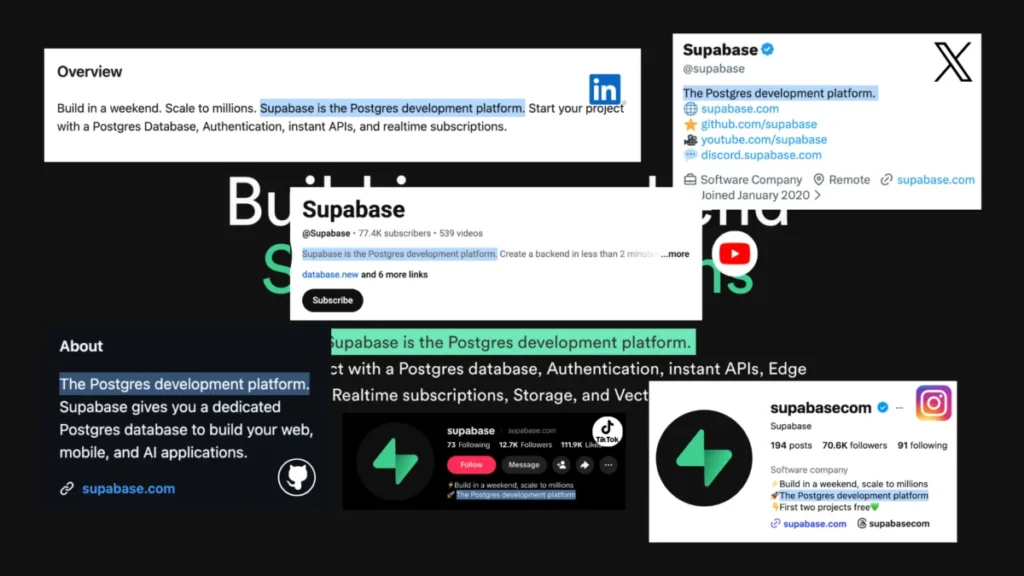
Supabase, a Postgres development platform, presents an intriguing case of serendipitous agent-readiness. Its tagline, "Postgres development platform," might seem dry to "vibe coders," but it is a perfectly machine-readable description of its core offering and what a coding agent can achieve with it. This clarity of identity and function has positioned Supabase as the default database for many AI-built applications. Whether intentionally designed for agents or not, its precise, unambiguous self-description serves the needs of AI agents exceptionally well, demonstrating that inherent machine-readability can be a powerful, often accidental, competitive advantage in the agentic era.
Deconstructing Agent-Readiness: The New Fundamentals of Web Presence
Investing in agent-readiness isn’t about creating a new department or a line item in a budget. It represents a fundamental shift in infrastructure decisions, dictating how a website delivers its offerings to non-human visitors. This involves three core pillars: machine-readable content, discoverable actions, and predictable transaction flows.
1. Machine-Readable Identity and Content:
The most immediate and impactful step towards agent-readiness is ensuring that AI agents can effectively "read" and comprehend a website’s core information. This goes beyond superficial text extraction.
- Server-Rendered HTML with Semantic Structure: Many modern websites rely heavily on JavaScript rendering to display content dynamically. While this provides rich human experiences, most AI agents struggle with it, often seeing an empty or incomplete page. Server-rendered HTML, which delivers fully formed content directly from the server, is the fundamental baseline. Furthermore, content must be semantically structured using appropriate HTML tags (e.g.,
<article>,<section>,<nav>,<aside>,<header>,<footer>,<figure>,<figcaption>). This semantic structure provides explicit cues to agents about the purpose and hierarchy of content, enabling more accurate information extraction than mere text parsing. Cloudflare’s "Markdown for Agents" is a clear step in this direction, advocating for structured, unambiguous content formats. - Clarity and Conciseness: Beyond technical structure, the language itself must be clear, concise, and unambiguous. Jargon, overly poetic language, or highly contextual phrasing can confuse agents. Supabase’s tagline is a prime example of how direct, functional language, while perhaps less "vibrant" for humans, is perfectly optimized for machine understanding. This necessitates a re-evaluation of content strategy, balancing human appeal with machine interpretability.
2. Discoverable Actions and Offerings:
Once an agent can read the content, it needs to understand what a website offers and how to interact with those offerings. This involves a set of classical web fundamentals re-applied with an agent-first mindset.
robots.txtfor AI User Agents: Therobots.txtfile, traditionally used to guide search engine crawlers, gains renewed importance. It now needs to acknowledge specific AI user agents, allowing for granular control over what agents can access and how they can interact. This enables developers to direct agents to optimized interfaces (like netlify.ai) or restrict access to sensitive areas, ensuring both functionality and security.- Current and Comprehensive Sitemaps: An up-to-date sitemap, detailing all accessible pages and resources, becomes a critical roadmap for AI agents. This isn’t just for discoverability; it helps agents understand the scope of a website’s offerings and navigate it efficiently, reducing the computational load of blind exploration.
- Structured Data (Schema.org, JSON-LD): This is perhaps the most powerful tool for explicit machine communication. By using structured data formats like Schema.org implemented via JSON-LD, websites can explicitly name entities (products, services, organizations, people), define their attributes (price, availability, description), and articulate their relationships. This transforms amorphous content into structured, factual data that agents can readily consume, compare, and act upon without needing complex natural language inference. It’s the difference between an agent guessing what a product is versus being explicitly told.
3. Predictable Transaction Flows and Invokable Services:
This is where the agentic web moves beyond mere information retrieval to active participation. If a website sells something or provides a service, an agent must be able to complete the purchase or invoke the service autonomously.
- The Protocol Layer (UCP, MCP, WebMCP): This is the frontier of agent-readiness. Protocols like Google’s Universal Commerce Protocol (UCP), WebMCP (Web Machine Comprehension Protocol), and MCP (Machine Comprehension Protocol) are designed to standardize the interaction between agents and web services. They provide a common language for agents to understand and execute actions like "add to cart," "check out," "subscribe," or "deploy." These protocols abstract away the complexities of individual website UIs, allowing agents to interact programmatically.
- Agent-Callable APIs and Functions: For services, the ability to expose agent-callable functions through well-documented APIs is paramount. This allows agents to programmatically interact with a service, passing parameters and receiving structured responses. Stripe’s "Projects" platform and Netlify’s "agent skills" exemplify this, turning complex developer workflows into automated, agent-executable tasks. Security and robust error handling are critical considerations in this layer.
- Secure Payment Protocols: The integration of agent payment protocols, as seen with Google and FIDO Alliance, ensures that transactions initiated by agents are secure, authenticated, and verifiable. This is crucial for building trust in an agent-driven economy and preventing fraudulent activities.
Strategic Imperatives: Building the Moat in the Agentic Era
The emergence of the agentic web is not a distant future scenario; it is unfolding now, driven by the independent strategic decisions of industry leaders. For businesses, this presents both an unprecedented opportunity and a looming threat.
The Competitive Moat: The companies that are investing in agent-readiness today are effectively building a competitive moat. Shopify’s Agent Toolkit, enabled by default, means that merchants who understand and optimize their product data and checkout flows for agents will capture a disproportionate share of agent-referred traffic. Similarly, the first SaaS products to integrate WebMCP tools will gain an early advantage in acquiring agent-discovered users. Supabase’s success, even if partially serendipitous, highlights that early machine-readability can create a default status in a nascent ecosystem.
The Urgency of Adoption: The window for establishing this advantage is open precisely because most websites have not yet begun this transformation. Businesses that delay risk becoming invisible in an increasingly agent-mediated digital world. A website that fails for agents is a product with a broken distribution channel, even if its human users remain content. This isn’t about an incremental SEO tweak; it’s about a fundamental re-architecture of digital presence.
Rethinking Digital Strategy: Agent-readiness demands a holistic re-evaluation of digital strategy. This includes:
- Content Strategy: Moving towards structured, unambiguous, and machine-optimizable content.
- Technical SEO: Elevating server-side rendering, semantic HTML, comprehensive sitemaps, and structured data from best practices to absolute necessities.
- Product Development: Designing APIs and service interfaces with agent interaction in mind, not just human UI.
- Marketing & Sales: Adapting to a world where AI agents are the primary discoverers and evaluators, and potentially even the buyers, necessitating new forms of "agent marketing" and "agent sales."
- Analytics: Developing new metrics to track agent interactions, conversions, and their impact on overall business performance.
Implications for SEO and Web Development: Traditional SEO has focused on optimizing for human search queries and search engine algorithms that attempt to interpret human intent. Agent-readiness introduces "Agent Search Optimization" (ASO), which focuses on explicit machine-to-machine communication. While there’s overlap (e.g., structured data benefits both), ASO demands a deeper integration of programmatic interfaces and unambiguous data representation. Web developers will increasingly need to think like API designers, ensuring that every piece of information and every action on a website is programmatically accessible and understandable to an autonomous agent.
Conclusion: "Make Something People Want" Now Includes Agents
Y Combinator’s timeless motto, "Make something people want," remains the North Star for innovation. However, the path to achieving this desire has taken a momentous detour. AI agents are no longer a futuristic concept; they are an active, growing visitor class that mediates how people discover, compare, and ultimately decide to acquire products and services.
The independent, yet synchronized, investments by Cloudflare, Shopify, Stripe, Supabase, Netlify, and Google are not isolated incidents; they are collective affirmations of a new digital reality. They confirm that the distribution of products and services on the web is undergoing a profound, irreversible shift from predominantly human-mediated channels to an increasingly agent-mediated ecosystem.
Ignoring this shift is no longer an option. A website built exclusively for human eyes, failing to provide the machine-readable identity, structured content, discoverable actions, and predictable transaction flows that AI agents demand, is akin to a product with a broken distribution channel. It may be well-crafted and desirable, but if the agents cannot find it, understand it, or interact with it, a significant portion of its potential audience will remain perpetually out of reach. The future of the web is agentic, and the time to build for it is now.