The New Frontier of AI Observability: Deep-Diving into AgentOps Integration
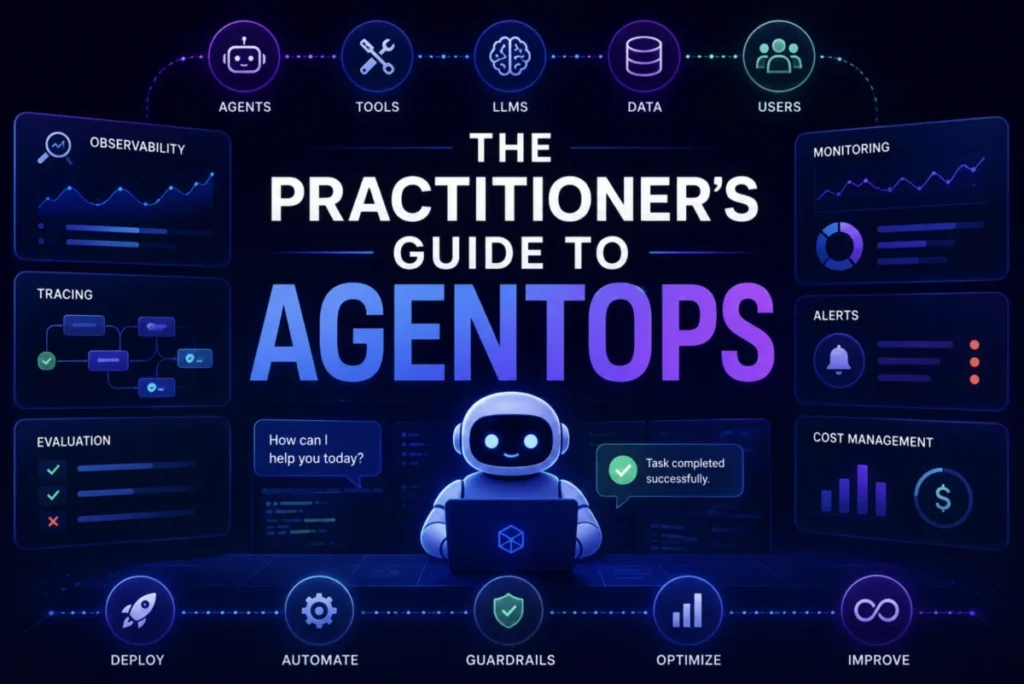
As the artificial intelligence landscape shifts from simple chatbot interactions to complex, multi-step autonomous agent workflows, the developer community faces a daunting challenge: how do you debug, monitor, and optimize an agent that "thinks" for itself? The answer, increasingly, is observability. A newly released blueprint for a research-oriented AI agent demonstrates how developers can now achieve full-stack visibility into LLM decision-making, providing a masterclass in implementing AgentOps for production-grade systems.
Main Facts: The Intersection of Autonomy and Accountability
The release of the research_agent.py reference implementation marks a significant milestone for developers working with Anthropic’s Claude models. At its core, the project serves as a practical guide for embedding "AgentOps"—a specialized observability framework—into an agent’s lifecycle. Unlike traditional logging, which often captures only the input and output of an API call, this approach provides a granular, event-driven trace of every tool execution, internal logic decision, and token consumption metric.
The system relies on a few key architectural pillars:
- AgentOps Instrumentation: By initializing the SDK at the entry point, the developer automatically wraps the LLM client, ensuring every request is logged, cost-tracked, and tagged for dashboard analysis.
- Functional Decorators: The use of the
@record_functiondecorator allows for the automatic capture of function-level metadata, including arguments, execution time, and potential runtime exceptions. - Tool-Use Loops: The agent utilizes a structured loop that permits the model to call external tools (like search engines or data extractors) repeatedly until a final, summarized output is achieved.
- Session Management: The implementation ensures that every session—whether it ends in a successful summary or a failure due to iteration limits—is correctly terminated and reported to the AgentOps dashboard.
Chronology: Building the Modern Research Agent
The development of such an agent follows a rigorous, multi-stage process that prioritizes testability and modularity.
Phase 1: Environment and Initialization
The process begins with strict environment management. By utilizing python-dotenv, developers decouple sensitive API credentials—such as AGENTOPS_API_KEY and ANTHROPIC_API_KEY—from the logic itself. The initialization phase is critical; the agent must call agentops.init() before any other operations occur. This ensures that the SDK can intercept and record all subsequent LLM calls.
Phase 2: Defining the Toolset
The agent operates via a defined schema of tools. These tools are not merely code functions; they are defined with input schemas that guide the LLM’s behavior. The current implementation includes:
search_topic: The primary data gathering tool.get_key_facts: A secondary tool to filter and refine raw data.format_summary: The mandatory final step that forces the LLM to output findings in a clean, structured JSON format.
Phase 3: The Execution Loop
The heart of the agent is the run_research_agent loop. This loop sends the user’s request to Claude, monitors the stop_reason of the response, and handles the logic for tool invocation. If the model determines it needs more information, it triggers a "tool_use" signal. The agent then executes the corresponding code, captures the return value, and feeds that data back to the LLM to continue the research process.
Supporting Data: Why Observability Matters
In the current AI climate, cost and performance are the primary constraints for scaling. The provided research agent implementation highlights the importance of real-time monitoring. By tracking every iteration, the developer can identify "runaway loops"—situations where the model becomes stuck in a cycle of redundant tool calls.
The code includes a max_iterations = 10 safety limit, which acts as a circuit breaker. In the context of the AgentOps dashboard, this is vital; developers can visualize the "session replay," seeing exactly where the logic deviated from the expected path. Furthermore, the ability to monitor token usage per step allows teams to calculate the exact cost of a research query, enabling more precise ROI analysis on AI-driven workflows.
Official Perspectives: The Shift Toward "Agentic" Software
Industry experts have long argued that the transition from prompt engineering to agentic software requires a fundamental change in tooling. According to the developers behind the AgentOps framework, the traditional "black box" model of LLMs is no longer acceptable for enterprise applications.
"When an agent makes a mistake, you cannot simply look at the final answer," notes an industry lead familiar with the technology. "You must be able to peel back the layers to see which tool provided the incorrect data or which reasoning step led the model astray. By integrating observability directly into the agent’s execution loop, we move from guessing why an error occurred to knowing exactly where the breakdown happened."
This sentiment is echoed by the move toward standardized tool schemas. By providing the model with clear, version-controlled definitions for every tool it can call, developers reduce the frequency of hallucinations and increase the reliability of agentic outputs.
Implications for Future Development
The implications of this observability-first approach are profound for several industries, including finance, legal research, and scientific discovery.
1. Enhanced Debugging Capabilities
For complex agents, standard print statements are insufficient. With full session tracing, developers can perform "root cause analysis" on agent failures. If an agent fails to provide a summary, the logs will show exactly which tool returned an error or if the model simply failed to reach the format_summary step.
2. Standardization of Agent Behavior
The use of decorators and structured system prompts means that agents can be made more predictable. By enforcing a specific, final step (like the format_summary call in the provided code), developers can ensure that the outputs are always machine-readable, facilitating easier integration into downstream pipelines.
3. Economic Efficiency
As organizations begin to run thousands of agent sessions, the ability to aggregate cost data via the AgentOps dashboard becomes a competitive advantage. Developers can compare the performance of different model versions (e.g., Sonnet 3.5 vs. future iterations) to determine which is the most cost-effective for specific research tasks.
4. Safety and Governance
As agents become more autonomous, the need for governance grows. Observability provides an audit trail. If a system is tasked with making financial decisions or synthesizing sensitive data, having a permanent record of every piece of information the agent accessed and every conclusion it drew is essential for compliance.
Conclusion
The provided research_agent.py is more than a simple coding example; it is a blueprint for the next generation of software development. By treating an AI agent as a traceable, observable entity, developers are finally bringing the same level of engineering rigor to AI that they have applied to traditional distributed systems for decades.
As we move deeper into 2026, the success of AI-driven projects will not be defined merely by the intelligence of the underlying models, but by the quality of the "plumbing"—the observability, the safety rails, and the structured feedback loops—that surrounds them. For those looking to move from experimental prototypes to robust, production-ready AI, adopting these patterns is no longer optional; it is the fundamental requirement for building systems that are both powerful and dependable. The path forward is clear: build with observability, monitor with precision, and always maintain the ability to audit the machine’s mind.