The Great Indian IPO Wave: How 2026 is Redefining Startup Exits on Dalal Street
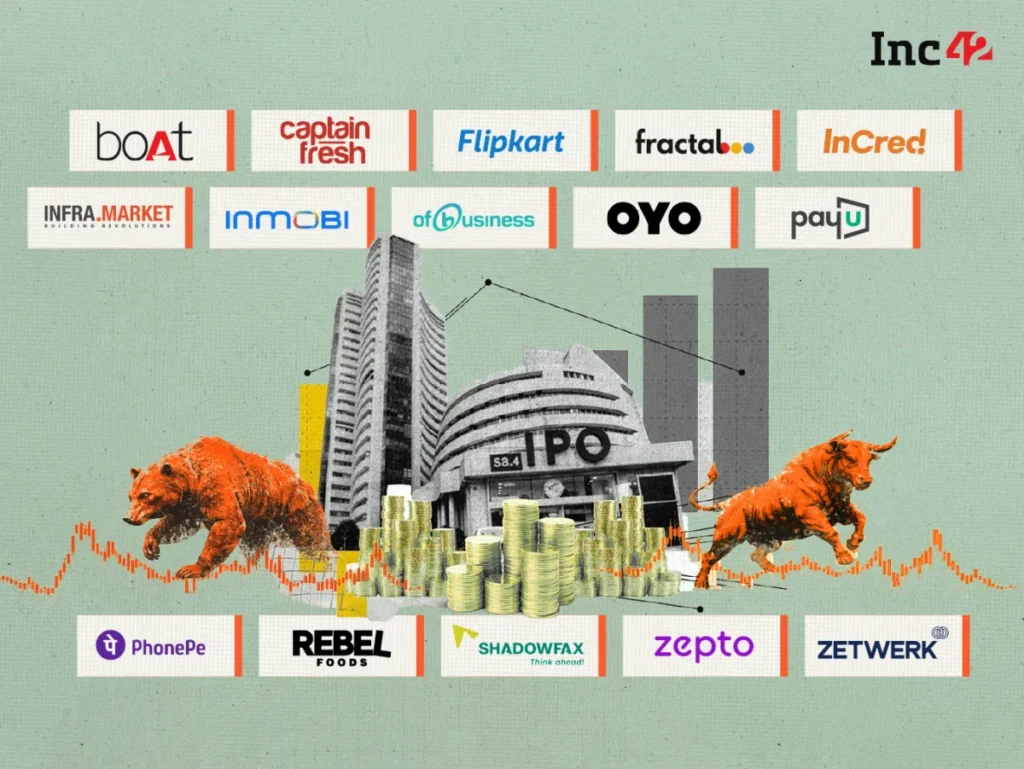
The year 2025 will be remembered as a watershed moment for the Indian startup ecosystem. As domestic capital deepened and regulatory frameworks became more investor-friendly, Dalal Street transformed into a "founder’s paradise." A record 18 Indian startups successfully listed, mopping up an unprecedented INR 41,248 Cr from public markets. This historic momentum, however, has set the stage for a more complex and critical year in 2026.
While 2025 was defined by a celebratory rush to the bourses, 2026 has introduced a narrative of "recalibration." Investors are no longer merely chasing headline growth; they are demanding cold, hard evidence of profitability, sustainable unit economics, and operational discipline. As the Indian IPO machine shifts gears, the focus has moved from hype to long-term value creation.
The Macroeconomic Tailwinds and Regulatory Catalyst
The surge in startup listings was not accidental. It was a perfect storm of macroeconomic tailwinds and proactive regulatory reform. Robust GDP growth projections significantly bolstered investor confidence, but the Securities and Exchange Board of India (SEBI) served as the primary engine.
Reforms such as the simplification of Draft Red Herring Prospectus (DRHP) filings drastically reduced the bureaucratic red tape that previously stifled new-age tech companies. Furthermore, the evolution of Employee Stock Option Plan (ESOP) rules allowed founders to retain meaningful ownership even as they scaled, providing them with the incentive to remain committed to their ventures for the long haul.
Retail participation has also been a massive pillar of support. With demat account registrations crossing the 20 Cr mark, the democratization of the stock market has ensured that startups have a ready base of liquidity. Last year, the Offer for Sale (OFS) component dominated public issues, providing a crucial exit window for early-stage venture capital backers.
A Year of Two Halves: From 2025 Frenzy to 2026 Caution
The transition from 2025 to 2026 has been marked by a noticeable shift in market sentiment. While six new-age tech companies made their debut in the first three months of 2026, the performance has been, at best, mixed. Unlike the stellar gains seen in 2025, many of the recent listings have been flat or lacklustre.
"Besides the readiness that startups showed in their unit economics, there is also an increase in the founders committing to their businesses for the next couple of decades and growing by adding adjacent profit pools—something that the public markets reward handsomely," explains Ashish Kumar, Co-founder and General Partner at Fundamentum Partnership.
However, challenges are mounting. Average retail subscription levels have begun to moderate, and Foreign Institutional Investors (FIIs) have adopted a more cautious stance, pulling back amid ongoing geopolitical tensions, particularly the conflict in West Asia. This "wait-and-watch" approach has forced IPO-bound companies to be more realistic with their valuations.
The 2026 Pipeline: A Multi-Billion Dollar Opportunity
Despite the cooling sentiment, the pipeline for the remainder of 2026 is nothing short of massive. Twenty-six startups have already filed their DRHPs, and over 24 others are in advanced stages of finalizing their IPO plans.
If projections hold, giants like Flipkart, Zepto, OYO, InMobi, and Zetwerk could collectively raise over INR 47,000 Cr in 2026, potentially making it the most significant year for startup IPOs in Indian history.
Rehan Yar Khan, Managing Partner at Orios Venture Partners, notes, "IPO-bound startups in 2026 will be increasingly defined by their ability to demonstrate predictable cash flows and operational discipline rather than headline growth alone. Public market investors will place greater emphasis on governance, capital efficiency, and long-term value creation."
Deep Dive: 2026 Market Debuts
The performance of companies that have already tested the waters in 2026 provides a roadmap for those still in the wings:
Amagi (SaaS)
After filing its DRHP in mid-2025, Amagi’s journey to the bourse concluded in early 2026. Despite a 30.2X oversubscription, the stock suffered a lacklustre debut, listing at a 12.2% discount on the BSE. This highlights that even for fundamentally strong SaaS companies, valuation at the time of issue is critical.
Aye Finance (Fintech)
The NBFC sector faced a reality check with Aye Finance. After an undersubscribed public issue, the stock listed flat at its issue price of INR 129. The company’s performance underscores the market’s sensitivity to profit volatility in the lending space.
Fractal (AI-Analytics)
As one of the most anticipated AI-led listings, Fractal’s 2.66X subscription was met with a muted market reaction. The stock debuted at a 2.7% discount on the NSE, signaling that even high-growth AI narratives must justify their pricing against bottom-line performance.
Kissht (Fintech)
A rare bright spot in the early 2026 cohort, Kissht made a stellar debut on May 8, listing at an 11.7% premium. With a strong 9M FY26 performance, the company proved that retail and institutional appetite remains high for fintech players that demonstrate clear, scalable profitability.
SEDEMAC (Deeptech)
SEDEMAC’s debut on March 11 was a testament to the growing interest in India’s deeptech manufacturing capabilities. Listing at a 13.5% premium, the company benefited from its clear focus on industrial and mobility hardware, proving that "hard-tech" can command a premium on Dalal Street.
Shadowfax (Logistics)
Shadowfax’s January 2026 debut was a sober reminder of the market’s volatility. Listing at a 9.19% discount, the logistics major’s performance reflected the broader caution surrounding cash-burn-heavy delivery models, despite the company’s strong revenue growth.
The Future: A Maturing Ecosystem
The broader outlook for Indian new-age tech remains bullish. The maturity of business models, combined with deeper domestic capital pools and a regulatory framework that emphasizes transparency, positions India as a global hub for tech IPOs.
However, the "growth-at-all-costs" era is definitively over. Companies currently in the pipeline—ranging from quick-commerce titan Zepto to the B2B construction marketplace Infra.Market—are under immense pressure to show not just scale, but the path to sustainable margins.
Key Observations on the Upcoming Pipeline
- Sector Diversification: The pipeline is no longer just about B2C consumer tech. Deeptech (Tonbo Imaging), B2B commerce (OfBusiness, Zetwerk), and specialized logistics (Shiprocket) are taking center stage.
- The "Reverse Flip" Trend: Several companies, including Flipkart and Razorpay, have completed the complex legal process of "reverse flipping"—moving their corporate domiciles back to India—to facilitate their public listings. This reflects a strategic move to align with the domestic investor base.
- Profitability as the New Currency: Companies like Captain Fresh and Furlenco, which have recently pivoted toward profitability, are finding more favor with institutional bankers than their loss-making counterparts.
- Governance Standards: The increased scrutiny by SEBI on IPO-bound firms means that founders are now investing more heavily in board composition, independent directors, and audit transparency before even submitting their initial drafts.
Implications for Investors
For the retail investor, the 2026 IPO market requires a shift in strategy. The days of "listing gains" as a guaranteed outcome have faded. Investors are now encouraged to look past the marquee names and delve into the DRHPs. The metrics to watch are no longer just Monthly Active Users (MAUs) or Gross Merchandise Value (GMV), but rather Contribution Margins, EBITDA profitability, and the burn rate per unit of growth.
As India moves toward a more mature public market, the companies that succeed will be those that balance the aggressive innovation of a startup with the operational rigor of a legacy conglomerate. While 2025 was the year the door was kicked open, 2026 is the year the market is setting the ground rules for who gets to stay inside.
Data sourced from Inc42, respective DRHPs, MCA filings, and media reports. All numbers reflect reported or estimated figures as of June 2026.