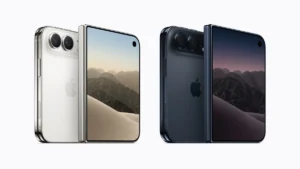
The Evolution of Optics: Why the iPhone 18 Pro’s Camera Bump is Set to Grow
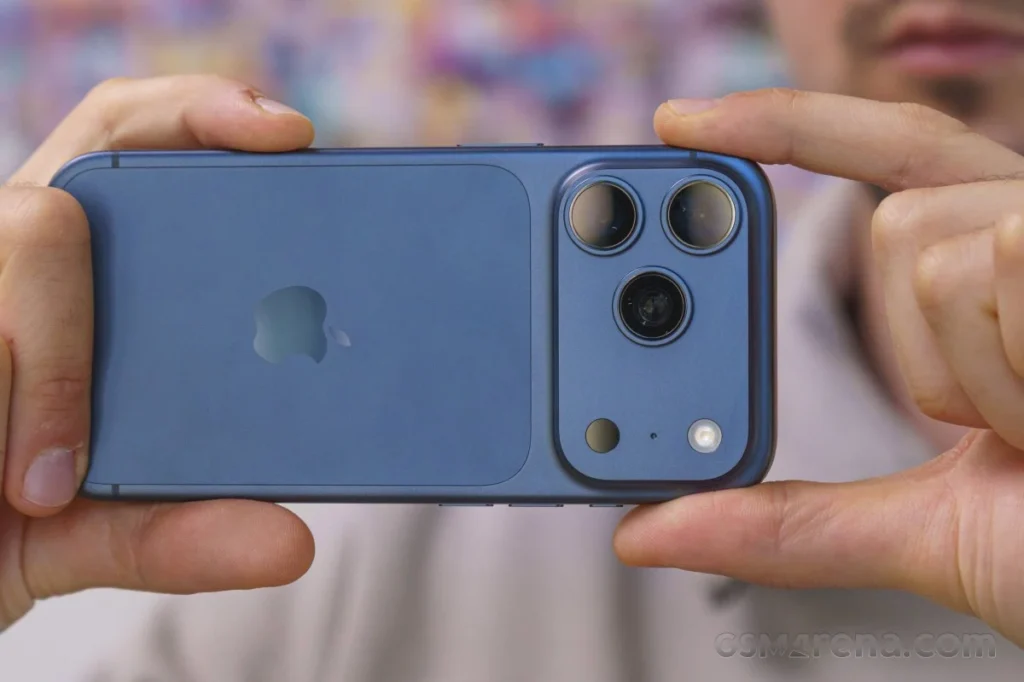
The smartphone industry has long been defined by the tension between aesthetic sleekness and optical performance. For years, Apple has danced this delicate balance, refining the "camera bump" to be as unobtrusive as possible while squeezing ever-greater capabilities into its flagship devices. However, according to the latest intelligence surfacing from industry insiders on Weibo, that balance is about to shift significantly.
The upcoming iPhone 18 Pro and its larger sibling, the iPhone 18 Pro Max, are reportedly slated for a major hardware overhaul that will manifest in a physically larger camera module. Reliable tipsters have gone as far as to describe this change as "confirmed," signaling a shift that could define the next generation of mobile photography for the Cupertino giant.
Main Facts: A Physical Shift in Design and Capability
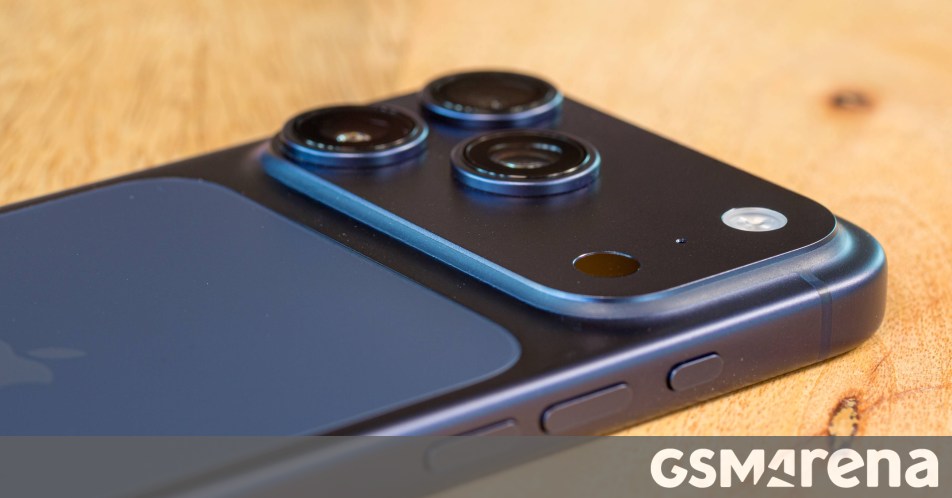
The core revelation regarding the iPhone 18 Pro is the expansion of the rear camera array. Industry reports indicate that the main camera module will undergo a physical growth, resulting in a noticeably thicker camera bump—by approximately 2 millimeters. While 2mm may seem trivial in the context of general device thickness, in the world of industrial design, it is a massive margin that requires a complete rethinking of the chassis’s internal layout.
The primary driver behind this expansion is widely believed to be the implementation of a variable aperture system. For years, photographers have utilized variable aperture to control depth of field and light intake mechanically; bringing this technology to a smartphone sensor allows for a more "DSLR-like" control over exposure, particularly in challenging low-light conditions or when a natural, non-computational bokeh effect is desired for portraiture.
Beyond the variable aperture, analysts are not ruling out the inclusion of a larger image sensor. As the law of physics dictates that larger sensors capture more light and detail, Apple is likely pushing the boundaries of what its "Pro" series can achieve, necessitating a deeper optical assembly that simply cannot be contained within the current, thinner architecture.
Chronology: The Road to the iPhone 18 Series
The path to the iPhone 18 Pro has been marked by a series of rapid advancements in Apple’s optical engineering. To understand the significance of this upcoming shift, one must look at the recent history of the iPhone camera trajectory:
- The Pro Evolution (2023–2024): Apple focused heavily on computational photography and the introduction of the 5x tetraprism zoom lens on the iPhone 15 Pro Max. During this phase, the camera bump grew marginally but maintained a consistent aesthetic.
- The Sensor Integration (2025): Rumors began to circulate about Apple’s interest in liquid lens technology and variable apertures. While these did not materialize in the standard 17-series, they laid the groundwork for the R&D currently culminating in the 18-series.
- The Current Leaks (Early 2026): By mid-2026, the industry consensus shifted toward a major hardware upgrade for the 18 Pro. The Weibo leaks, which have been historically accurate regarding internal component changes, confirmed that the design language for the 2026 flagship would prioritize optics over thinness.
- The Upcoming Launch Schedule (September 2026 – Spring 2027): The industry anticipates a split-release cycle. The flagship iPhone 18 Pro and Pro Max, alongside the much-hyped "iPhone Ultra," are expected to debut in September 2026. Conversely, the more consumer-focused iPhone 18, the iPhone 18e, and the successor to the rumored iPhone Air line are currently slated for a spring 2027 rollout.
Supporting Data: The Engineering Challenges of Mobile Optics
The increase in camera bump thickness is not merely a design choice; it is a mathematical necessity. Optical engineering in smartphones is governed by the "stack height"—the total distance from the outer lens element to the sensor plane.
The Physics of Variable Aperture
A variable aperture mechanism requires physical blades (similar to an iris) to move within the lens assembly. This requires extra space, not just for the blades, but for the micro-actuators that move them. If Apple is aiming for a multi-stop variable aperture (e.g., switching between f/1.4 and f/4.0), the thickness is a non-negotiable requirement.
Sensor Surface Area
The transition to larger sensors—potentially reaching the 1-inch threshold or pushing the boundaries of current CMOS designs—requires a larger lens image circle. A larger image circle requires larger glass elements, which leads to a wider and deeper lens stack. If the iPhone 18 Pro is to maintain its market-leading status, it must accommodate these larger components to prevent light fall-off at the edges of the frame.
Official Responses and Corporate Strategy
As is standard protocol, Apple has maintained its "no comment" stance regarding unreleased hardware. However, the company’s strategic trajectory over the last two years provides clear context. Apple has increasingly positioned the "Pro" lineup as a legitimate tool for cinematographers and professional photographers.
The introduction of features like Log encoding, ProRes video, and spatial video recording has transformed the iPhone from a casual camera into a prosumer device. By investing in a physically larger camera bump, Apple is signaling that it is willing to sacrifice a degree of pocketability to satisfy the demands of the creative community. This is a deliberate "pro-first" strategy, distinguishing the premium tiers of their product lineup from the more mass-market iPhone 18 and 18e models.
Implications: What This Means for the User
The implications of this shift are twofold: one for the professional creator, and one for the general consumer.
For the Content Creator
The shift represents a "holy grail" moment for mobile videography. A variable aperture will allow creators to shoot in bright sunlight without overexposing their footage or relying on heavy software filters. It allows for natural depth-of-field control that doesn’t look "processed," a common criticism of current Portrait modes. This could potentially bridge the gap between high-end mirrorless cameras and mobile devices for many indie filmmakers.
For the General Consumer
The trade-off is the ergonomics of the device. A 2mm increase in camera bump thickness will make the iPhone 18 Pro more prone to "wobble" when laid flat on a table without a case. Furthermore, it will likely necessitate a new ecosystem of cases, as previous iterations will be incompatible with the larger module. Consumers will need to decide if they value the extreme optical fidelity over the slim, flat-backed design that characterized earlier iPhone iterations.
The Market Outlook
The split-launch strategy—releasing the high-end Pros in the fall and the standard models in the spring—suggests that Apple is managing its supply chain for these complex new components with extreme care. The manufacturing of a high-precision variable aperture mechanism is significantly more difficult than a fixed lens. By staggering the release, Apple can ensure that the Pro models receive the focus of their manufacturing capacity while allowing the standard models to utilize more mature, stable technology in the spring.
Conclusion
The rumored evolution of the iPhone 18 Pro’s camera system represents a pivot point in Apple’s design philosophy. By embracing a larger, more complex camera module, the company is doubling down on the premise that the future of the smartphone is in its capability as a professional optical instrument. While the aesthetic change—a thicker, more prominent bump—may be polarizing, the functional benefits of a larger sensor and variable aperture promise to keep the iPhone at the forefront of the mobile photography revolution. As we approach the September launch, all eyes will be on whether this hardware gamble pays off in the form of superior image quality that sets a new industry standard.